
WATER LINE REPAIR & REPLACEMENT • CALIFORNIA CENTRAL COAST
Water Fixers helps homeowners and property managers evaluate buried and incoming water-line problems across supported Central Coast communities. The first question is not “repair or replace?” It is what line is involved, where the failure is, which side of the service boundary applies, and whether the condition is isolated or part of a broader piping problem.
38+ years serving California’s Central Coast • CA License #719792 • Se Habla Español
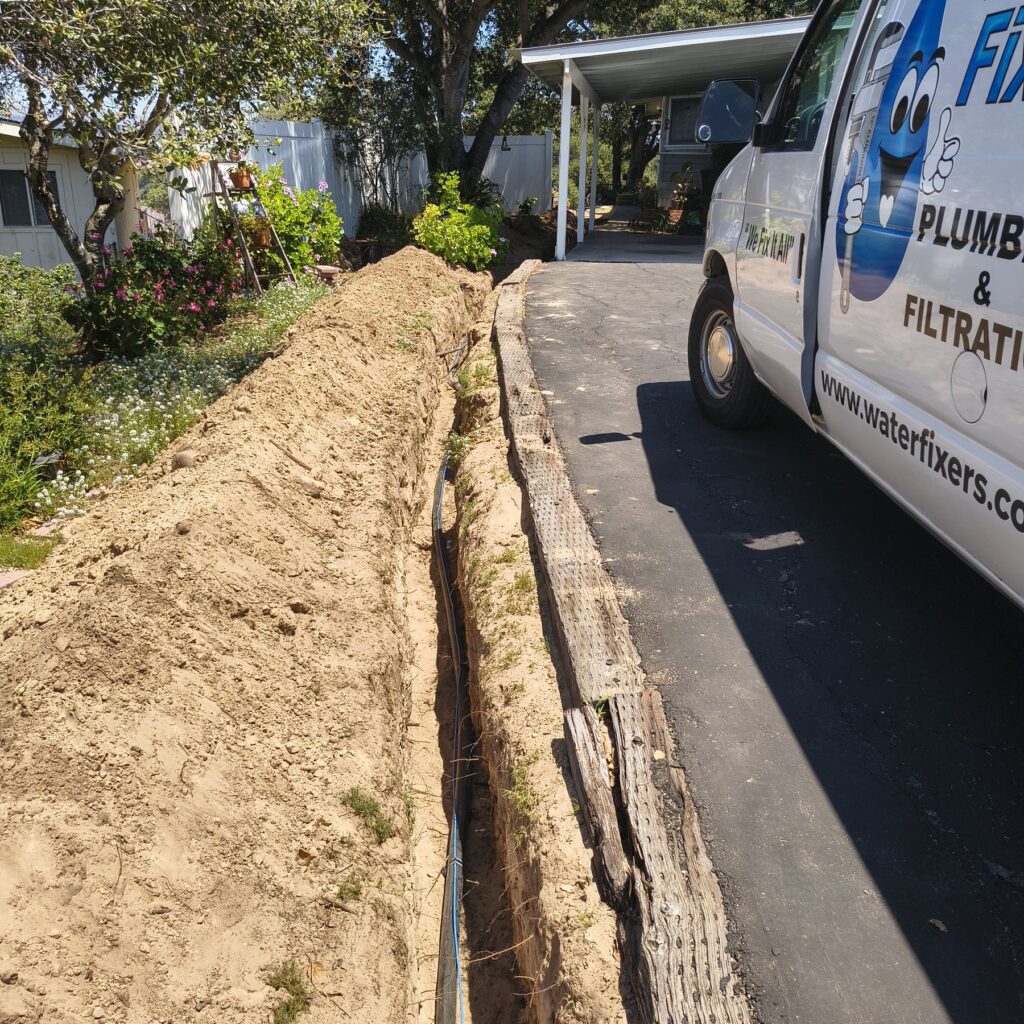
START WITH WHAT YOU KNOW
Pressure loss, wet soil, unexpected water use or meter movement can be useful clues, but none of them proves by itself that the private water service line has failed.
LINE TYPE & SERVICE BOUNDARY
A buried water line can sit between several different responsibilities. The correct boundary depends on the property, water provider, meter/service arrangement and local rules.
Water Fixers identifies the likely scope before recommending excavation, repair or replacement.
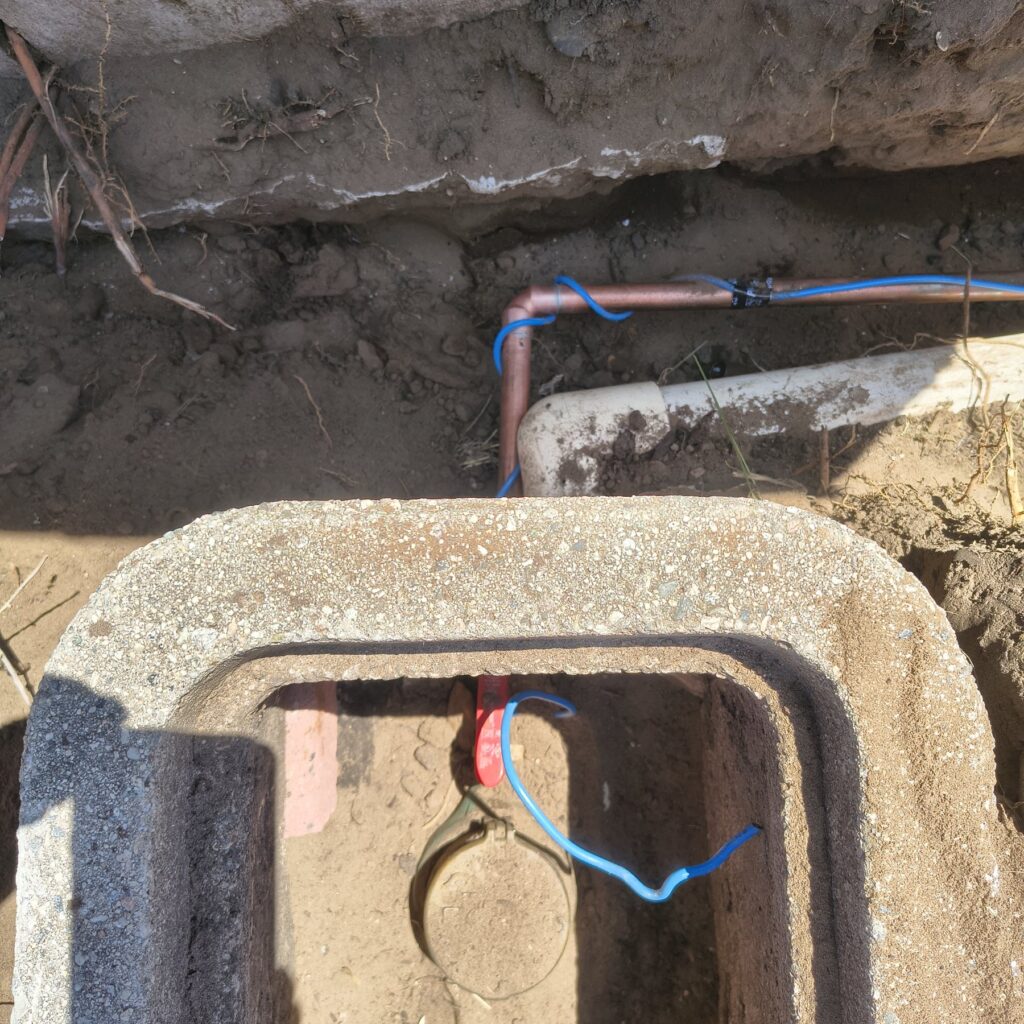
COMMON CLUES
Use the pattern to decide what should be checked next. The goal is to avoid excavating or replacing a line just because one symptom appears.
REPAIR OR REPLACE?
There is no universal age, material or symptom that automatically means a water line must be replaced. A focused repair may be reasonable when the failure is isolated and the surrounding line is serviceable. Replacement becomes more worth evaluating when the damaged section cannot be repaired reliably, access favors a planned replacement, or failures are recurring along the same service.
Water Fixers considers failure location, line material, visible condition, connection condition, access, repair history, pressure information and the practical cost/scope of each option before recommending a direction.
SAFE EXCAVATION & PROJECT PLANNING
Buried water-line work can involve excavation near other underground facilities. For planned excavation in California, the excavator must use the regional notification process and receive the required utility responses before work begins. California guidance calls for notification at least two working days before planned excavation, subject to the current law and project circumstances.
Permits, utility coordination, right-of-way issues and restoration requirements vary by jurisdiction and project scope. Water Fixers does not promise a trenchless method, a specific permit outcome or a particular restoration approach before the site and line are evaluated.
CHOOSE THE RIGHT SERVICE PATH
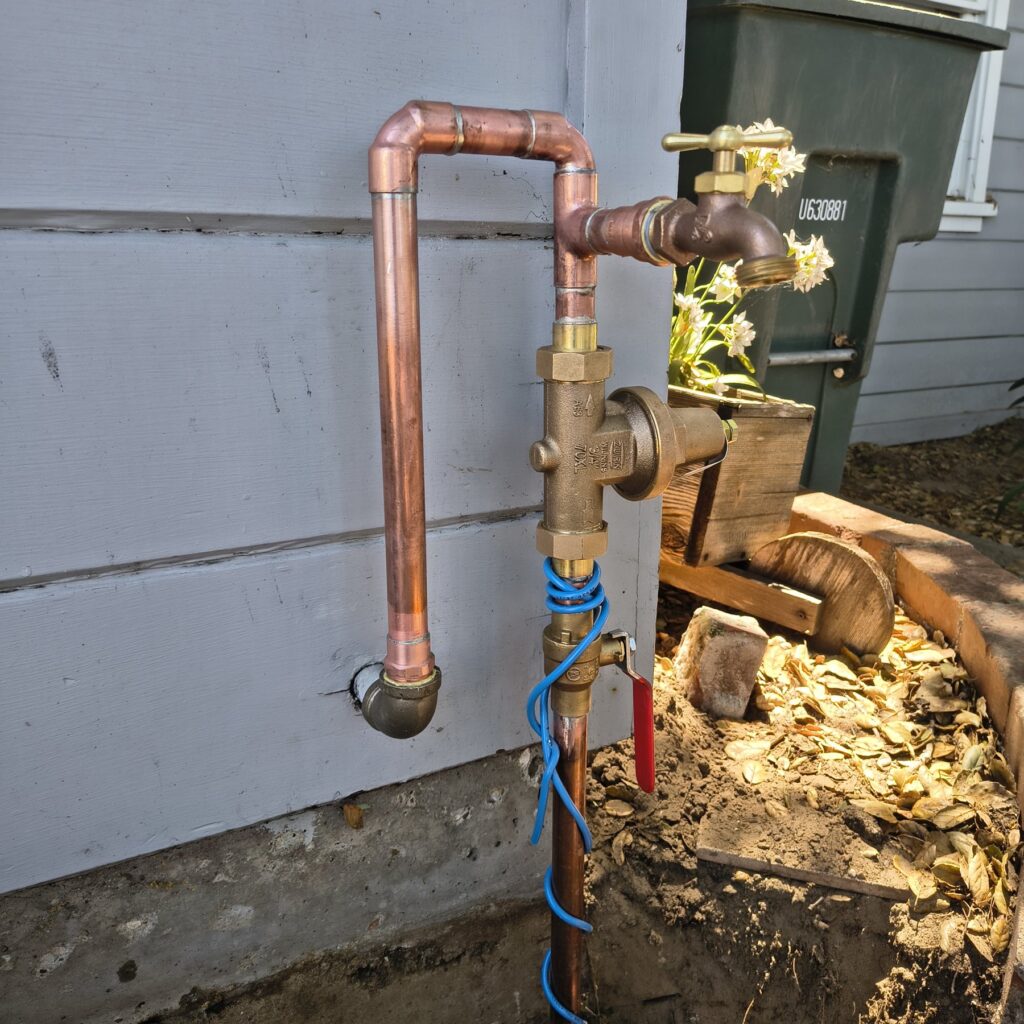
AFTER THE LINE WORK
A completed water-line repair can be a good time to confirm that the property has reliable water control and that related pressure or monitoring concerns are not being confused with the original line failure.
SERVICE BY LOCATION
Choose your community for the local water-line page. The master page stays focused on Central Coast-wide service while each location page handles local plumbing context and regional routing.
HOW WATER-LINE SERVICE IS ROUTED
WATER LINE FAQ
Clues can include unexplained water use, wet ground, visible damage or a whole-property change in flow or pressure, but those symptoms do not prove the service line is leaking. When the source is unknown, leak detection is the better first step.
Sometimes. A focused repair can make sense when the failure is isolated and the surrounding line is serviceable. Replacement becomes more worth evaluating when damage is extensive, failures repeat, access favors planned replacement or a reliable repair is not practical.
Water-line work focuses on the incoming service or supply line serving the property. Repiping focuses on broader interior water-distribution piping. A problem in one system does not automatically mean the other needs replacement.
Not automatically. A service-line restriction or leak is one possibility, but valves, pressure regulators, provider conditions, fixture restrictions and private-well equipment can also affect pressure. The pattern should be diagnosed before a line replacement is assumed.
Water-line projects can require excavation when the damaged piping is buried. The method and amount of access depend on the actual site, line location, utility markings, surrounding conditions and approved repair scope. No trenchless or restoration method should be promised before evaluation.
For planned excavation in California, the regional notification and utility-response process applies before excavation begins. Current California guidance requires advance notification and appropriate responses/marking. Project-specific requirements should be confirmed for the actual work.
Responsibility varies by water provider and service arrangement. Public mains, meters and some service components may be utility-owned, while private piping begins at the provider-defined service boundary. Confirm the address and provider before treating meter-side hardware as customer plumbing.
Water Fixers serves supported communities across Santa Barbara and San Luis Obispo counties. Use the location directory on this page or Service Areas to choose the local water-line page for the property.
Tell Water Fixers what changed, whether water is actively escaping, whether the source has been located, and which community the property is in. We can route the problem toward leak detection, water-line repair, pressure service, repiping or another plumbing path without asking you to diagnose the line yourself.
Water Fixers Plumbing & Filtration • California’s Central Coast • License #719792 • Se Habla Español
CALL NOW! Se Habla Español!