






Tips From Harley • Under-sink leaks
Water Under the Sink: What Should I Check First?
A wet sink cabinet can come from more than one place. The safest first step is to notice where the water appears and when it shows up—without taking equipment apart or assuming the first wet fitting is the cause.
Start by separating the possible water paths
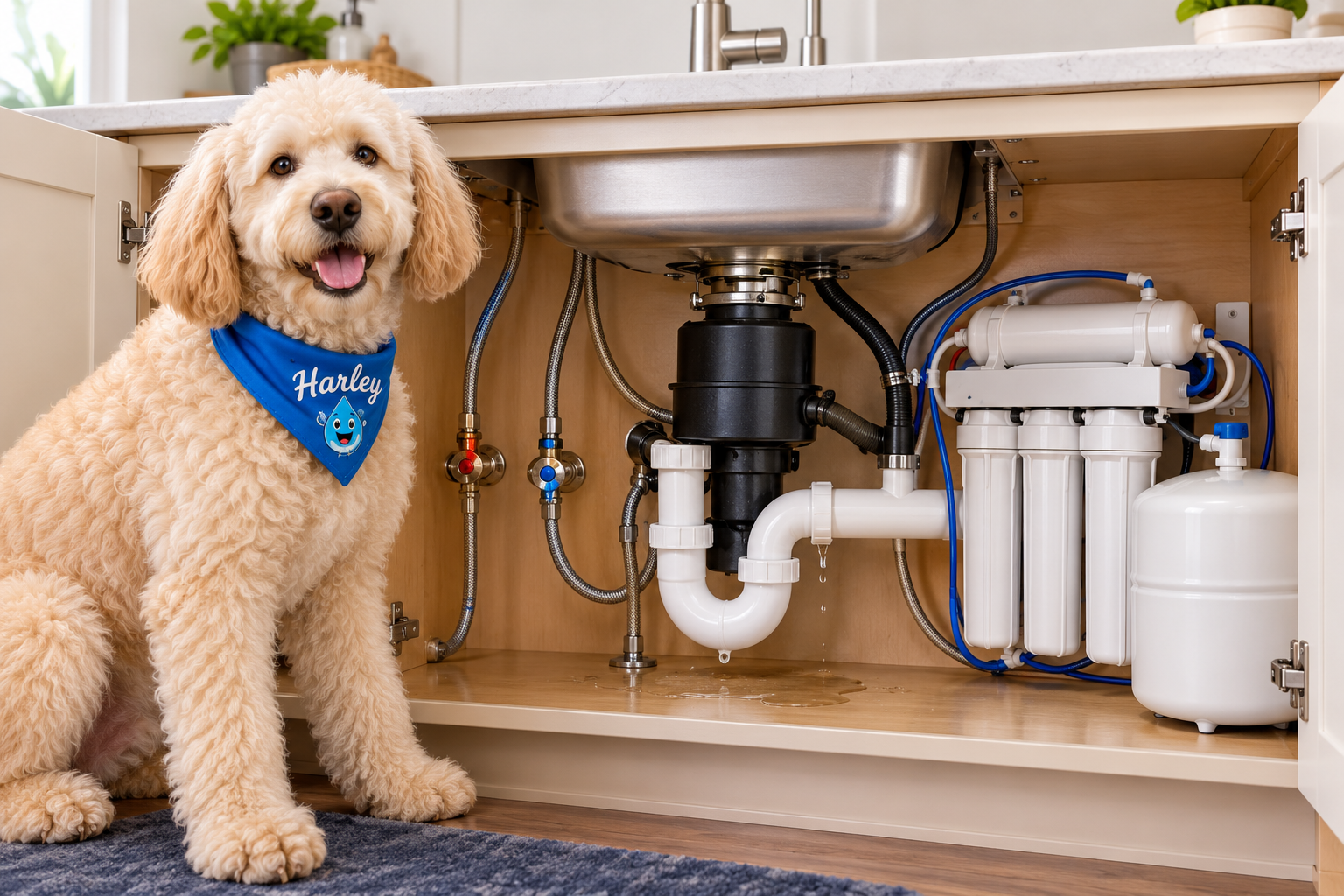
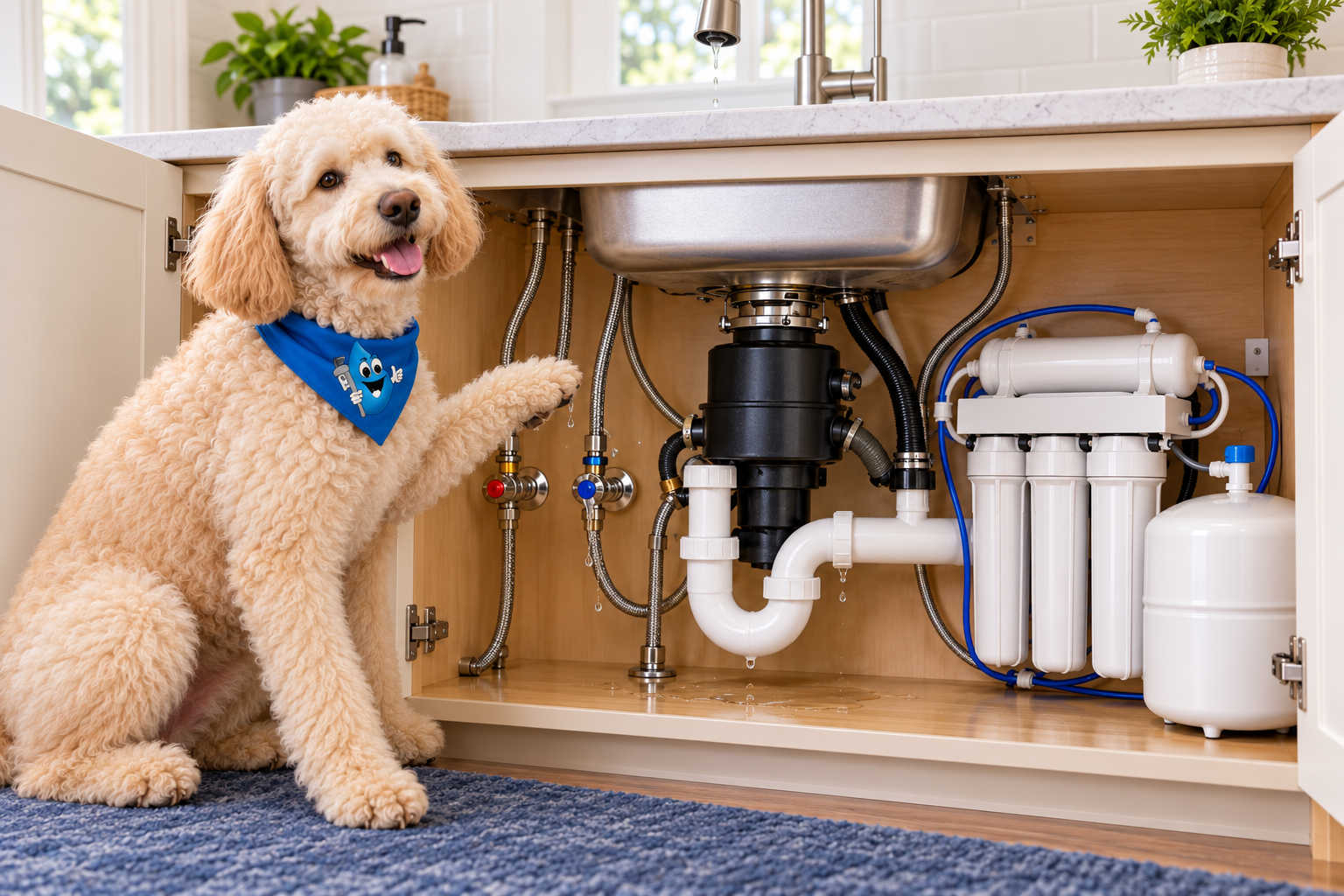
Under a kitchen or bathroom sink, several systems can share one small cabinet. Water may come from the faucet or its hot/cold supply connections, the drain and trap, a garbage disposal or dishwasher connection where present, or an under-sink drinking-water system such as reverse osmosis. Water can also travel along tubing or the underside of the sink before dripping somewhere that makes the source look misleading.
Faucet, shutoff or supply connection
If moisture appears around the faucet lines, angle stops or visible supply fittings, the problem usually belongs on the fixture/plumbing repair path. Do not keep tightening an unfamiliar fitting just because it looks wet; water may be tracking from above.
Drain, trap or disposal area
If the cabinet stays dry while the faucet is running but gets wet as the sink drains, inspect the visible drain path without disassembling it. A loose or failed drain connection, disposal mounting area, discharge connection or dishwasher inlet can all put water into the cabinet.
Reverse osmosis equipment
If the wet point is clearly on an RO housing, fitting, tube, tank connection or RO faucet line, use the RO service and repair path. This guide does not duplicate model-specific RO troubleshooting.
Source still unclear
If the cabinet is wet but you cannot confidently identify the source, leak detection is a better next step than replacing parts at random.
Observe when the water appears
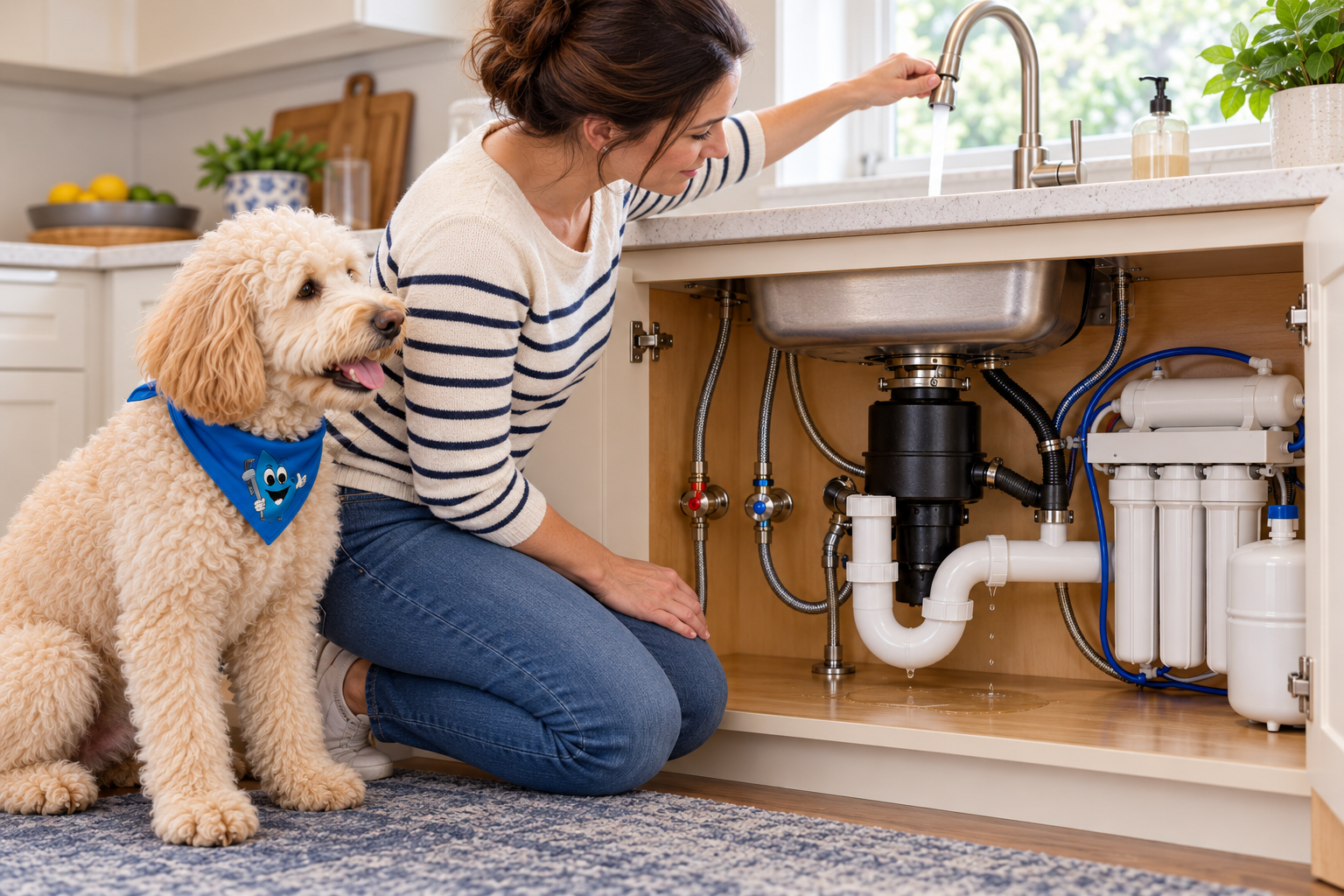
A safe observation can narrow the service path. Wipe up old moisture, place a dry towel or paper where you can see new drops, and watch the accessible areas during normal operation. The goal is not to diagnose the failed component yourself; it is to notice a repeatable pattern you can describe accurately.
If water appears while the faucet is running
Look at the faucet body from above and the visible hot/cold supply lines below. EPA WaterSense specifically recommends looking under sinks for leaks at pipe connections, puddling or water spots. A wet connection is a clue, not automatic proof that the connection itself is defective.
If water appears mainly while the sink is draining
The drain side deserves more attention. Depending on the sink, that can include the basket/strainer area, P-trap, slip-joint connections, disposal mounting and discharge plumbing, or a dishwasher drain connection. InSinkErator’s own leak guide separates those locations because water from one point can run down the disposal and appear to come from another.
If water appears during dishwasher operation
If a dishwasher is connected to the sink or disposal, the timing can justify checking the visible dishwasher drain hose and connection area. Do not assume the dishwasher is the cause just because the cabinet becomes wet during a cycle; supply plumbing, the sink/disposal connection, or another nearby path may still be involved.
If water appears continuously
Continuous moisture can point toward a pressurized supply-side leak, an RO feed/tubing issue, stored water escaping from equipment, or another source that is not tied to sink drainage. If you cannot identify and safely isolate the source, stop the experiment and call for service.
What should I do if the leak is active?
If water is actively escaping, use the smallest known, working shutoff that safely controls the problem. For a clearly isolated sink supply leak, that may be a fixture shutoff. If the correct local shutoff is unknown, will not operate normally, or does not stop the water, use the main water shutoff guide rather than forcing a stuck valve.
- Move stored items out of the cabinet if you can do so without entering a wet electrical hazard.
- Use towels or a shallow pan only for minor, safely accessible water; do not delay service for water that is spreading.
- Do not force a corroded or unfamiliar valve.
- If water is uncontrolled or creating immediate property-damage risk, use the emergency plumbing path or call Water Fixers at 805-928-6444.
Be careful when electricity is involved
A disposal, dishwasher connection, outlet or other powered equipment can put electricity close to an under-sink leak. Electrical Safety Foundation International guidance warns against using electrical appliances that have gotten wet and recommends qualified evaluation of water-damaged electrical equipment. Do not reach into standing water to unplug equipment, handle a breaker with wet hands, or keep operating equipment that has been exposed to water.
Which Water Fixers service should I choose?
Use the most specific path that matches what you can actually see:
- Visible faucet, shutoff, supply or drain connection: Fixture Installation & Repair or Plumbing Services.
- RO housing, tubing, fitting, tank or RO faucet connection: Reverse Osmosis Service & Repair.
- Water is present but the source is still not known: Leak Detection.
- Water is actively uncontrolled or cannot be safely isolated: Emergency Plumber or call 805-928-6444.
Quick questions homeowners ask
Does water that appears only while draining prove the P-trap is leaking?
No. It makes the drain side more relevant, but water can travel from a sink flange, disposal mount, dishwasher connection or another nearby joint before it drips into the cabinet.
Should I tighten every wet fitting?
No. Different fittings seal in different ways, and over-tightening can damage some connections. Delta, for example, cautions against over-tightening faucet supply connections. Identify the actual source and follow the manufacturer instructions for that component.
What if I have an RO system under the sink?
First determine whether the wet area is actually on the RO equipment or its tubing. If it is, use Water Fixers’ RO service path. If the source is elsewhere—or still unknown—keep it on the plumbing or leak-detection path.
Can I keep using the sink if the leak is small?
If using the faucet or drain reliably makes new water appear, continued use can make the damage worse. Stop using the activity that reproduces the leak until the source is identified and repaired.
- EPA WaterSense — Home Maintenance
- EPA WaterSense — Fix a Leak Week
- InSinkErator — Garbage Disposal Leaking
- Delta Faucet — Kitchen Faucet Installation & Leak Check
- Electrical Safety Foundation International — Water-Damaged Electrical Equipment
Manufacturer instructions vary by model. External links are provided as supporting references, not as a substitute for the instructions for the equipment installed in your home.