






Tips From Harley • Vacation plumbing checklist
What Plumbing Should I Check Before Leaving Home for Vacation?
Before you lock the door, give the plumbing a calm once-over. A few visible checks can catch small leaks, questionable hoses, or a shutoff problem while you are still home—and help you decide whether monitoring or automatic shutoff protection makes sense for the property.
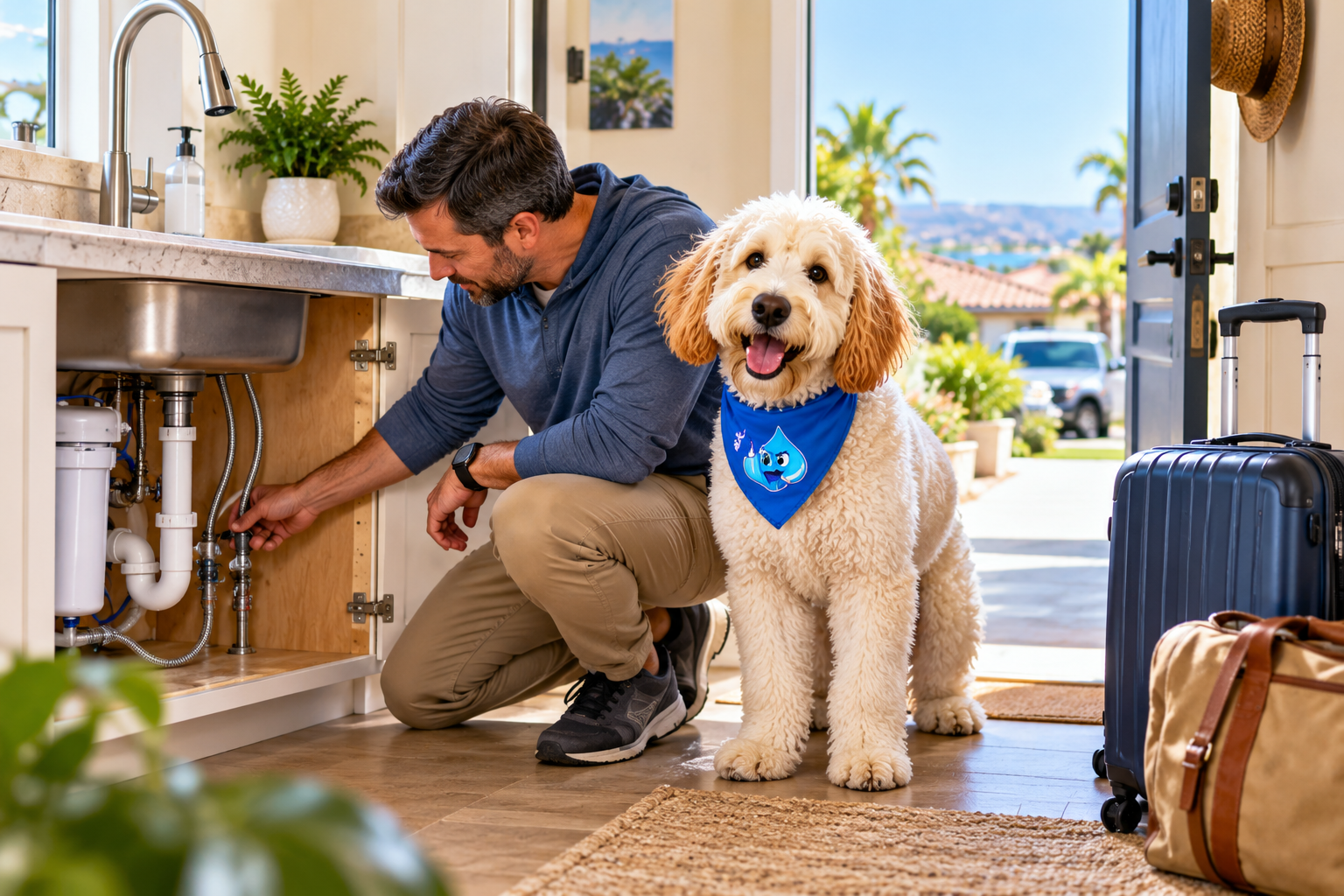
Harley’s before-you-lock-the-door plumbing checklist
The best vacation check is simple enough to finish before you leave and specific enough to catch something useful. Walk the house once while the plumbing is still in normal operation.
Look for visible leaks and fresh moisture
Check under sinks, around toilets, near the water heater, around exposed valves, and where appliances connect to water. New dampness, corrosion, staining, or a drip that keeps returning deserves attention before the house is left unattended. If the source is unclear, use the Water Fixers leak-detection path instead of guessing.
Inspect accessible supply hoses and connections
Give washing-machine, dishwasher, refrigerator/ice-maker, toilet, and faucet supply connections a visual check where they are safely accessible. The Insurance Institute for Business & Home Safety notes that supply-hose fittings and gaskets can degrade over time and recommends replacing aging washing-machine and dishwasher supply hoses rather than waiting for failure.
Know the shutoffs you may actually need
Know where the main water shutoff is and which local valves serve fixtures or appliances. If a valve is corroded, leaking, hidden, or difficult to operate normally, do not wait until departure morning to force it. See Water Fixers’ main shutoff guide or shutoff valve service.
Check monitoring, alerts, batteries, and connectivity
If you rely on a smart water monitor, point leak sensors, or an automatic shutoff device, confirm that the device is powered, connected, and configured the way you expect. An alert-only monitor and an automatic shutoff are not the same protection.
Leave an emergency contact and access plan
Make sure a trusted local person can reach the property if an alert comes in. Save Water Fixers at 805-928-6444 and keep the contact page handy. A notification is much more useful when someone can safely verify what is happening.
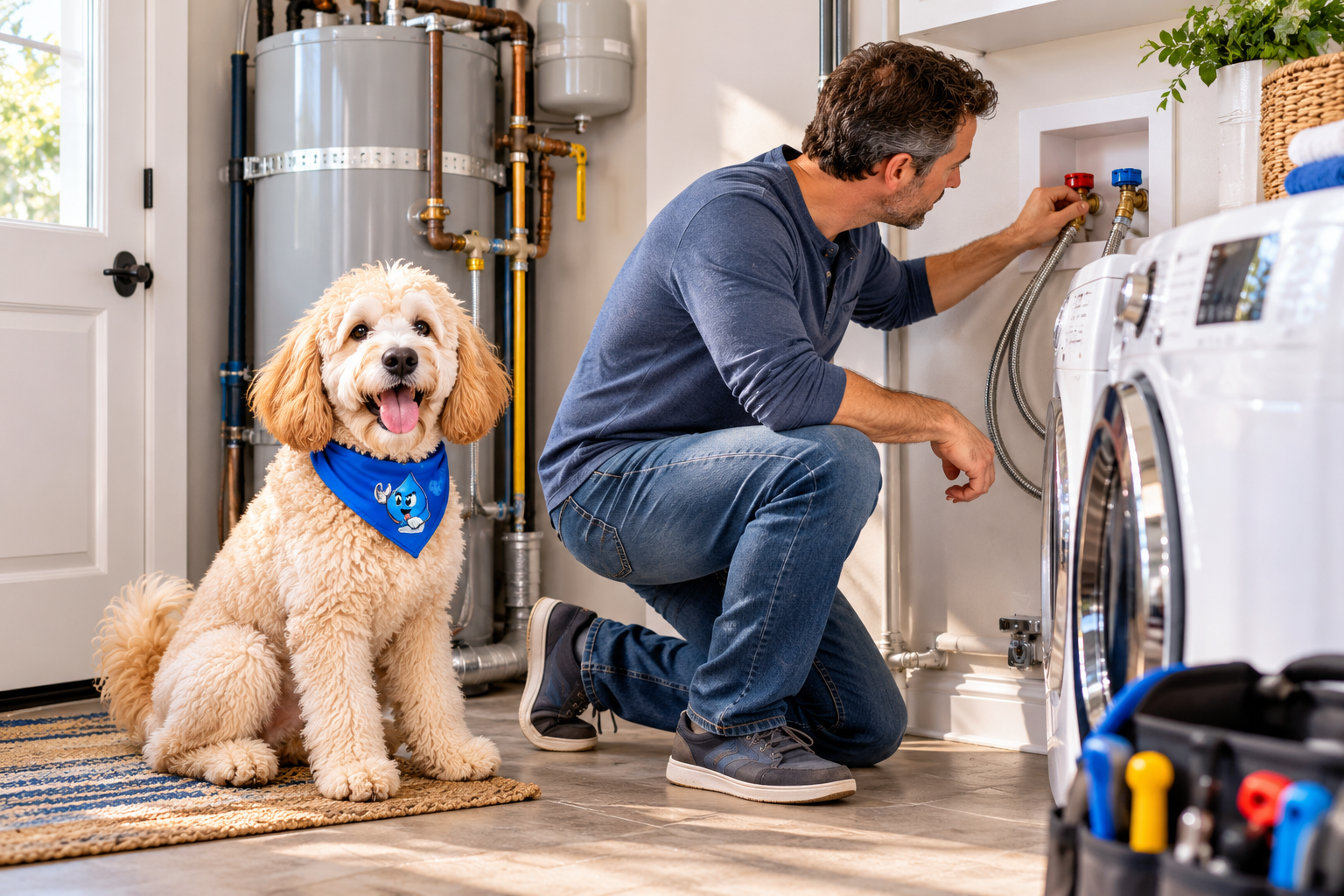
Should I shut off the main water before vacation?
Sometimes shutting off domestic water is a reasonable part of a travel plan, but it is not a universal rule. Before closing the main, know what that valve feeds. Some homes have irrigation, fire sprinklers, water treatment, recirculation, shared piping, pumps, or other equipment that may depend on the same supply or require a specific shutdown procedure.
Why blanket advice can be wrong
The U.S. Fire Administration notes that home fire sprinklers can be connected to the home water supply, and NFPA guidance discusses combined domestic/fire-sprinkler service arrangements. NFPA’s recent sprinkler research also identifies systems being shut off as a leading reason sprinklers fail to operate. If your domestic shutoff also affects fire protection—or you are not sure—do not close it casually.
Irrigation and other scheduled water use
Irrigation may have its own valve and controller, or it may share part of the domestic supply. If watering must continue while you are away, understand which valve serves it and how your smart shutoff handles scheduled irrigation. Moen, for example, documents special settings/manual overrides for expected irrigation use in Away mode.
What about the water heater?
A water heater should not be treated with one generic “off” instruction either. The correct setting depends on the model, fuel type, length of the trip, freeze risk, plumbing configuration, and manufacturer requirements. Some modern heaters provide a Vacation or Away setting. Rheem, for example, currently advises using a lower or vacation setting for some trips and following model-specific instructions for longer absences.
If the heater has been unreliable, leaking, making unusual sounds, or is due for service, address that before leaving rather than changing settings as a substitute for repair. Water Fixers’ water-heater maintenance and water-heater service pages are the better next step for equipment questions.
Leak monitoring is not the same as automatic shutoff
Smart water protection comes in several forms, and the differences matter when nobody is home.
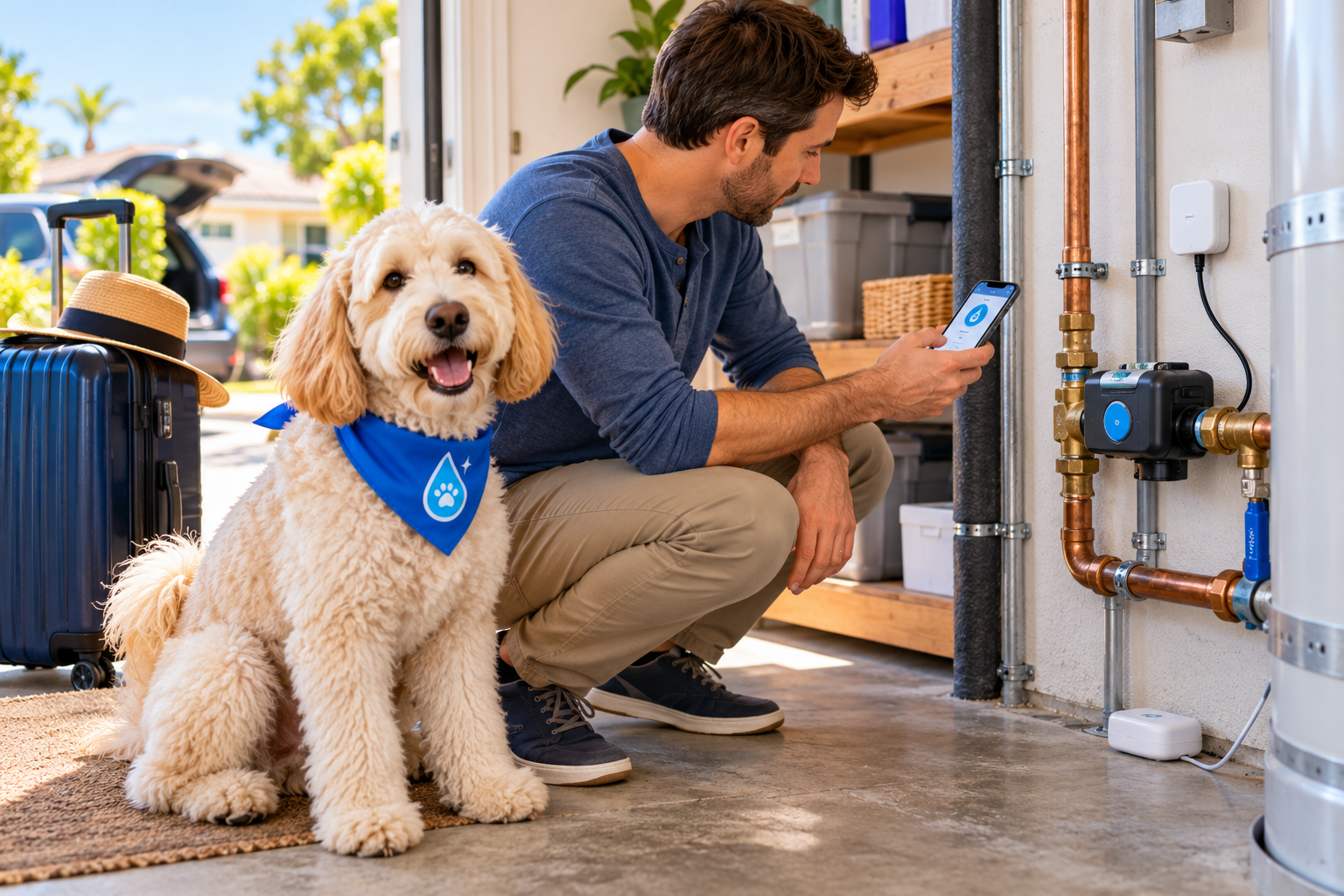
Monitoring and alerting
A monitor may track flow or water use and send notifications when something looks unusual. Point sensors may detect moisture in specific locations. Those tools can give you valuable information, but an alert alone does not physically stop the water. See Water Fixers’ Flume Smart Water Monitor information.
Automatic shutoff
An in-line smart shutoff can monitor water and close the valve when its rules identify a serious leak. Moen distinguishes leak detectors, monitors, and the Flo Shutoff specifically because only the shutoff product can automatically close the water. See Water Fixers’ Moen Flo Smart Water Shutoff page.
Devices also have operating limits and settings. Moen documents, for example, that its Sleep Mode continues monitoring but disables alerts and automatic shutoff, and that irrigation or other unusual water use may need configuration. Battery backup, internet connectivity, sensor placement, learning periods, and user settings can also affect what a system can do. Review your device instructions before depending on it while away.
When should I fix something before I leave?
Schedule service before the trip if you find an active leak, a hose or fitting that looks compromised, a shutoff that does not operate normally, a water heater showing warning signs, unexplained water use, or protection equipment you cannot verify. Preventive work is much easier to manage before departure than from a hotel room.
- Shutoff will not operate or leaks: Shutoff Valve Replacement.
- Unclear moisture or unexplained water use: Leak Detection.
- Interested in alert-only monitoring: Flume Smart Water Monitor.
- Interested in automatic shutoff protection: Moen Flo Smart Water Shutoff.
- Water-heater concern: Water Heater Services.
Quick questions homeowners ask
Should I turn off every fixture shutoff before vacation?
Not as a blanket rule. Old or rarely used valves can leak or fail when disturbed. Operate only valves you understand and that work normally; repair questionable shutoffs before relying on them.
Does a smart water monitor prevent a leak?
No. Monitoring can identify unusual use and send alerts, but it does not necessarily close a valve. Automatic shutoff requires a system designed and configured to do that.
Can I shut off the main if I have fire sprinklers?
Do not assume you can. Residential fire sprinklers may share the home water supply. Identify the system arrangement and follow the fire-sprinkler system’s requirements before closing a valve that could affect it.
Should I put my water heater in Vacation mode?
Use the manufacturer instructions for your exact model. Vacation/Away settings exist on many systems, but the right choice varies by equipment, trip length, freeze risk, and installation.
What is the most useful thing to leave with a house sitter?
The location of accessible shutoffs, your plumber’s contact information, and clear instructions for any monitoring or alert system. Do not ask someone to operate unfamiliar equipment without knowing the correct procedure.
- Insurance Institute for Business & Home Safety — plumbing and supply-hose preparedness guidance
- U.S. Fire Administration — Home Fire Sprinklers
- NFPA — Home Fire Sprinkler Installation
- NFPA — U.S. Experience with Sprinklers
- Rheem — Summer Vacation Tips for Gas Water Heaters
- Moen — Flo Smart Water Monitor & Shutoff
- Moen Solutions — Using Flo at Vacation, Second, or Rental Homes
Equipment and plumbing arrangements vary. Manufacturer instructions and the actual system installed at the property control over general travel checklists.