Water Fixers provides routine maintenance for conventional storage-tank water heaters across California’s Central Coast. Depending on the installed model and condition, service can include tank flushing, inspection of accessible connections and shutoffs, review of safety and discharge components, and other manufacturer-specified maintenance. Active leaks, no-hot-water complaints or safety concerns should be diagnosed before routine flushing.
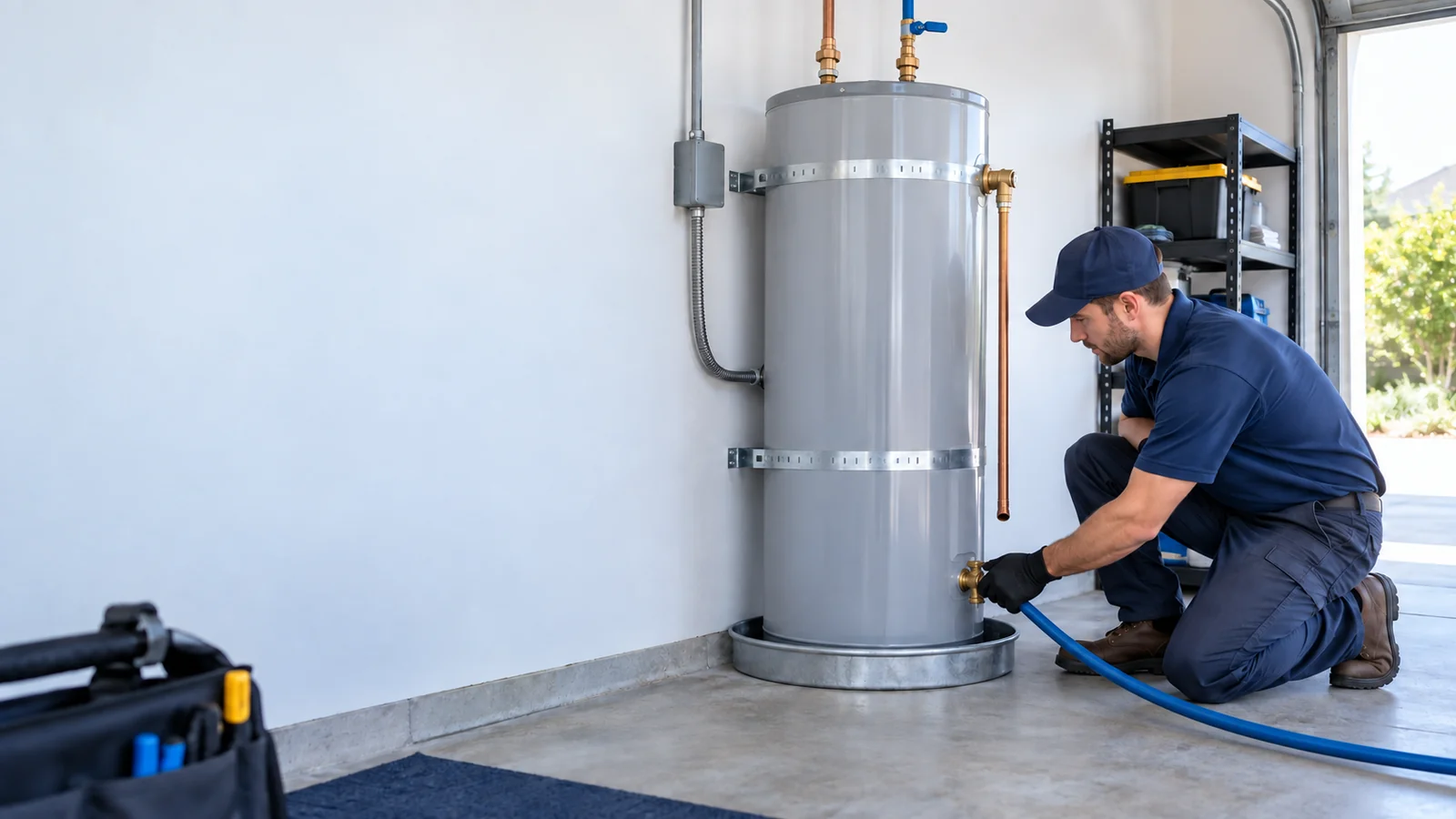
Good maintenance is preventive care for a heater that is otherwise serviceable. The goal is to remove or identify routine service issues, document the condition of accessible components and catch signs that the visit should move from maintenance into repair.
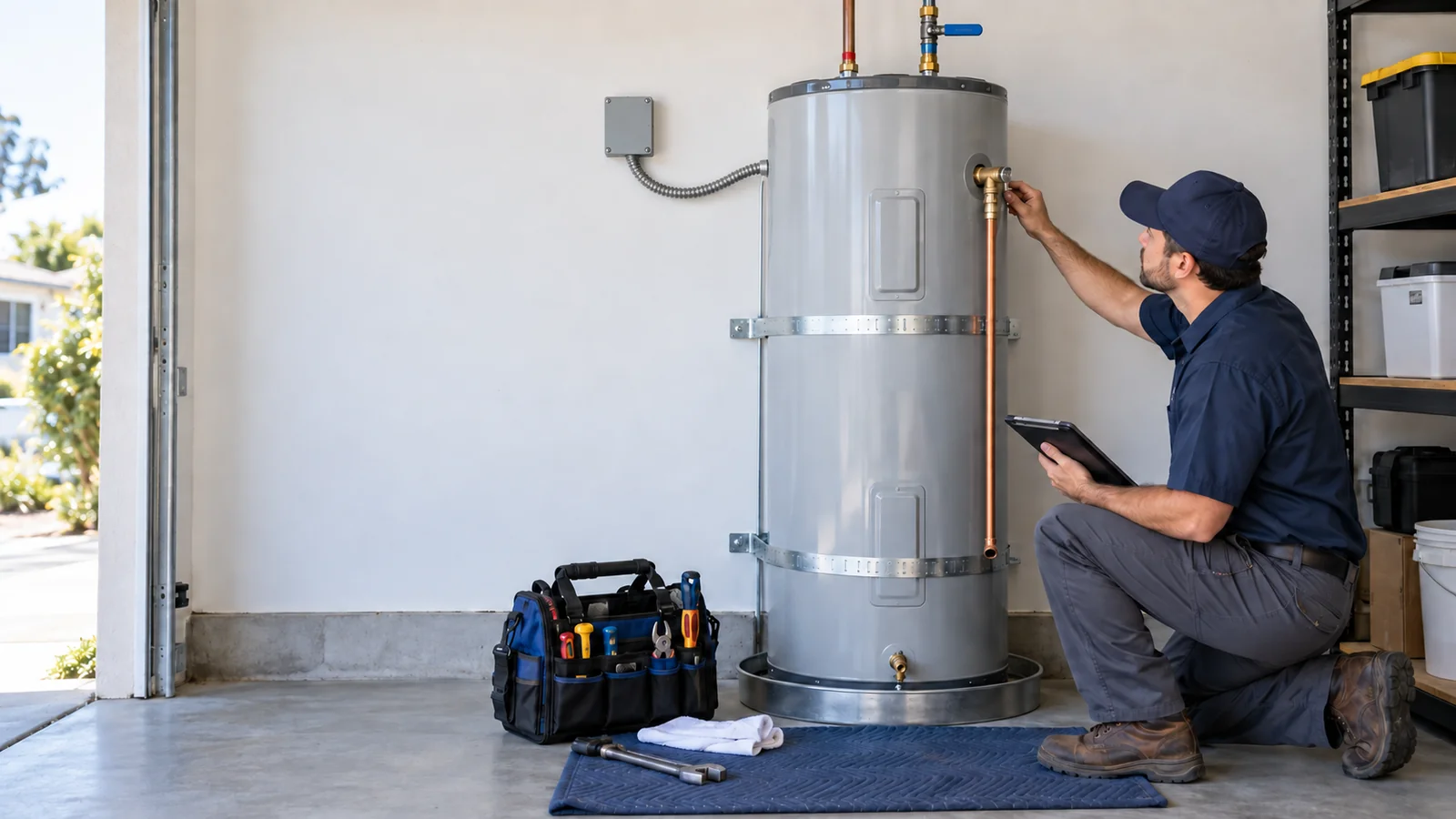
Many storage-tank manufacturers include periodic draining or flushing in their maintenance instructions to help manage sediment. The appropriate interval and procedure depend on the exact heater, tank condition, service history and manufacturer guidance. A routine flush should not be forced when the installed equipment or drain components make that approach inappropriate.
A professional maintenance visit can review the cold-water shutoff, visible piping and fittings, drain area, temperature-and-pressure relief valve and discharge path, signs of moisture or corrosion, and other serviceable items that apply to the installed heater. Gas, electrical, venting and combustion-related checks are handled according to the equipment and should not be treated as homeowner troubleshooting steps.
Many steel storage tanks use a sacrificial anode rod to help protect the tank from internal corrosion. Whether it is accessible, when it should be inspected and when replacement is appropriate depends on the manufacturer and the actual heater. Anode condition is one more reason model-specific maintenance matters.
If a heater is leaking, not producing hot water, repeatedly shutting down or showing another active operating problem, diagnosis should come before a maintenance-only visit. Flushing is useful only when it matches the actual service need; it does not repair failed controls, heating components, leaking tanks, unsafe venting or other unrelated faults.
No hot water, active or spreading leakage, repeated shutdowns, a relief valve that is discharging unexpectedly, severe visible corrosion, unusual combustion symptoms, gas odor or an electrical hazard should not be treated as routine flushing. The next step should match the actual symptom and safety condition.
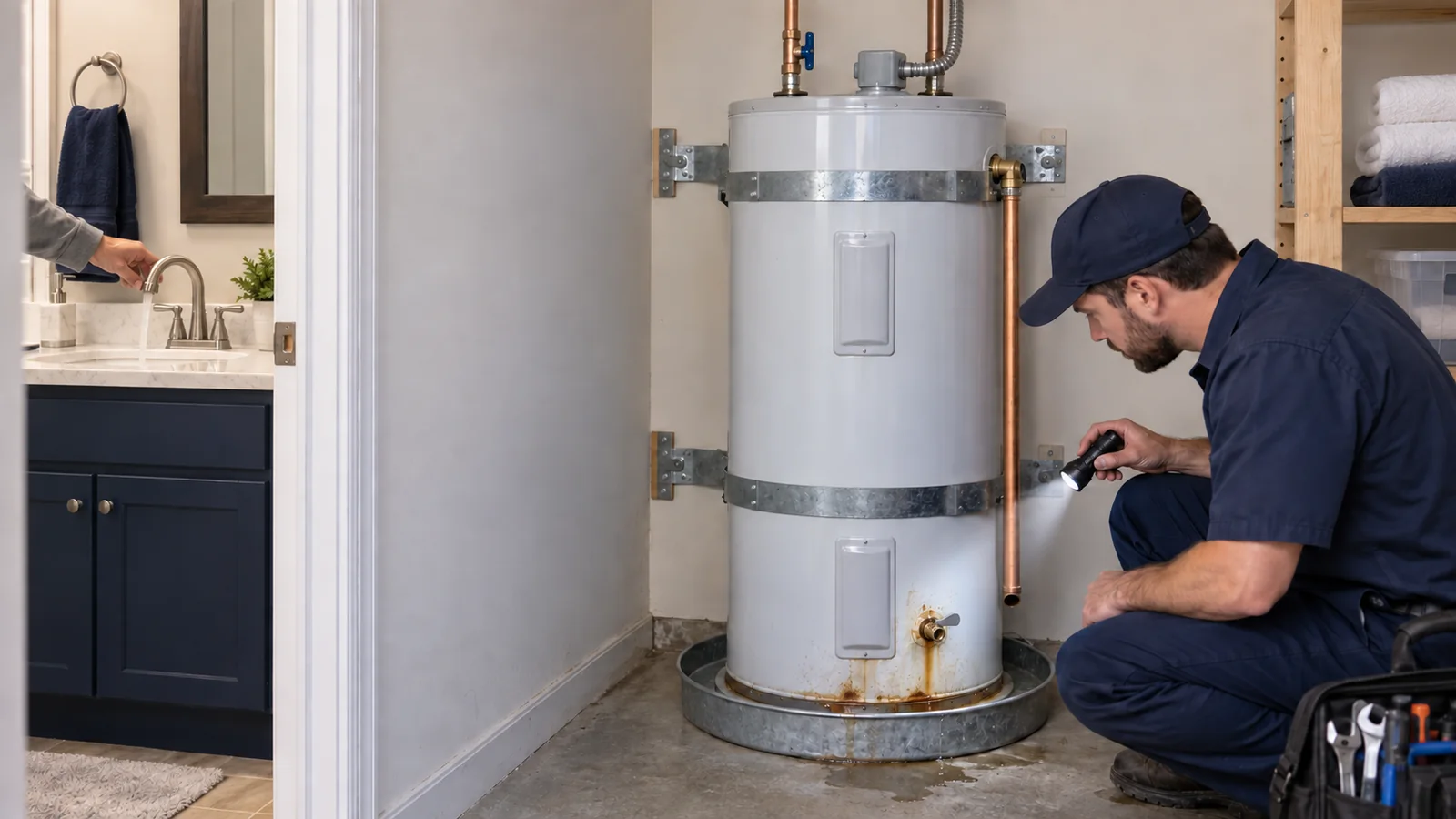
A working heater that is due for routine care belongs on the maintenance path. A serviceable failed component belongs on repair. A leaking tank, repeated failures, difficult parts support or an installation that no longer makes practical sense may move the conversation toward replacement.
The decision should follow the heater’s present condition, service history and installation—not a preset age cutoff or a promise that one maintenance task will extend every tank by the same amount.
If replacement becomes the practical next step, use the Water Heater Installation & Replacement page for sizing, equipment choices, utilities and project planning.
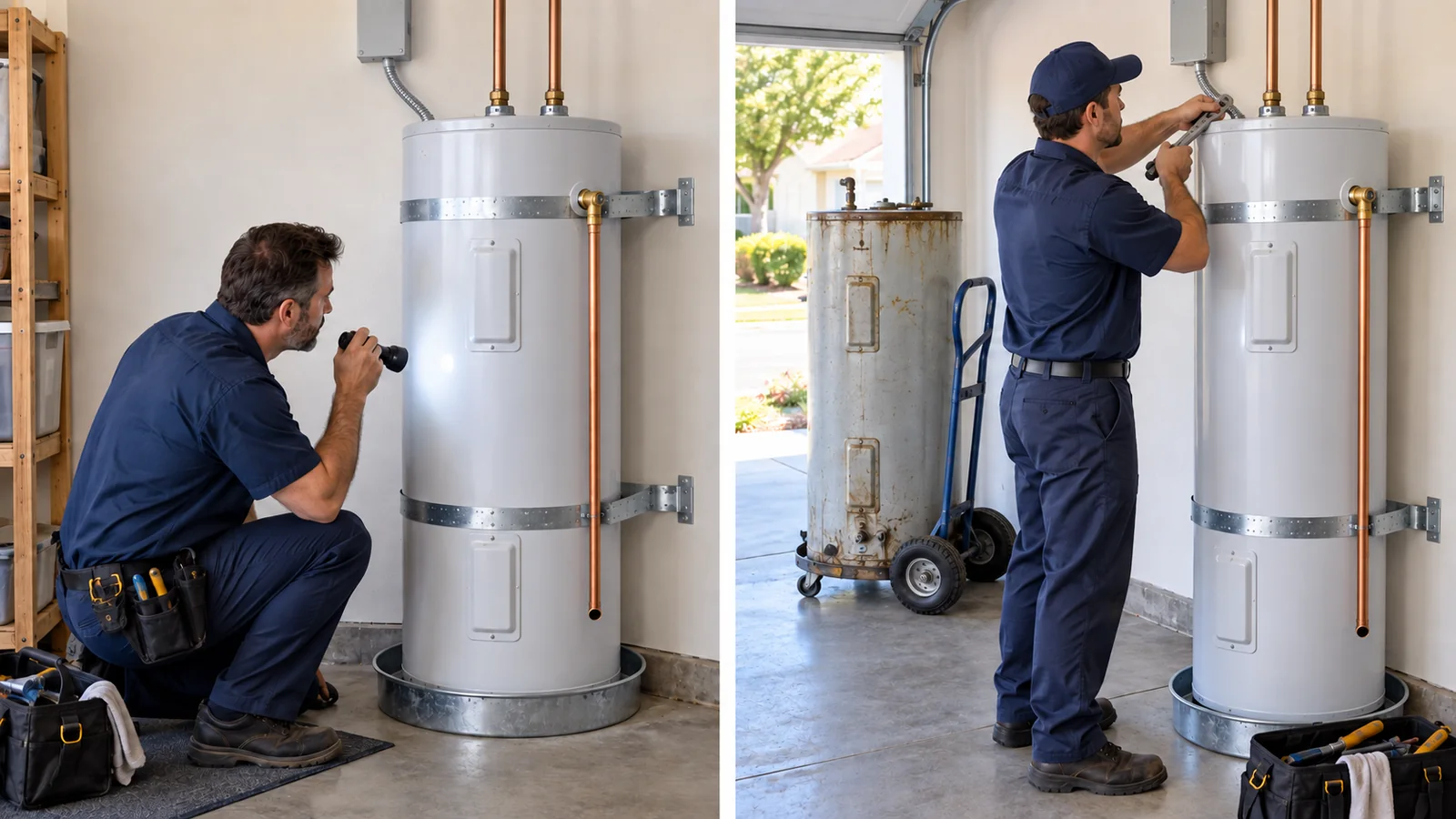
The maintenance plan should match the equipment actually installed, the manufacturer instructions available for that model and what the heater is doing today.
Conventional gas and electric storage tanks, heat-pump water heaters and tankless systems do not share one universal checklist. Model and serial information, fuel or power type, installation details and manufacturer guidance help determine which maintenance items apply.
Visible leakage, no-hot-water symptoms, recurring faults, abnormal noise or other active complaints can move the visit from preventive maintenance into diagnosis or repair before routine service continues.
Service findings such as recurring mineral scale or sediment can justify a separate water-quality conversation, but they do not prove a universal local-water condition. Testing and the actual water source should guide any treatment decision.
Routine maintenance is not the right path for an active hazard. When water, gas, electrical conditions or another immediate safety concern is present, address that condition first.
If water is actively escaping from the heater, nearby piping or a failed valve and is threatening the property, use the emergency-plumbing route rather than waiting for routine maintenance.
If you smell gas, suspect a combustion problem or see water creating an electrical hazard, leave the unsafe area and contact the appropriate utility or emergency service. Do not attempt routine maintenance or troubleshooting in the affected area.
For an otherwise stable conventional tank, preventive service can focus on manufacturer-appropriate flushing, accessible inspection and the service items that fit that heater. Tell Water Fixers about any symptoms before the visit so maintenance and repair can be separated correctly.
If the heater is simply due for routine care and there is no active hazard or operating failure, schedule maintenance rather than waiting for a preventable service issue to become a repair call.
Choose the service that matches the installed system and the actual need. Conventional tank repair, tankless maintenance, heat-pump equipment and water-quality follow-up each have their own deeper service path.
If maintenance uncovers an operating failure, use Water Heater Repair for diagnosis of conventional storage-tank problems.
For tankless descaling, inlet-screen cleaning and other tankless-specific routine service, use Tankless Water Heater Maintenance.
If service findings support a water-quality question, use Water Testing before assuming a softener or filtration system is automatically needed.
Heat-pump equipment has its own maintenance considerations, including air-side and condensate items on applicable models; see Heat Pump Water Heaters. For the complete residential family, return to Water Heater Services.
Tell Water Fixers what type of water heater you have, the model if available, when it was last serviced if known, and whether there are any active symptoms. That information helps separate preventive maintenance from repair before the appointment is scheduled.
Tankless systems should use the dedicated Tankless Water Heater Maintenance page for descaling and tankless-specific service.
CALL NOW! Se Habla Español!