
HEAT PUMP WATER HEATERS • CENTRAL COAST
Heat-pump water heaters use electricity to move heat from surrounding air into stored water instead of creating all of the heat with resistance elements or combustion. For a Central Coast replacement, the heater itself is only part of the decision: the room, available air, electrical supply, condensate path, hot-water demand, service access and permit path all matter.
Water Fixers can evaluate the plumbing side of the project and help compare a heat-pump option with conventional storage and tankless alternatives without assuming one system type fits every home.
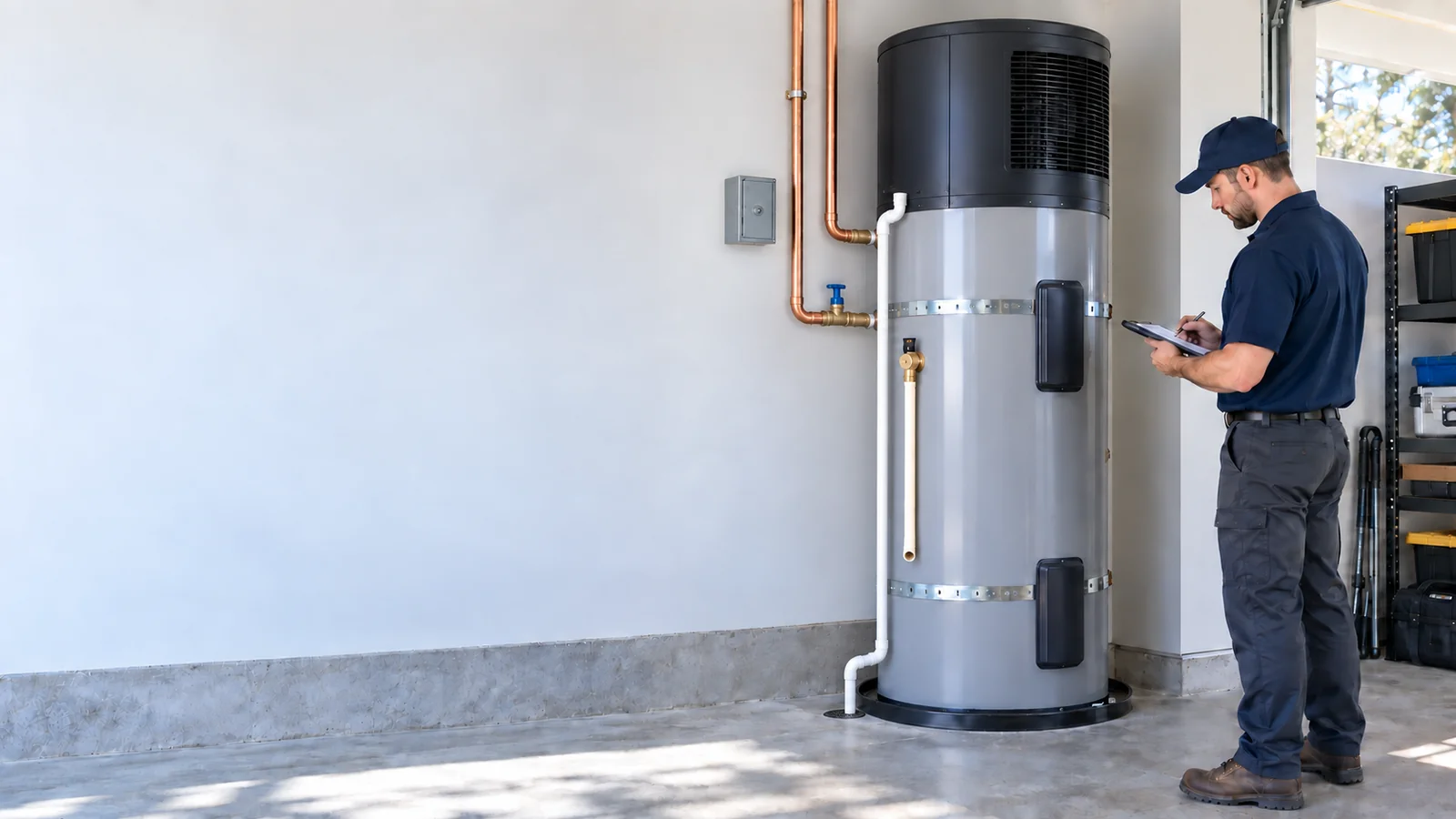
A heat-pump model is still a storage water heater, but it also behaves like a small air-source appliance. The compressor and fan need suitable air, the unit can produce condensate, and the installation may change the electrical scope compared with an existing gas heater or another water-heater type.
Integrated models draw heat from surrounding air. ENERGY STAR guidance notes that many manufacturers call for roughly 450–700 cubic feet of free air unless an approved louvered or ducted arrangement is used. The selected model’s installation manual controls the actual air-volume, clearance, temperature and ducting requirements.
Heat-pump operation removes moisture from the air and can create condensate. The installation needs a reliable drainage path or an approved condensate-pump arrangement where gravity drainage is not practical. Drainage should be planned before the heater is set in place.
Replacing a gas or other water-heater type can change the electrical scope. Confirm the selected model’s voltage, circuit and connection requirements and whether the existing panel and branch circuit are suitable. When electrical work is needed, the plumbing and electrical scopes should be coordinated before equipment is ordered.
INSTALLATION CONSIDERATIONS
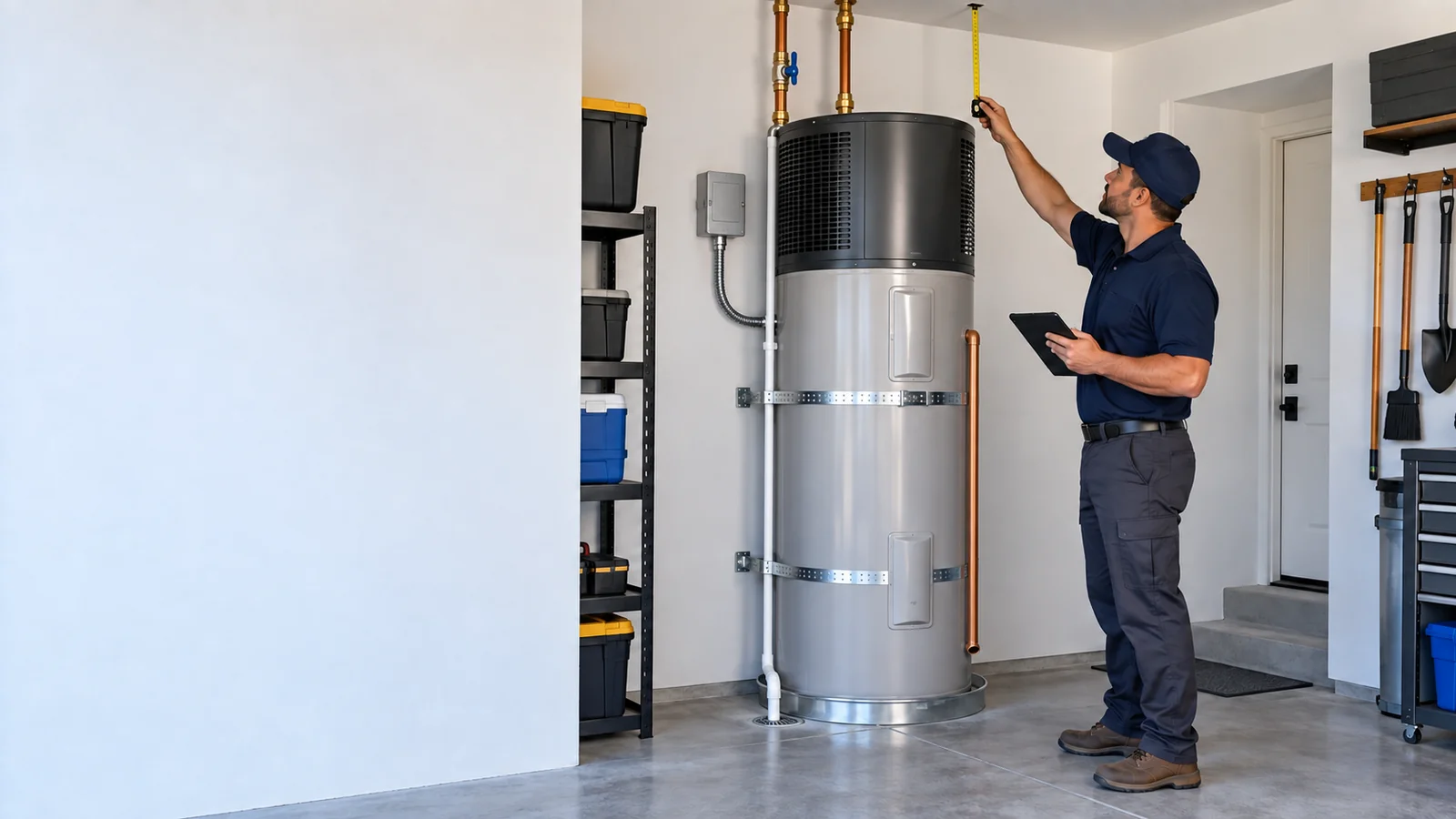
ENERGY STAR installation guidance emphasizes free air, service access, condensate management, temperature conditions and model-specific instructions. California’s current Energy Code also includes ventilation requirements for consumer integrated heat-pump water heaters and recognizes manufacturer-provided installation methods.
The practical takeaway is simple: choose the equipment after the actual location has been checked. A garage or utility room can be a good fit when the model requirements are met; a small closet may need approved louvers or ducting. Sound, filter access, surrounding temperature and future service space should also be considered before the final layout is accepted.
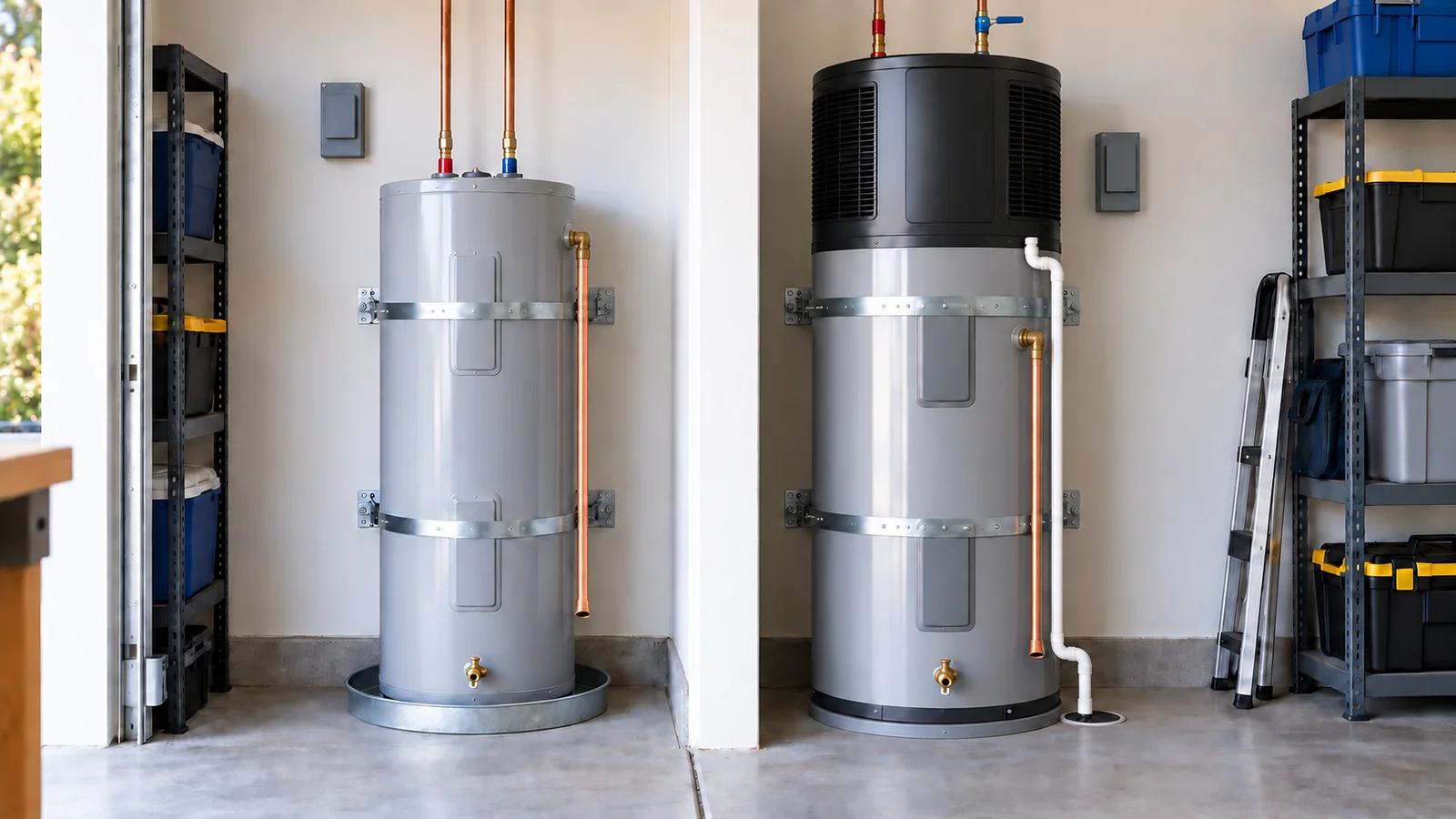
HEAT PUMP VS. STANDARD STORAGE TANK
A conventional storage heater may use gas combustion or electric resistance to heat water directly. An integrated heat-pump water heater uses a compressor and fan to move heat from surrounding air into the tank and commonly includes electric resistance backup for higher-demand or recovery conditions.
Heat-pump models can use substantially less electricity than standard electric-resistance tanks, but the best replacement choice also depends on hot-water demand, first-hour capacity, recovery behavior, installation space, sound, electrical readiness, condensate, service access, purchase and installation scope, and the household’s priorities. Neither system should be selected from gallon size alone.
California’s 2025 Building Energy Efficiency Standards took effect January 1, 2026 for permit applications covered by the new code. The standards expand heat-pump use and electric-readiness, but that does not mean every existing water-heater replacement has the same requirement. Building type, project scope, permit date, jurisdiction and selected equipment still matter.
Heat-pump projects can involve plumbing, electrical, condensate, ventilation and permit details that vary by property. Confirm the applicable jurisdiction and the selected manufacturer’s current instructions rather than relying on a generalized statewide shortcut.
Rebates, tax credits and utility incentives can also change by program, equipment, funding, date and customer eligibility. Treat any incentive as something to verify at the time of purchase, not as a guaranteed fixed discount.
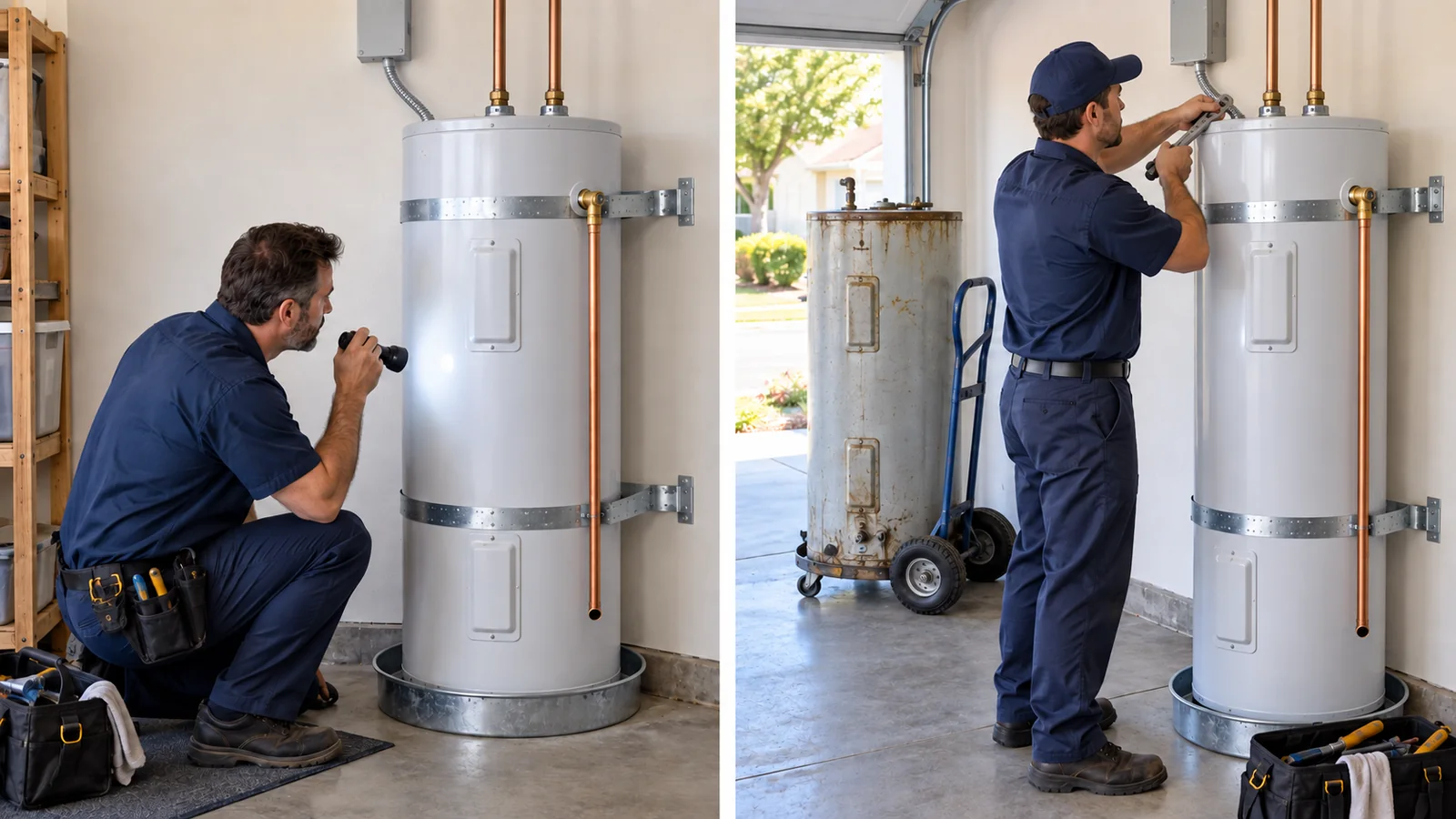
WHAT TO EVALUATE BEFORE CHOOSING A HEAT-PUMP UNIT
Before selecting a model, check the conditions that affect comfort, performance and installation scope. The best unit is the one that matches both the household’s hot-water demand and the space where it must operate.
Confirm the model’s required room volume, approved louver or duct options when applicable, ambient-temperature range, clearances, filter access and service space. Many units are taller than standard tanks, and fan/compressor sound can matter when the heater is near living or sleeping areas.
Confirm the selected unit’s electrical requirements, the available branch circuit and panel conditions, and a practical condensate path. A gas-to-electric conversion can add electrical work even when the water piping location is otherwise usable.
Compare tank capacity and first-hour performance with the household’s actual demand. Heat-pump recovery can differ from a gas or resistance tank, and operating modes or backup elements vary by model. Capacity should come from demand and manufacturer performance data rather than assuming one tank size fits every household.
A heat-pump upgrade is a planned project. Active water, suspected gas leakage or water around energized equipment changes the priority and should be handled before equipment-selection work continues.
If water is actively escaping or spreading, use emergency plumbing rather than waiting for an upgrade appointment. If it can be done safely, keep people away from standing water and energized equipment. Heat-pump planning can resume after the immediate leak is controlled.
If you smell gas around existing equipment, leave the area and contact the gas utility or emergency services from a safe location. Do not operate switches, create a flame or use a routine web guide to troubleshoot a suspected gas hazard.
If the existing system is stable, a scheduled project review can compare heat pump, conventional storage and tankless options. If the heater simply has an operating problem rather than a planned replacement, start with the Water Heater Services hub so the symptom can be routed correctly.
For permit and inspection questions, use the Plumbing Permits guide and confirm the actual property jurisdiction. Permit and electrical requirements can differ by project even when two homes use the same water-heater model.
Choose the next page by project stage. Heat-pump planning stays here; conventional replacement, maintenance, tankless options and local service routing remain on their established Water Fixers pages.
Use Water Heater Installation & Replacement for conventional storage-tank installation, replacement planning and broader conversion scope.
Use Tankless Water Heaters if an on-demand system is also being considered. Tankless and heat pump solve the same hot-water need with very different utility, space and maintenance requirements.
Use Water Heater Maintenance for routine storage-tank service, the Plumbing Permits guide for permit questions, and Service Areas to reach the correct local water-heater page. The project gallery shows examples of Water Fixers work without changing which page owns a specific service.
Current code, equipment instructions and incentive programs can change. Confirm the selected model, permit path and any available incentive before purchase so the final installation is based on the project as it exists now.
Tell Water Fixers what heater is installed now, whether it is leaking or simply due for replacement, where it is located, what electrical service is available if known, and how much hot water the household normally uses. We can review whether a heat-pump option fits the property or whether another water-heater path makes more sense.
Water Fixers serves Santa Maria and communities across California’s Central Coast. For location-specific water-heater routing, use Water Heater Services or Service Areas.
CALL NOW! Se Habla Español!