INSTALLATION • REPLACEMENT • SYSTEM PLANNING
Water Fixers installs and replaces conventional residential water heaters across the Central Coast. A good replacement plan considers hot-water demand, equipment type, utilities, location, access, plumbing connections, venting where applicable, drainage or containment needs, and the permit or inspection path that applies to the actual project.
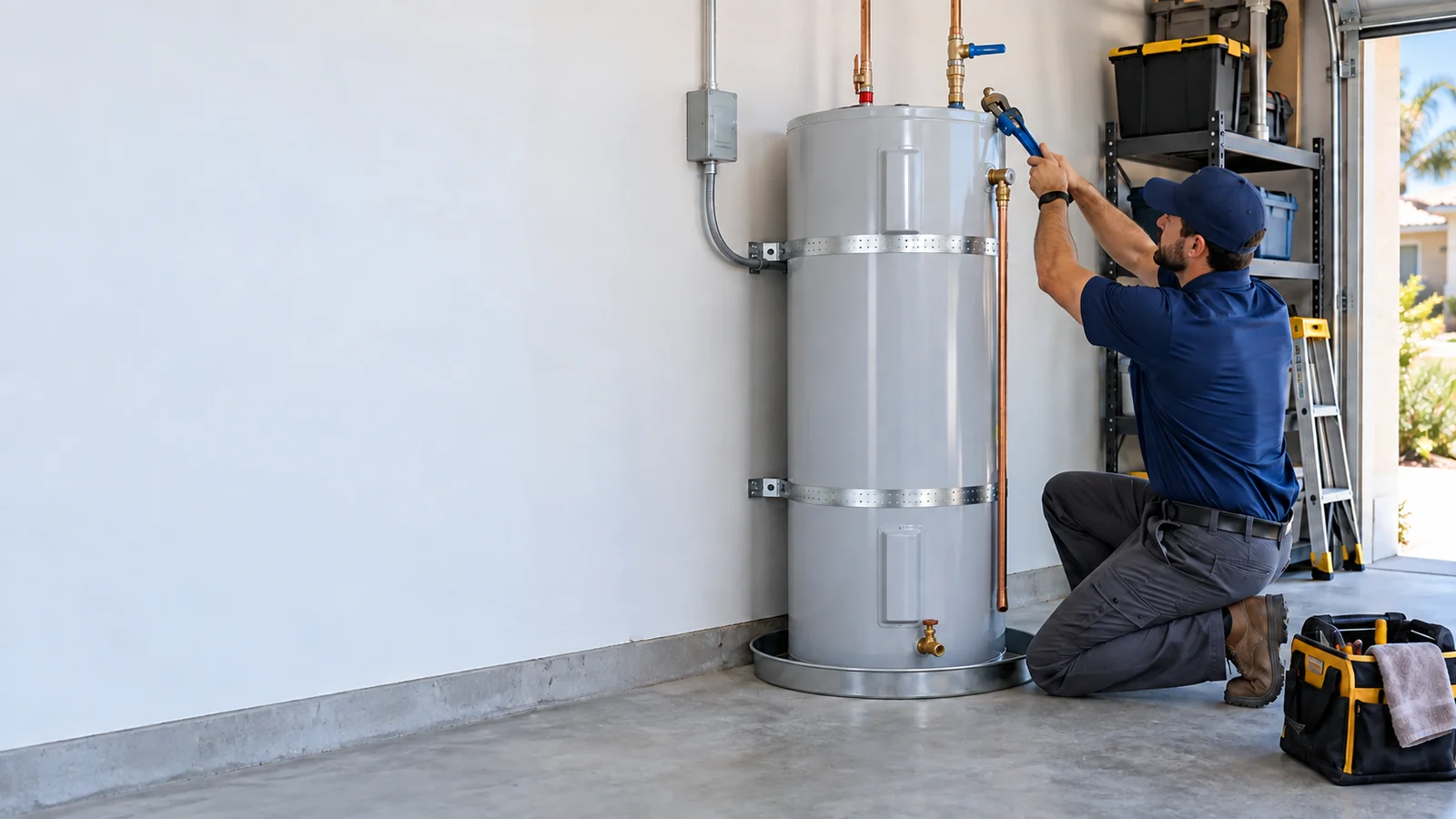
The right replacement depends on what the existing heater does well, what failed, and what the property needs next.
A like-for-like replacement may be straightforward, but sizing, location, utilities, connections and current project requirements still deserve review.
A larger tank, tankless conversion or heat-pump option should be evaluated against actual hot-water demand and installation conditions rather than selected only by capacity label.
Tank-to-tankless projects belong on the dedicated tankless installation page because utility capacity, venting, flow and conversion work can materially change the scope.
INSTALLATION DETAILS MATTER
The equipment must fit the space and connect to the property safely and serviceably. Water, shutoffs, drainage or containment, applicable venting, electrical or gas supply, pressure/expansion conditions where applicable, access and manufacturer requirements can all affect the installation plan.
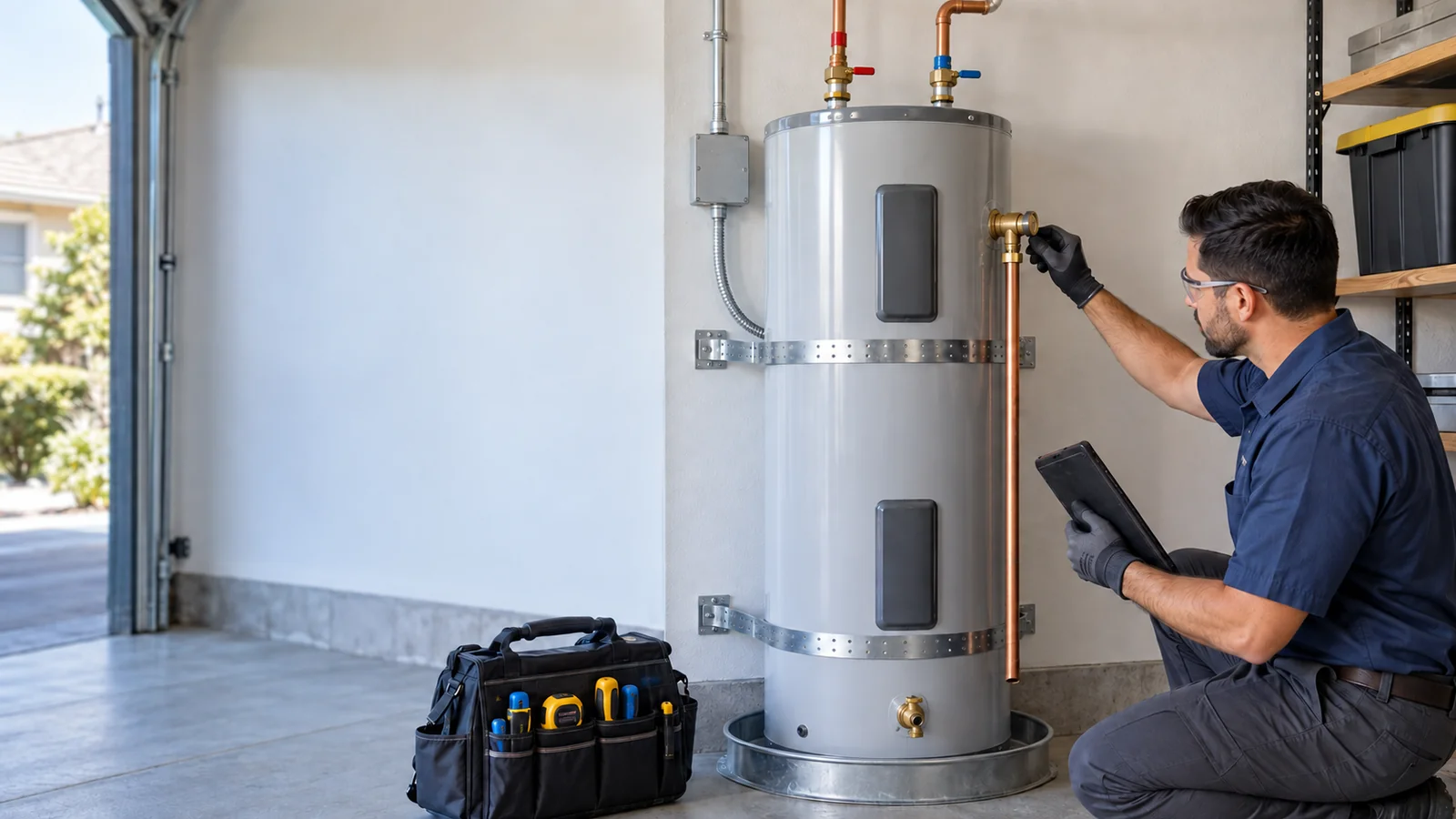
TANK OR TANKLESS?
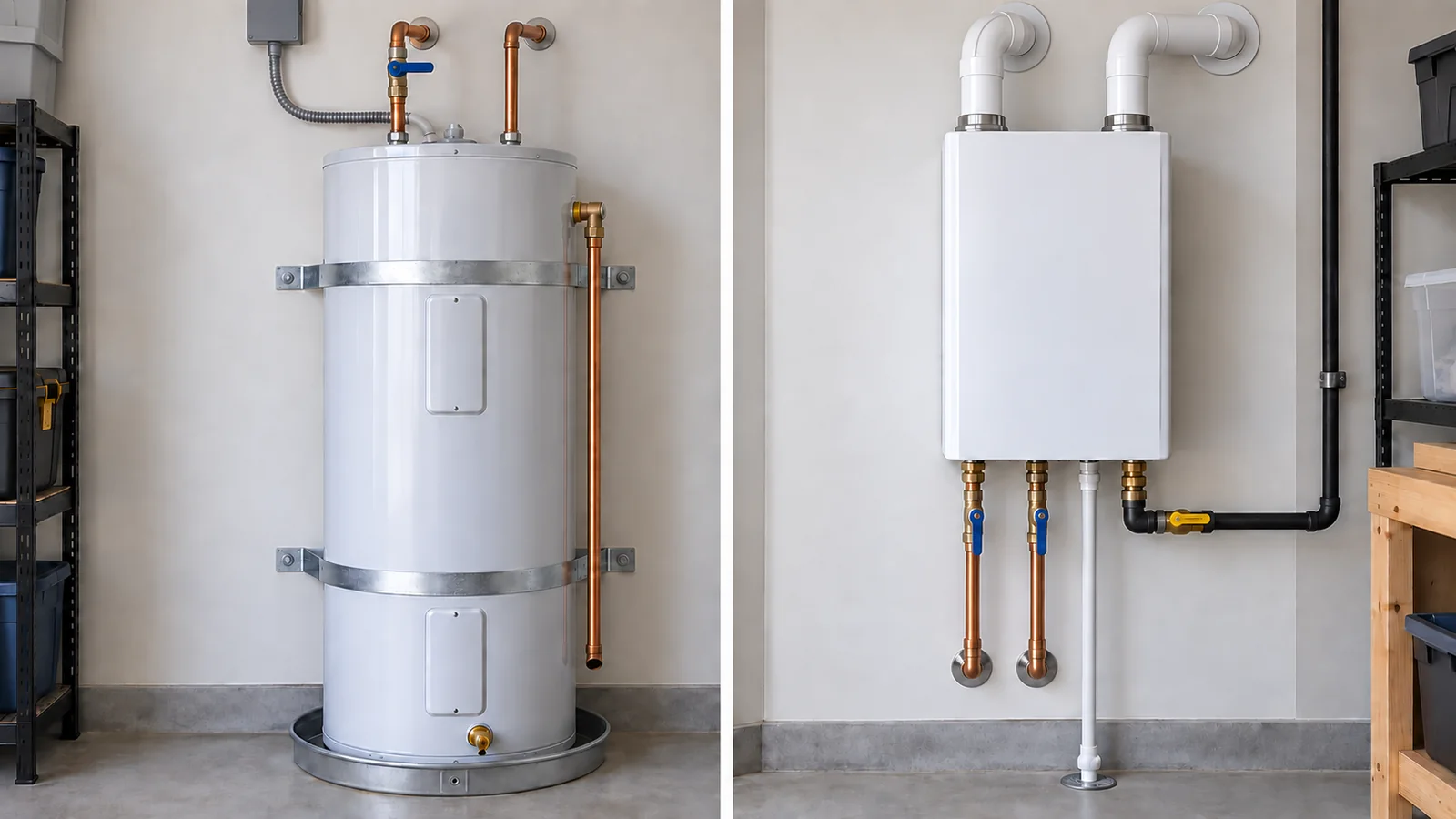
Storage tanks keep hot water ready. Tankless units heat water on demand. The better fit depends on simultaneous hot-water use, available utilities, venting, location, service access, flow requirements, conversion work and maintenance expectations.
Heat-pump water heaters use electricity and move heat from the surrounding air into stored water. They require different planning than a standard gas or electric resistance tank.
Installation can involve air-space, condensate, electrical, location, sound and service-access considerations. Manufacturer instructions and applicable project requirements control the final installation.
Heat-pump systems have their own planning requirements. Use the dedicated heat-pump page for airflow, condensate, electrical, location and service-access considerations.
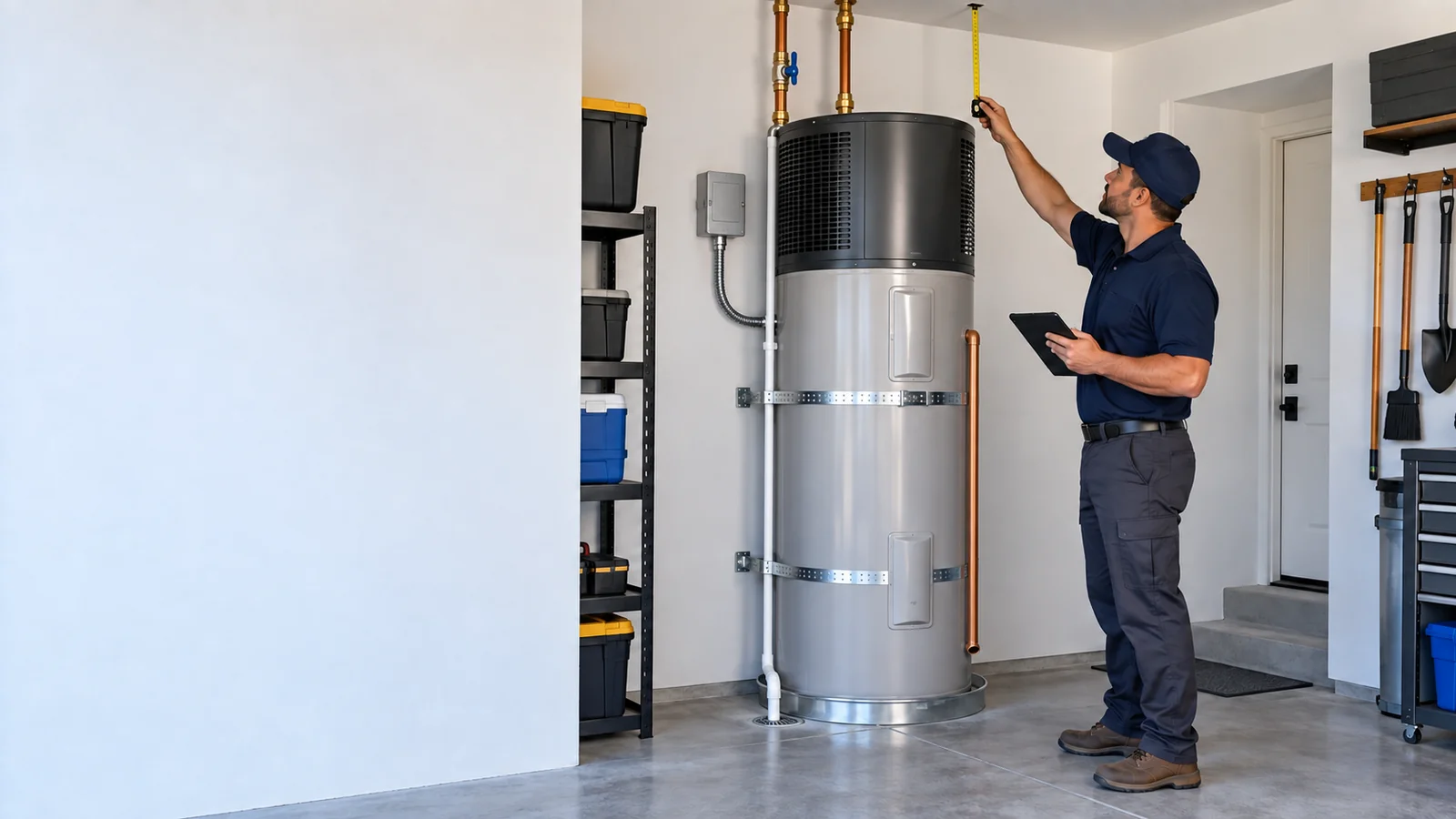
BEFORE A NEW WATER HEATER IS INSTALLED
A replacement goes more smoothly when the practical constraints are identified first.
Household size alone does not define demand. Fixture use, simultaneous loads and the current system’s performance all provide useful context.
Available gas or electrical service, venting where applicable, floor area, clearances, drainage, access and equipment dimensions can affect the practical options.
California’s 2025 Title 24 building standards took effect January 1, 2026. The actual permit and inspection path still depends on the property, jurisdiction and project scope, including any local amendments. Use the Plumbing Permits guide as a starting point and confirm the project with the applicable building department.
Planned replacement and emergency leakage are different service paths.
If water is actively escaping or spreading, use Emergency Plumbing first. Replacement planning comes after the immediate water threat is controlled.
Diagnosis may show that repair is practical. Start with Water Heater Repair when the cause and replacement need have not yet been established.
Leave unsafe areas and contact the appropriate utility or emergency service rather than attempting DIY troubleshooting.
For permit planning, use the Plumbing Permits guide; Water Fixers does not issue permits or promise approval outcomes.
Choose the service that matches the next decision.
If you do not yet know whether replacement is necessary, start with Water Heater Repair.
Use Tankless Water Heater Installation for new tankless systems, replacement units and tank-to-tankless conversion planning.
Use Water Heater Maintenance & Flushing for conventional tank routine service and Tankless Maintenance for tankless descaling/service.
For permit and jurisdiction questions, use Plumbing Permits. For city-specific water-heater service, choose your community from Service Areas.
Tell Water Fixers what is installed now, what problem or upgrade is driving the project, and whether you are considering tank, tankless or heat pump. We can help define the practical next step.
Use the Plumbing Permits guide for jurisdiction and permit-planning resources.
CALL NOW! Se Habla Español!