CONVENTIONAL TANK WATER HEATER SERVICE
Water Fixers repairs conventional storage-tank water heaters across California’s Central Coast. Start with what the heater is doing, whether water is visible, and whether all hot-water fixtures are affected. We evaluate the installed equipment and surrounding plumbing before recommending a repair, maintenance visit or replacement.
38+ years on the Central Coast • CA License #719792 • Se Habla Español
SAFETY FIRST
Many hot-water problems can be scheduled normally. Active water, gas odor or water near electrical equipment changes the priority. Do not use routine troubleshooting when there is an immediate hazard.
If water is escaping or spreading and a familiar shutoff can be used safely, control the water. If it cannot be contained, use Emergency Plumbing.
Keep clear of the affected area and use an urgent service path. Do not reach through water to operate electrical equipment.
Leave the area and contact the gas utility or emergency services as appropriate. Do not continue operating or troubleshooting the heater.
START WITH THE SYMPTOM
A symptom is useful evidence, but it is not proof that a specific thermostat, element, burner, valve or tank component has failed.
If hot water is missing throughout the home, the heater and its operating conditions need diagnosis before a part is blamed.
Hot water that is inconsistent, too cool or changing unexpectedly can involve the heater, controls, demand or another system condition.
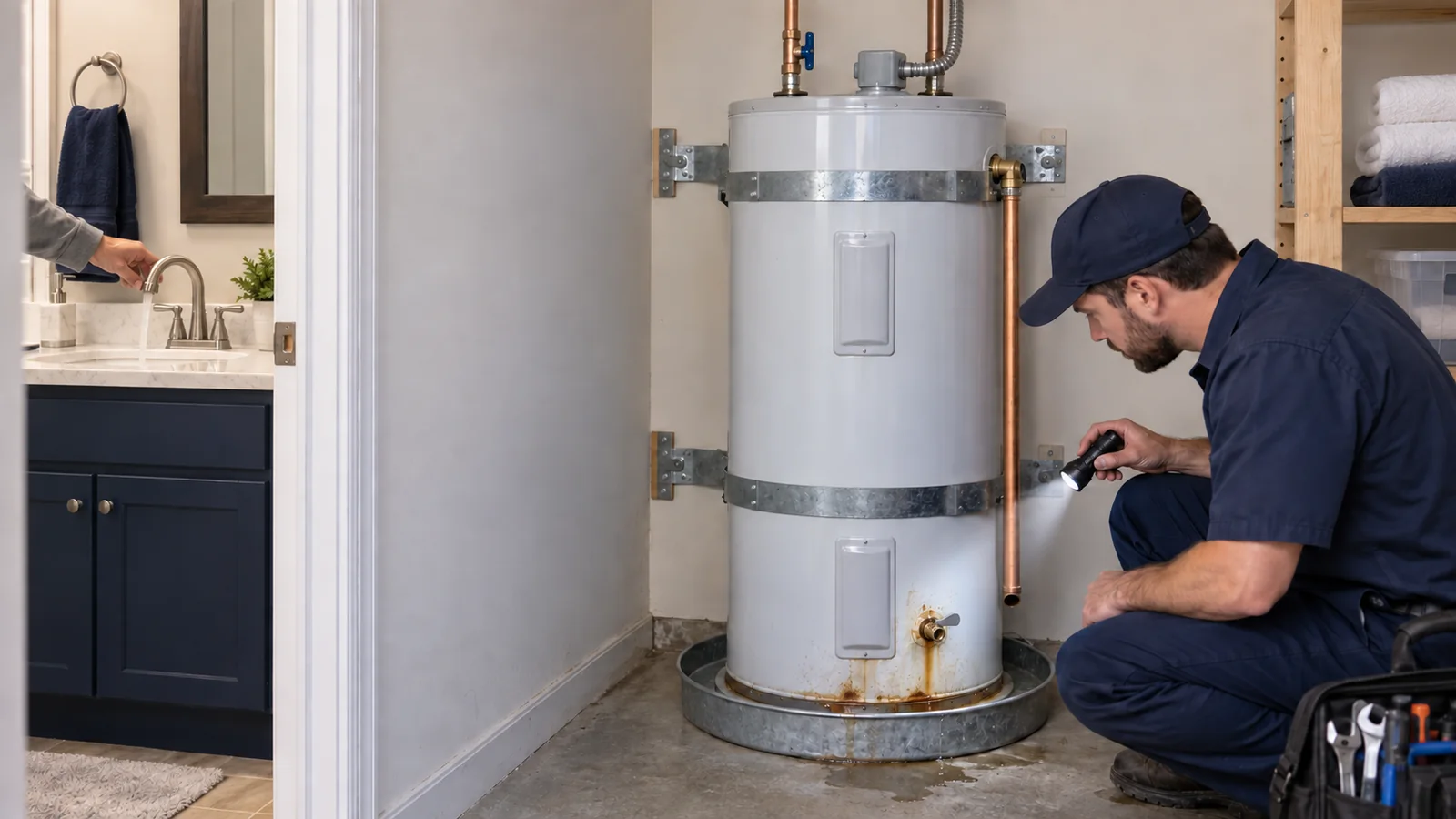
Water can come from piping, valves, fittings, the drain-pan area or the tank itself. The source changes the repair-versus-replacement decision.
Slow recovery or reduced available hot water should be evaluated against the installed equipment, demand and operating condition.
Noise, repeated cycling or other unusual behavior is a reason to inspect the heater rather than assume a single cause from the sound alone.
Tankless systems use different controls, flow logic and maintenance practices. Use the dedicated tankless repair service for deeper diagnosis.
DIAGNOSIS BEFORE PARTS
A useful repair visit separates the customer’s symptom from the failed component. We look at where water is appearing, whether the whole hot-water system is affected, the visible condition of the heater and connections, and the utilities or venting that apply to the installed equipment.
If it is easy to do safely, note the model information, whether the problem affects every hot-water fixture, whether water is visible, and when the change first appeared. Photos of the heater and surrounding area can also help us understand access and equipment type before arrival.
REPAIR OR REPLACEMENT?
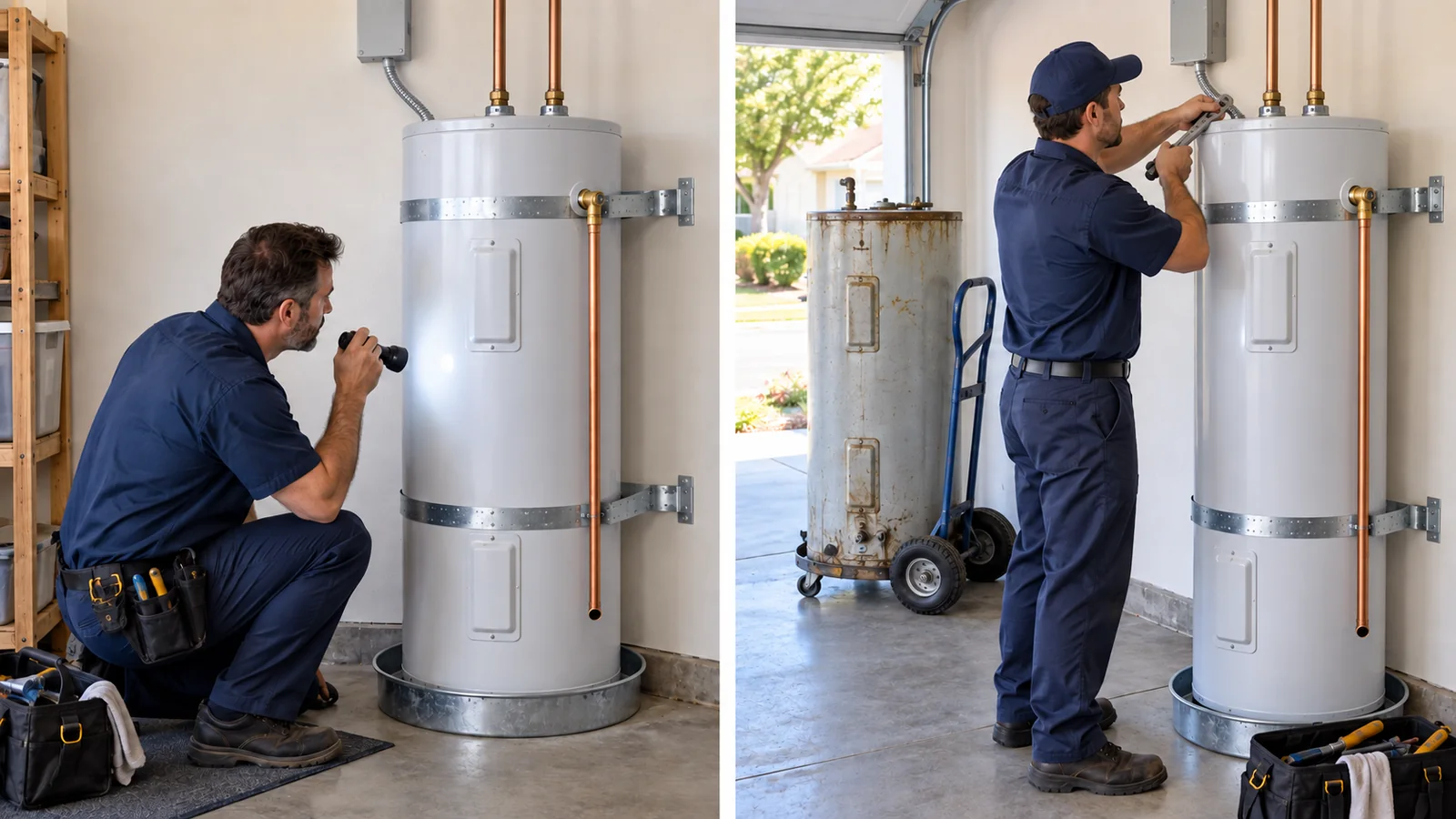
Repair can make sense when the problem is serviceable and the rest of the heater remains practical to keep. Replacement deserves consideration when the tank itself has failed, problems repeat, important parts are impractical to support, the installation has material safety or serviceability issues, or the equipment no longer fits the home’s hot-water demand.
The decision should consider tank condition, repeat history, repair cost and supportability, utility type, location, access, hot-water demand and the condition of connected plumbing. We do not use a single age number as an automatic replacement rule.
WHAT WE EVALUATE
Whether every hot-water fixture is affected, only one fixture is different, or the symptom appears intermittently helps separate heater problems from fixture-level conditions.
Visible piping, shutoffs, moisture, controls, drain area and applicable venting or utility conditions are considered as part of the installed system.
Tank condition, repeat history, parts support, installation condition and current hot-water demand all matter before recommending a repair path.
A pressure issue, failed shutoff or unrelated nearby leak should not be mistaken for a water-heater component failure.
If moisture is present but the source cannot be tied to the heater or visible piping, leak detection may be the better starting point.
When the repair decision changes into an installation project, use the installation page for equipment, location and permit planning.
REPAIR, MAINTENANCE OR A DIFFERENT SYSTEM?
Routine maintenance is different from repairing a failure. If the heater is operating and the goal is inspection or flushing, use Water Heater Maintenance. If the equipment is tankless, use the tankless repair, installation or maintenance pages because those systems have different service requirements.
A failing conventional tank does not automatically mean tankless or heat pump is the right replacement. A system change should follow hot-water demand, utility capacity, location, access, venting where applicable, condensate or air-space requirements where applicable, and the installation scope.
RELATED WATER-HEATER SERVICES
You do not need to repeat the same story on several pages. Choose the most specific service below when the next step is already clear.
For a failed tank, planned replacement, new storage-tank installation or a broader equipment change.
For routine conventional storage-tank maintenance, inspection and flushing when the system is operating.
For tankless no-hot-water conditions, recurring errors, low flow, shutdowns and tankless-specific diagnosis.
For new tankless installation, conversion or replacement planning.
For the full tank, tankless and heat-pump water-heater service overview.
Use your local water-heater page when location-specific service information matters.
WATER HEATER SERVICE BY LOCATION
Choose your community for local repair, installation, replacement and maintenance guidance. Tankless-specific technical service remains on the dedicated tankless pages.
WATER HEATER REPAIR FAQS
NEED CONVENTIONAL WATER-HEATER REPAIR?
Tell us whether the problem is no hot water, a temperature change, visible water, unusual operation or a repair-versus-replacement question. We can begin with diagnosis and explain the practical next step from the actual equipment and installation.
CALL NOW! Se Habla Español!