





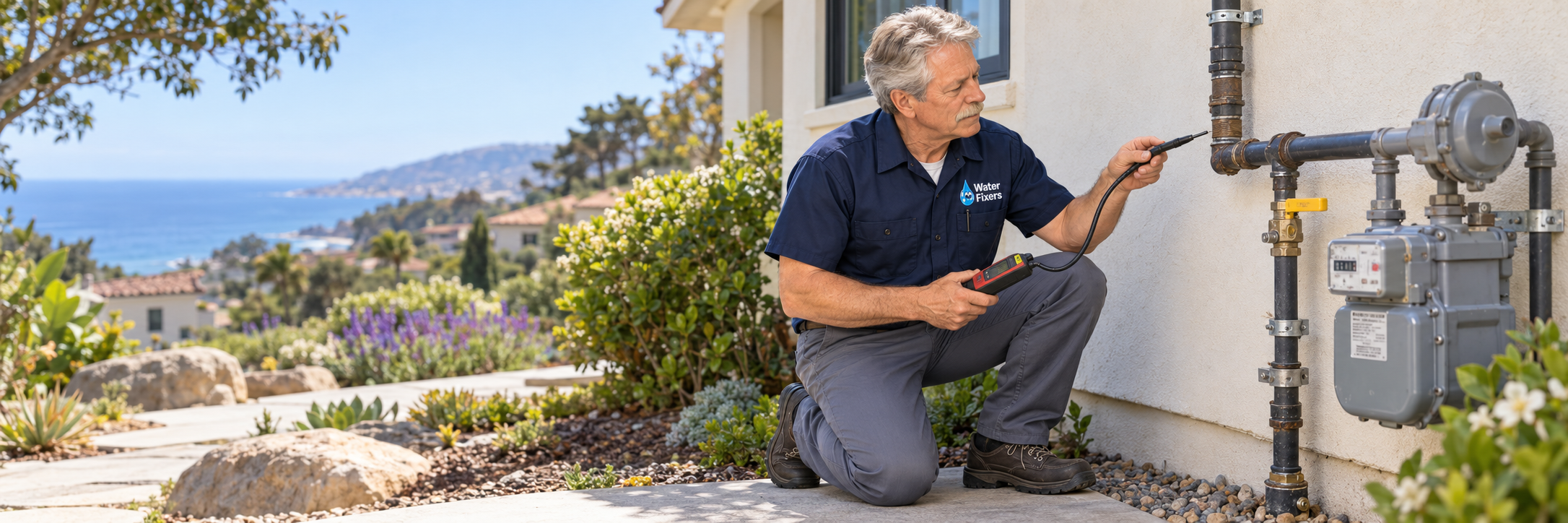
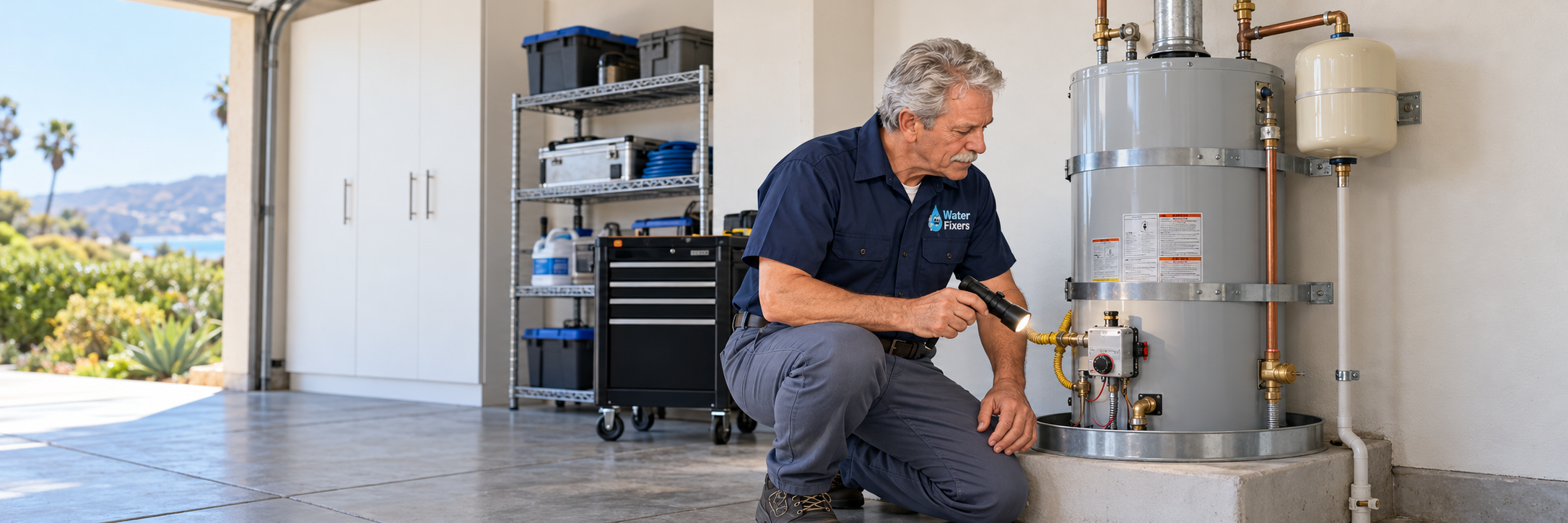


Tips From Harley • Water near the service entry
Water Near the Plumbing Entry: Utility, Leak or Drainage?
A wet patch beside the pipe entering your home deserves attention. Harley helps you describe the location, recognize the limits of a homeowner check and choose the next inspection without guessing who owns the problem.
Describe where the water is before naming the source
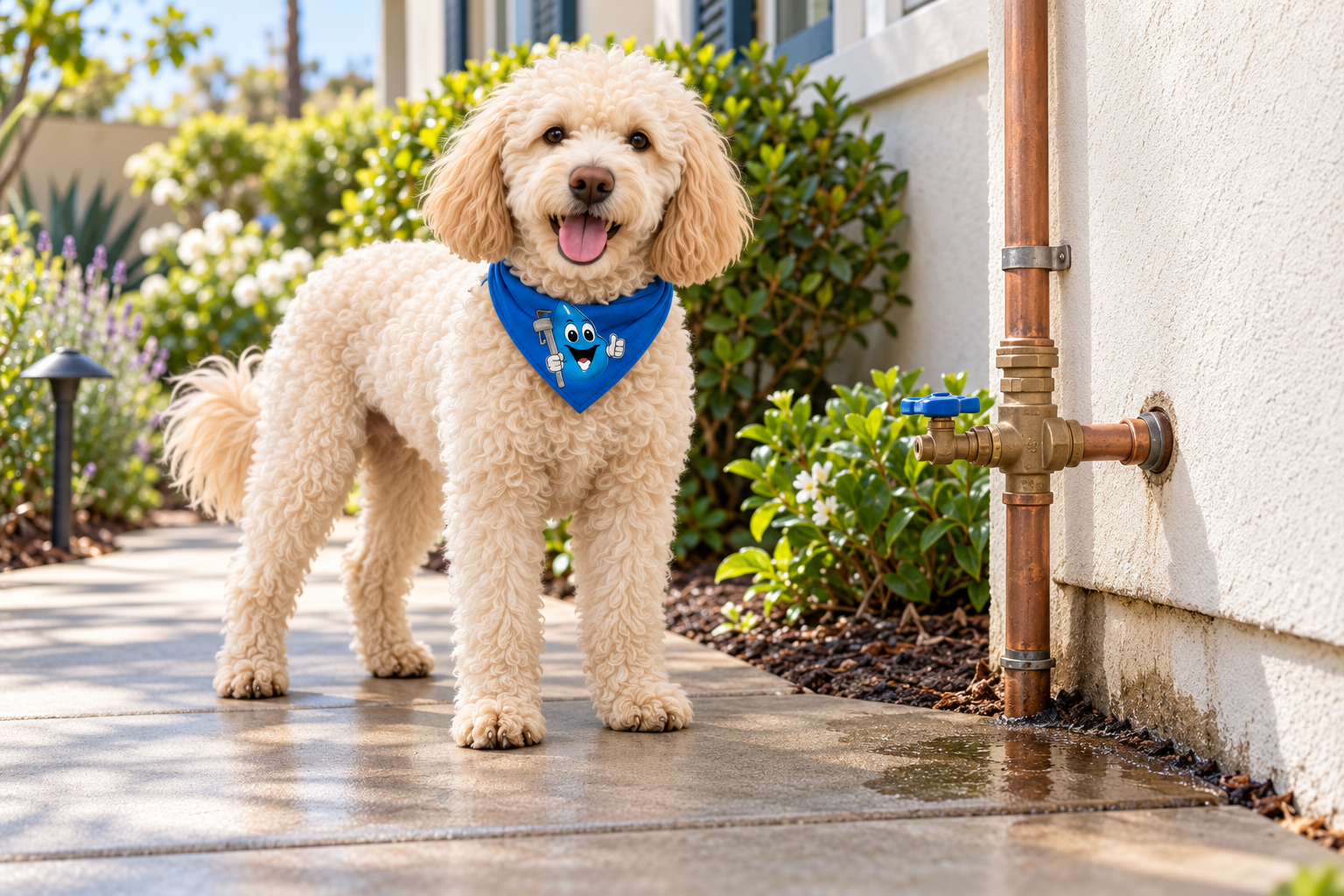
Distinguish a visible wet fitting from water pooled near a wall, meter area, irrigation branch or pipe penetration. Note recent rain, irrigation timing, continuous moisture and any change inside the house. Water arriving at a pipe does not by itself establish that the pipe leaked. Treat each source as a possibility to be checked. [1]
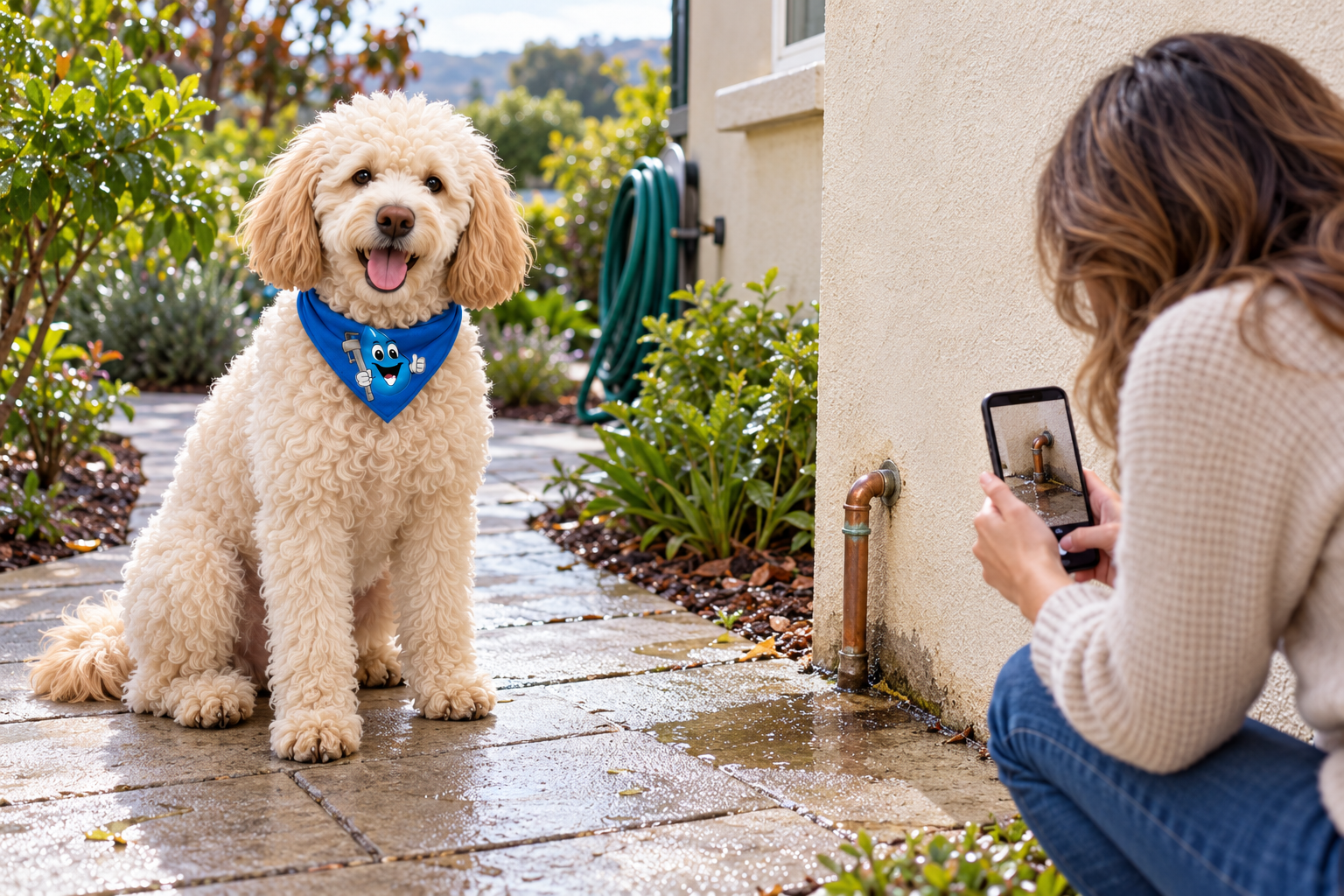
Keep the report concrete: location, first noticed time, whether water is increasing, and whether there is a visible source. A safe photograph can preserve the pattern without requiring a homeowner to excavate or dismantle a connection. [1]
Choose the question before choosing a repair
A visible connection is leaking
Describe the exact accessible connection and whether water is actively escaping. That observation can support a plumbing-repair visit. Avoid tightening an unfamiliar fitting or treating every wet surface nearby as another failed part. [1]
The ground is wet, but no source is visible
Ask about leak locating and an appropriate inspection before opening the ground. Note the size and position of the wet area from a safe location. A puddle beside the service entry does not tell you which buried or visible water path is responsible. [1]
The pattern follows rain or irrigation
Include the weather and irrigation schedule in the report. That can justify examining a surface-water or irrigation route, but the timing does not clear nearby household plumbing. Keep those possibilities open until the source is established. [1]
The utility boundary is unclear
Contact the supplier shown on the account and ask who should inspect first. Describe the location without claiming that a meter box or pipe belongs to one party. Access rules and ownership must be confirmed for the address. [2]
Leave utility hardware and hidden piping alone
Know the difference between a familiar property-side shutoff and equipment you cannot identify. Do not force a valve or assume the meter assembly is yours to operate. Ask the supplier to confirm its access rules and the responsibility boundary for the address. A boundary is a utility-specific fact, not a universal rule about every wet meter box. [2]
If water is actively escaping from household plumbing and a known safe shutoff is readily accessible, use the appropriate property-side control only if it operates normally. Keep away from electrical hazards and seek urgent help when the water cannot be safely isolated. Do not work in the wet area to diagnose it. [1], [2]
Choose the inspection that matches the uncertainty
A confirmed connection leak can lead to plumbing repair. Unexplained moisture may require leak locating before an area is opened. Water that tracks rain or irrigation may instead need a drainage or irrigation assessment. These routes are alternatives to investigate, not diagnoses assigned from the puddle. [1]
Pressure symptoms belong in the report but do not identify a failed regulator. The PRV controls excessive incoming pressure; testing and the surrounding plumbing conditions determine whether it is relevant. Do not turn the adjustment screw simply because the wet area is nearby. [3]
What to tell the utility or plumber
Give the address and actual supplier when contacting them, then describe which side of the service area looks wet without asserting ownership. Mention whether fixtures have changed, whether the wetness persists in dry weather, and whether a visible household connection is leaking. Ask who should inspect first when the boundary is uncertain. [1], [2]
Make the first conversation easier
Use a location rather than a component diagnosis
A report such as ‘water is collecting at the base of the exterior wall beside the entry pipe’ gives the listener a place to start. Add whether a visible fitting is dripping or whether the water’s starting point cannot be seen. You do not need to name a failed regulator or underground line to request a useful evaluation. [1], [3]
Keep observations from different times together
If conditions are safe, note when you first noticed the moisture and whether it changes with ordinary rain or irrigation patterns. Keep any photographs with those notes. Do not turn irrigation on, operate an unknown valve or dig around a pipe simply to produce a more convincing demonstration for the service call. [1], [2]
Mention pressure changes without adjusting equipment
Tell the plumber if the wet area appeared alongside a pressure concern inside the house. The information belongs in the same report, but it does not establish that the pressure regulator caused the moisture. Leave the setting alone so testing and the surrounding plumbing conditions can guide the decision. [3]
Quick questions homeowners ask
Does water beside the meter mean the utility must repair it?
Not necessarily. The location alone does not settle the source, ownership or access rules. Ask the actual supplier to confirm the responsibility boundary and who should inspect the reported condition. [2]
Should I dig a little to find the leak?
Leave hidden piping and utility equipment alone. Describe the visible conditions and ask which professional should investigate before an area is opened. [1], [2]
Can I rule out plumbing because the ground got wet after rain?
No. Rain, irrigation and household plumbing are possibilities to separate. The timing helps describe the pattern; it does not establish or eliminate a pipe leak by itself. [1]
- Plumbing Problems Around the House | Harley Tip #5 | Water Fixers
- Vacation Plumbing Checklist: What to Check Before You Leave | Water Fixers
- Water Pressure Regulator & PRV Service | Water Fixers
Observations help focus an evaluation; the cause still needs checking. Use the actual equipment instructions and current supplier guidance.