











Plumbing and Water Checks Before Houseguests Arrive
Before guests arrive, look for drips, running toilets, slow drains and hot-water limits. Review due treatment care; follow equipment instructions before changing working settings.

Walk the rooms you will actually use
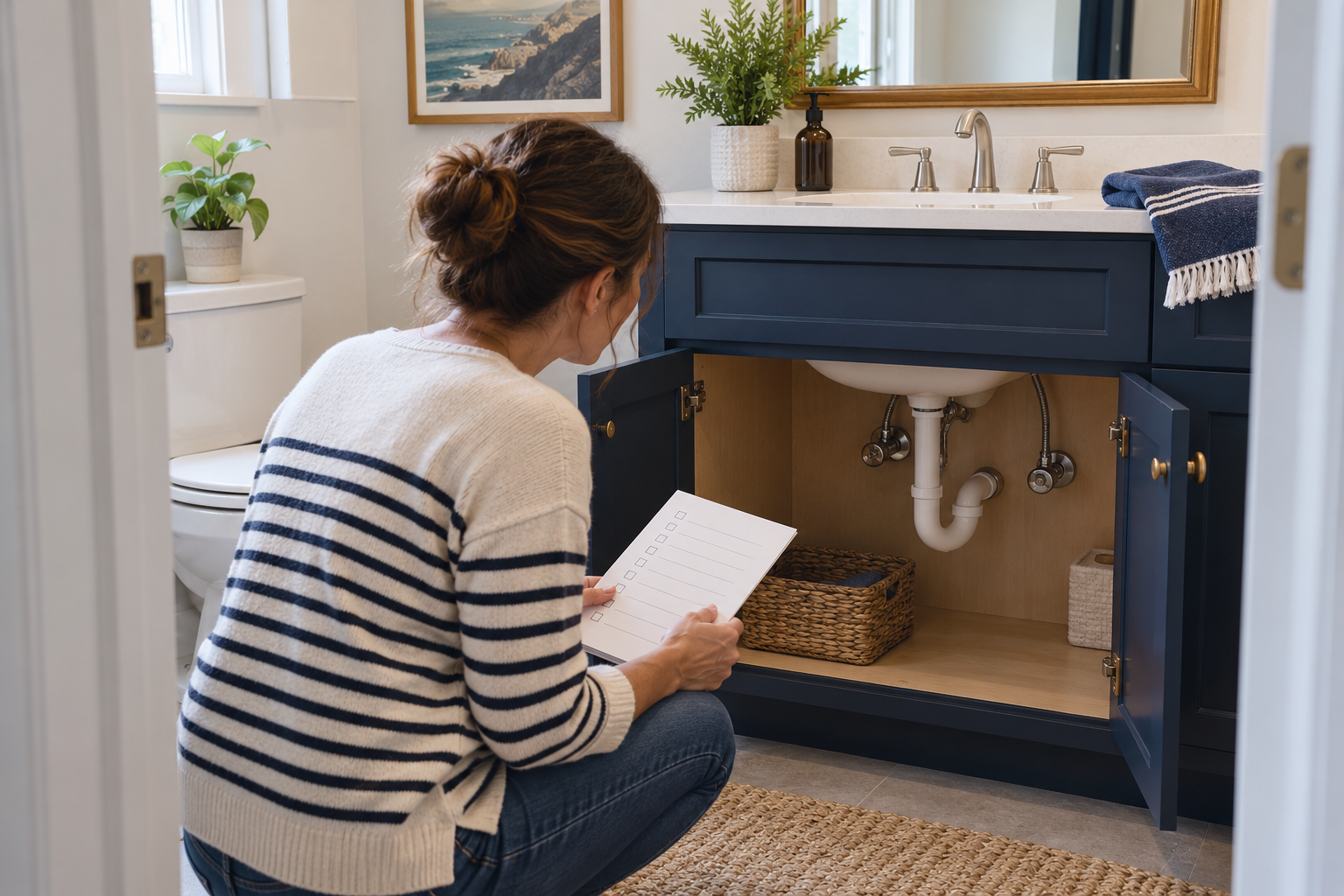
Check under accessible sinks for fresh moisture; listen for toilets that keep running; note existing slow drains. Locate a familiar property-side shutoff. Do not force an unfamiliar or stuck valve, open walls, or dismantle a fixture as part of a hosting checklist. [1], [2]
Separate an ordinary observation from an active problem: a visible leak or several fixtures reacting together deserves attention before the guest schedule. Avoid putting extra water through a backed-up drain simply to see whether it recovers. [1], [3]
Put the checks in a useful order
1. Check for active leaks or backups
Treat water that is escaping or wastewater that is backing up as the immediate issue. The hosting checklist can wait. Stop the activity that reproduces the problem, keep clear of hazards and use the appropriate professional response rather than running another test cycle. [1], [3]
2. Note recurring kitchen symptoms
Note whether the sink is slow during ordinary use or changes when the dishwasher discharges. Include any symptoms at other fixtures. A service professional can use that history to choose the investigation without assuming that meal preparation created a new failure. [4]
3. Review existing hot-water limits
Describe the normal routine and the activities that overlap. Separate a longstanding limitation from performance that has recently declined. Keep heater identity and service history available; guest arrival does not make a temperature adjustment or a larger heater the automatic answer. [5]
4. Check treatment care already due
Check the actual equipment records and manuals. Complete the appropriate due task with the person qualified to perform it. Do not substitute a new filter, a generic calendar interval or an equipment purchase for identifying what this installed system requires. [6], [7]
Kitchen demand: watch the existing drain pattern
Heavy meal preparation and dishwasher discharge can expose a partially restricted kitchen drain that seemed adequate during light use. Note whether the sink is slow on its own, backs up during dishwasher discharge, or is accompanied by trouble elsewhere. Those patterns help choose the next service. [4]
Use the existing disposal and kitchen guides for cleanup rules. A disposer grinding something does not establish that the connected drain can carry a large batch of waste. Keep troubleshooting observational rather than reaching into equipment or applying a chemical drain treatment. [8]
Hot water: distinguish more use from declining performance
Record whether hot water falls short only when showers, laundry and dishwashing overlap, or whether the same ordinary routine has become worse. Tell the service professional what type of heater is installed. Changing a temperature setting or assuming a bigger heater is needed is not a preparation checklist item. [5]
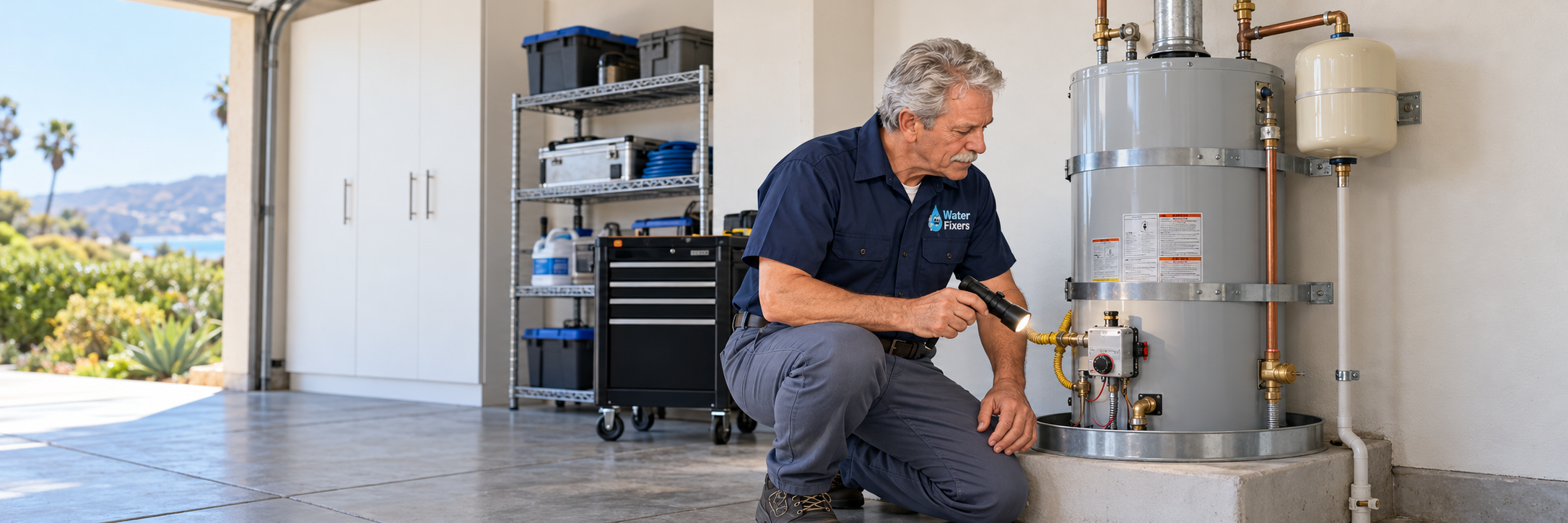
Water, unusual behavior or a recurring performance problem at the heater belongs on the equipment evaluation path. Use the existing warning-sign guide instead of improvising electrical or combustion work. [5]
Treatment equipment: do what is due
Review the actual manuals and service records for installed RO, softening or filtration equipment. A calendar reminder is useful only when it points to the correct task for that system. Do not install new equipment just because visitors are coming. [6], [7]
Leave guests a simple way to report a drip or toilet issue and keep an emergency contact accessible. If the household will leave afterward, use the separate vacation checklist: shutting off water or changing equipment settings can have property-specific consequences. [2]
Make the checklist useful during the visit
Keep the household handoff simple
Let guests know how to report a drip, a running toilet or a slow drain promptly. Keep a service contact accessible and identify a familiar property-side shutoff for the household. The instruction should be easy to follow without asking a visitor to force a valve, dismantle plumbing or diagnose powered equipment. [1], [2]
Keep cleanup advice connected to the drain
Use the existing kitchen and disposal guidance when planning meal cleanup. Grinding waste and carrying it through the connected drain are different questions. If the sink already backs up, report that history before heavy use rather than relying on the disposer to make the drain’s capacity or condition irrelevant. [4], [8]
Leave the departure plan on its own checklist
If the household will travel after the visit, return to the vacation guide and the equipment instructions. A preparation note for guests is not a blanket instruction to shut off the house or change treatment settings later. Keep the property’s actual shutoffs and equipment needs in view when deciding what to do before leaving. [2], [7]
Quick questions homeowners ask
Should I include the guest count when reporting a hot-water problem?
Include the usual household routine, expected guests and the activities that overlap. That gives the service professional demand context without deciding the cause in advance. [5]
Sources & further reading
- Plumbing Problems Around the House | Harley Tip #5 | Water Fixers
- Vacation Plumbing Checklist: What to Check Before You Leave | Water Fixers
- Sewer and Main Drain Service | Central Coast | Water Fixers
- Kitchen Sink Backs Up During Heavy Cooking? What It Means | Water Fixers
- Water Heater Warning Signs | Harley Tip #4 | Water Fixers
- Water Softener Maintenance | Central Coast | Water Fixers
- Water Filtration & Treatment | Central Coast CA | Water Fixers
- What Not to Put Down a Garbage Disposal After Thanksgiving | Water Fixers