HARLEY’S TIP #4 • WATER HEATERS
Water Heater Warning Signs Homeowners Shouldn’t Ignore
Harley’s rule is simple: a water heater does not need to be dramatically broken before it deserves attention. Water around the unit, changing hot-water performance, unusual sounds, visible corrosion or a safety-control problem can all be reasons to stop guessing and have the system checked.
HARLEY’S QUICK TAKE
The Short Answer
Common warning signs include water or moisture around the unit, inconsistent hot water, unusual noises, visible corrosion, discolored hot water, recurring temperature problems or a relief-valve concern. The right next step depends on what you see: maintenance, repair, replacement planning or urgent service.
01
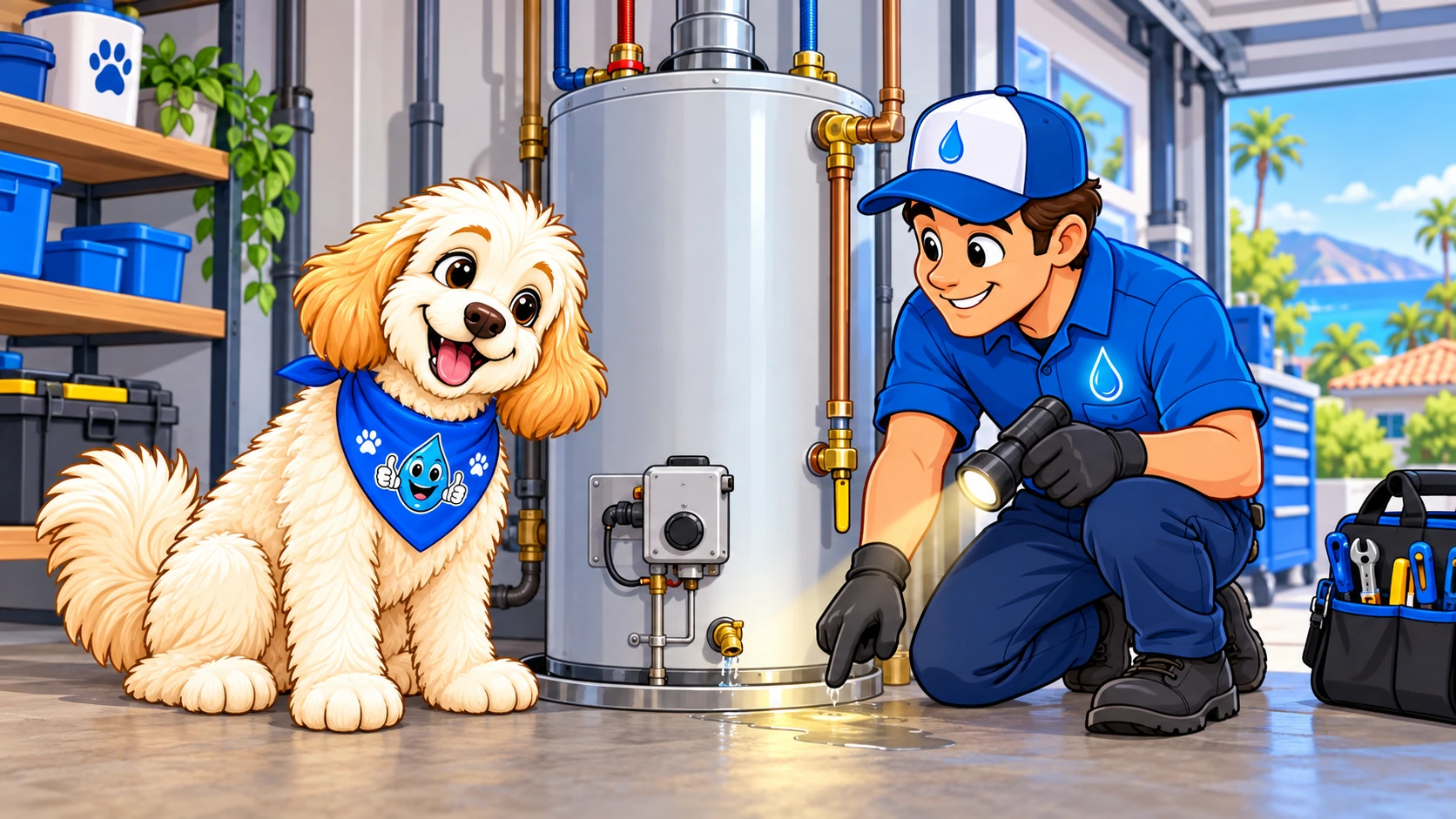
Water around the heater is not a “wait and see” clue
Moisture may come from a plumbing connection, drain valve, temperature-and-pressure relief discharge, condensation on some systems, or the tank itself. A homeowner can observe where water appears, but should not assume the source without inspection. If water is spreading or cannot be isolated safely, use the urgent plumbing path.
02
Hot water that changes suddenly deserves a real diagnosis
Running out of hot water faster than usual, fluctuating temperature, or water that never reaches the expected temperature can have several causes. The useful question is whether the system needs adjustment, maintenance, component repair or replacement—not whether one symptom automatically means the tank has failed.
03
Noise, sediment and maintenance are related—but not identical
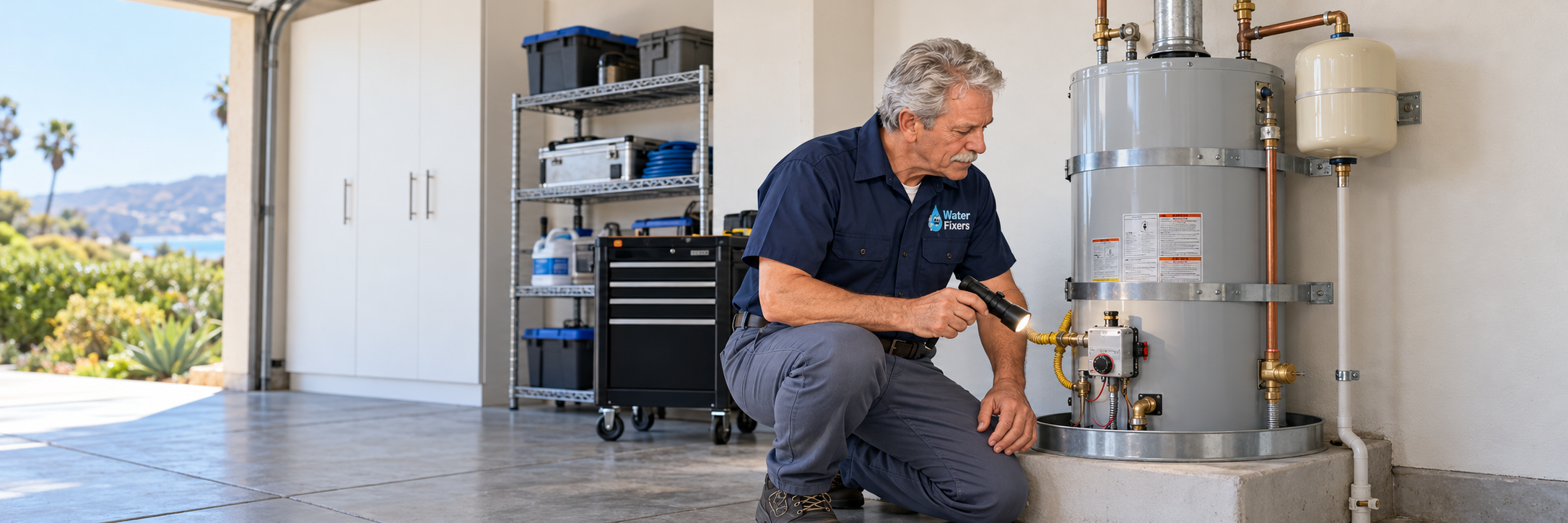
Popping, rumbling or other unusual sounds can occur when sediment or scale accumulates, but sound alone does not tell you the exact condition inside the heater. Water Fixers can inspect the system and determine whether flushing or another maintenance step is appropriate for that specific unit.
04
Visible corrosion and safety controls should be taken seriously
Corrosion at fittings, deteriorated connections, damaged venting on fuel-burning equipment, or abnormal relief-valve behavior are reasons for professional evaluation. Do not cap, plug or defeat a temperature-and-pressure relief valve. If you smell gas or suspect an electrical hazard, leave the equipment alone and follow the appropriate emergency procedure.
05
Repair, maintain or replace? The condition decides
Age matters, but it is not the only factor. Tank condition, leak location, repair history, efficiency, installation quality and the cost of the needed repair all affect the recommendation. A warning-sign guide should help you know when to call—not pretend to choose the equipment outcome from a webpage.
ROUTE THE PROBLEM CORRECTLY
Related Water Fixers Help
Water Heater Services
Use the Water Fixers page that owns this service question instead of diagnosing the whole problem from one symptom.
Water Heater Repair
Use the Water Fixers page that owns this service question instead of diagnosing the whole problem from one symptom.
Water Heater Maintenance & Flushing
Use the Water Fixers page that owns this service question instead of diagnosing the whole problem from one symptom.
Tankless Water Heaters
Use the Water Fixers page that owns this service question instead of diagnosing the whole problem from one symptom.
Emergency Plumbing
Use the Water Fixers page that owns this service question instead of diagnosing the whole problem from one symptom.
INDEPENDENT REFERENCE
Want a Technical Reference?
These sources provide general maintenance or water-efficiency guidance. Property-specific plumbing and equipment decisions still depend on the actual condition at the home.
DIRECT ANSWERS
Harley’s FAQ
What are the most common water heater warning signs?
Water around the unit, changing hot-water performance, unusual noises, visible corrosion, discolored hot water and abnormal safety-control behavior are common reasons to have a water heater checked.
Does a noisy water heater always need replacement?
No. Noise can have several causes, including sediment, but the cause and condition of the heater should be evaluated before deciding between maintenance, repair or replacement.
Should I keep using a water heater that is leaking?
If the leak is active or spreading, do not treat it as normal operation. Shut off water only if you can do so safely and contact a plumber. Gas or electrical hazards require additional caution.
Can flushing fix every water heater problem?
No. Flushing is a maintenance procedure, not a universal repair. A leaking tank, failed component, venting issue or damaged safety control needs the appropriate service path.
More Tips From Harley
Harley supplies the personality. The Water Fixers team reviews the plumbing guidance.
Beauty Tips From Zsa Zsa
For hard-water, shower-water and drinking-water questions with a little more glamour, visit Zsa Zsa.
CALL THE HUMANS
Not Sure Which Plumbing Problem You Have?
Tell Water Fixers what you are seeing, hearing or smelling and where it is happening. The team can route the problem without asking you to diagnose it first.