COMMERCIAL HOT WATER • CALIFORNIA CENTRAL COAST
Water Fixers supports commercial water-heater service for businesses, managed properties and commercial facilities across California’s Central Coast. We start with the installed equipment, current symptom, peak demand, operating schedule, access and the effect of downtime before recommending repair, replacement or a new equipment plan.
38+ years on the Central Coast • California License #719792 • Se Habla Español
START WITH THE OPERATING PROBLEM
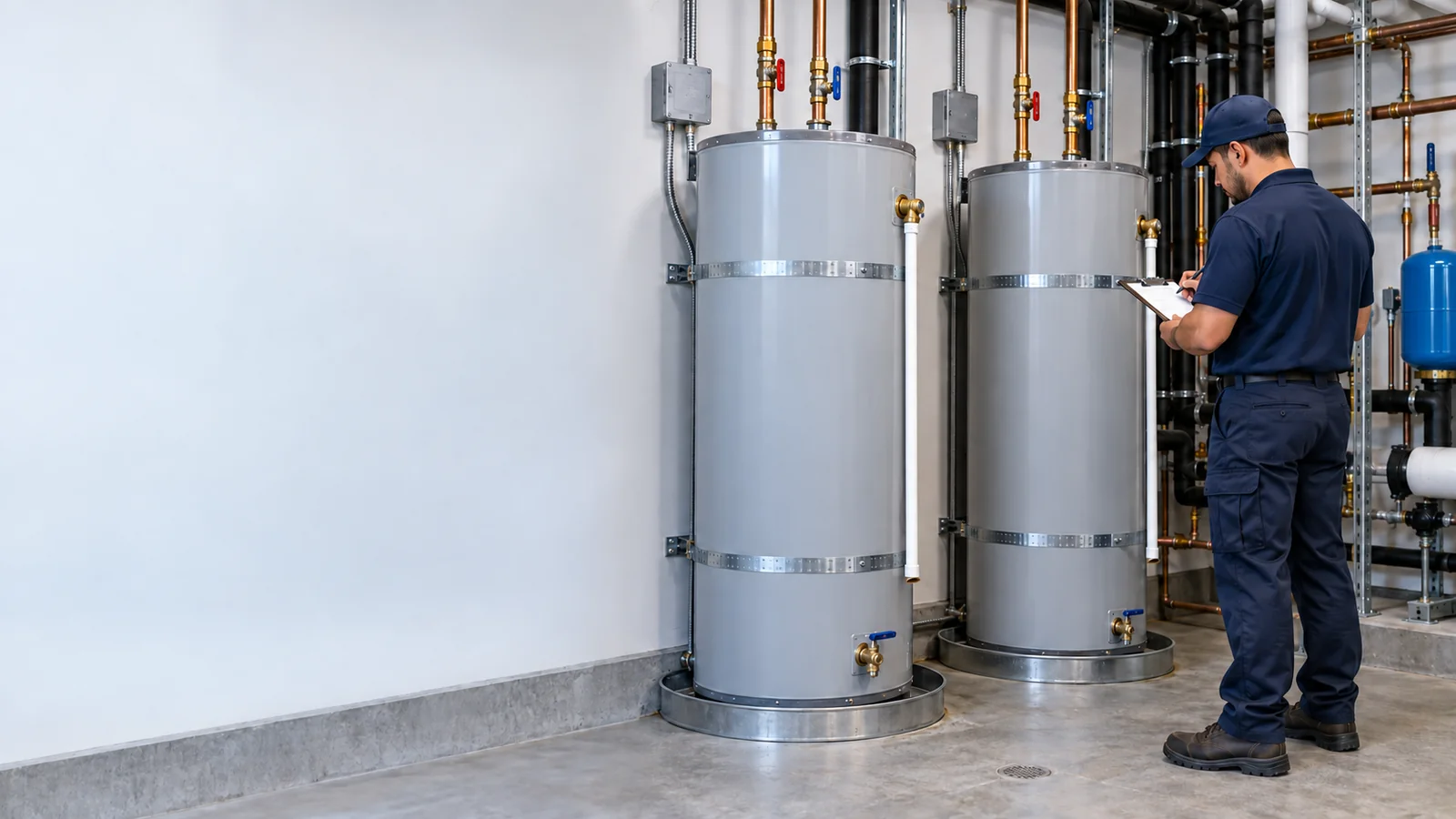
Commercial water-heater work can involve the same basic symptoms found in a home, but business demand, shared equipment, access and downtime can change the practical service plan. Start with the closest match rather than assuming the same solution fits every property.
No hot water, leaks, unstable temperature, failed controls or equipment faults should be evaluated from the installed system before a part or replacement is assumed.
Replacement planning should account for hot-water demand, equipment arrangement, utilities, available space, service access, permit requirements and the impact of a shutdown.
When access, tenants, multiple units, shared equipment or recurring property-level needs are part of the job, use the dedicated property-manager path as well.
SERVICEABLE COMMERCIAL SYSTEMS
Commercial hot-water equipment should remain practical to isolate, inspect and service. Shutoffs, valves, controls, drain points, recirculation components where present, and the equipment itself need realistic access for future diagnosis and maintenance.
The right arrangement depends on the building, equipment and operating needs. Water Fixers evaluates the installed piping and access rather than applying a residential layout rule to a commercial mechanical space.
DEMAND • STORAGE • RECOVERY
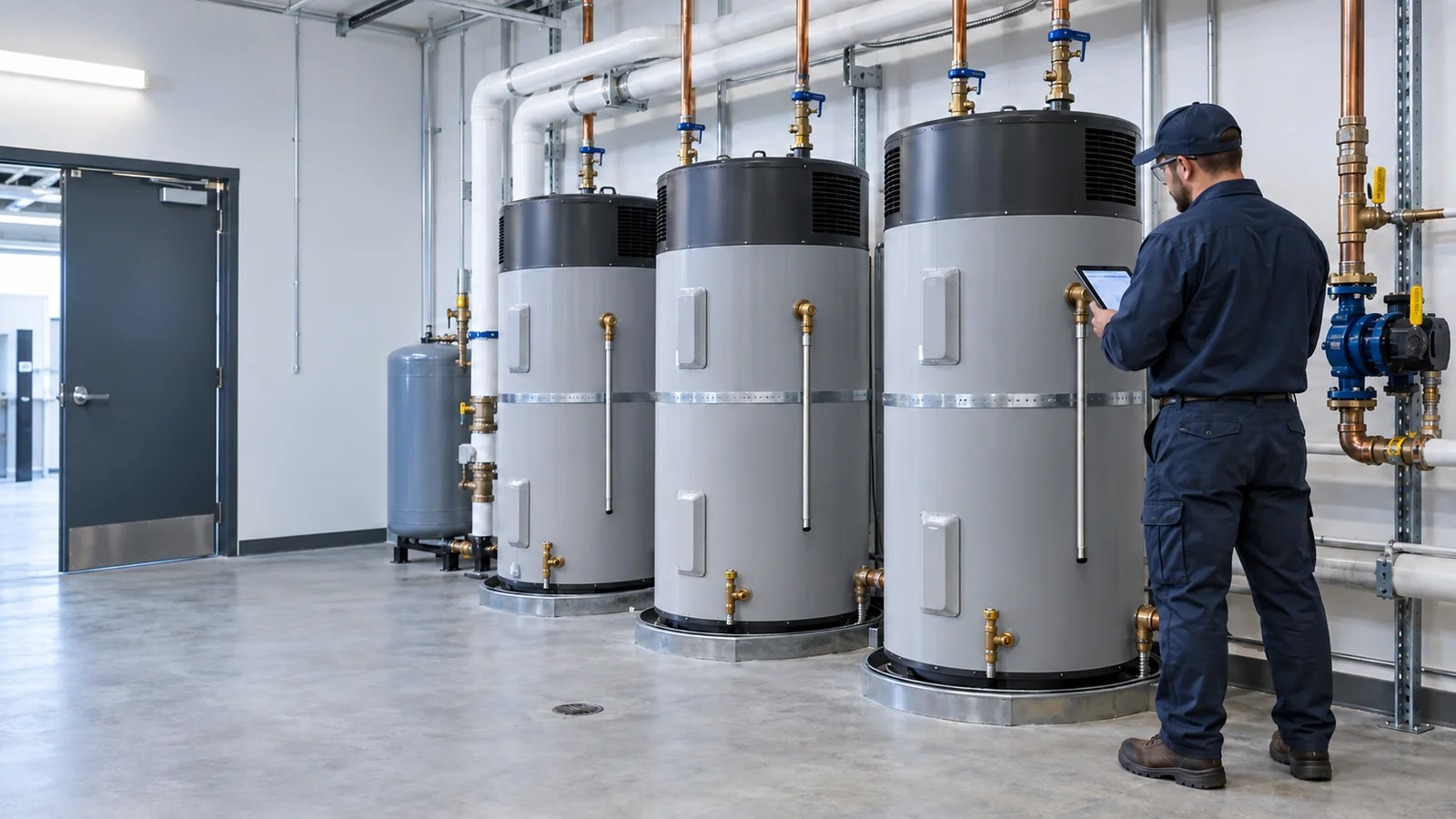
Restaurants, lodging, managed properties, laundries, offices and other facilities can have very different hot-water patterns. The practical plan should consider peak simultaneous demand, recovery or storage needs, hours of operation, available utilities, piping, recirculation where applicable, and the consequences of losing hot water.
Commercial properties may use storage tanks, tankless equipment, multiple units or other configurations. Equipment should be selected from the required output, approved ratings, available utilities, maintenance access and operational priorities—not because one technology is universally better.
REPAIR OR REPLACE
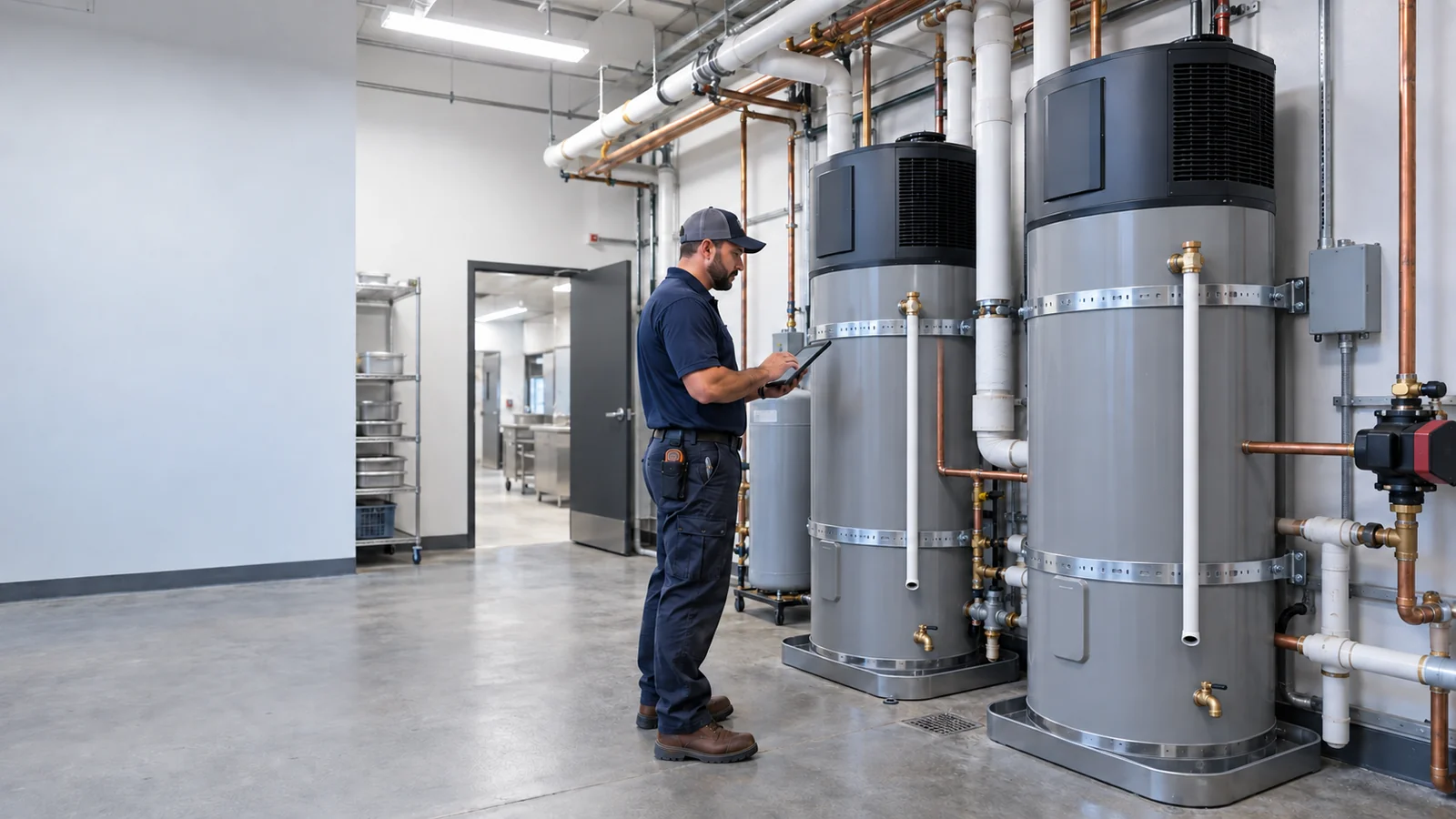
Commercial replacement decisions should not be made from equipment age alone. The diagnosis, tank or heat-exchanger condition, repeat failures, parts support, repair cost, capacity, installation condition, utility requirements, service access and downtime exposure all matter.
A repair can be appropriate when the failed part or connection is identifiable, the rest of the system is in serviceable condition and the equipment still meets the operation’s hot-water need.
Replacement planning becomes more important when failures repeat, the equipment condition is poor, capacity no longer matches demand, parts or serviceability are limiting, or the installation needs broader correction.
COMMERCIAL PLANNING QUESTIONS
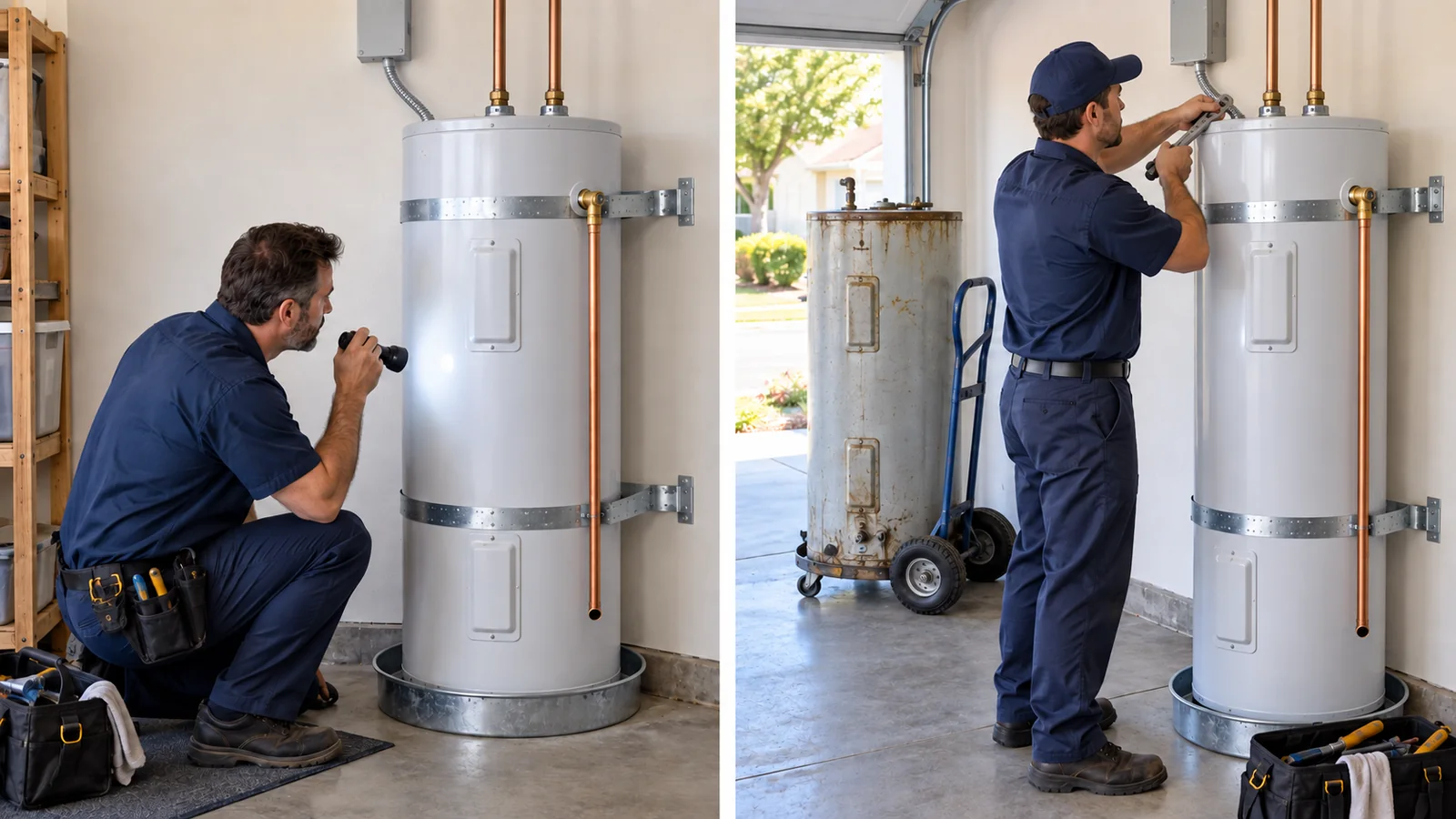
A useful commercial assessment connects the equipment to the way the property actually uses hot water. These questions help narrow the project without pretending that every site needs the same configuration.
How much hot water is needed at the busiest times? Which uses are simultaneous? Are there operating periods where a shutdown would create a larger business impact?
Fuel or electrical capacity, venting or exhaust requirements where applicable, drain/condensate needs, equipment dimensions and service clearances can affect the feasible options.
Existing shutoffs, multiple units, recirculation and the ability to isolate equipment can affect how repair or replacement work is sequenced. Redundancy is considered only when the actual operation needs it.
Scale or other water-quality conditions can matter, but treatment should follow measured conditions and the actual equipment—not an automatic add-on.
Installation and replacement can involve current California plumbing, mechanical, electrical and energy requirements plus local permit review. The exact path depends on the equipment, scope and authority having jurisdiction.
CURRENT CALIFORNIA BASELINE
California’s 2025 Building Standards Code became effective January 1, 2026, and the current Energy Code includes requirements for service water-heating systems. A commercial installation or replacement should therefore be reviewed against the current equipment, project scope, local permit process and applicable code requirements rather than copied from an older installation.
Photos of the heater or system, model/serial information when accessible, fuel or electrical type, and any displayed fault information help establish the starting point.
Describe whether the issue is no hot water, slow recovery, temperature instability, leaking, shutdowns, recurring faults or a planned replacement.
Share the building use, peak hot-water periods, critical fixtures or processes and whether more than one heater or recirculation system is involved.
Mechanical-room access, tenant or staff coordination, occupied areas and the acceptable shutdown window can affect how work is scheduled and sequenced.
Isolation valves, recirculation, pressure, nearby piping and previous service history can help distinguish an equipment problem from a broader plumbing issue.
For replacement or modification work, Water Fixers can review the scope and use the project location to determine the appropriate permit/code path.
URGENT COMMERCIAL HOT-WATER CONDITIONS
A stable system can be scheduled for diagnosis or project review. Active water loss, gas odor, electrical hazards or unsafe combustion/venting conditions require a different response.
If water is escaping or threatening the property, use the urgent plumbing path and tell Water Fixers the site is commercial so access and system information can be considered.
Leave an unsafe area and contact the gas utility or emergency services as appropriate. Do not rely on online troubleshooting for a suspected fuel or combustion hazard.
Keep clear of standing water near energized equipment or damaged electrical components and use an appropriate urgent professional response. Do not reach through water to operate equipment.
RELATED COMMERCIAL SERVICES
Commercial water-heater work sometimes overlaps building plumbing, managed-property coordination or water-quality questions. Use the path that matches the actual need instead of expanding a hot-water project into unrelated work.
For piping, valves, pressure, drains, fixtures and other building-side plumbing needs beyond the water heater.
For managed properties where access, tenant communication, multiple units or recurring coordination are part of the service need.
When actual water conditions are affecting equipment or a treatment decision is needed, start with evidence and the commercial treatment path.
COMMERCIAL WATER HEATER FAQS
COMMERCIAL HOT WATER
Share the building type, installed equipment, current symptom, peak hot-water use, access limits and any shutdown concerns. Water Fixers can begin with the actual system and route the project to the appropriate commercial plumbing, water-heater or water-treatment service.
CALL NOW! Se Habla Español!