
TEMPLETON • SMART WATER DEFENSE • SERVICEABLE INSTALLATION
For a Templeton property, Water Fixers starts with the plumbing instead of the app. We trace the incoming domestic supply, confirm a dependable manual shutoff, note any pressure regulator and fire-protection branch, then make sure the proposed location has electrical power, wireless coverage and enough room for future maintenance.
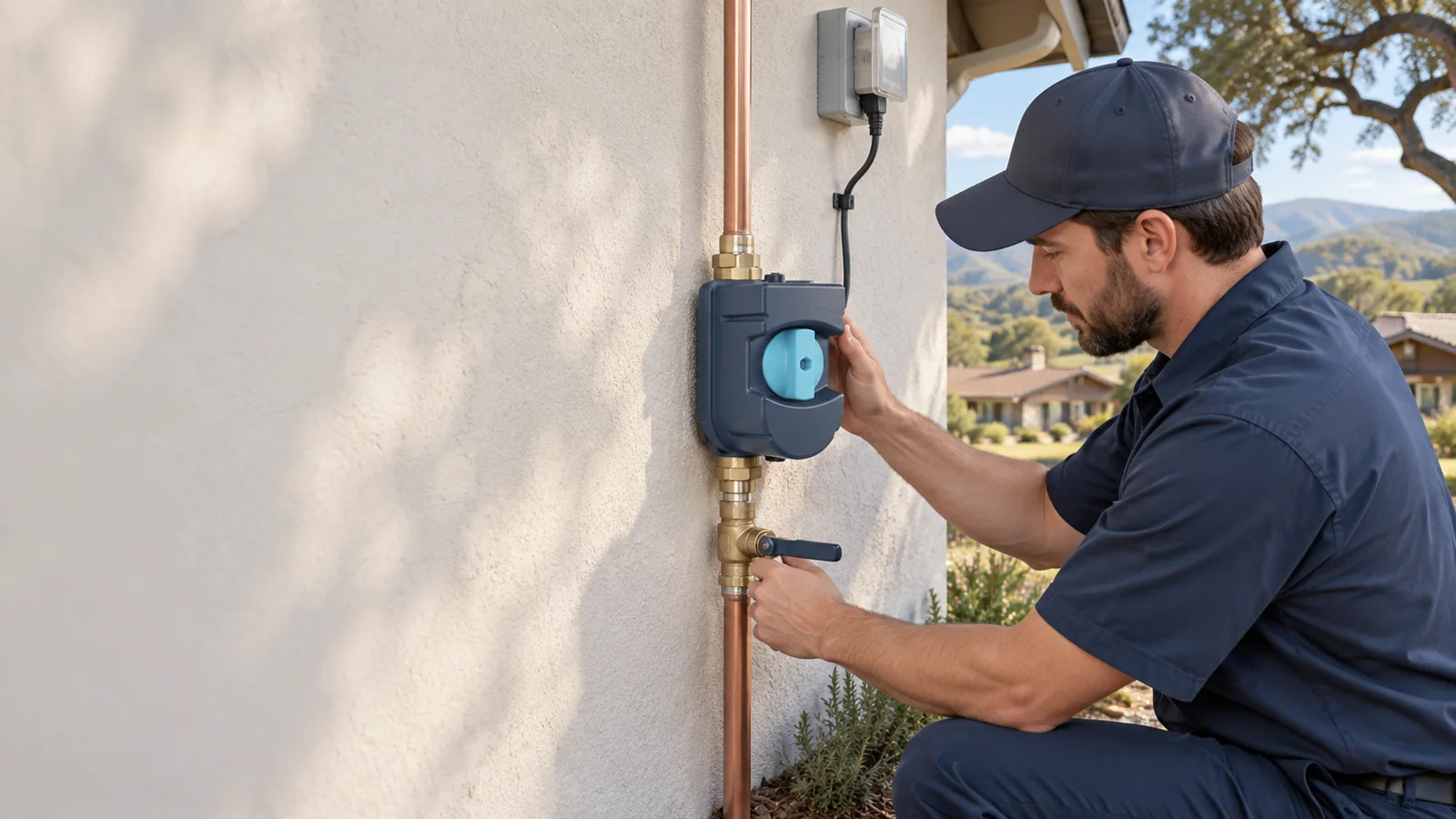
The current product is called the Moen Flo Shutoff. Its sensor-and-valve assembly is installed in the domestic supply so it can track water activity and, for qualifying critical conditions, close the internal valve. That protection is valuable only when the surrounding plumbing and setup are appropriate for the home.
Reading pressure and controlling pressure are different functions. Flo can supply pressure data, while a pressure-reducing valve physically limits excessive incoming pressure. If the complaint is pressure-related, measure it and deal with the regulator rather than expecting the smart valve to perform that mechanical job.
A usage warning can show that water behavior is unusual without identifying which toilet, appliance, underground service line or concealed fitting is responsible. When normal use does not explain the event, the next step is plumbing diagnosis—not assuming the device has already found the source.
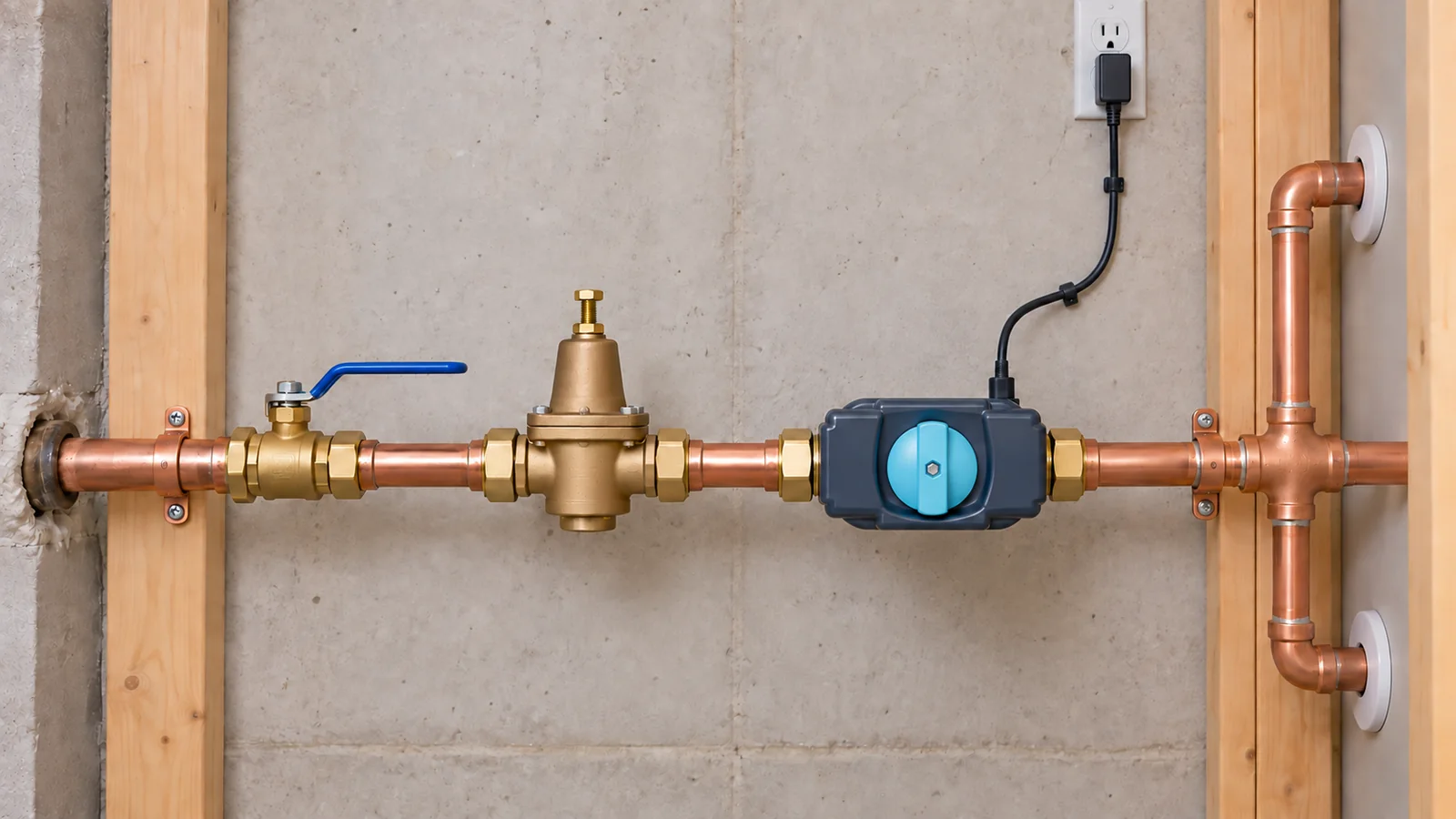
Moen’s installation guidance puts the Flo Shutoff in the main home supply downstream of the existing manual shutoff and, where one is installed, downstream of the pressure regulator. It belongs upstream of the domestic branches it is intended to protect. Fire-suppression piping and hot-water distribution stay outside that automatic shutoff path.
Templeton Community Services District operates the community water system and handles public distribution work. Its published water standards say TCSD performs water-main shutdowns for tie-ins. A reliable building-side shutoff therefore makes installation and later servicing simpler because routine work can stay on the property plumbing.
When the home cannot be isolated from its own plumbing and work would require a public-main shutdown, arrange that shutdown through TCSD rather than treating District controls as a homeowner valve. Moen gives similar guidance: when an accessible home shutoff is missing, contact the local water authority about permitted main isolation.
Templeton mailing addresses can have different water arrangements, so the actual source still matters. Before cutting pipe, confirm whether the property is District-served or uses another source, identify the building’s normal shutoff, locate any PRV, and understand irrigation or fire-protection branches that change the correct placement.
A good finished installation is easy to explain: the normal manual shutoff remains usable, the regulator continues handling pressure, public-system controls are not repurposed, and the Flo device protects the intended domestic branches from an accessible service location.
The site check is a plumbing-serviceability exercise as much as a technology check. Water Fixers verifies where the supply enters, what must remain outside the automatic valve, whether the fittings are practical to service, and whether power and network conditions support dependable setup.
Follow the active supply into the building and mark the manual shutoff, pressure regulator, domestic branches, irrigation takeoffs and any fire-protection connection. The chosen cut-in point should protect the intended house plumbing without putting required fire flow behind the device.
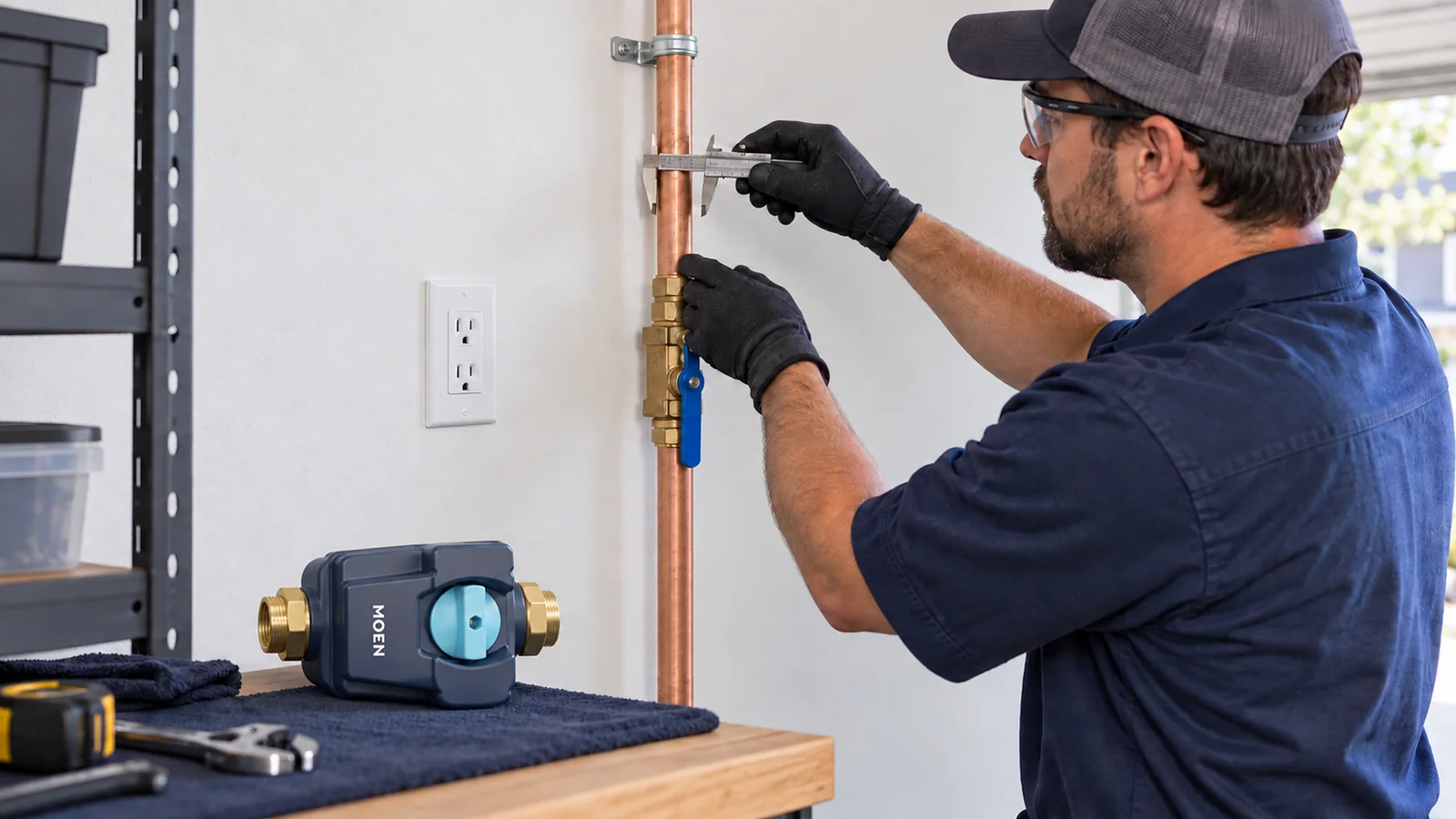
Before modifying the line, verify the pipe size and material, access around the fittings, usable working length, maintenance clearance, a normal 120-volt receptacle and 2.4 GHz Wi-Fi for setup and connected operation. Properties with unusual piping, well equipment or sediment conditions may need additional planning before the device is installed.
Once the location is approved, the unit can be installed in the domestic supply. Water is restored carefully, the new joints are checked under pressure, the device is powered, paired with the app and tested for valve operation. The ordinary manual shutoff should still be obvious and usable afterward.
If the system later reports unexpected flow or closes the water, compare the event with known household activity. A filling toilet, irrigation cycle or appliance may explain it. When the pattern remains unexplained, move to leak detection so the plumbing evidence is tied to a physical source.
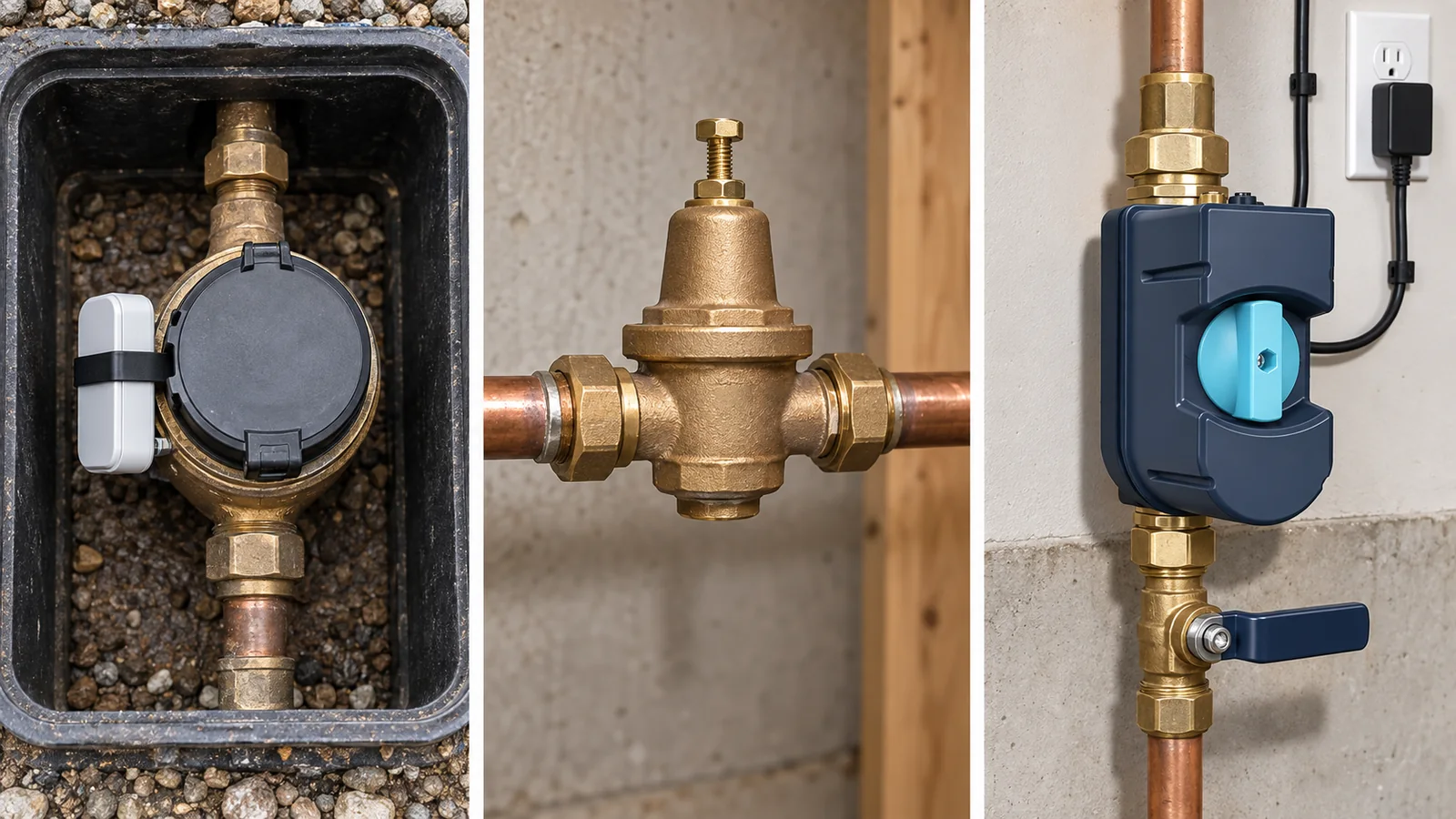
Flume is designed around compatible-meter monitoring. It can help reveal unusual consumption without adding a motorized shutoff valve to the domestic main. It fits homeowners who want usage visibility but do not need the inline automatic-closure function that distinguishes Moen Flo.
Moen Flo becomes part of the home’s water line. It pairs monitoring with an internal valve capable of stopping domestic flow for qualifying events. Because it is physically in the supply, installation sequence, access, power and the branches on each side of the unit all matter.
The pressure regulator has a simple plumbing job: lower excessive supply pressure to an appropriate downstream level. It does not provide smart leak alerts, and Moen Flo does not take over this regulating function. Pressure problems stay on the testing-and-PRV path.
Review the event time and household activity first. If a known fixture or appliance explains the water use, repair that source. When no visible cause fits the data, Templeton leak detection is the right next step. For an active uncontrolled leak or immediate water hazard, move directly to Templeton emergency plumbing.
A leaking, seized or incomplete house shutoff should be corrected before it becomes the only practical way to isolate the smart device later. Restore dependable manual control first, then place the technology downstream where it can be serviced safely.
Start with a pressure reading and regulator evaluation. A Flo device can add information about pressure conditions, but reducing pressure is still a PRV function and should be handled independently of the smart-shutoff installation.
When the usage history or Flo event suggests water is moving and no fixture or appliance explains it, Templeton leak detection can investigate the private plumbing and determine where that water is actually going.
Water Fixers can review the property’s water source, manual isolation, regulator, domestic and fire branches, pipe access, 120V power and 2.4 GHz coverage, then choose a smart-shutoff location that remains understandable and serviceable after the installation is complete.
CALL NOW! Se Habla Español!