HOMEOWNER RESOURCE • UPDATED FOR THE 2025 CALIFORNIA CODE CYCLE
Quick answer: California’s 2025 Building Standards Code (Title 24) is the current statewide code cycle. The 2025 California Plumbing Code is Part 5 and is based on the 2024 Uniform Plumbing Code. Building-permit applications submitted on or after January 1, 2026 are subject to the 2025 code cycle; applications received on or before December 31, 2025 remain under the 2022 cycle.
That does not mean one web page can tell you the exact requirement for every house. Local amendments, the authority serving the address, the permit date, occupancy, equipment, and work scope can all matter.
Educational guide • Last reviewed September 2026 • Water Fixers Plumbing & Filtration • California License #719792
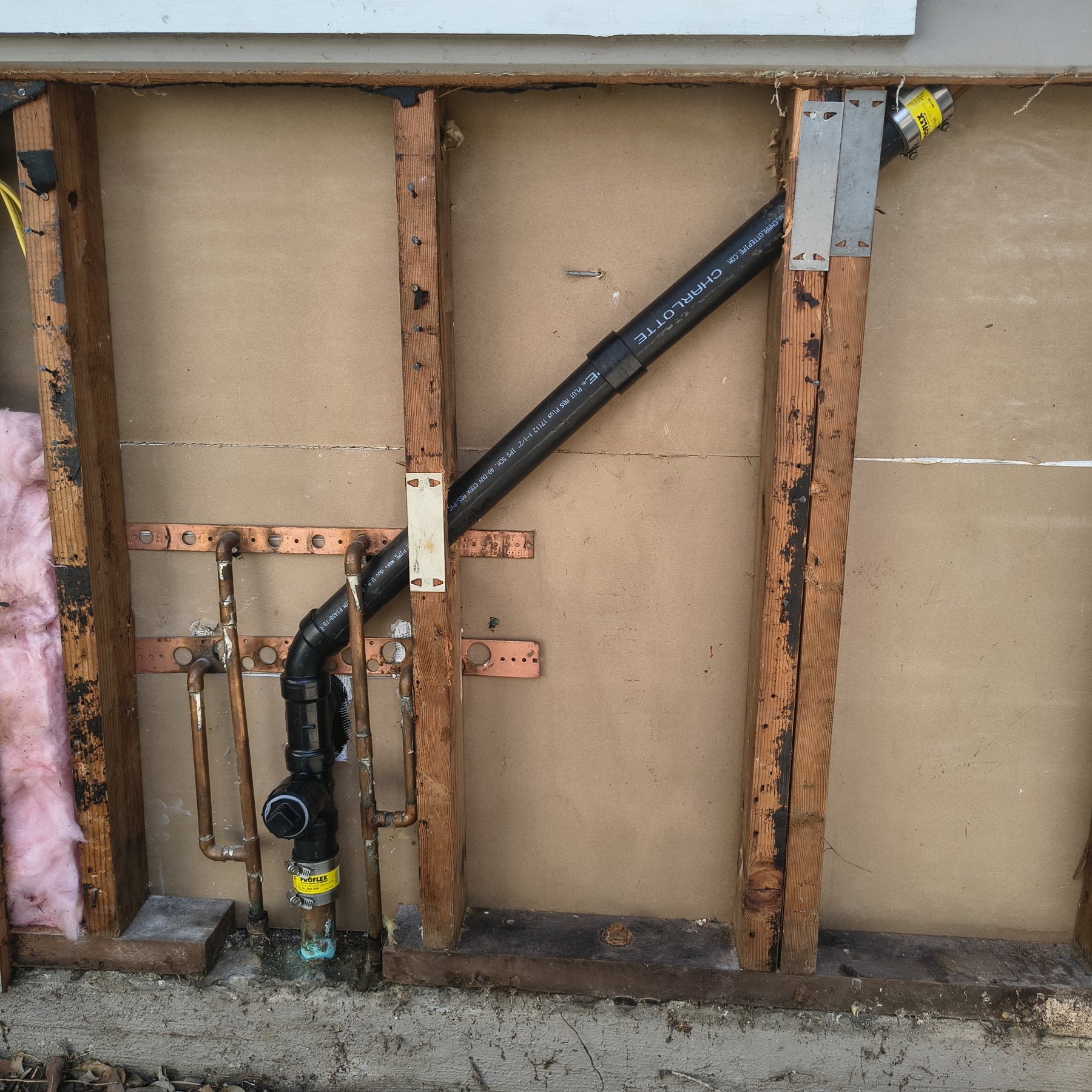
Real Water Fixers field work shown for plumbing context. A photo alone cannot establish code compliance or the permit requirements for a specific property.
THE FASTEST WAY TO FRAME THE QUESTION
Code compliance is project-specific. The useful starting point is not a random section number from the internet—it is the correct code cycle, authority, property, and scope.
1 • CODE CYCLE
For most new permit applications submitted on or after January 1, 2026, start with the 2025 California Building Standards Code. Older active permits can be tied to the prior cycle.
2 • AUTHORITY
The city or county serving the exact property administers permits and inspections. A mailing city does not always tell you whether the property is inside city limits.
3 • SCOPE
Replacing equipment in place, moving fixtures, altering piping, adding gas work, opening walls, or changing system layout can create different code and permit questions.
4 • RECORD
If a permit or inspection applies, keep the approved scope, plans or product information, inspection records, corrections, and final documentation together.
CURRENT CALIFORNIA STATUS
The California Building Standards Commission published the 2025 Title 24 code on July 1, 2025 with a statewide effective date of January 1, 2026. Part 5 is the California Plumbing Code, based on the 2024 Uniform Plumbing Code. CBSC also publishes errata, supplements, and code-change resources, so the official state code page is the best place to confirm the current edition.
STATE BASELINE + LOCAL ADMINISTRATION
California law allows local governments to adopt code amendments within the state framework. Those amendments are generally more restrictive and must follow state filing requirements. The local building department also controls the project-specific permit, plan-review, inspection, and correction process.
That is why two homes with similar plumbing can still have different procedural requirements when they are in different jurisdictions—or even when their permit applications were filed under different code cycles.
Code: Technical standards that govern covered work.
Permit: Authorization/review tied to a defined project and property.
Inspection: Review of covered work at required stages.
Contractor license: A separate qualification and consumer-protection question.
Passing an inspection is not the same as a lifetime warranty, and a permit is not a substitute for contractor-license verification.
WHERE CODE QUESTIONS SHOW UP
These are examples of question categories, not universal requirements. The correct installation method comes from the current adopted code, manufacturer instructions, local amendments, and the authority reviewing the specific project.
WATER HEATERS
Code questions can involve location, seismic restraint, venting/combustion, temperature-and-pressure relief discharge, drainage, energy source, clearances, and related electrical or gas work. The exact requirements depend on the equipment and installation.
SUPPLY PIPING
Material, sizing, support, penetrations, shutoffs, pressure, connection details, and where new work joins existing piping can all matter. A code guide should not be used as a substitute for a project-specific design or inspection.
DRAINAGE
Drainage work can raise questions about pipe sizing, slope, venting, traps, cleanouts, connections, and testing. The applicable path depends on what is being repaired, replaced, added, or rerouted.
GAS PIPING
Gas piping can involve approved materials, sizing, valves, supports, testing, appliance connections, and coordination with other code requirements. Gas work should stay on the qualified, permitted path when required.
FIXTURES
Fixture work can touch water-supply connections, drainage, traps, clearances, backflow or air-gap requirements, and accessibility or layout rules depending on the project.
WATER TREATMENT
Water-treatment equipment can create plumbing questions around bypasses, drains, air gaps, cross-connection protection, pressure, waste discharge, and how treatment equipment connects to the building plumbing.
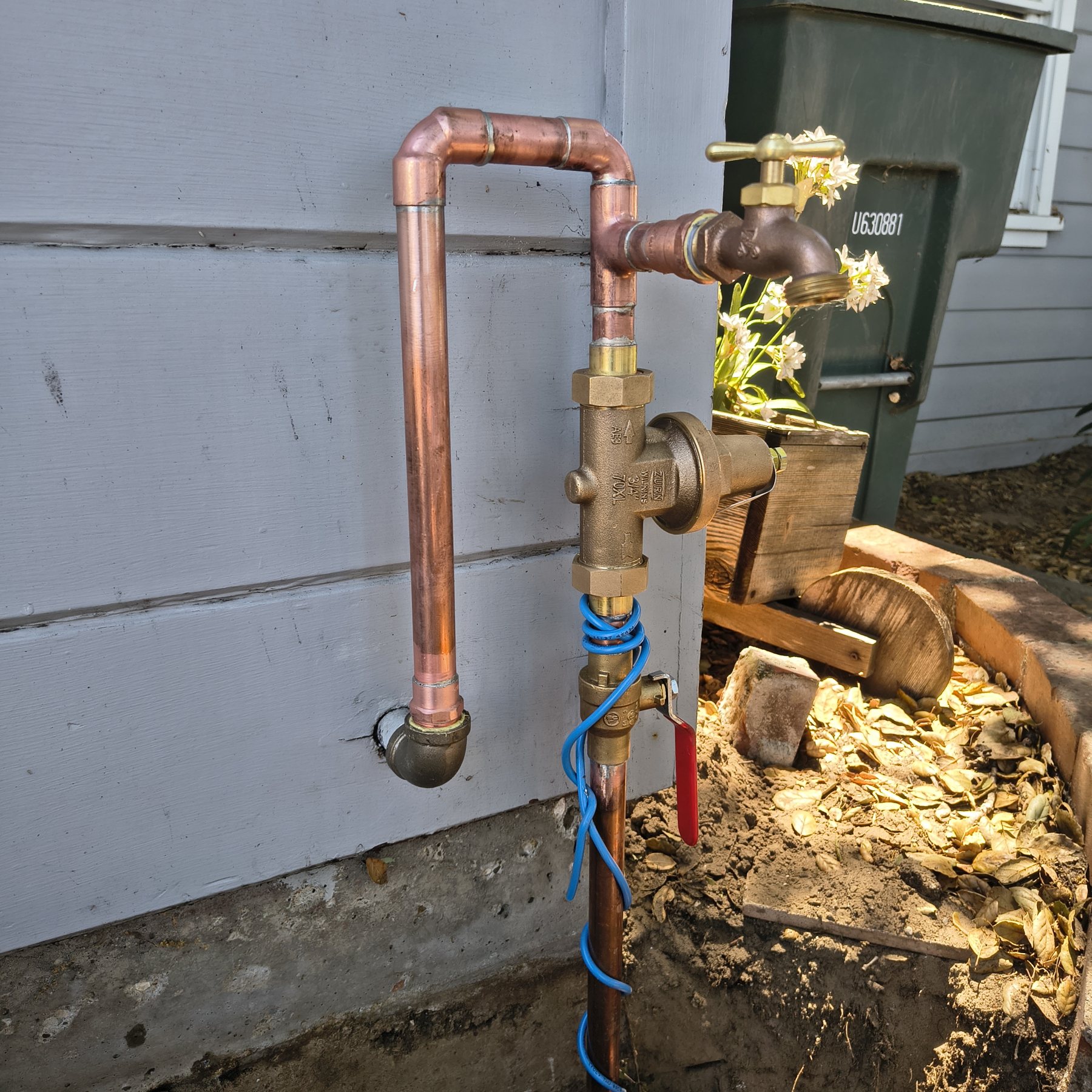
Field conditions matter. Existing layout, pressure, access, materials, and the repair scope can change what must be evaluated before work begins.
A CODE QUESTION IS NOT A DIAGNOSIS
A code book does not diagnose a leak, failed valve, pressure problem, clogged drain, damaged pipe, or worn-out water heater. The first technical job is to identify the actual plumbing condition. Once the repair or replacement scope is clear, the applicable code, permit, manufacturer, and inspection requirements can be checked for that work.
This keeps homeowners from overcorrecting the wrong problem—or assuming an old installation must be rebuilt simply because a newer code edition now exists.
OLDER HOME? START WITH THE WORK, NOT THE YEAR BUILT
Existing buildings often contain plumbing installed under earlier codes. New work, alterations, repairs, replacements, changes of use, or discovered unsafe conditions can trigger current requirements or other Title 24 provisions, but the answer depends on the project.
The permit application date matters too: California’s 2025 code cycle applies to applications submitted on or after January 1, 2026, while applications received on or before December 31, 2025 remain under the 2022 cycle. For an existing permitted project, do not assume the newest edition automatically replaces the code attached to that permit.
The plumbing code is only one part of California Title 24. Depending on the work, residential/building, mechanical, electrical, energy, green-building, existing-building, accessibility, fire, or other requirements can also affect a project.
That is another reason this page stays a practical guide rather than pretending to be a complete code matrix.
LOCAL AUTHORITY EXAMPLES
These official pages are examples from the two counties Water Fixers serves most heavily. They are not a complete city-by-city directory. For the broader routing list, use the Water Fixers Plumbing Permit Guide.
The City lists the 2025 California Plumbing Code based on the 2024 UPC and notes that California model codes are adopted and amended locally by the City Council.
The County Building & Safety Division administers and enforces state and county building, plumbing, mechanical, and related codes for county jurisdiction.
Use the City’s permit/forms resource when the property is inside San Luis Obispo city jurisdiction and you need current permit or inspection guidance.
For unincorporated SLO County, the County maintains a Residential Mechanical, Electrical & Plumbing permit path and PermitSLO guidance.
INSPECTION IS A CHECKPOINT
When an inspection applies, the inspector reviews covered work within the permit and inspection scope. If corrections are issued, keep the correction notice, document the completed work, and confirm whether another inspection or final approval is required.
After the project is complete, retain the permit, approved plans or product information, inspection/final records, invoices, warranty information, and any service documentation. Those records can be useful for future repairs, remodels, property sales, and equipment replacement.

An inspection reviews covered work at a point in time. It does not guarantee that plumbing will never clog, leak, corrode, wear out, or need maintenance later.
OFFICIAL CODE RESOURCES
Use the official CBSC codes page to confirm the active Title 24 edition and find current errata, supplements, and publisher access.
CBSC’s change summary explains substantive California amendments in the 2025 edition and is useful when moving from the 2022 code cycle.
Information review: September 2026. California code cycles, errata, supplements, local ordinances, and permit procedures can change. Recheck the official state and local sources before beginning work.
DIRECT ANSWERS
Water Fixers can diagnose the plumbing condition, explain the proposed work, and help you identify the code, permit, manufacturer, and inspection questions that should be confirmed for the property. The authority having jurisdiction remains the source for the final code and permit determination.
Water Fixers Plumbing & Filtration • California License #719792
CALL NOW! Se Habla Español!