








Pumps & Pressure Systems
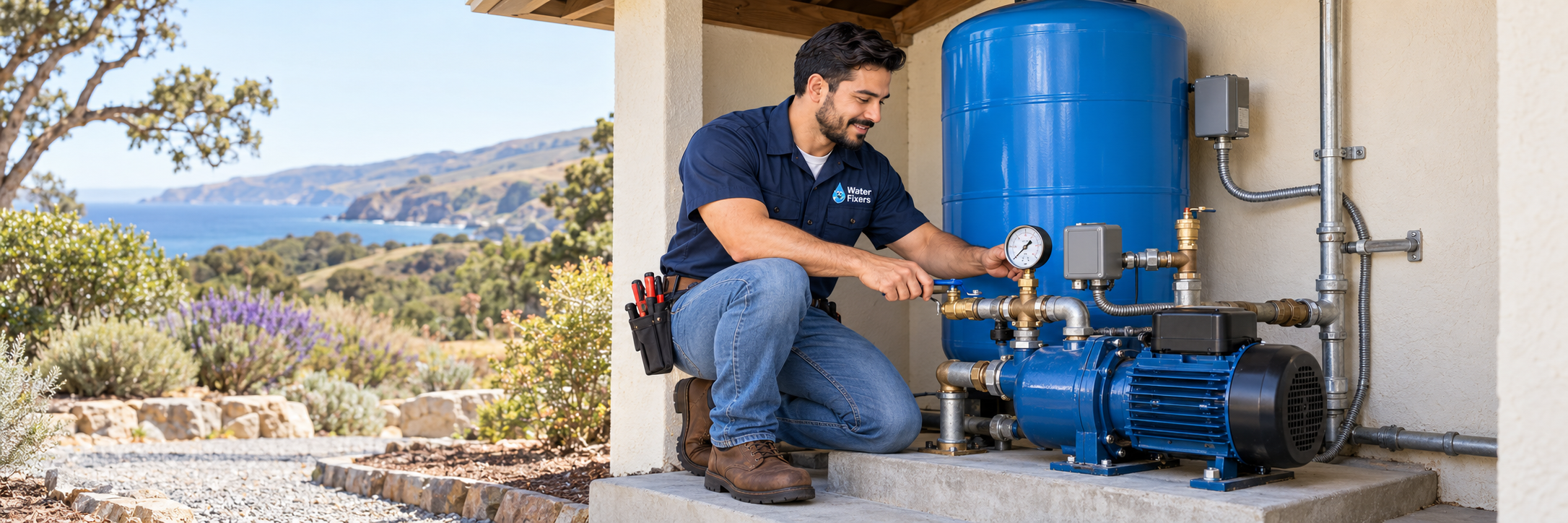
Pump and pressure system diagnosis, repairs and service to keep water moving reliably through your home.
Plumbing Services
Local plumbing repairs, fixture updates and water line service to keep your home running smoothly every day.
Leak Detection
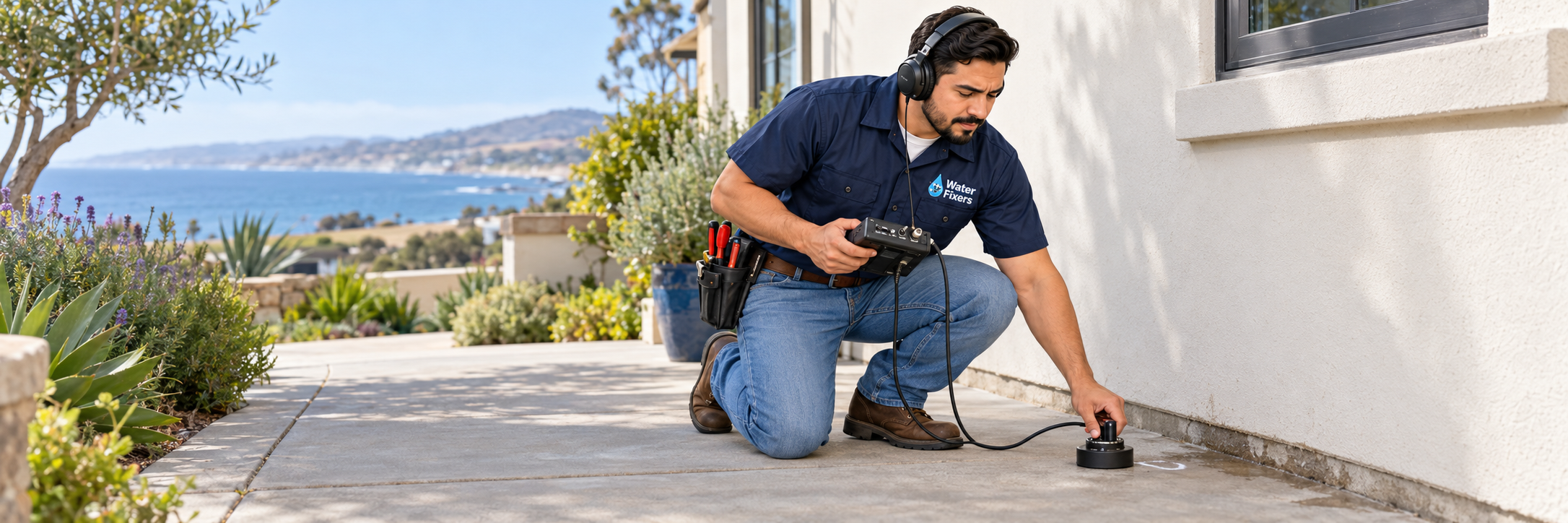
Help locating hidden leaks and unexplained water use, with clear guidance on the next steps for your home.
Drains & Sewer
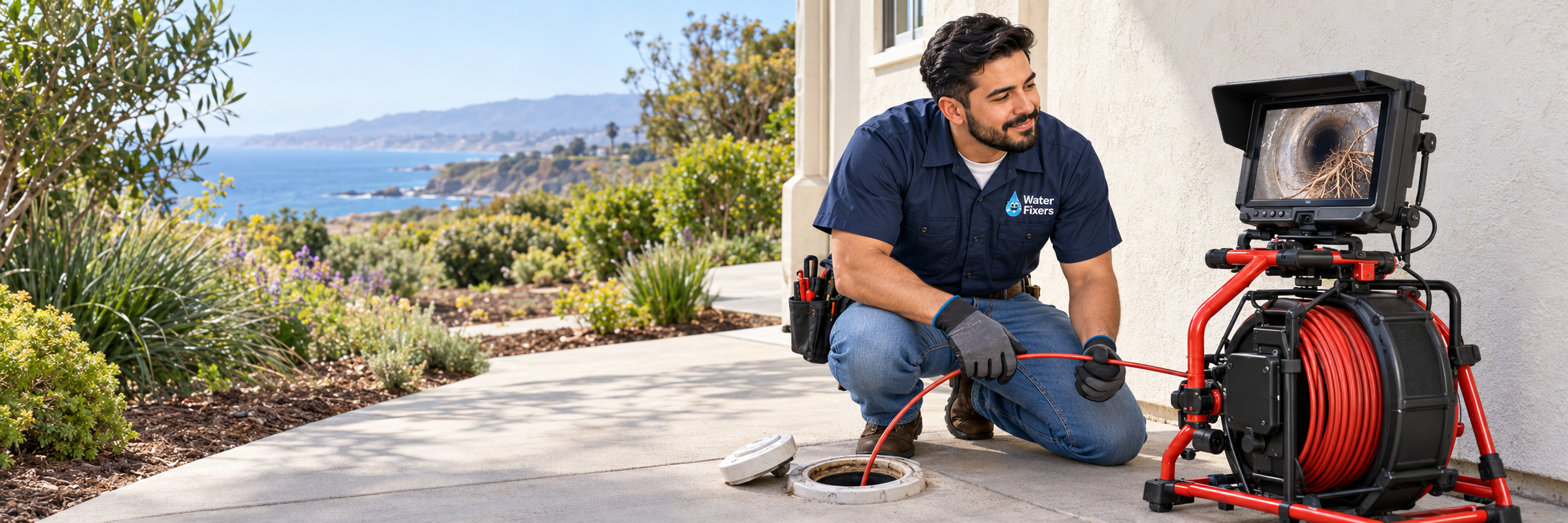
Drain cleaning and sewer camera inspections to find the cause of stubborn clogs, slow drains and backups.
Gas Line Services
Gas line installation, repairs and appliance connections, with careful attention to your home’s plumbing needs.
Water Heater Services
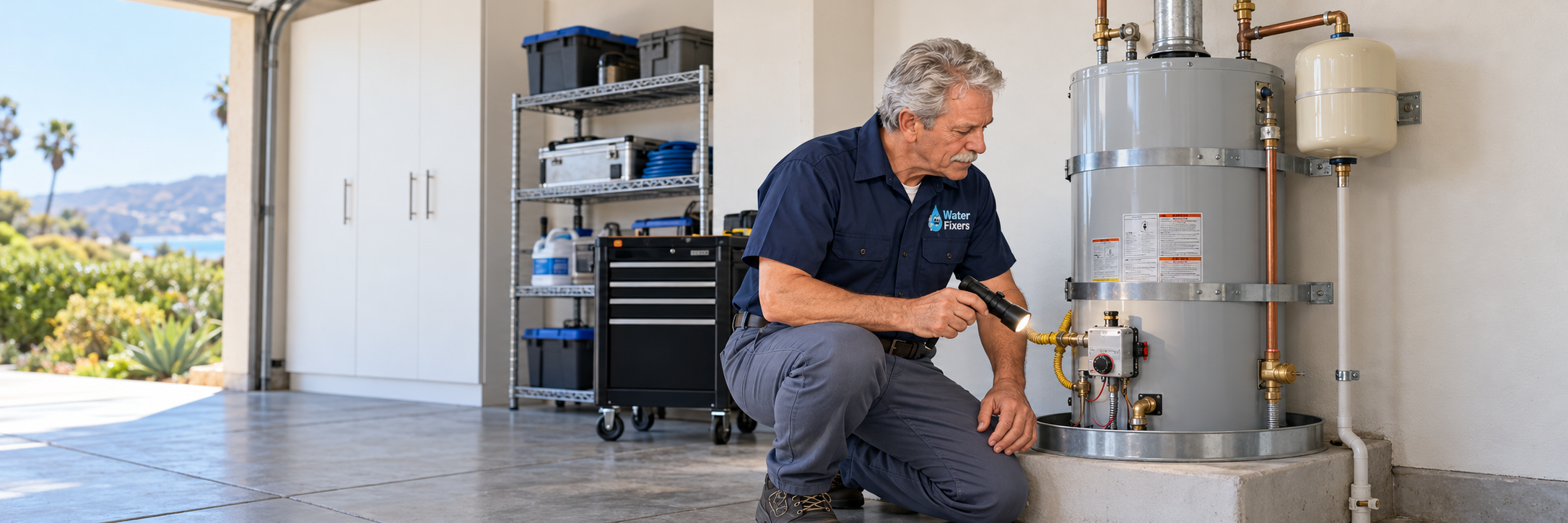
Tank and tankless water heater repairs, replacement and maintenance to keep hot water ready for daily use.
Santa Maria is more than a service address. It is the center of a working agricultural valley, a city with its own municipal utilities and permit process, and a practical Central Coast home base for parks, schools, shopping, wine country and the region’s barbecue tradition.
This guide gives homeowners and buyers a reliable starting point for who handles what, what local records matter, and where to go next when a question becomes property-specific.
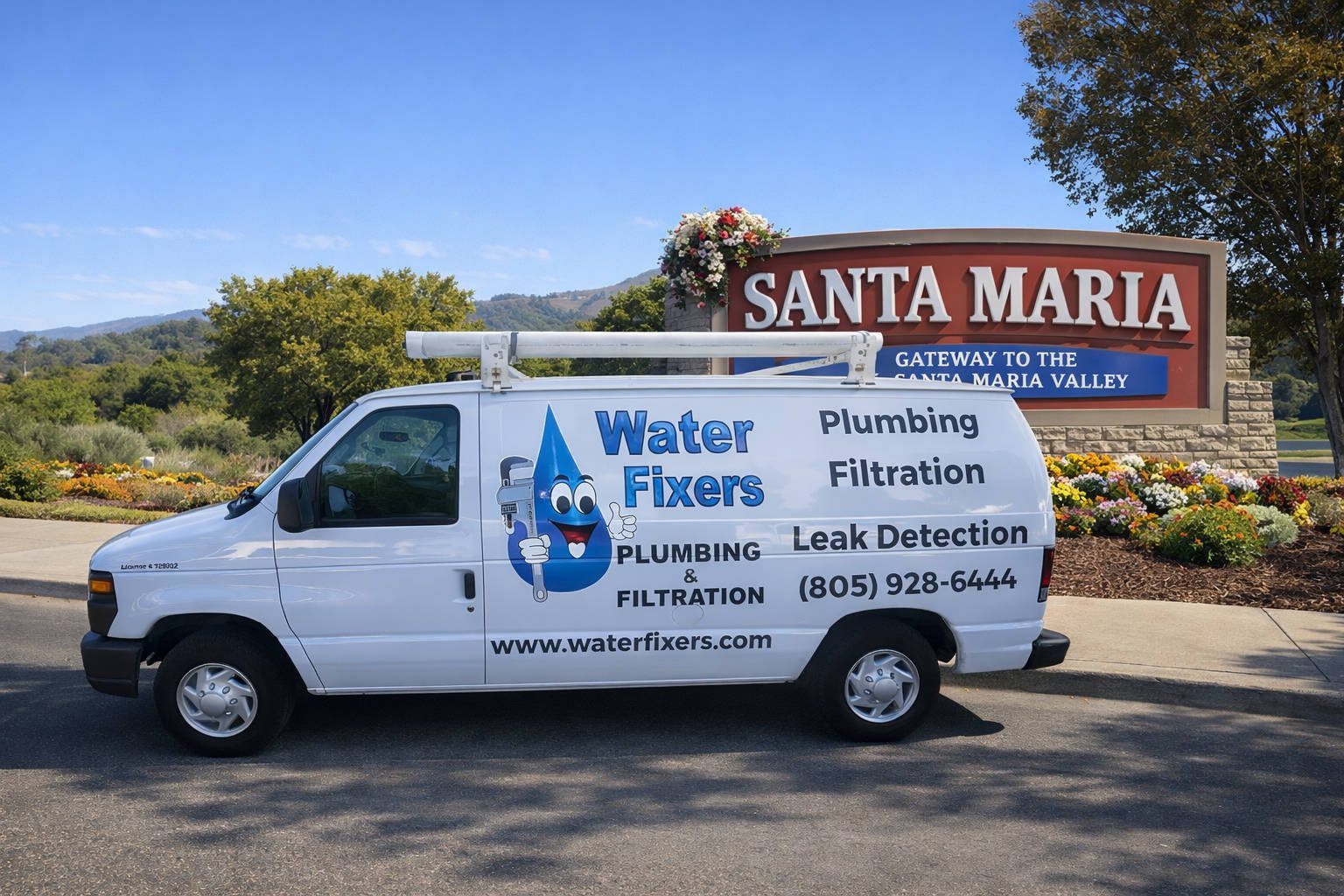
Santa Maria • Santa Barbara County
City utility and permit information should always be checked against the exact property address and current City guidance.
These are useful orientation points, not substitutes for an address-specific record or project review.
Santa Maria is an incorporated city in northern Santa Barbara County. City departments—not a neighboring district—are the first stop for many municipal utility and permit questions.
The City states that water service is mandatory within Santa Maria and provides the starting point for City utility service and current water information.
The City reports two supply sources: local groundwater and imported State Water. The supplies are blended, in part, to reduce the hardness and mineral content of local groundwater.
Santa Maria Community Development includes the Building Division, which reviews plans, issues building permits and performs construction inspections.
This is not a tourism directory, but a community guide should still reflect the place. The Valley’s food, agriculture, parks and regional connections matter when you are deciding where a property fits and which public agency actually serves it.
Santa Maria’s barbecue tradition is one of the Valley’s best-known cultural signatures and remains part of the area’s food identity.
The broader Santa Maria Valley is an active agricultural and wine-growing region, with the Foxen Canyon corridor connecting local wineries and rural landscapes.
Los Flores Ranch, Preisker Park and nearby coastal open spaces give residents access to hiking, family recreation and Central Coast scenery without leaving the region.
Santa Maria sits close to Orcutt, Guadalupe, the Nipomo area, the coast and the Santa Ynez Valley, so regional services and community resources can cross city lines even when utility and permit authority does not.
A Santa Maria mailing address does not by itself answer every jurisdiction question. Start with the exact parcel or service address, then confirm the utility account and permit record before applying citywide assumptions to the home.
For a property inside City service, begin with current City utility information. Public-system records explain the municipal side of service; they do not diagnose a fixture, pressure issue, heater, leak or private treatment device inside the residence.
When a project involves plumbing, gas, electrical, mechanical work, walls or other regulated construction, check the current City review path before work begins. Scope matters: repair, relocation, addition and new equipment may be treated differently.
Utility information tells you about the public system. Property-specific symptoms still need to be evaluated at the residence. That distinction helps prevent a citywide water fact from being mistaken for a diagnosis of one home.
The City of Santa Maria identifies local groundwater and imported State Water as its two supply sources. The City says local groundwater has higher hardness and mineral content and that blending with imported water lowers those levels compared with the local supply alone.
That is useful community context, but it still does not tell you whether one home needs a softener, filtration, reverse osmosis or no treatment at all. Existing plumbing, the service address, the treatment goal and—when appropriate—testing should guide that decision.
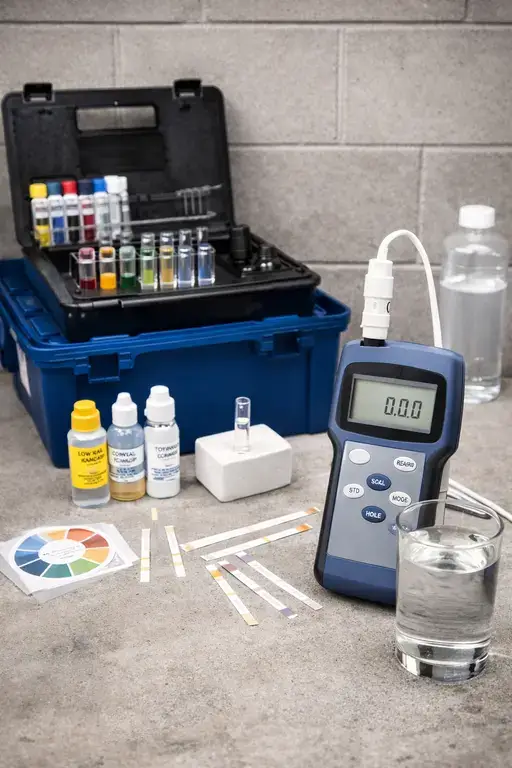
Testing is most useful when it answers a specific question about the property or treatment goal—not when appearance alone is used to guess at water chemistry.
Permit and utility responsibilities can change with the kind of work being done. A like-for-like repair, a relocation, a new branch line, excavation and a new treatment system are not the same project.
The City’s Community Development guidance says work involving plumbing, electrical, mechanical systems or walls generally requires permit review. Check the actual scope before opening walls or rerouting systems.
Before digging, use the required utility-locating process and remember that public marks do not map every private line on the property. Private-side piping still has to be identified safely.
Confirm the source, treatment goal, available plumbing space, drain requirements and electrical needs before equipment is chosen or relocated. The water-quality guide carries the deeper treatment discussion.
A small amount of organized information can make future repairs, remodels and equipment decisions much easier. Keep the records that explain the property—not just the last invoice.
A City water report can describe the public water system. A permit record can show prior regulated work. Neither one can tell you by itself why a faucet lost pressure, why a water heater is leaking, whether a shutoff valve works, whether a drain is restricted, or whether an existing treatment system is operating correctly.
The best sequence is simple: use the public record for context, then use the property symptom to choose the right home-side investigation.
Use City Water Services, current City reports and the dedicated Santa Maria water-quality guide.
Use the Santa Maria plumber page when the problem is a leak, drain, fixture, hot-water, pressure or piping symptom at the residence.
Use Water Testing or the Santa Maria water-quality guide when the decision depends on actual water conditions or a specific treatment goal.
Keep the community guide broad. Once the issue is specific to the home, switch to the page that matches the actual problem instead of turning this page into another service hub.
Local plumbing routing for fixtures, leaks, drains, hot water, pressure, shutoffs and supply-line questions.
Local water-supply context, treatment boundaries and links to testing, softening, filtration and RO.
Use the regional hub when the property is outside the city or you need to move among nearby community and service-area pages.
Use testing when the treatment decision depends on water chemistry, a changing private system or a specific water-quality question.
Orcutt, Guadalupe and other nearby communities can use different utility providers, districts or permit authorities. Open the community guide for the actual property location before applying Santa Maria-specific information.
Use the Orcutt guide for community-specific utility, permit and homeowner-resource starting points.
Use the Guadalupe guide for its own City utility, permit and property-resource context.
Use the Community Guides directory to choose the exact community before carrying over public-agency assumptions.
Procedures, contacts and annual reports change. Use current source pages when you are ready to act.
Quick answers for the questions that most often sit between community information and a property-specific decision.
If the question has moved from “who handles this?” to a specific leak, drain, hot-water, pressure, plumbing or water-quality problem at the property, Water Fixers can help route the issue to the appropriate service or testing path.
Water Fixers Plumbing & Filtration • Santa Maria, California • 805-928-6444 • California contractor license #719792