
GROVER BEACH • SHUTOFF VALVE SERVICE
Shutoff valve replacement in Grover Beach is appropriate when a private fixture stop, branch valve or whole-house shutoff leaks, will not close fully, is damaged or can no longer be relied on to isolate water. Water Fixers inspects the valve, nearby fittings and connected piping before recommending focused repair or replacement.

Start with the symptom, then confirm which control point is involved. A leaking angle stop under a sink is a different job from a private whole-house shutoff near the service entrance, and both are different from a pressure regulator or an unfamiliar meter-side control.
Leakage can come from the stem or packing area, the valve body, a threaded or soldered connection, or nearby piping. Identify the actual source before deciding whether the valve needs repair or replacement.
If a shutoff is seized, turns without stopping the water or feels unreliable, do not keep forcing it. Plan controlled isolation and inspect the valve and surrounding connection before more stress is put on the piping.
If the faucet, toilet or fixture connection is failing but its shutoff works correctly, start with fixture plumbing instead of replacing a working valve.
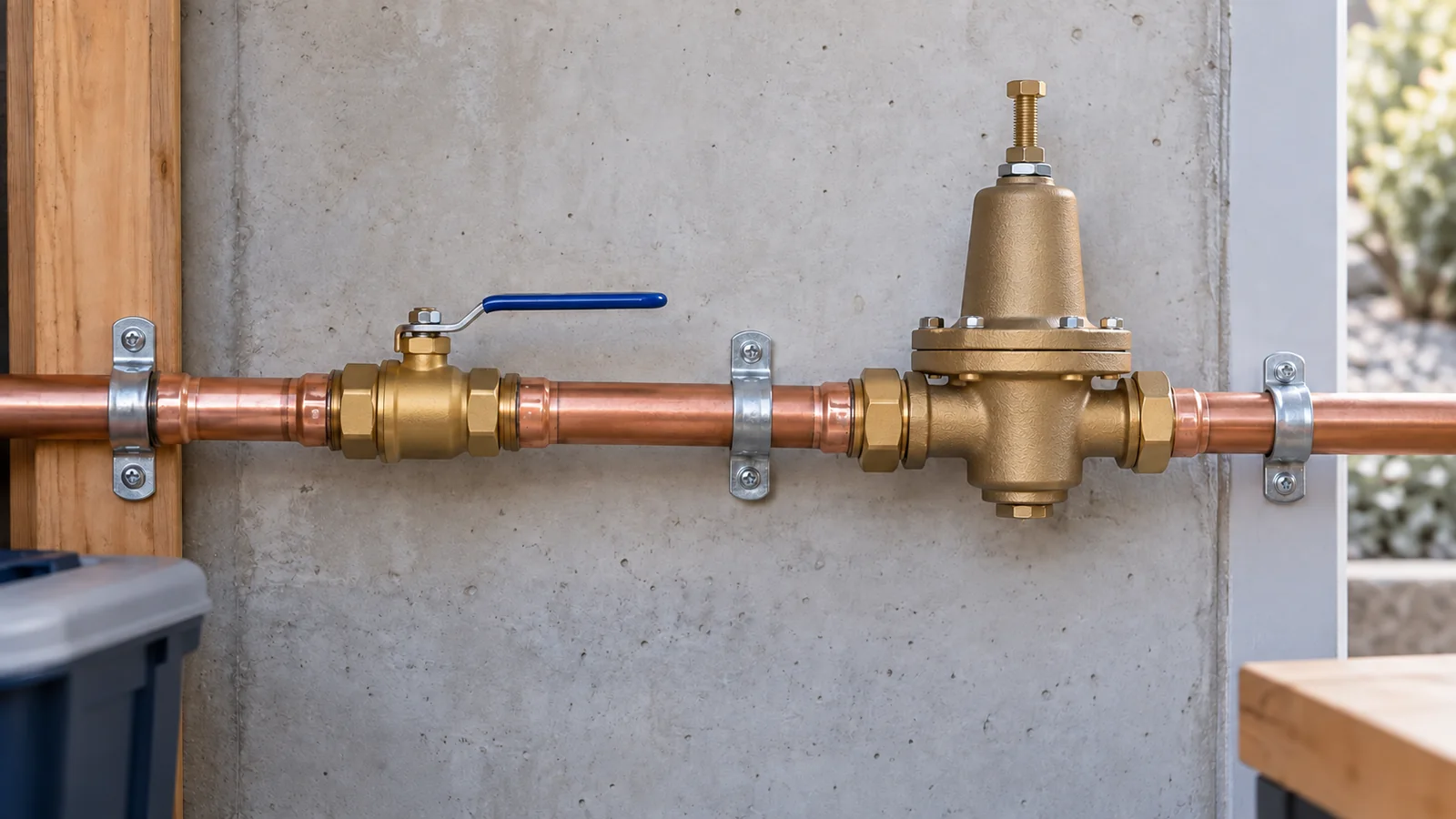
Whole-house pressure concerns call for pressure testing and PRV evaluation. A shutoff valve isolates flow; a pressure regulator controls incoming pressure. They may be near one another but they do different jobs.
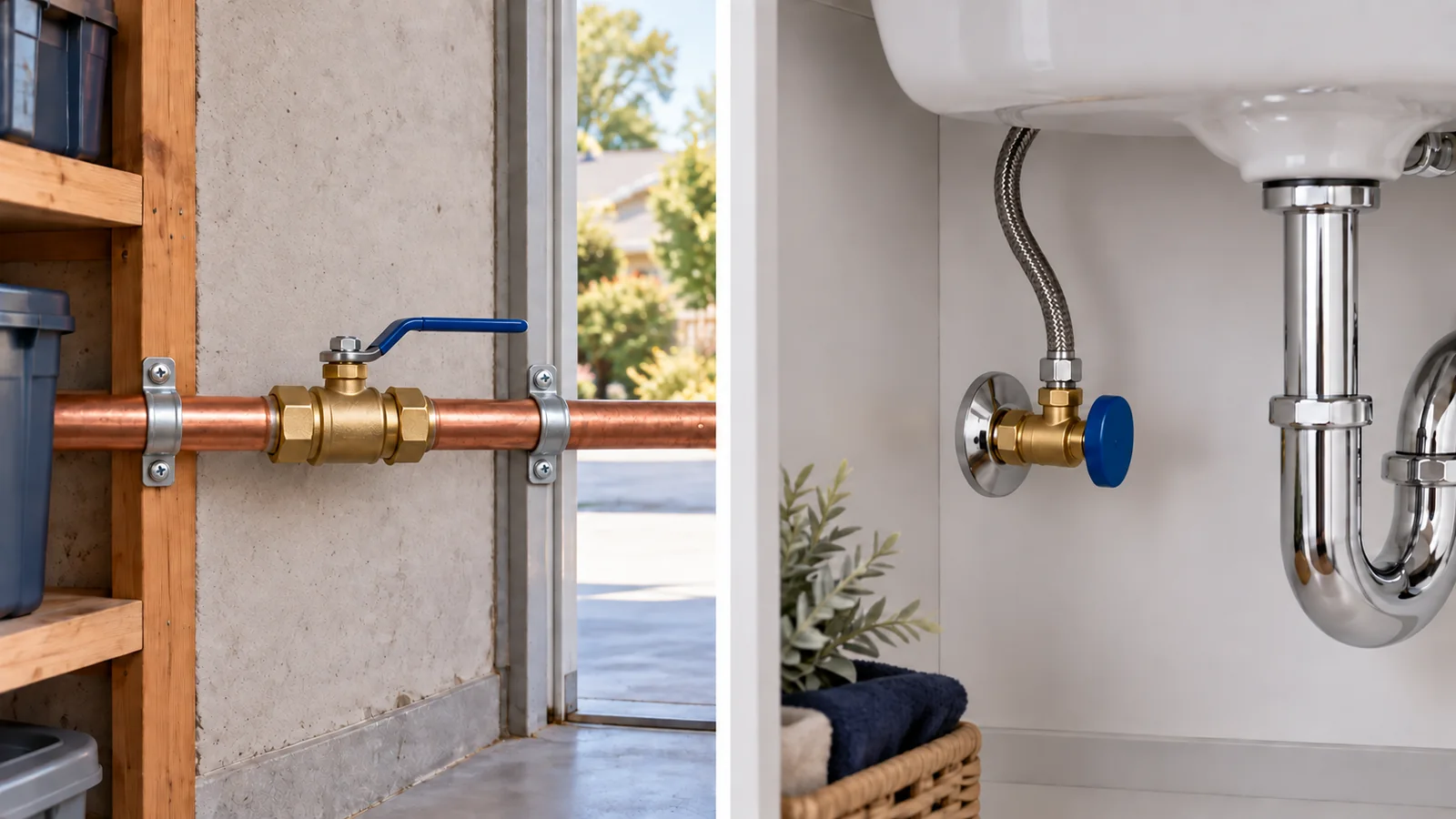
A fixture shutoff or angle stop isolates one fixture or appliance connection. A private whole-house shutoff is intended to isolate the building supply more broadly. Knowing which valve is unreliable determines the repair scope.
An angle-stop leak can stay at the fixture when the surrounding piping is sound. A main-control problem may require a broader isolation plan near the service entrance. They should not be treated as the same repair.
Grover Beach Public Works’ current 1-inch water-service standard labels a CUSTOMER STOP separately from the METER STOP in the meter-area layout. When a shutoff problem is close to the meter, first identify which control is actually the customer-side valve before service is planned.
Water Fixers can evaluate the private shutoff and the piping connected to it. If a control point is not clearly the customer stop shown in the City standard, avoid treating unfamiliar meter-side equipment as ordinary household plumbing.
Once the private valve is identified, repair versus replacement still comes down to observed condition, access, leakage, nearby fittings and whether the valve can isolate water reliably.
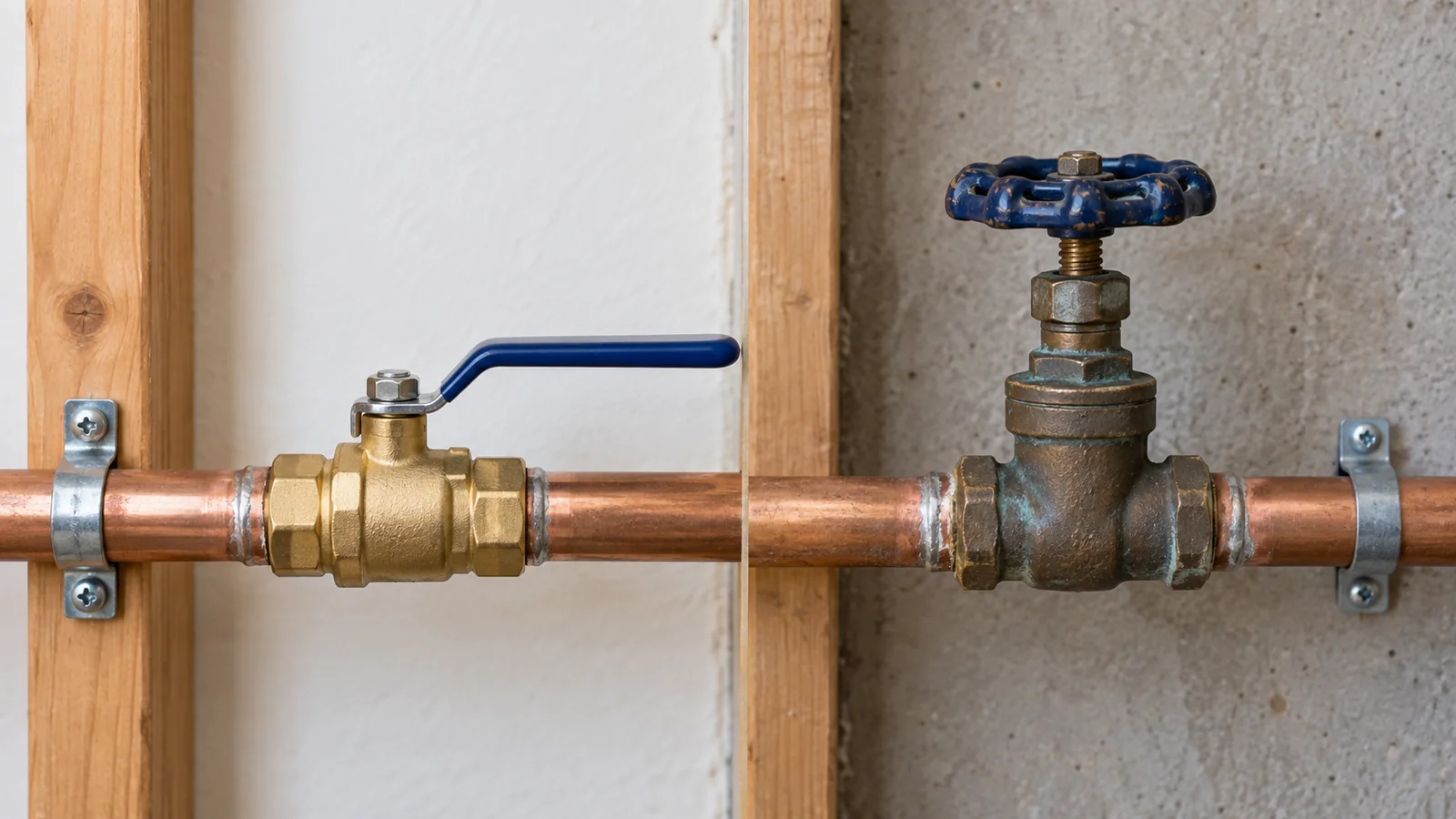
A lever-style ball valve normally moves between open and closed with a quarter turn. A gate valve uses a multi-turn wheel. Valve style alone does not decide whether replacement is needed; actual condition and operation matter more.
Hard operation, leakage or incomplete shutoff are reasons to inspect the valve and its connections. Avoid repeated force on a stubborn control because the surrounding piping can be part of the problem.
Repair versus replacement should come from what is actually found: where the leak starts, whether the valve moves and closes correctly, how accessible it is, and what condition the connected piping is in.
If leakage is limited to a serviceable point and the valve body, operating parts and nearby piping remain sound, a focused repair may solve the problem without replacing the full valve assembly.
Severe corrosion, damaged operating parts, a cracked or leaking body, or an inability to close fully can shift the practical choice toward replacement rather than another temporary correction.
A shutoff is part of a piping assembly. Nearby fittings and pipe should be checked for leakage, corrosion, stress or poor transitions so a valve repair does not overlook a larger plumbing problem.
A shutoff valve isolates water flow. A pressure regulator, or PRV, controls incoming pressure. A pressure-relief valve protects specific equipment from excessive pressure. Similar-looking hardware does not mean the components have the same job.
At a service entrance, identify the symptom before choosing the repair: inability to stop water points toward shutoff service; abnormal house pressure points toward PRV evaluation; an uncertain leak source may need leak detection first.
The exact sequence depends on valve location and access. Water Fixers confirms the control point, the condition of the valve and the safe isolation plan before disturbing the connection.
Confirm whether the problem involves a fixture stop, branch valve or private whole-house shutoff so the work is scoped to the correct part of the plumbing.
Check the leak source, corrosion, valve movement, access and nearby fittings. If the issue is close to the meter, confirm the customer-side control point before planning isolation.
Determine how the private water supply can be isolated without forcing a damaged shutoff or operating an unfamiliar meter-side control.
Complete the agreed repair or replacement, restore water, check the connection for leakage and verify that the private shutoff operates reliably.
A working angle stop does not need replacement just because the faucet, toilet or connected fixture has a problem. Use fixture service when the visible fixture is the failing component.
Water can travel along piping, cabinets or walls and make a valve look guilty when the source is elsewhere. When the origin is uncertain, locate the leak before planning valve work.
An uncontrolled supply leak or a failed main shutoff is no longer a routine valve-service appointment. Use the Grover Beach emergency plumbing path and avoid forcing a damaged control.
For broader shutoff-valve information and other service areas, see Water Fixers shutoff valve replacement and service.
A valve that leaks from the body, will not close fully, has damaged operating parts or cannot reliably isolate water should be evaluated. Not every leak requires full replacement; the valve and nearby connection determine the practical repair.
Leakage can come from the stem or packing area, valve body, threaded or soldered connection, or adjacent piping. The source should be identified before repair or replacement is chosen.
Do not keep forcing it. A shutoff that cannot stop the water reliably should be inspected and serviced with a controlled isolation plan.
No. A shutoff valve isolates water flow. A pressure regulator, or PRV, controls incoming water pressure. They may be installed near one another but serve different purposes.
Yes. Water Fixers can evaluate fixture shutoffs and angle stops at sinks, toilets and other plumbing connections and replace them when the valve or connection condition warrants it.
Yes. Grover Beach Public Works’ current 1-inch water-service standard shows a CUSTOMER STOP separately from the METER STOP at the meter area. Confirm that the valve being serviced is the customer-side control rather than assuming every meter-side valve is ordinary household plumbing.
If a shutoff is leaking, stuck or unreliable, tell us where the valve is, what happens when it is operated and whether the water supply is currently controlled. Water Fixers can inspect the assembly and determine the practical next step in Grover Beach.
CALL NOW! Se Habla Español!