
ORCUTT • WATER SHUTOFF VALVES
Shutoff valve replacement in Orcutt can restore dependable control when a fixture stop, branch valve or household shutoff leaks, will not close, is badly corroded or cannot be trusted during plumbing service. Water Fixers checks the valve, nearby connection and safe isolation plan before recommending repair or replacement.
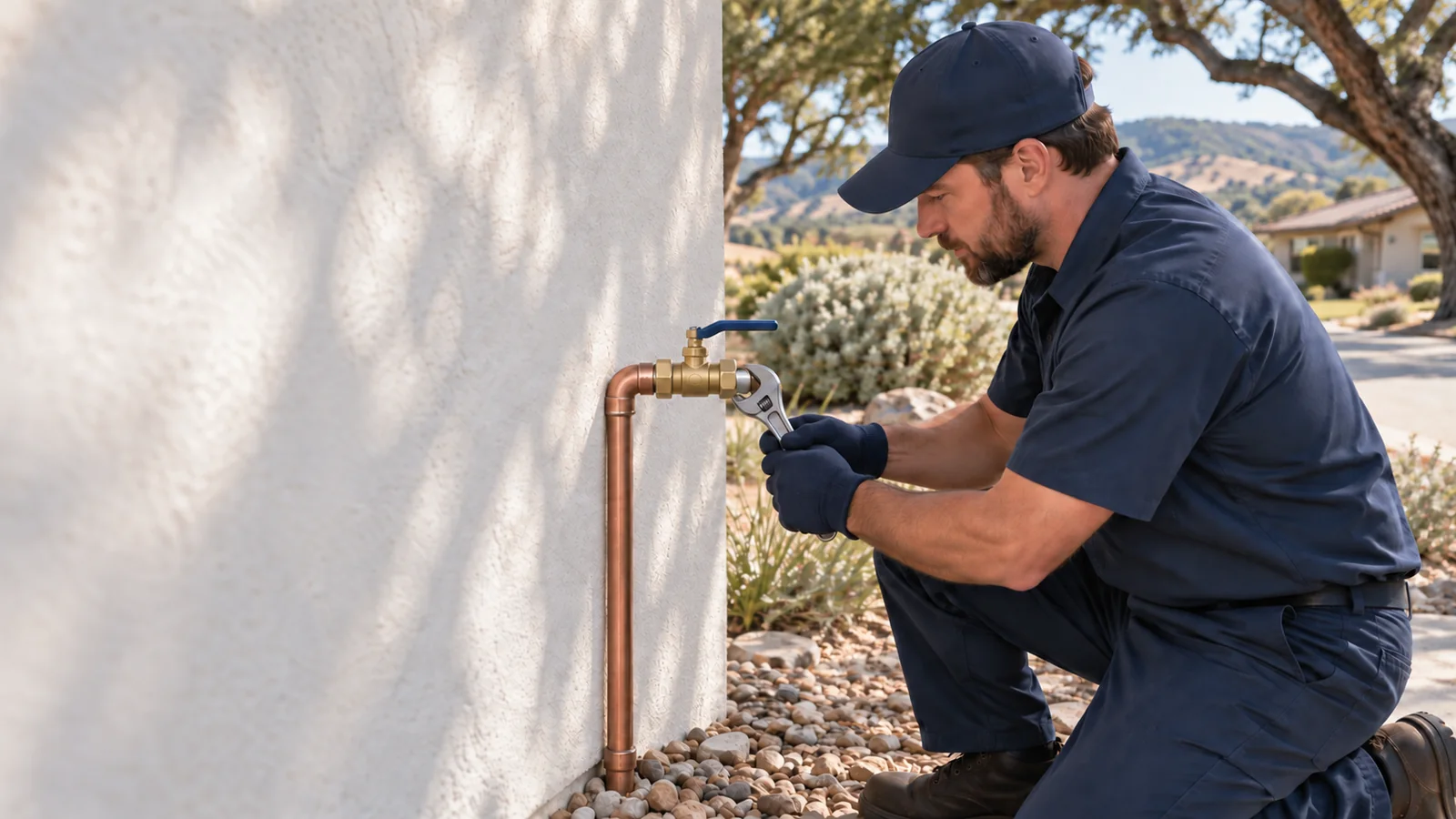
The first question is whether the problem is the shutoff itself or something nearby. Leakage, incomplete closure, a fixture problem and a pressure-control problem each call for a different next step.
Water can escape from the stem, packing area, valve body or nearby fitting. Identify the source before deciding that the whole valve needs replacement.
If the handle is difficult to move or the valve never reaches a dependable closed position, stop forcing it. A stuck or failing valve should be evaluated before an active leak makes isolation urgent.
If the faucet, toilet or other fixture connection is failing but its shutoff works normally, start with fixture plumbing instead of replacing a working valve.
A pressure regulator controls incoming pressure; a shutoff valve controls flow. Pressure complaints should be tested and evaluated on the PRV path rather than treated as a shutoff-valve failure.
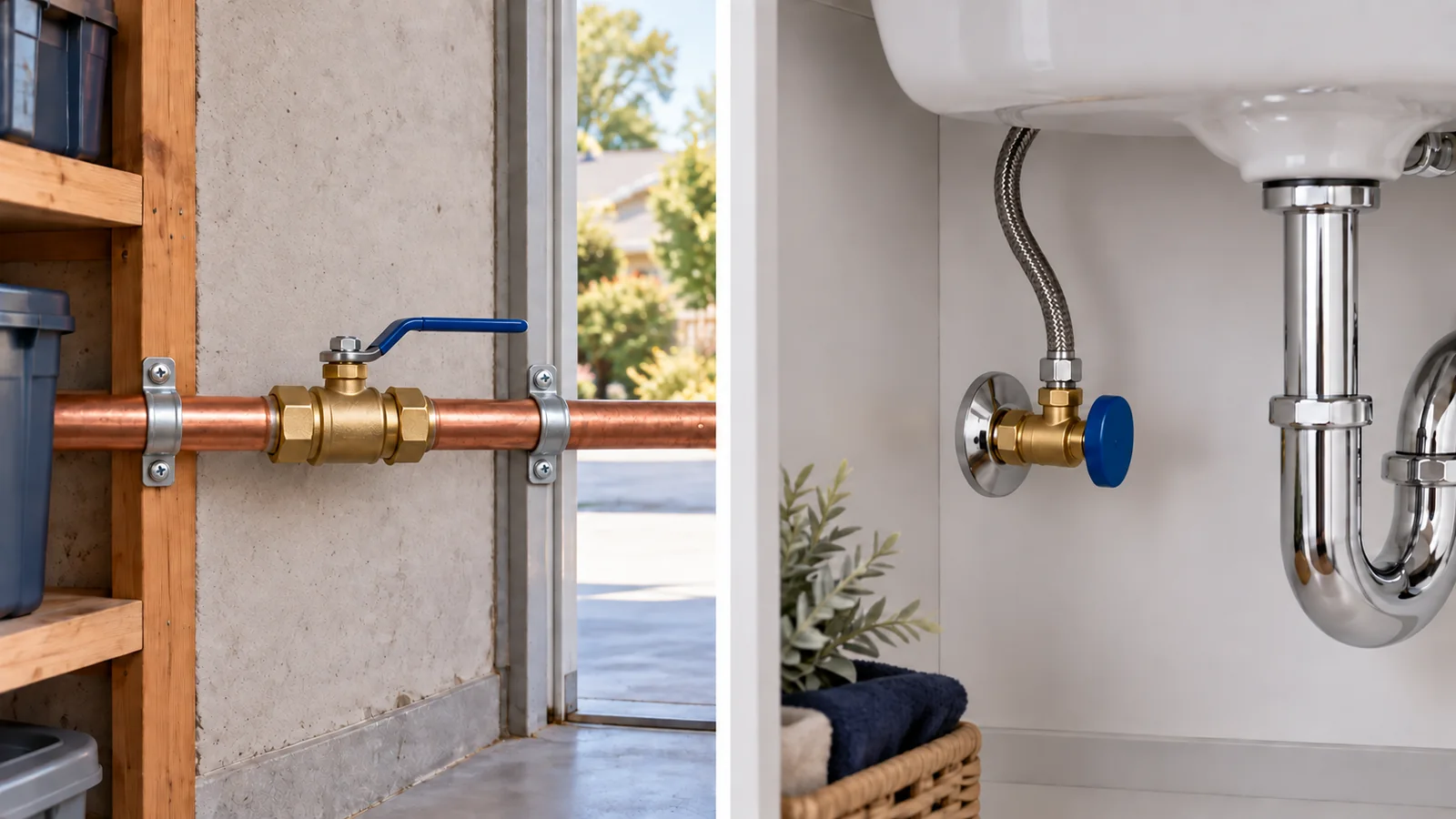
A fixture angle stop normally isolates one faucet, toilet or appliance connection. A household main shutoff controls a much broader portion of the home water supply. Knowing which valve controls what helps keep the repair scope clear.
A valve can be close to another control without doing the same job. Confirm the affected fixture or piping area before relying on a shutoff during service.
Golden State Water lists Orcutt within its Santa Maria Customer Service Area and operates the Orcutt water system. The company says it maintains the service line to the meter, while plumbing and leaks beyond the meter are the customer’s responsibility.
Golden State Water also says valves on or near its meter belong to the utility and should not be operated by customers. A household shutoff, branch valve or fixture stop should be identified separately before plumbing work is planned.
If water cannot be safely controlled with a known customer-side shutoff, do not force meter equipment. Contact Golden State Water when utility-side isolation is required, and use Water Fixers for the private plumbing valve or connection that needs service.
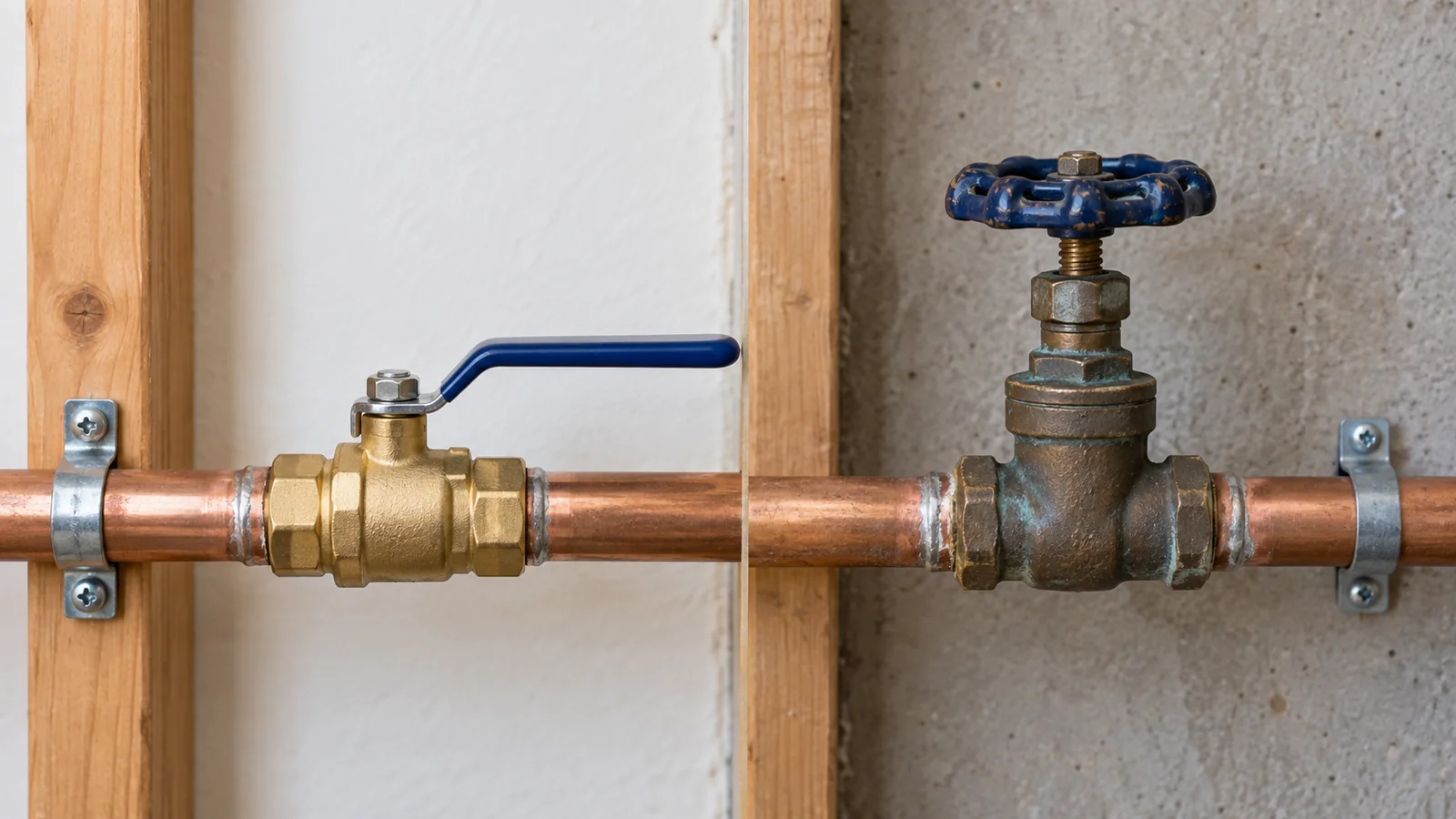
Quarter-turn ball valves and wheel-handle gate valves use different internal designs. Either type can leak, seize or stop isolating water reliably, so the service decision should follow the actual condition of the valve and its connection.
Do not repeatedly test a stiff valve by applying more force. Stress at the handle can transfer to the valve body, fittings or pipe around it. A controlled inspection is safer than trying to prove that an unreliable valve will eventually move.
There is no universal replacement age for a shutoff valve. Reliability, leakage, corrosion, serviceability, access and the condition of the nearby connection are more useful than an arbitrary year count.
Some leaks or connection problems can be corrected without replacing an otherwise dependable valve. The source of the defect should be identified before parts are changed.
Replacement becomes more reasonable when corrosion is advanced, the valve cannot close dependably, leakage keeps returning or the assembly can no longer provide reliable isolation.
Valve work depends on the connection around it. Pipe material, fittings, access and the condition of the adjacent plumbing can change how the repair is isolated and completed.
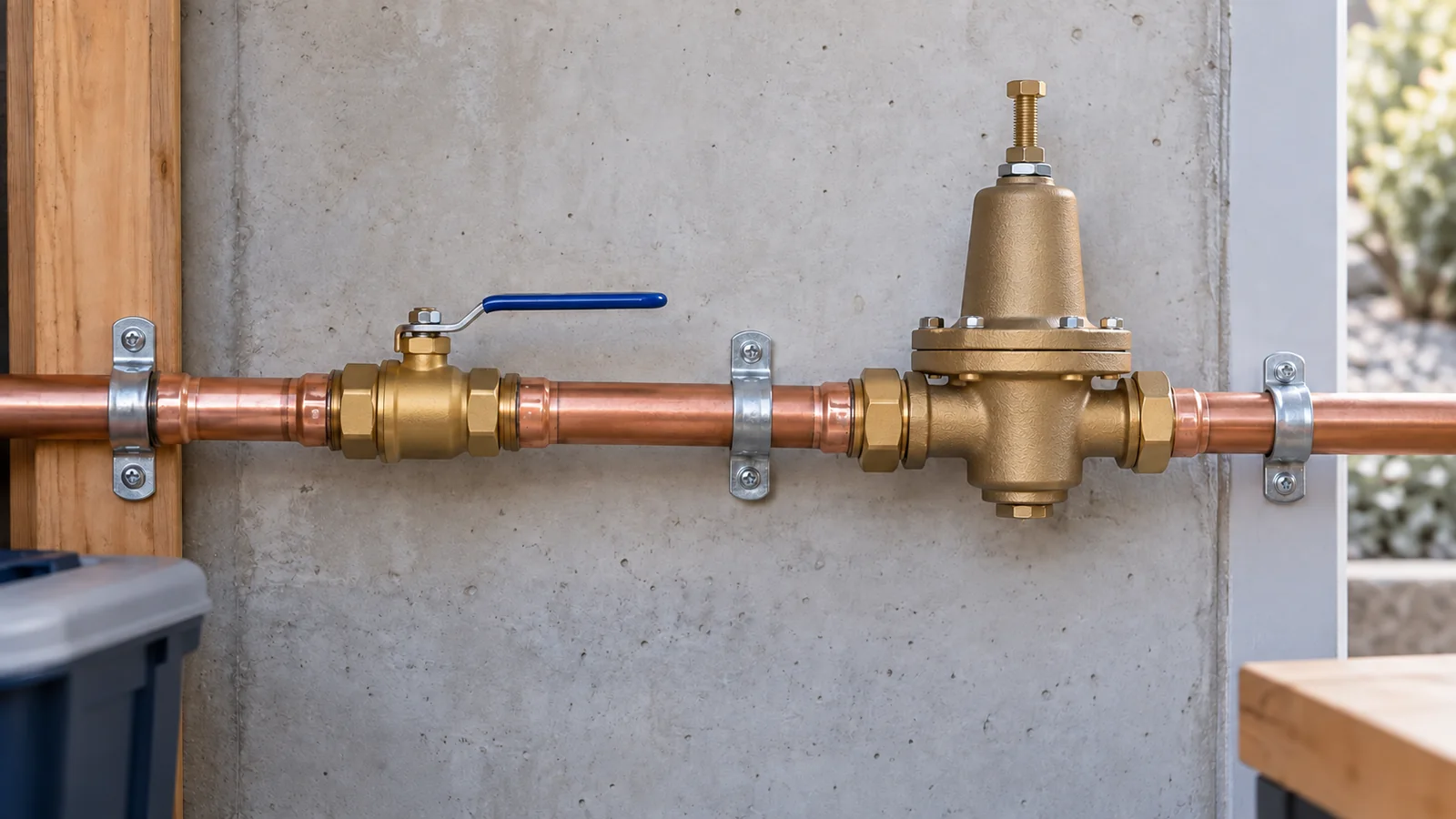
Shutoff valves stop or isolate water flow. Pressure-reducing valves regulate incoming pressure. Pressure-relief valves are separate safety devices. Keeping those terms distinct helps the plumbing problem start on the right service path.
At a service entrance, several valves may be installed near one another. Identify whether the complaint is flow control, pressure regulation or a leaking connection before deciding which component needs attention.
The exact sequence depends on the valve, access and how water can be isolated. A typical service call starts with the control point and surrounding plumbing before any replacement decision is made.
Confirm whether the problem involves a fixture stop, branch valve or household main shutoff and what portion of the plumbing it controls.
Check where water is escaping, how the valve operates, its corrosion or damage, the available access and the condition of nearby fittings.
Determine how the customer-side water supply can be controlled without forcing unfamiliar, damaged or utility-owned equipment.
Repair or replace the agreed valve or connection, restore water, operate the shutoff and check the completed work for reliable control and visible leakage.
If the shutoff works and the problem is the faucet, toilet or other fixture, use fixture service rather than turning a fixture repair into an unnecessary valve replacement.
If water is present but you cannot tell whether it comes from the valve, fitting, wall or another source, locate the leak before replacing a valve that may still be sound.
If water remains uncontrolled, focus first on safe isolation and limiting damage. Do not force a stuck valve; use the Orcutt emergency-plumbing path when the condition cannot be reliably contained.
For broader information, see Water Fixers Shutoff Valve Replacement. For other local work, visit Orcutt Plumbing Services, the Santa Maria Valley service page, or all service areas.
A shutoff should be evaluated when it leaks, will not fully close, is badly corroded or cannot be operated reliably. Replacement may be appropriate when dependable isolation cannot be restored through a focused repair.
Leakage can come from the stem, packing area, valve body or nearby connection. Identify the source before deciding whether the valve itself or the surrounding fitting needs repair.
Do not keep forcing it. An unreliable shutoff can make future plumbing work harder to control, so the valve and surrounding connection should be inspected before it is needed during an emergency.
No. A shutoff stops or isolates water flow. A pressure-reducing valve, or PRV, controls incoming water pressure. They may be installed near one another but they do different jobs.
Yes. Water Fixers can evaluate fixture angle stops and other customer-side shutoffs and repair or replace them when the valve or connection condition makes that appropriate.
No. Golden State Water says valves on or near its meter belong to the utility and should not be operated by customers. Use a known customer-side shutoff when it is safe and contact Golden State Water when meter-side isolation is required.
Tell Water Fixers where the valve is located, what happens when it is operated and whether water is currently under control. We can evaluate the valve and nearby plumbing, then separate a shutoff problem from a fixture, pressure or hidden-leak issue.
CALL NOW! Se Habla Español!