
SANTA YNEZ • WATER SHUTOFF VALVES
Shutoff valve replacement in Santa Ynez is appropriate when a private fixture stop, branch valve or whole-house shutoff leaks, will not close, is badly corroded or cannot be trusted to isolate water. Water Fixers checks the valve and nearby piping before deciding whether focused repair or replacement makes sense.
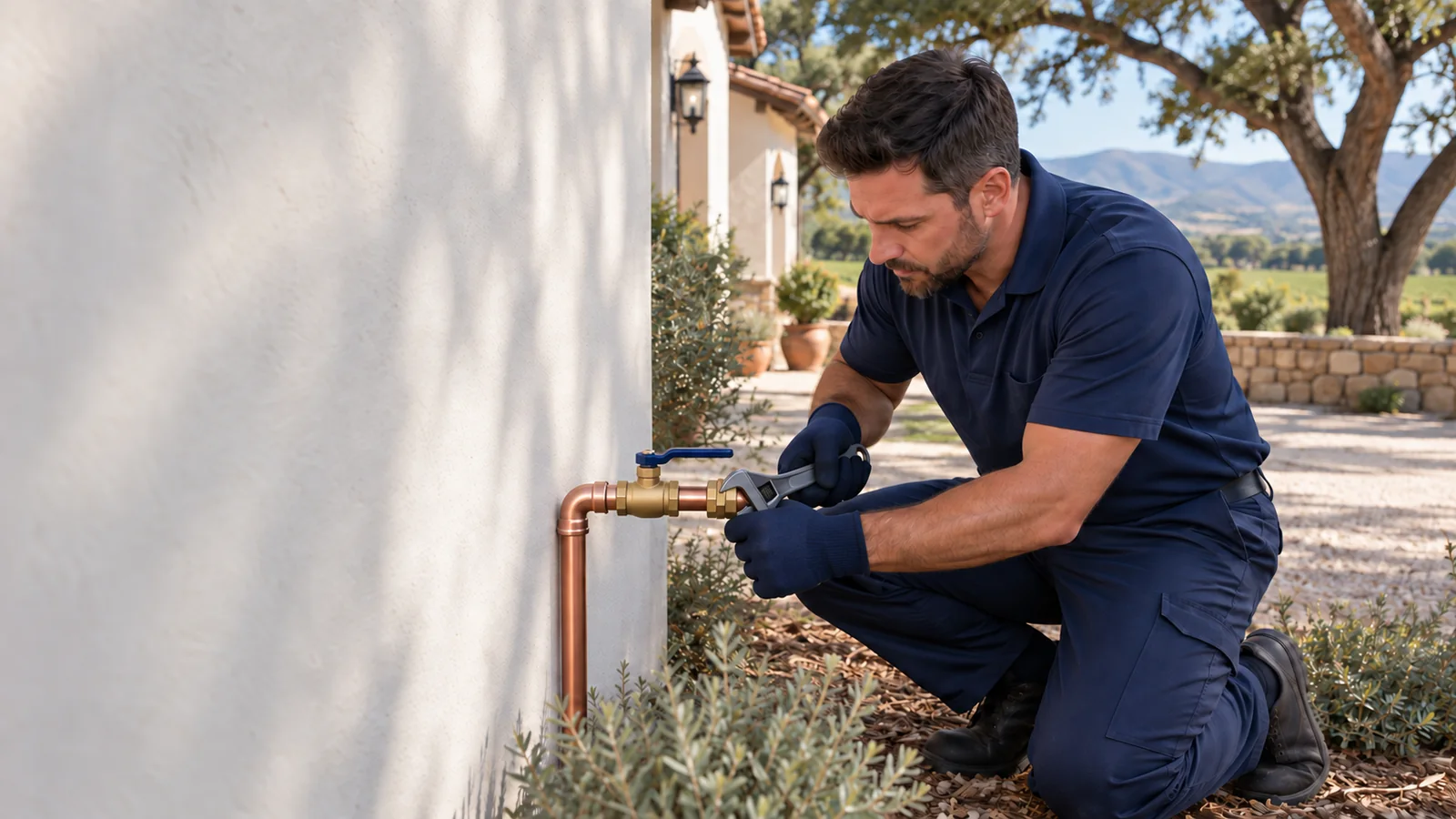
Identifying the correct control point first keeps a fixture problem from being mistaken for a main-valve or pressure issue. A fixture stop, branch valve and private whole-house shutoff solve different isolation problems.
Water around a shutoff should be traced to the stem, body or adjoining fitting before any repair choice is made. A leaking control point should not be treated as dependable isolation.
If the handle turns poorly or the valve never reaches a reliable closed position, stop forcing it and have the assembly checked before a leak makes isolation urgent.
If the faucet, toilet or fixture connection is failing but its shutoff works correctly, start with fixture plumbing instead.
Pressure regulation and water isolation are different jobs. If the concern is high or unstable pressure, test the pressure system instead of treating the shutoff as the cause.
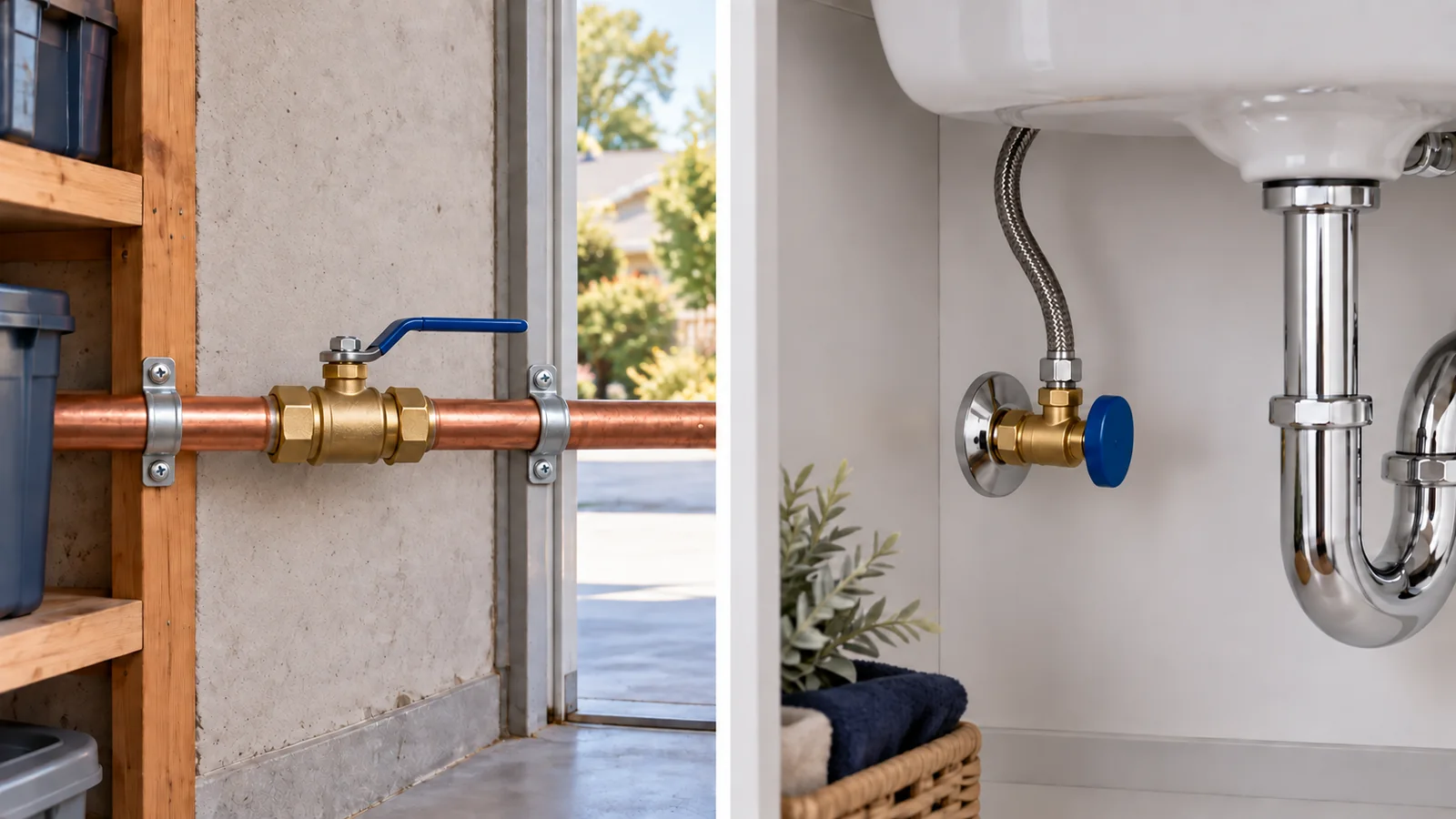
Under a sink or beside a toilet, an angle stop usually serves only that fixture. A private whole-house shutoff is a broader control point for the home water supply.
Understanding the valve’s scope prevents an angle-stop problem from being treated like a main-water problem and helps determine how the plumbing can be isolated safely for repair.
Santa Ynez River Water Conservation District, Improvement District No. 1 says it is responsible for the angle curb stop, water meter, meter box and customer valve. The District says customers maintain private water piping on the customer side of that customer valve.
That means a valve in the meter assembly should not automatically be treated as private plumbing. Water Fixers keeps this service focused on clearly private downstream fixture, branch and whole-house shutoffs unless the exact boundary is confirmed for the property.
If water is leaking in the street or around the meter, the District asks customers to report it directly. If you are unsure which water provider serves the property, confirm that before meter-area work is planned. See the District’s responsibility guide.
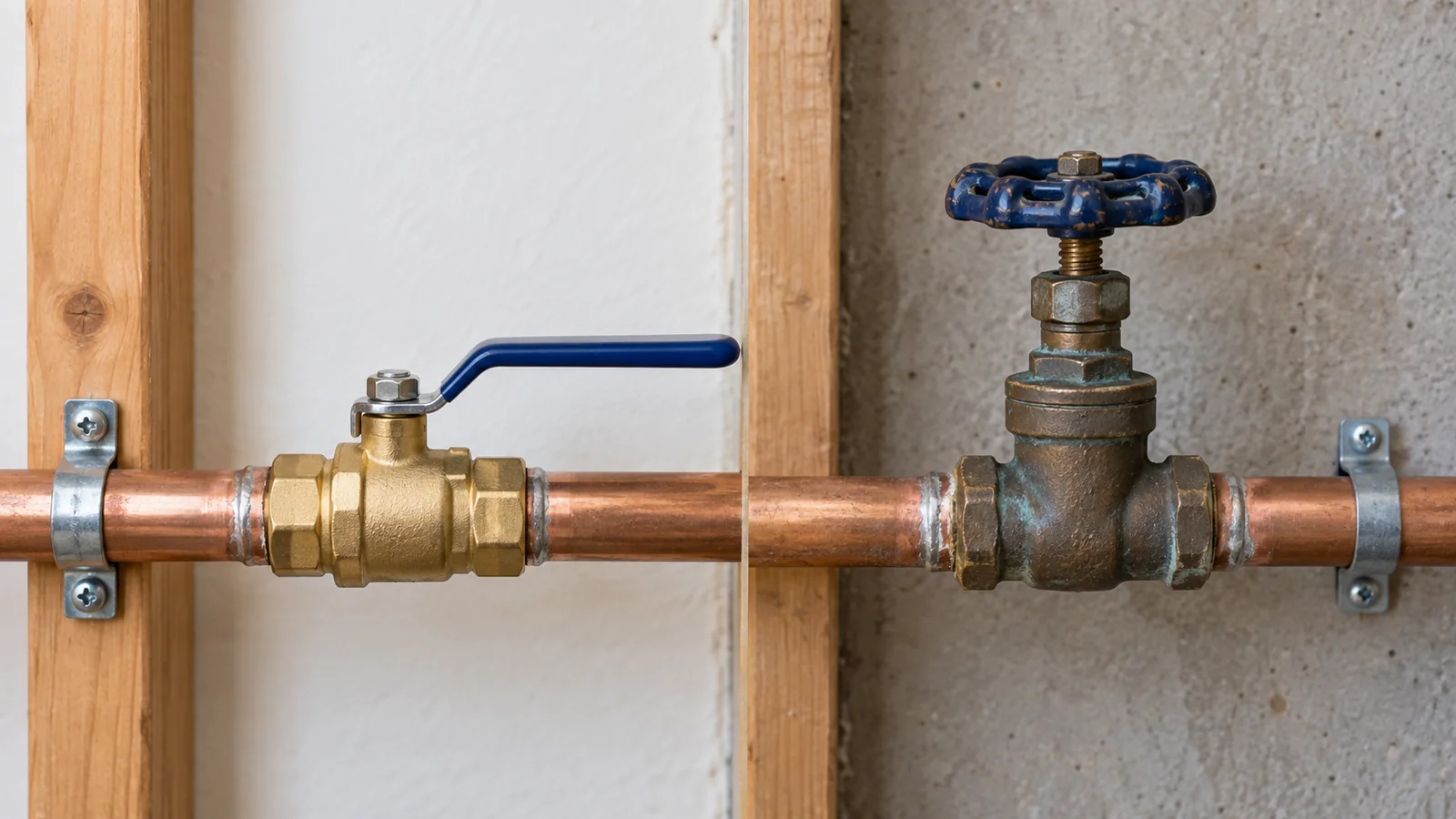
Quarter-turn ball valves and wheel-handle gate valves use different mechanisms. What matters for service is whether the private valve operates normally, seals reliably and can be isolated without forcing it.
Hard operation can be a warning that the valve or its connection is deteriorating. Service should be planned around safe isolation instead of repeated attempts to free a seized control.
Repair versus replacement should come from the observed condition. Where the leak is, how the valve moves and what the surrounding piping looks like all matter.
If the valve operates normally and the defect is limited to an appropriate serviceable component or connection, a focused repair may be enough.
If corrosion is advanced, the valve cannot close dependably, leakage keeps returning or the assembly can no longer be trusted for isolation, replacement may be the better path.
A new valve is only as reliable as the connection around it. Nearby pipe, fittings, corrosion and support should be checked so a weak transition is not left behind.
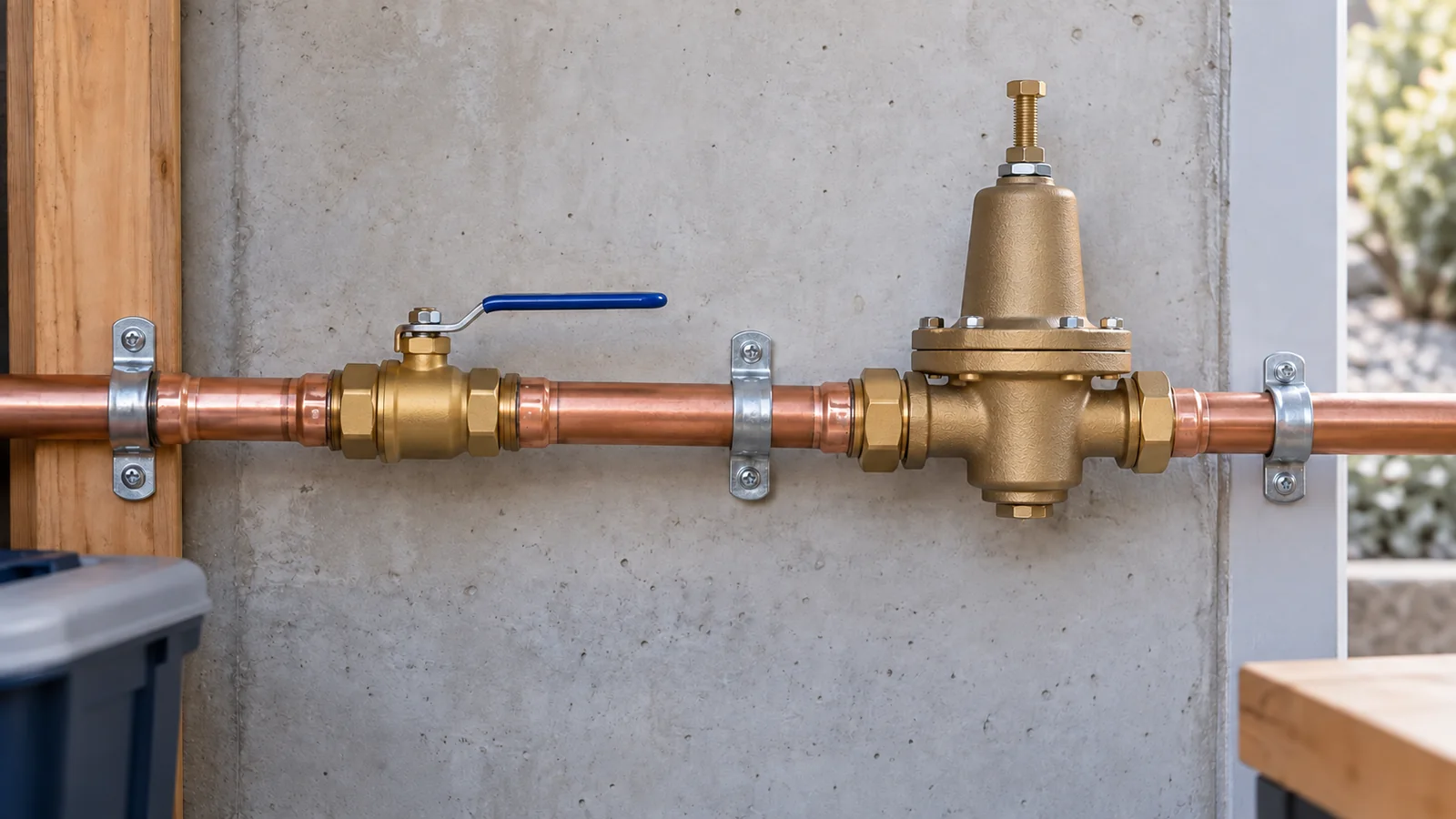
A shutoff valve isolates water flow, while a pressure regulator reduces incoming pressure. A pressure-relief valve is another device with a separate safety function. They should not be treated as interchangeable parts.
Components can be close together, so visual proximity is not enough to identify the job. Confirm whether the problem is flow control, pressure regulation or a piping connection before selecting the repair.
The exact steps vary by valve and access, but the goal is consistent: identify the correct private control point, inspect the valve and nearby piping, plan safe isolation and verify dependable operation after the approved work.
Confirm whether the problem involves a fixture stop, branch valve or private whole-house shutoff and what part of the plumbing that valve is expected to isolate.
Check leakage, corrosion, operation, access and nearby fittings. The condition of the surrounding connection matters as much as the valve body itself.
Determine how the private plumbing can be isolated without forcing or modifying utility-owned equipment. For SYRWCD ID No. 1 customers, the District-owned customer valve at the meter is not treated as a homeowner repair point.
Repair or replace the agreed private valve or connection, restore water carefully and verify that the control point operates without leakage and provides dependable isolation.
A fixture problem should stay on the fixture path when the local shutoff is dry, accessible and able to isolate the connection normally.
If the wet area is unclear, diagnosis comes before replacement. Find where the water originates so a sound valve is not replaced unnecessarily.
Active water damage changes the priority from diagnosis to control. Use the local emergency-plumbing path when a familiar private shutoff cannot contain the situation, and avoid forcing a stuck or damaged valve.
For broader valve information, see Water Fixers shutoff valve replacement and service. For broader local plumbing help, use the Santa Ynez plumber page or Santa Ynez Valley service page.
A shutoff that leaks, will not fully close, is badly corroded or cannot be operated reliably should be evaluated. Replacement may be appropriate when dependable isolation cannot be restored through a focused repair.
Leakage can come from the stem, valve body, packing area or nearby connection. The exact source should be identified before deciding whether repair or replacement is appropriate.
Do not keep forcing it. An unreliable shutoff can make future plumbing work harder to control, so have the valve and surrounding connection inspected.
No. A shutoff isolates water flow. A PRV controls incoming pressure. They may be installed near one another but serve different purposes.
Yes. Fixture angle stops and other private shutoffs can be evaluated and replaced when the valve or connection condition makes replacement appropriate.
Not for properties served by Santa Ynez River Water Conservation District, Improvement District No. 1. The District says it provides and is responsible for the customer valve at the meter, while private piping begins on the customer side of that valve. Confirm the provider and boundary before meter-area work.
Describe where the valve is located, what happens when it is operated and whether water is presently under control. That gives the service call a useful starting point for evaluating the private shutoff and nearby piping.
CALL NOW! Se Habla Español!