VANDENBERG VILLAGE, CA • WATER QUALITY GUIDE

Vandenberg Village, CA Water Quality & Water Treatment Guide

Start with the District report. Match treatment to the actual goal.

Vandenberg Village Community Services District (VVCSD) provides water and wastewater service to the unincorporated Vandenberg Village area. Its 2025 Consumer Confidence Report says the District met all drinking-water standards and identifies three groundwater wells in the Lompoc Upland Aquifer as the Village supply.

The annual report is useful system-level context. A taste, scale, spotting, plumbing or treatment question at one home still needs to be matched to the actual symptom and, when useful, property-specific testing.

Residential home-service context for Vandenberg Village, California

CURRENT DISTRICT CONTEXT

Three Facts to Know Before Choosing Treatment

These figures describe the VVCSD public water system. They do not replace a tap sample, diagnose a plumbing problem, or describe Vandenberg Space Force Base.

LOCAL PROVIDER

VVCSD

The District provides water and wastewater service to Vandenberg Village. Use the water bill or District service information to confirm that this report applies to the property.

WATER SOURCE

Three groundwater wells

The 2025 report says Wells 1B, 3A and 3B draw from the Lompoc Upland Aquifer. It reports 2025 production shares of 11%, 54% and 35%, respectively.

REPORTED HARDNESS

21 grains per gallon

The 2025 report lists calculated blended hardness of 362.4 mg/L, or 21 gpg, using the latest hardness sample shown in the report from February 2023.

WHERE THE WATER COMES FROM

Vandenberg Village Uses the Lompoc Upland Aquifer

VVCSD’s 2025 Consumer Confidence Report is specific about the Village supply: three wells draw from the Lompoc Upland Aquifer. During 2025, the report says Well 1B produced 11% of the water, Well 3A produced 54%, and Well 3B produced 35%.

That is more useful than treating “Lompoc-area water” as one generic source. The Village and Vandenberg Space Force Base are separate water-system contexts, so base water data should not be used as a substitute for the VVCSD report.

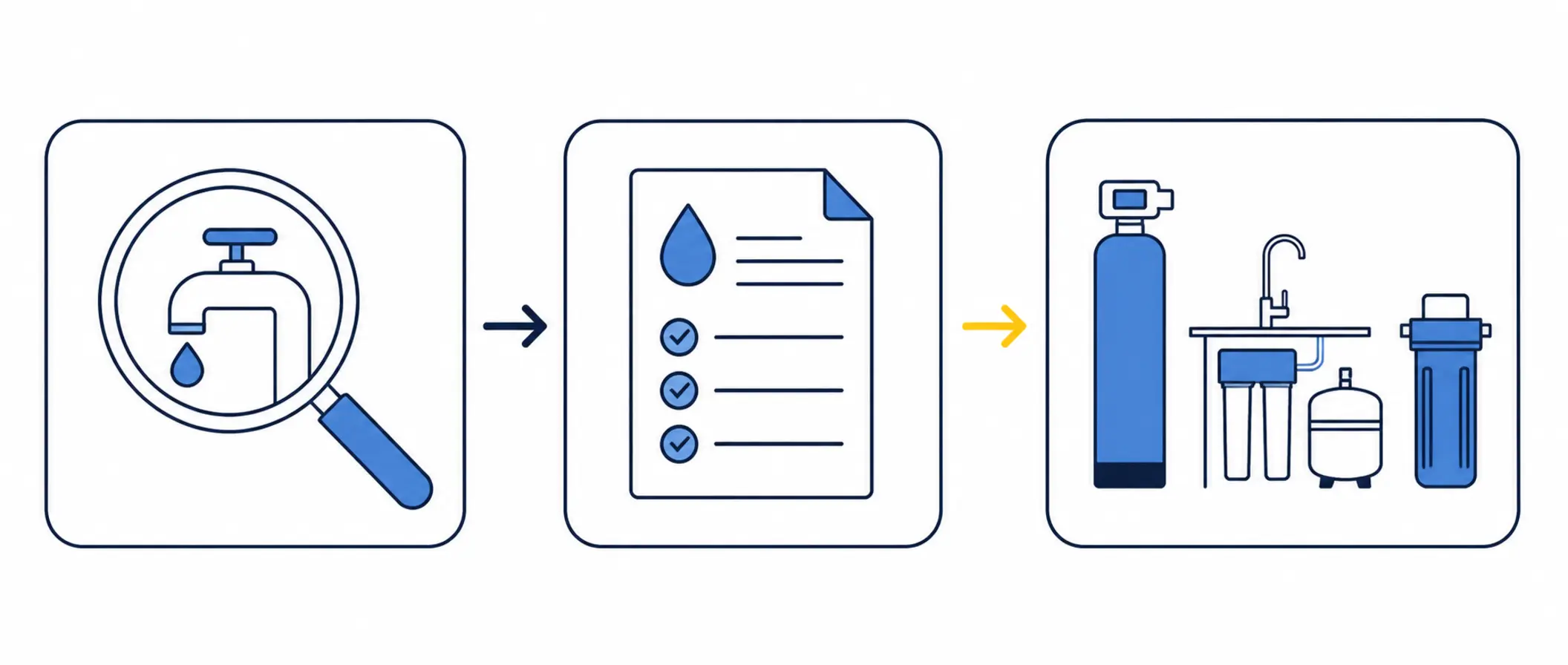
Three-step path from noticing a water concern to testing and matching treatment.

Useful rule: identify the water system first, then decide what needs to be measured or treated.

MINERALS + AESTHETIC CHARACTERISTICS

What the Current Report Says About Hardness and Dissolved Minerals

The latest hardness entry carried in the 2025 report is dated February 21, 2023. VVCSD reports a calculated blended hardness of 362.4 mg/L as CaCO₃, with a reported range of 210–410 mg/L. The report converts that blended value to 21 grains per gallon.

The same report lists total dissolved solids at 716.6 mg/L, chloride at 168 mg/L and sulfate at 195 mg/L. These are reported in the section for secondary drinking-water standards, which the report explains are based on aesthetics rather than health at the listed levels.

These numbers can explain why mineral scale or spotting is a reasonable treatment question, but the annual report is not a measurement taken at a particular faucet.

CCR VALUE

Hardness

362.4 mg/L calculated blended level; 210–410 mg/L reported range; latest hardness sample shown is 02/21/2023.

CCR VALUE

Total dissolved solids

716.6 mg/L in the 2025 report’s secondary-standards table. Use it as system context, not a home-specific result.

IMPORTANT VVCSD SOFTENER RULE

Hardness Does Not Mean “Install Any Softener”

VVCSD’s current FAQ says that, effective July 1, 2020, new residential or non-residential self-regenerating water softeners may not be installed. Existing self-regenerating units are not automatically required to be removed, but the District says they may not be replaced or enlarged and remain subject to efficiency requirements.

For customers who prefer softened water, VVCSD recommends exchange canisters from a commercial vending service so the regeneration brine is discharged elsewhere.

Before buying or replacing equipment, confirm the current District rule and separate hardness measurement from the equipment path that is allowed.
LOCAL DECISION

Why this matters

The Village has measurable hardness, but the local wastewater rule changes which softening choices are appropriate. A water-quality guide should surface that rule before equipment selection.

PROPERTY-SPECIFIC QUESTIONS

Use Testing When the Question Is About This Home

A Consumer Confidence Report summarizes the regulated public water system. It does not tell you whether one faucet has a fixture problem, whether an existing filter is exhausted, or what a laboratory sample from one property would show.

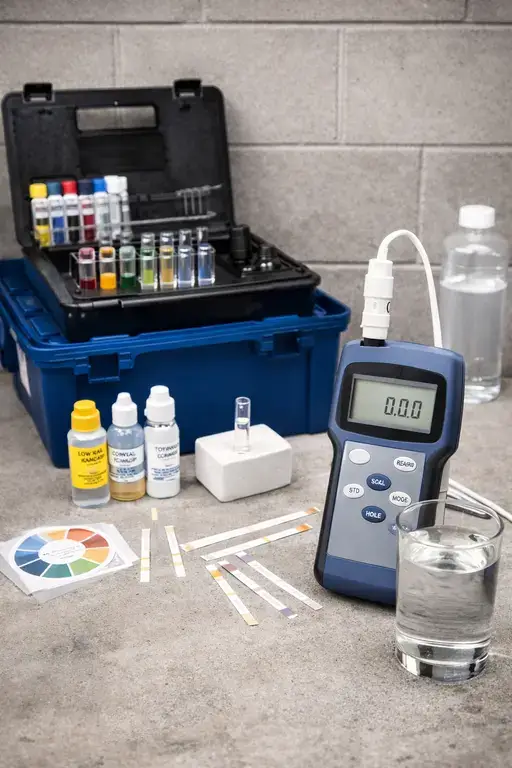
Testing is useful when you need to quantify hardness, investigate a change, compare untreated and treated water, evaluate existing equipment, or answer a question that belongs with a certified laboratory. Start with the question you need answered instead of ordering equipment from the symptom alone.

Water testing equipment used to evaluate household water quality

MATCH THE SERVICE TO THE GOAL

Softening, RO and Filtration Do Different Jobs

Use the reported local water context to ask better questions, then let the actual treatment goal determine the specialty page.

WHOLE-HOME MINERAL GOAL

Hardness / scale

Measure the concern and review the VVCSD self-regenerating-softener restriction before replacing or adding equipment.

POINT OF USE

Drinking / cooking water

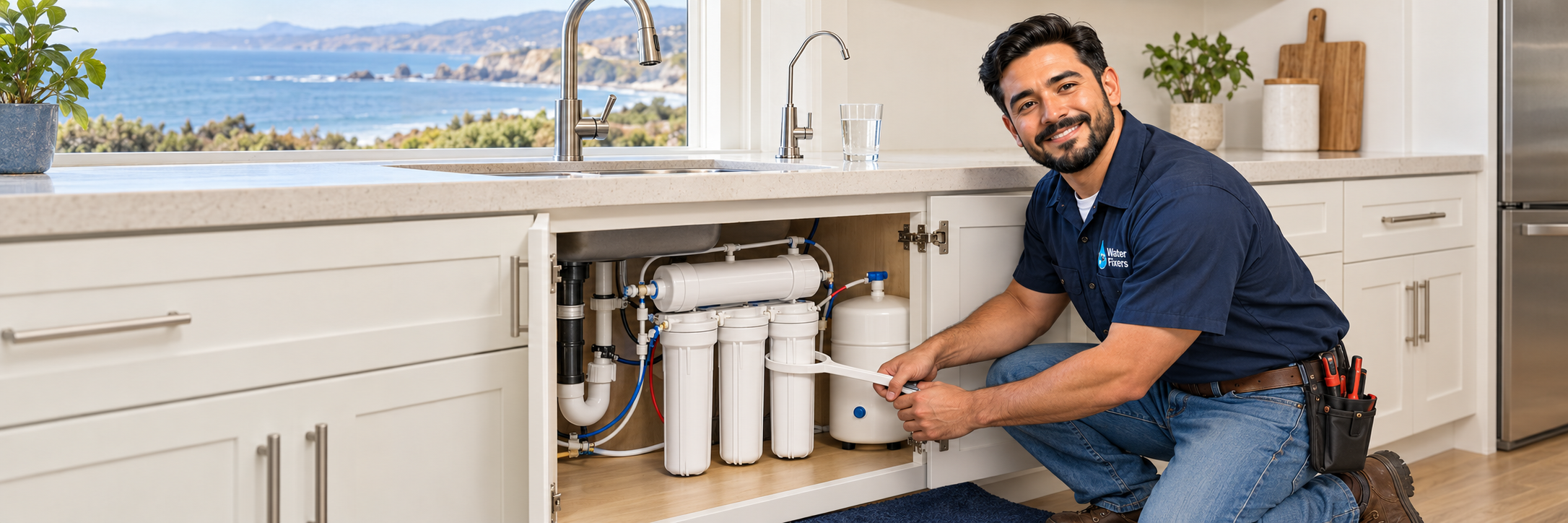
Point-of-use reverse osmosis is a separate drinking-water path. Model selection should follow the actual goal, feed water and installation conditions.

DEFINED FILTRATION GOAL

Whole-house filtration

Whole-house media should be selected for a defined goal such as selected sediment, taste, odor or disinfectant concerns—not simply because hardness is present.

VILLAGE SYSTEM • NOT THE BASE

Keep Vandenberg Village and Vandenberg SFB Water Data Separate

This guide applies to the VVCSD public water system serving Vandenberg Village. Vandenberg Space Force Base has its own water-system context. A similar place name is not a reason to combine the two reports or assume the same chemistry.

If the problem is a leak, valve, fixture, pressure regulator, water heater or another mechanical plumbing issue, use the Vandenberg Village plumbing page instead of treating it as a water-quality problem.

ADDRESS FIRST

Confirm the provider

Use the water bill or VVCSD service information before applying the District’s annual report to an address. Different providers and systems should be evaluated from their own current reports.

VANDENBERG VILLAGE WATER QUESTIONS

Vandenberg Village Water Quality FAQs

Quick answers based on the current VVCSD report and District guidance.

VVCSD’s 2025 Consumer Confidence Report says the District’s water comes from three wells drawing from the Lompoc Upland Aquifer. During 2025, it reports production shares of 11% from Well 1B, 54% from Well 3A and 35% from Well 3B.
The 2025 VVCSD report lists a calculated blended hardness of 362.4 mg/L, with a reported range of 210–410 mg/L, using the latest hardness sample shown in the report from February 21, 2023. The report converts the blended value to 21 grains per gallon. That is system-level context, not a test from a specific faucet.
Yes. VVCSD’s 2025 Consumer Confidence Report states that the District met all standards. The annual report describes the public system; it does not replace property-specific testing when the question is about conditions at one home or after water enters the building.
VVCSD reports measurable calcium-and-magnesium hardness. Mineral residue can remain after water evaporates, and hardness can contribute to scale. If the equipment decision matters, measure the property and review the District softener rule before choosing a solution.
VVCSD’s current FAQ says new residential or non-residential self-regenerating water softeners may not be installed, effective July 1, 2020. Existing units are not automatically required to be removed, but the District says they may not be replaced or enlarged. Confirm the current District rule before equipment work.
RO is a point-of-use treatment path for drinking and cooking water when the treatment goal and feed-water conditions fit the system. It does not replace whole-home hardness management, plumbing repair or testing for a question that requires a certified laboratory.
No. Vandenberg Village uses the VVCSD public water system described in this guide. Vandenberg Space Force Base has a separate water-system context. Confirm the provider before applying one system’s water-quality information to another address.

SOURCE + UPDATE NOTE

Use Current District Information

Official local sources reviewed September 22, 2026:

  • Vandenberg Village Community Services District — 2025 Consumer Confidence Report
  • VVCSD Water Quality page
  • VVCSD Frequently Asked Questions, including the current self-regenerating-softener restriction

Water-quality reports and utility rules can change. For the latest public-system information, use VVCSD’s current website and most recent Consumer Confidence Report.

TEST • UNDERSTAND • CHOOSE THE NEXT STEP

Start With the Water You Actually Have

Tell Water Fixers what you are trying to improve—scale, spotting, taste, odor, drinking water, existing equipment or another water-quality question. The next step can be testing, maintenance, RO, filtration, plumbing service or simply confirming that no new treatment is needed.