


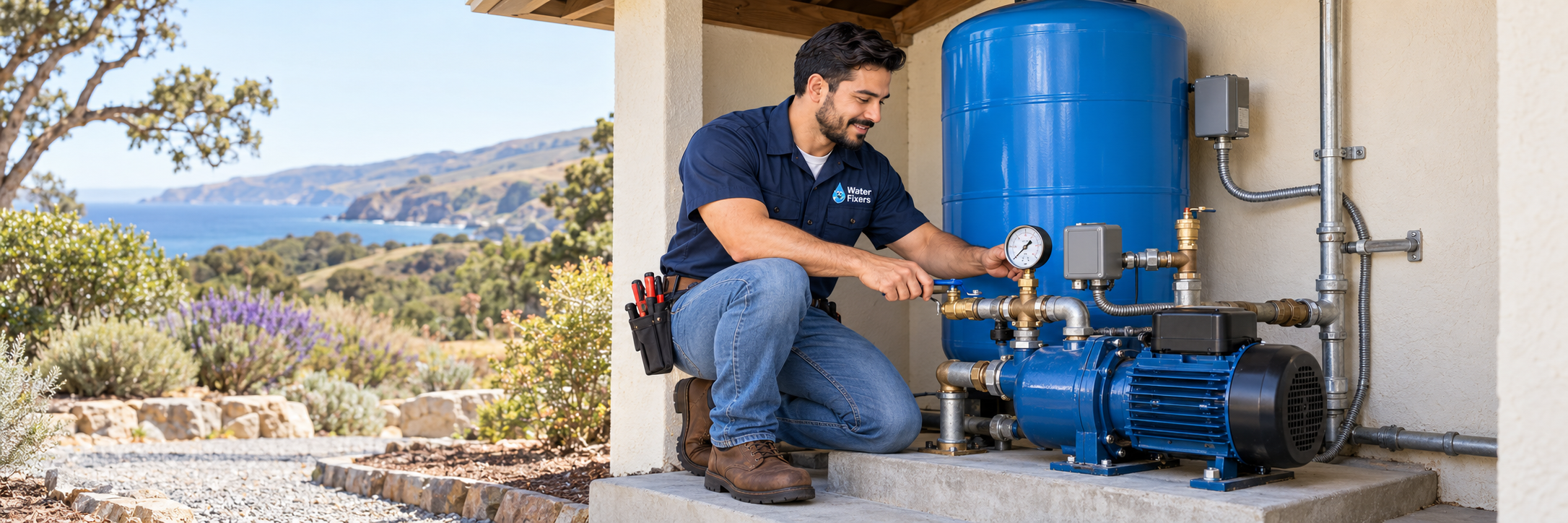








Pumps & Pressure Systems
Pump and pressure system diagnosis, repairs and service to keep water moving reliably through your home.
Plumbing Services
Local plumbing repairs, fixture updates and water line service to keep your home running smoothly every day.
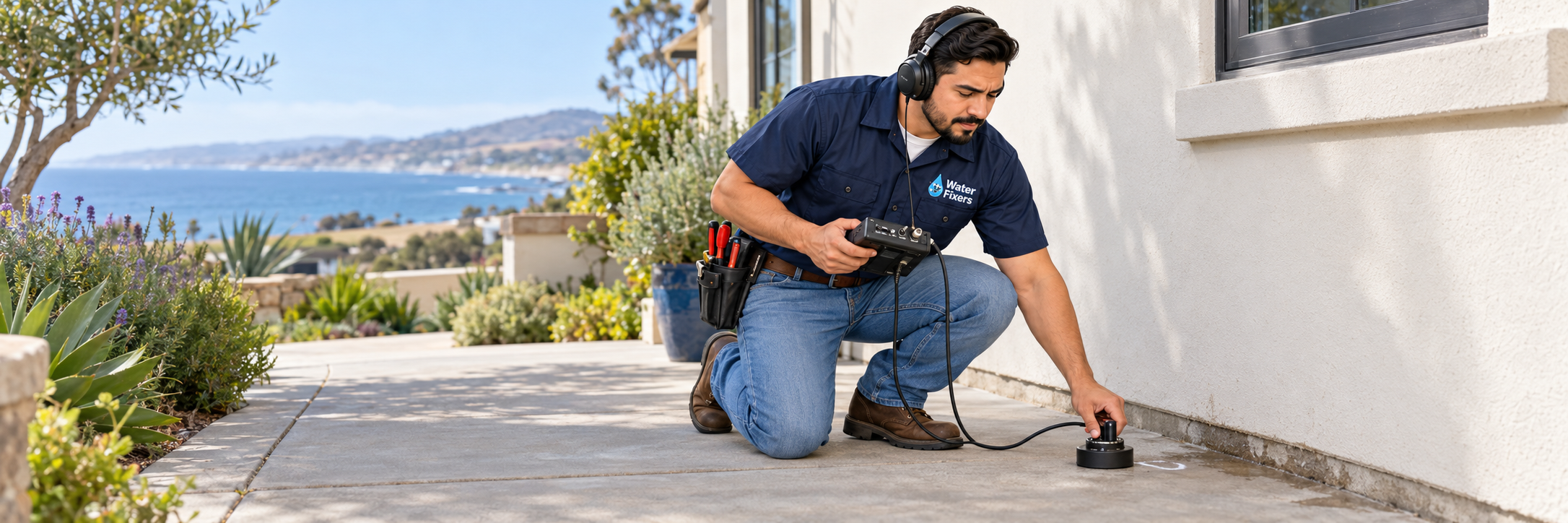
Leak Detection
Help locating hidden leaks and unexplained water use, with clear guidance on the next steps for your home.
Drains & Sewer
Drain cleaning and sewer camera inspections to find the cause of stubborn clogs, slow drains and backups.
Gas Line Services
Gas line installation, repairs and appliance connections, with careful attention to your home’s plumbing needs.
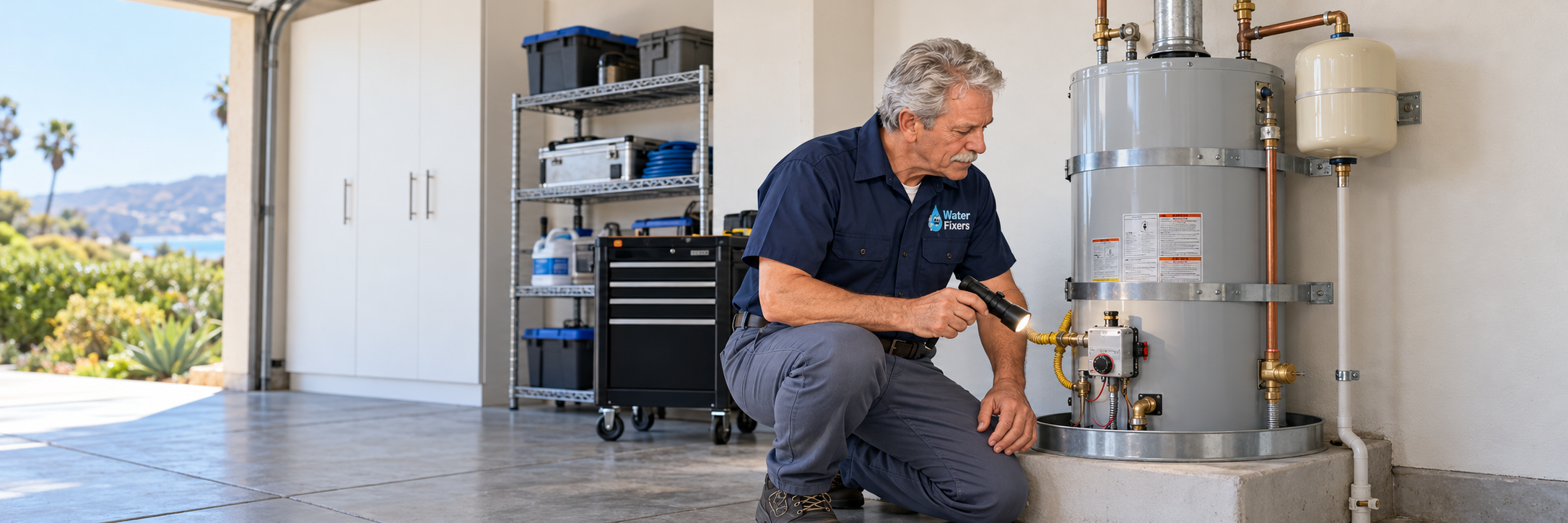
Water Heater Services
Tank and tankless water heater repairs, replacement and maintenance to keep hot water ready for daily use.
LOS ALAMOS, CA • WATER QUALITY • DISTRICT GROUNDWATER
Los Alamos Community Services District is an active groundwater system. Its latest accessible annual water-quality report describes four District wells in the San Antonio Groundwater Basin, chlorine disinfection and sodium-hydroxide corrosion control. This guide turns that public-system information into practical homeowner questions without treating District data as a guaranteed reading at every faucet—or assuming every Los Alamos-area property uses the District system.
Los Alamos and Central Coast service • California contractor license #719792

WHAT THE CURRENT DISTRICT RECORD ACTUALLY SAYS
The 2024 Los Alamos Community Services District report identifies Wells 3A, 4, 5 and 6 as the District’s active drinking-water sources. They draw from the San Antonio Groundwater Basin. After pumping, the District adds sodium hypochlorite for disinfection and sodium hydroxide for corrosion control before the water moves through the public distribution system.
The report states there was no violation in 2024. It also says 24 distribution-system bacteriological samples were collected during the year and none were positive. Those compliance statements describe the public system; they do not rule out a plumbing, treatment-equipment or private-well issue at an individual property.
California Drinking Water Watch currently lists Los Alamos Community Services District as active, with groundwater as its primary source. When a property is served by another source or a private well, that property’s own provider and test results take precedence over the District report.
READ THE NUMBERS IN CONTEXT
The 2024 report carries forward general-mineral sampling from May and July 2022 because those constituents are not required every year. It reports total dissolved solids from 430 to 590 mg/L, averaging 522.5 mg/L, with a secondary maximum contaminant level of 1,000 mg/L. TDS is not the same thing as hardness, so this number should not be used as a softener setting.
The same report lists nitrate as nitrogen at 0.9–4.8 ppm, averaging 2.42 ppm, against a 10 ppm MCL. Arsenic is listed at 3–4 ppb, averaging 3.5 ppb, against a 10 ppb MCL. Those are public-system report values from the cited sampling period—not a substitute for a private-well test or a current property sample when a specific drinking-water decision depends on it.
The report lists iron from non-detect to 220 µg/L, manganese from non-detect to 20 µg/L, chloride at 67–78 mg/L and sulfate at 117–167 mg/L in the cited sampling. These constituents can relate to different aesthetic or treatment questions. A softener, carbon filter, sediment filter and reverse-osmosis system do not all solve the same problem.
SYMPTOMS ARE CLUES, NOT LAB RESULTS
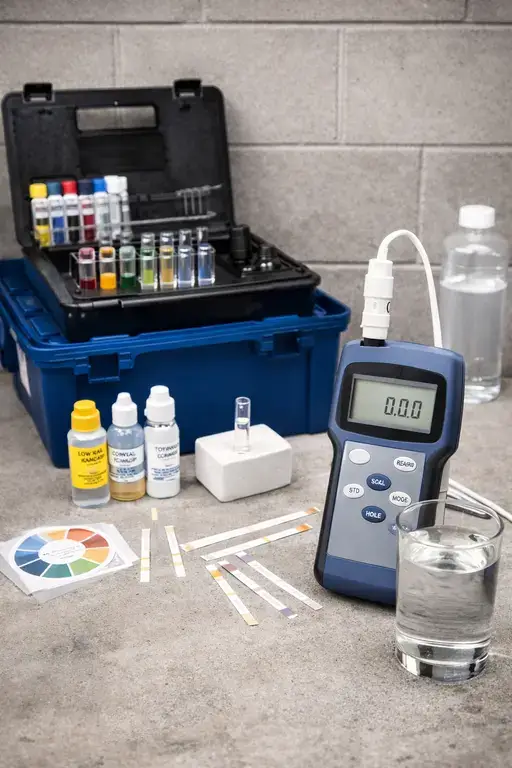
White scale or spotting is a reason to measure hardness, not to infer a hardness number from geography. Taste or odor can involve disinfectant, plumbing, treatment equipment or source water. Staining or particles can involve iron, manganese, sediment, household piping or an existing filter. Compare hot and cold water, more than one fixture and the condition of any treatment equipment before choosing a system.
MATCH THE TREATMENT TO THE GOAL
A water softener reduces calcium and magnesium hardness. Reverse osmosis is usually a point-of-use treatment for drinking and cooking water. Whole-house filtration should target a defined point-of-entry concern. A private well needs its own testing plan because the District report does not describe that well. If the complaint is unclear, testing should come before equipment selection.
USE THE PATH THAT MATCHES THE QUESTION
Use the Los Alamos softener page when measured hardness, scale, spotting, regeneration, salt use, softener repair or equipment sizing is the actual question. The District CCR does not publish a current household hardness setting for you to copy.
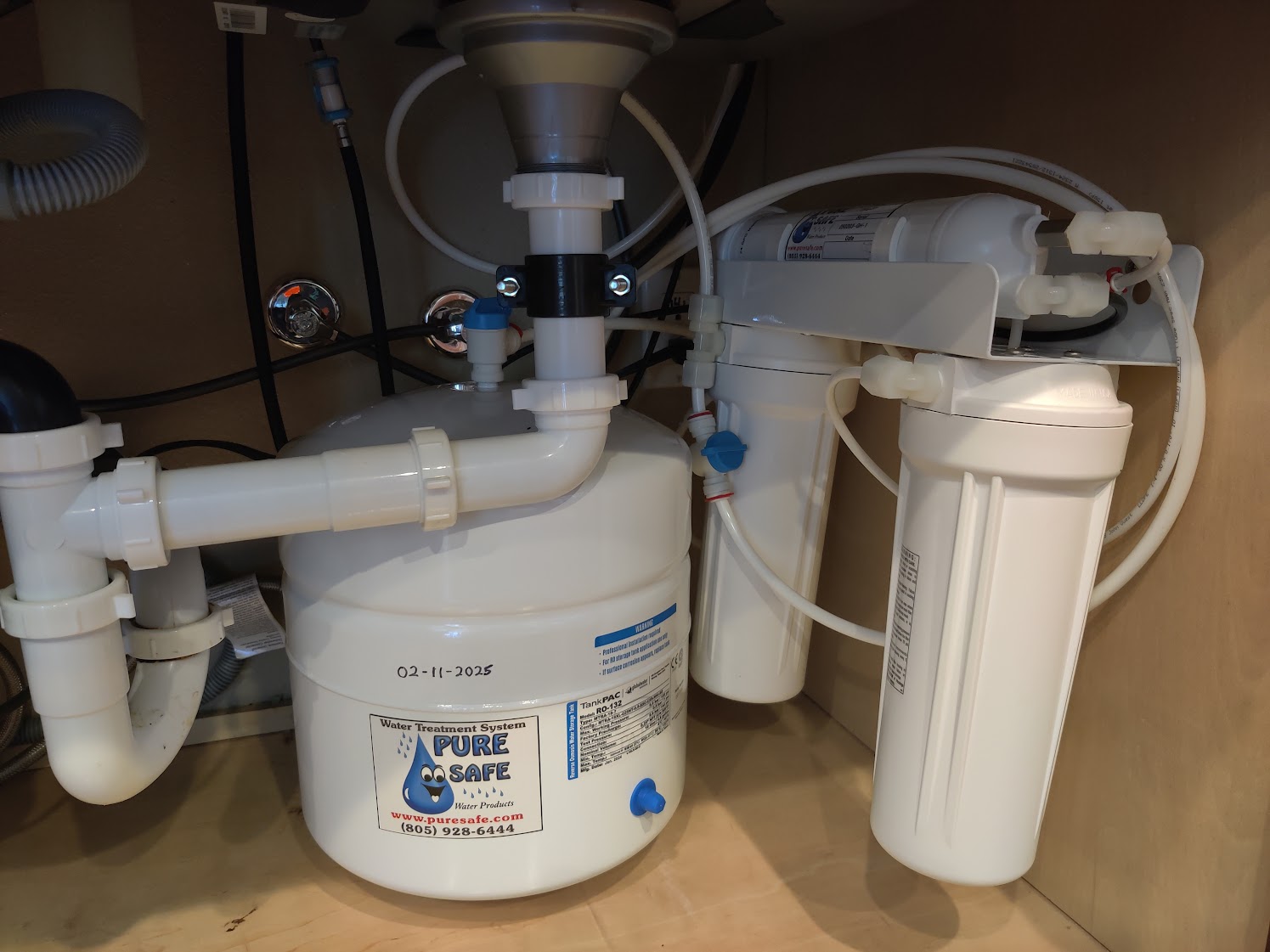
Use the Los Alamos RO page for a dedicated drinking-water faucet, filter service, membrane performance, storage-tank issues, flow problems or point-of-use treatment planning. RO is not a whole-house hardness solution.
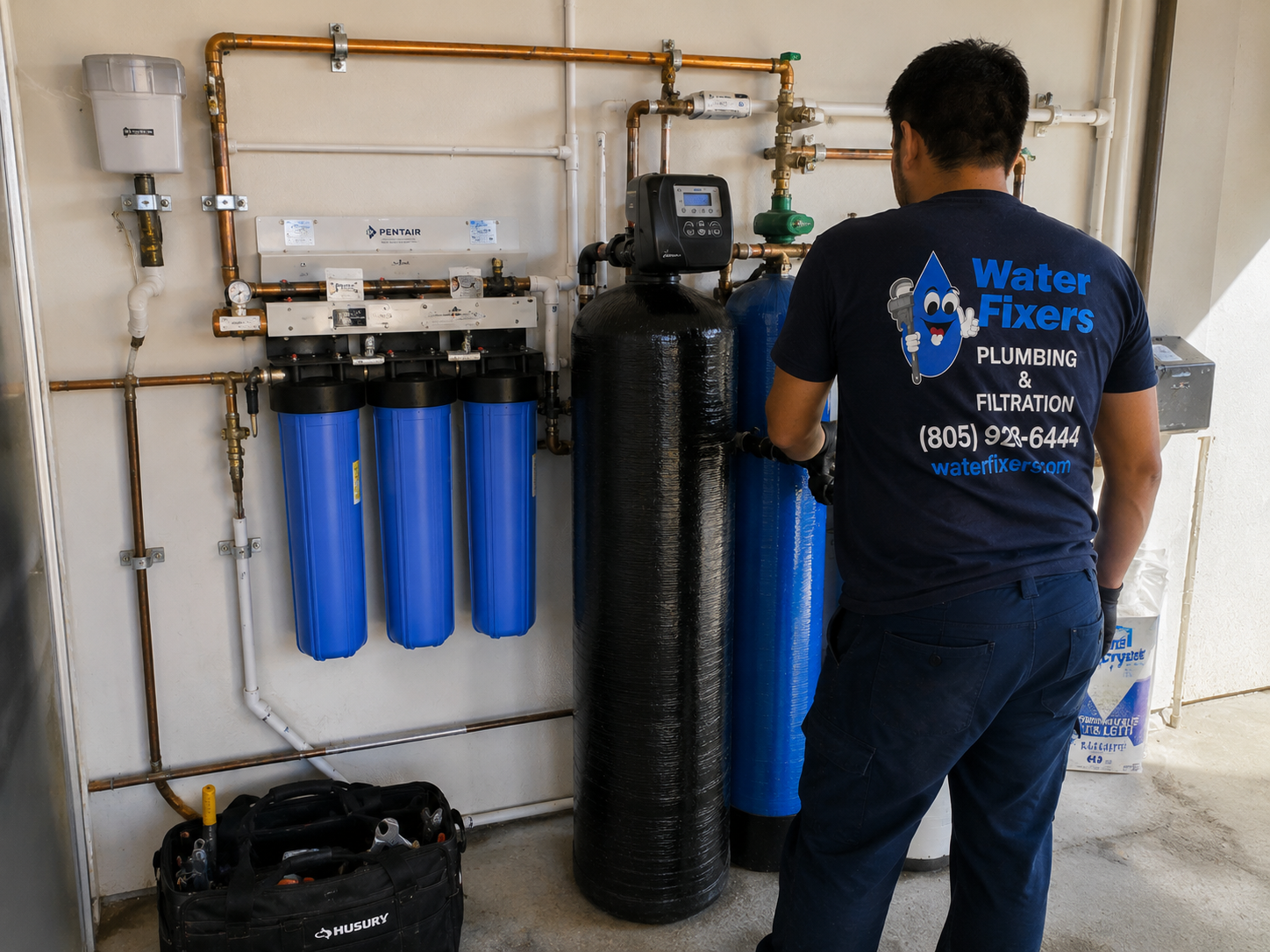
Use whole-house filtration when a defined concern applies throughout the property. If the property actually uses a private well, use well-specific testing and treatment guidance instead of applying LACSD averages to that source.
If the issue is isolated to one fixture, only hot water, a single branch, or the outlet of an existing treatment system, inspect that plumbing/equipment path before adding more treatment. A public-system report cannot diagnose a faucet, water heater, filter or pressure problem inside the property.
THE REPORT DATE MATTERS
The District explains that many general-mineral, physical and inorganic constituents are sampled less often than once per year because their concentrations are not expected to change rapidly. That is why several tables in the 2024 CCR show May and July 2022 sample dates. Use the report as the official public-system context, but use current testing when an equipment setting or property-specific decision depends on today’s water.
THE PROPERTY CAN CHANGE WHAT YOU EXPERIENCE
LACSD adds sodium hydroxide for corrosion control and monitors the public system, but conditions inside a building still matter. Fixture materials, water-heater sediment, stagnant plumbing, pressure, an exhausted cartridge or an incorrectly operating softener can change taste, appearance or performance after water enters the property. Compare multiple fixtures and note whether the symptom is hot, cold or both.
PUBLIC SYSTEM VS. PRIVATE WELL • DRINKING VS. WHOLE-HOME
LACSD reporting applies to the District public system. A private well needs its own water testing. For treatment scope, under-sink RO serves a dedicated drinking-water point, a softener changes hardness throughout the plumbing it serves, and a whole-house filter treats water at the point of entry for a defined whole-home goal. Source and scope come before equipment brand or size.
LOS ALAMOS WATER QUALITY QUESTIONS
LOS ALAMOS WATER QUALITY HELP
Tell Water Fixers which water source serves the property, what you notice, whether it affects hot, cold or all fixtures, and what treatment equipment is already installed. We can help separate hardness, drinking-water treatment, whole-house filtration, private-well questions, equipment service and plumbing issues.