
LOS OSOS • SEWER & MAIN DRAIN
Sewer and main drain service in Los Osos should start with both the fixture pattern and the property’s actual wastewater setup. Note which fixtures slow, gurgle or back up, whether the problem returns, and what happens at an accessible cleanout. Those clues help separate one branch clog from a larger private building-drain or sewer-lateral problem.
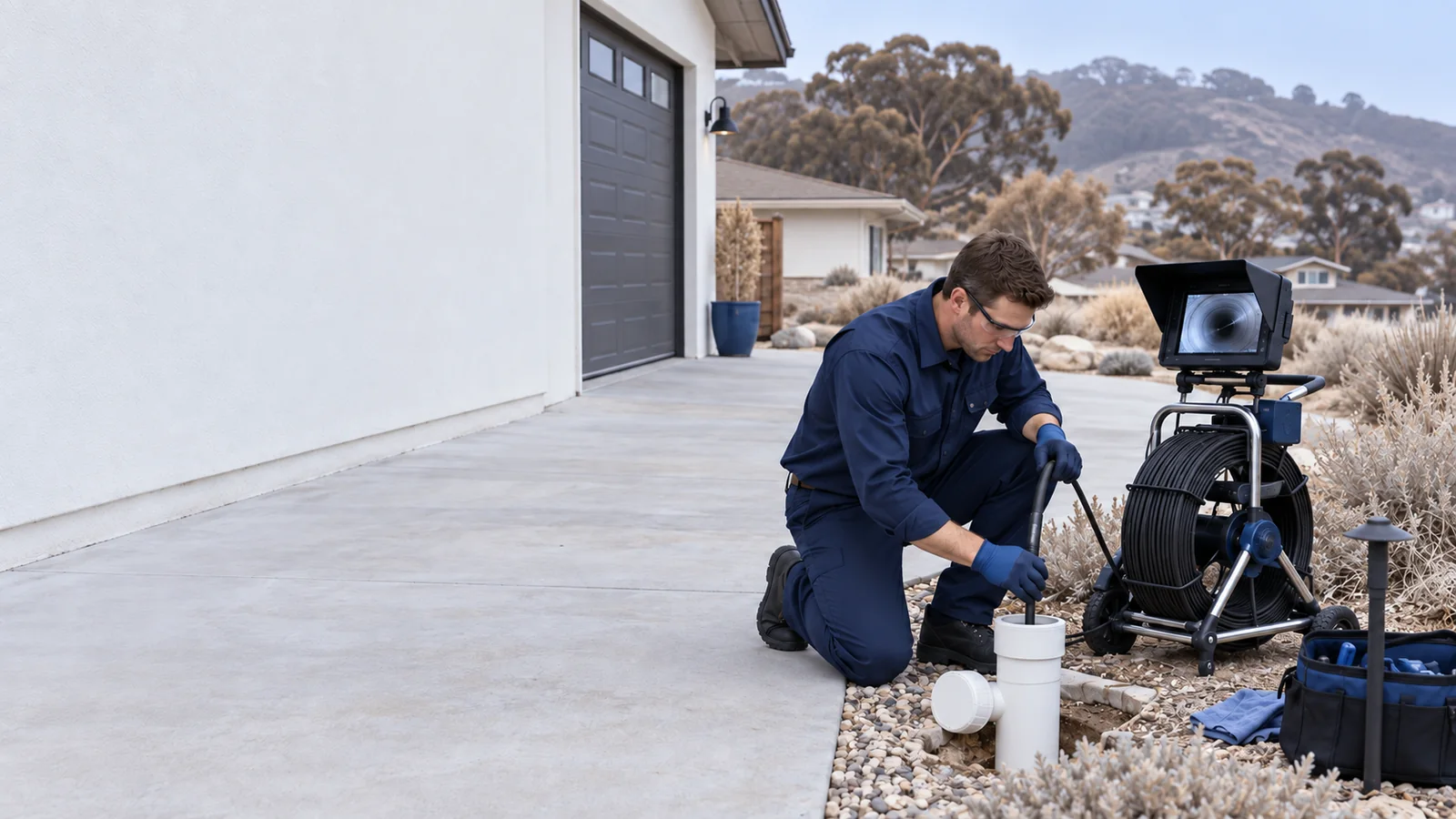
Begin with the scope of the symptoms. A single slow fixture belongs on the local drain-cleaning path. A toilet, tub or floor drain reacting to another fixture suggests a shared route. Repeated restrictions may justify inspection, while fixtures served by a wastewater pump need ejector-system diagnosis.
When a single sink, shower or tub drains poorly and the rest of the building behaves normally, start with Los Osos drain cleaning. That pattern usually calls for branch-drain work before a larger sewer investigation.
A toilet that makes a tub rise, a floor drain that receives wastewater from another fixture, or backups in separate rooms changes the scope. Limit additional fixture use and have the shared building drain or private lateral evaluated.
If flow is restored and the same restriction soon returns, document how often it happens and what prior work was performed. Repetition can justify a closer look at the line instead of simply repeating the last cleaning step.
Some below-grade fixtures discharge through a sewage ejector rather than gravity alone. When a known ejector serves the affected fixtures, alarm status, pump operation and discharge behavior should be checked before the symptom is treated as an ordinary sewer blockage.
A main-drain diagnosis depends on interaction between fixtures, not on the word “clog.” Gurgling across rooms, wastewater appearing at a lower opening, or multiple drains slowing during the same use cycle are stronger shared-line clues than one isolated slow sink.
Keeping those patterns separate protects the role of the Los Osos drain-cleaning page while reserving this page for conditions that extend into the building drain, private lateral or another shared wastewater route.
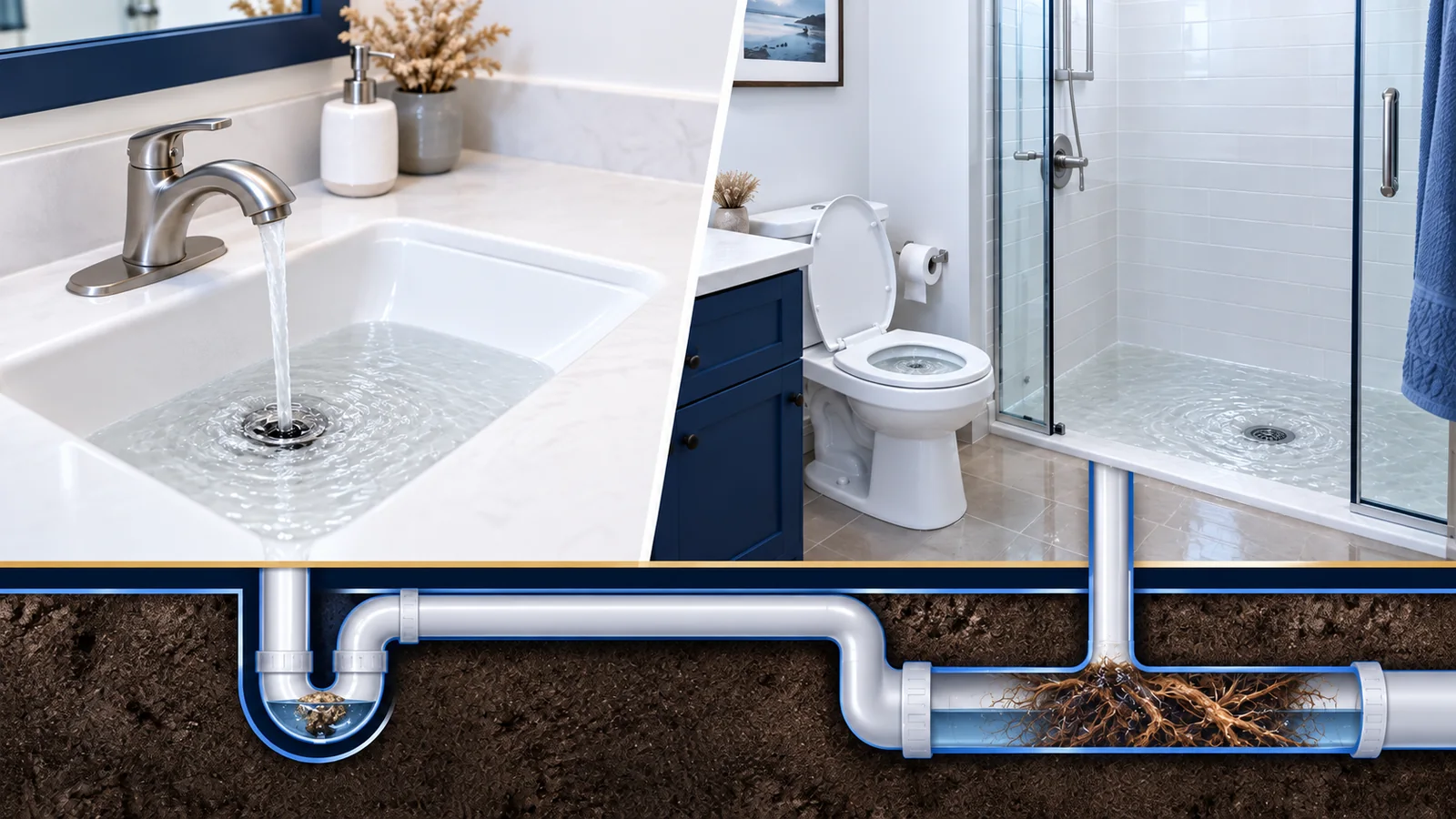
Snakes, cameras, hydro jetters and excavation solve different problems. Water Fixers first reviews where the backup appears, how the fixtures interact and what access is available. The service method follows that evidence rather than leading it.
Map the affected fixtures. Note which one starts the event and where water or wastewater shows up next.
Record whether this is the first incident or the same restriction has returned after earlier clearing.
Locate an accessible cleanout when one is known, and note whether the backup changes at that point during fixture use.
When symptoms persist, the next question is whether buildup, roots, a shifted connection, damage or another obstruction needs to be ruled in or out.
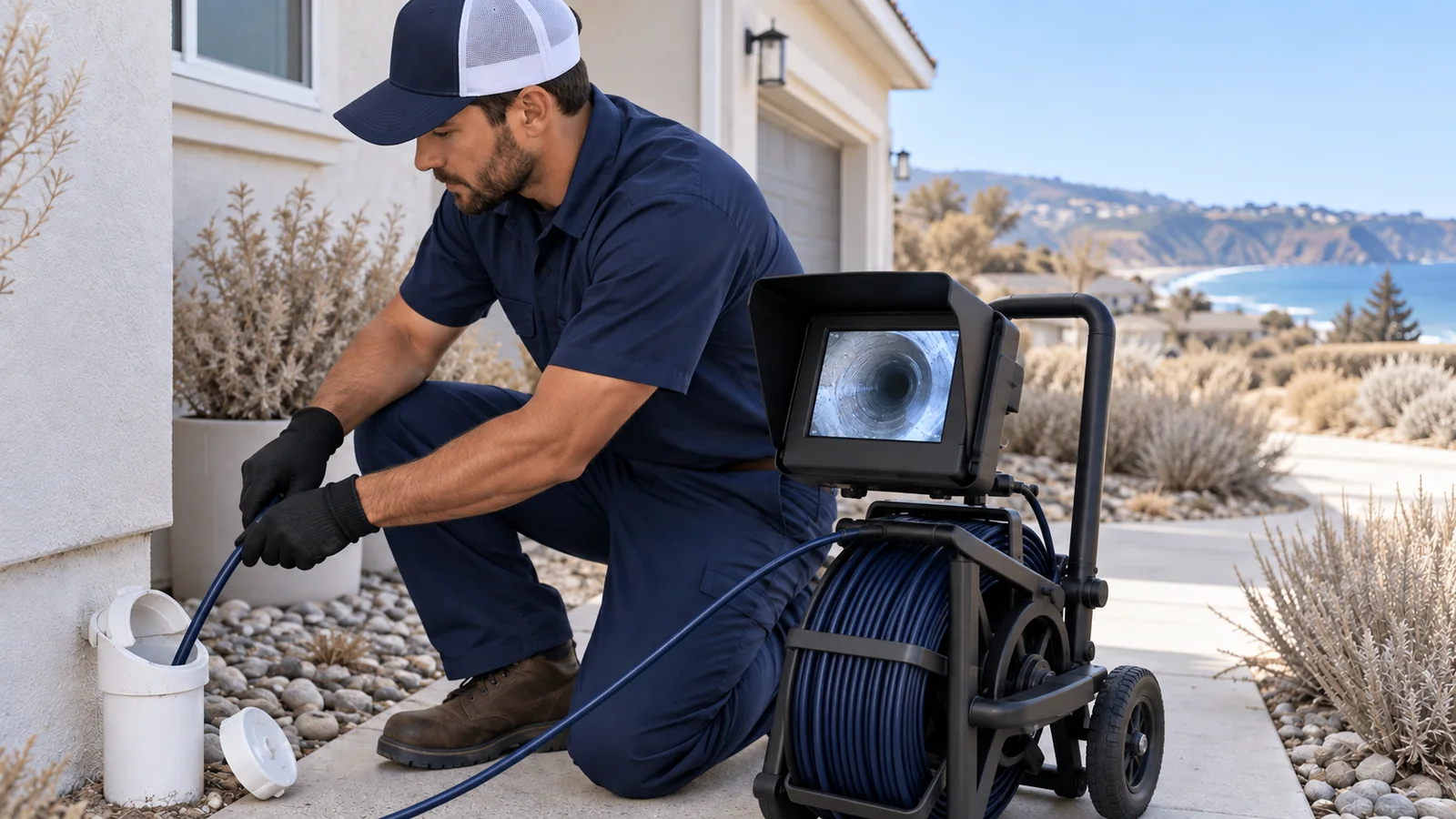
Camera inspection can be useful after recurring backups, when a damaged section is suspected, or when the condition of an accessible line must be documented before choosing between cleaning and repair.
For a straightforward one-time clog, a camera may add little. Its value is highest when the findings answer a specific question about the next service decision.
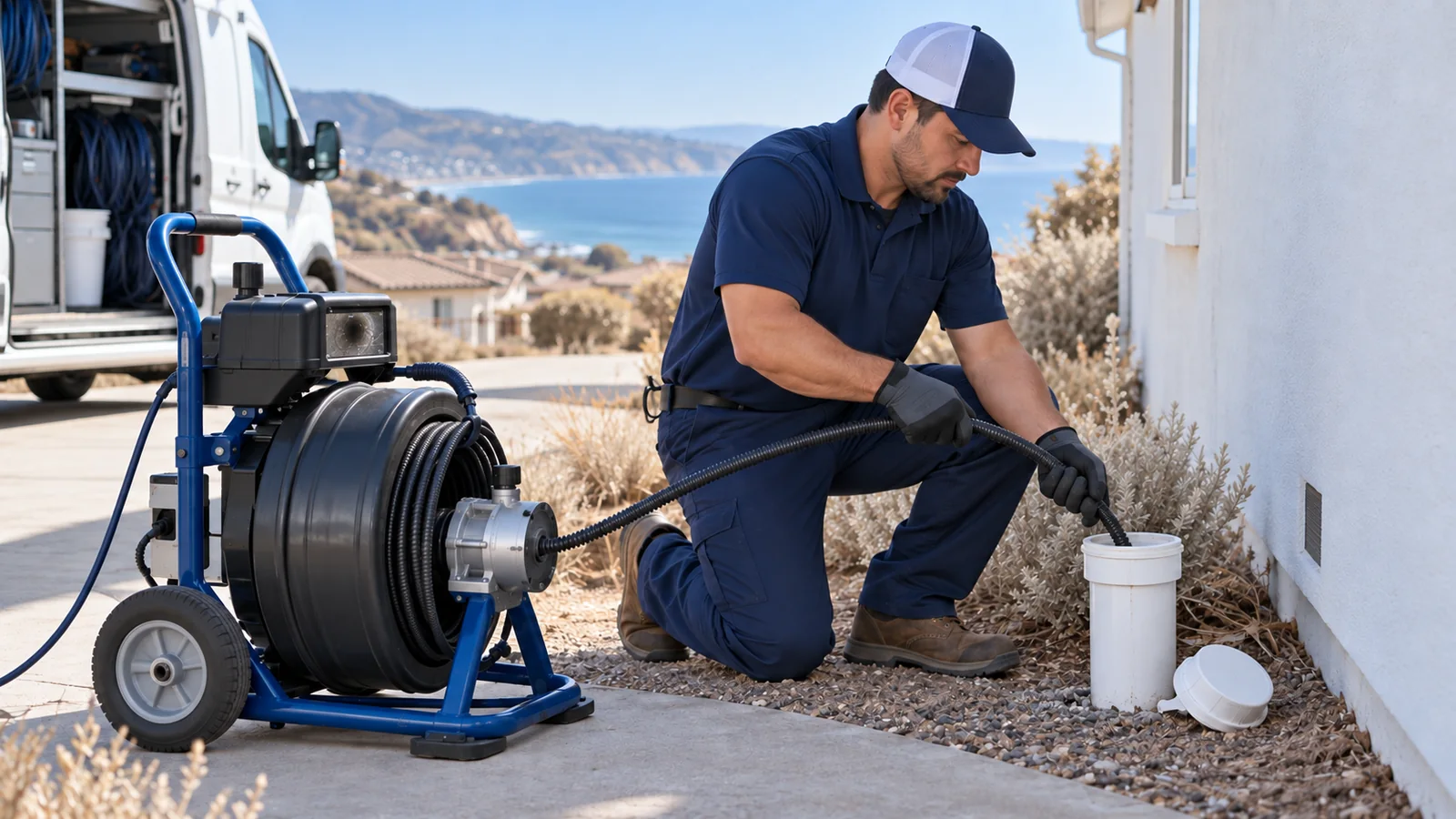
Mechanical clearing can reopen a serviceable line when a blockage is preventing normal flow. Restoring drainage does not, by itself, prove that hydro jetting or pipe replacement is needed.
Hydro jetting can remove suitable deposits with high-pressure water when pipe condition, access and the type of buildup make that method appropriate. It is a targeted cleaning option, not an automatic upgrade for every backup.
A structural defect changes the scope. If inspection shows a separated, offset, collapsed or otherwise failed section, additional cleaning cannot repair the pipe and the work moves into repair planning.
San Luis Obispo County Public Works states that on-lot sewer lateral connections in the Los Osos Wastewater Project area are the responsibility of each property owner. For a sewer-connected property, that private lateral and the building drain are important parts of the service picture before a public-system problem is assumed.
Los Osos Community Services District also notes that portions of Los Osos remain on septic systems. Before treating a backup as a sewer-line issue, confirm whether the property actually connects to the County wastewater system or uses an onsite septic system. Water Fixers can evaluate property-side plumbing symptoms; septic pumping and septic-system maintenance are separate services.
For a sewer-connected property, repeated backups or symptoms involving several gravity-drained fixtures are appropriate for sewer/main-drain evaluation. If the property uses septic or a pumped system, that wastewater setup needs to be identified before the same assumptions are applied.
When sewage is entering an occupied area, reduce use of the affected fixtures when safe, keep people and pets away from contamination, and contact the Los Osos emergency-plumbing service. Do not keep running water just to test the blockage.
A single fixture can start with Los Osos Drain Cleaning. A known wastewater-lift system belongs with Los Osos Ejector Pump Service. Hydro Jetting is a method for suitable lines after diagnosis, while Plumbing Services covers problems outside this sewer/main-drain scope.
For broader local navigation, see the San Luis Obispo Area services or browse all Water Fixers service areas.
Move to sewer/main-drain evaluation when separate fixtures affect one another, wastewater appears at a lower opening, or a blockage returns in a way that suggests the shared drainage route is involved. One isolated fixture can stay on the local drain-cleaning path.
Which fixture is used first, which other fixture reacts, whether the event is repeatable, and what happens at an accessible cleanout can narrow the scope. Those observations are more useful than guessing which machine the job needs.
No. The methods address different conditions. Pipe material, access, line condition and the type of restriction should support hydro jetting before high-pressure cleaning is selected.
A camera may help document a recurring restriction, investigate a suspected physical defect, or answer whether cleaning or repair is the more reasonable next step. It is not necessary simply because a drain was slow once.
No. County wastewater infrastructure serves the Los Osos Wastewater Project area, and LOCSD states that portions of the community remain on septic systems. The property’s actual wastewater connection should be confirmed before assuming a sewer or septic service path.
Describe the fixtures involved, where wastewater first appears, whether the problem has happened before, and whether a cleanout is known. If you know that the property uses County sewer, septic, or a sewage ejector, include that information as well.
When you call, describe the first affected fixture, any other drains that react, how often the problem returns, and whether the property is known to use County sewer, septic or a wastewater pump. That symptom map gives the technician a better starting point than choosing a cleaning method in advance.
CALL NOW! Se Habla Español!