
BUELLTON • PRIVATE WATER CONTROL
Shutoff valve replacement in Buellton is appropriate when a fixture stop, branch valve or private house shutoff no longer gives dependable control. Water Fixers checks whether the valve itself, the joint beside it or the connected piping is actually causing the problem before recommending repair or replacement.
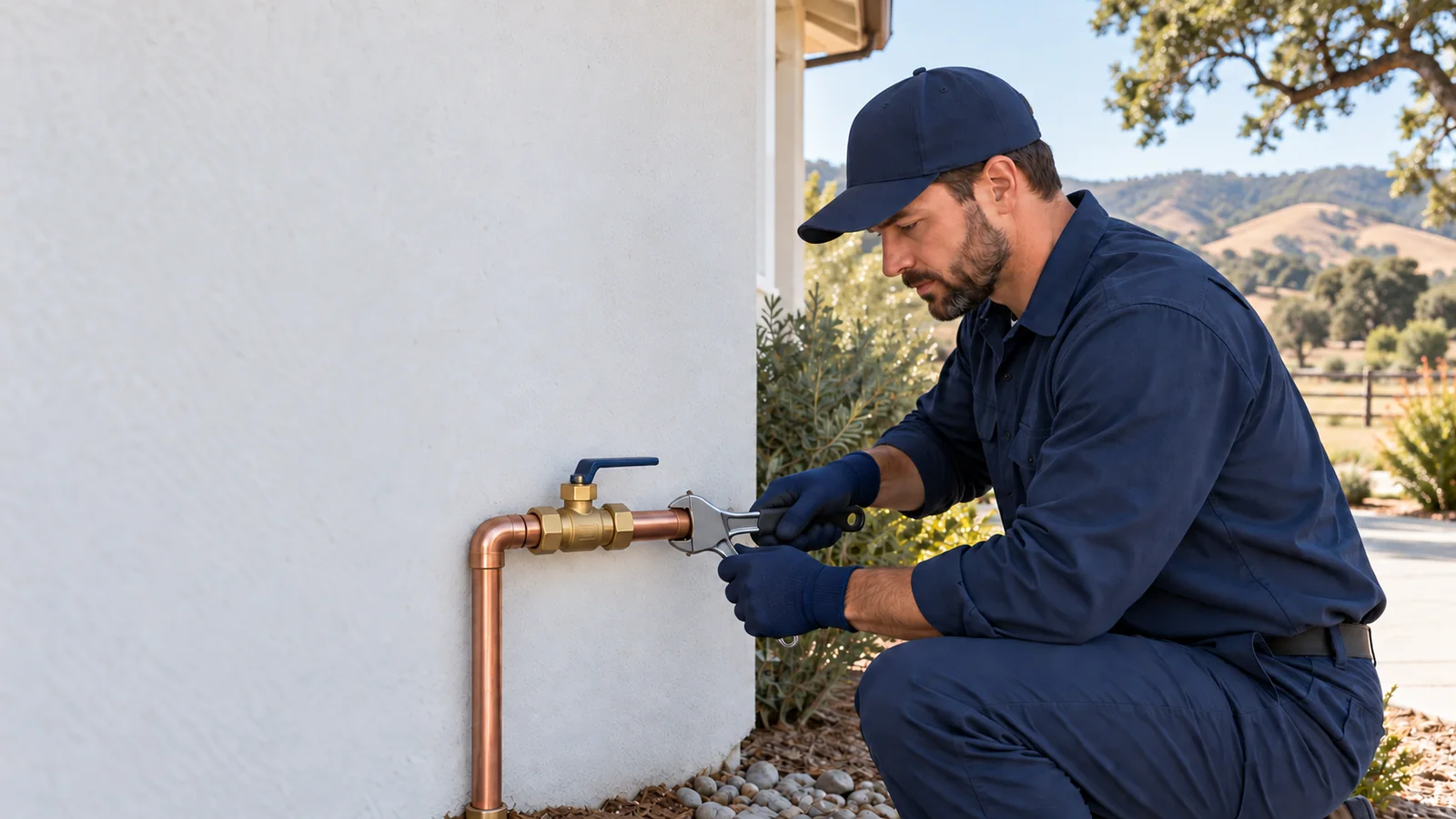
A shutoff is useful only if it controls the right part of the plumbing. Start by separating a leaking valve from a fixture problem, a pressure problem or water whose source is still uncertain.
Moisture at the stem, body or nearby connection should be traced before parts are changed. A valve that leaks while it is being operated should not be assumed dependable for future isolation.
A shutoff can turn without sealing. If water continues to flow, avoid repeated force; the internal valve and adjoining connection need evaluation before the next repair depends on them.
If the angle stop closes normally but the faucet, toilet or fixture connection is leaking or malfunctioning, use fixture plumbing rather than replacing a working shutoff.
Water isolation and pressure regulation are different jobs. High, low or unstable pressure should be evaluated on the pressure/PRV path instead of treating a working shutoff valve as the cause.
Under-sink and toilet angle stops are local controls. A private main shutoff is intended to stop a much larger part of the property water supply.
Knowing which valve works—and which one does not—changes the repair plan. A failed fixture stop can often be handled locally, while an unreliable house shutoff affects future plumbing work throughout the property.
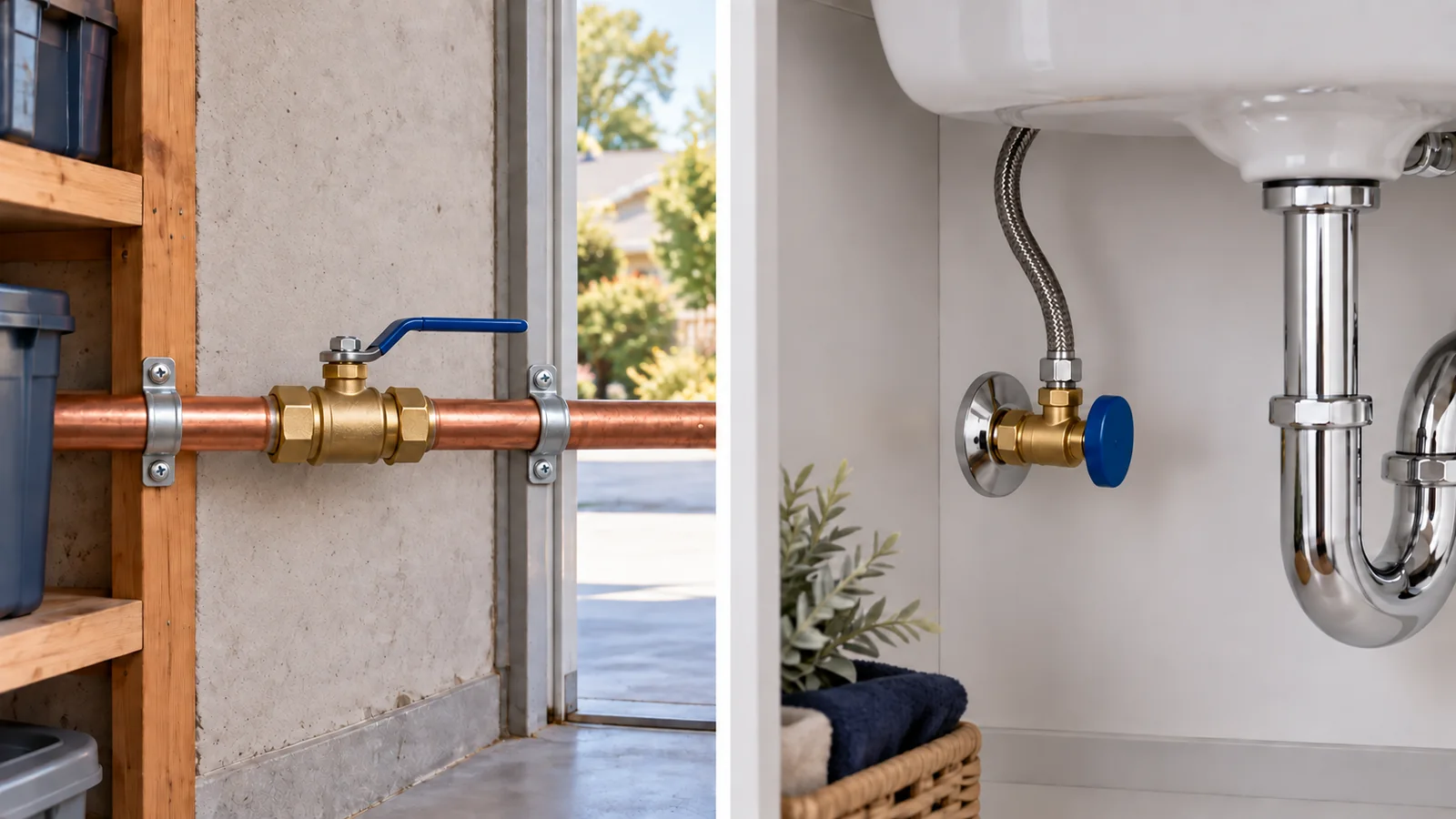
Buellton Municipal Code §13.32.070 requires the customer to provide a control valve on the customer side of the service installation, as close as practical to the meter.
The same section says the meter valve is not the customer’s routine on/off control. City Public Works also asks customers to keep the meter box accessible for reading, maintenance and emergency work.
For shutoff-valve service, Water Fixers can evaluate the private customer control and downstream plumbing while City equipment remains under City procedures.
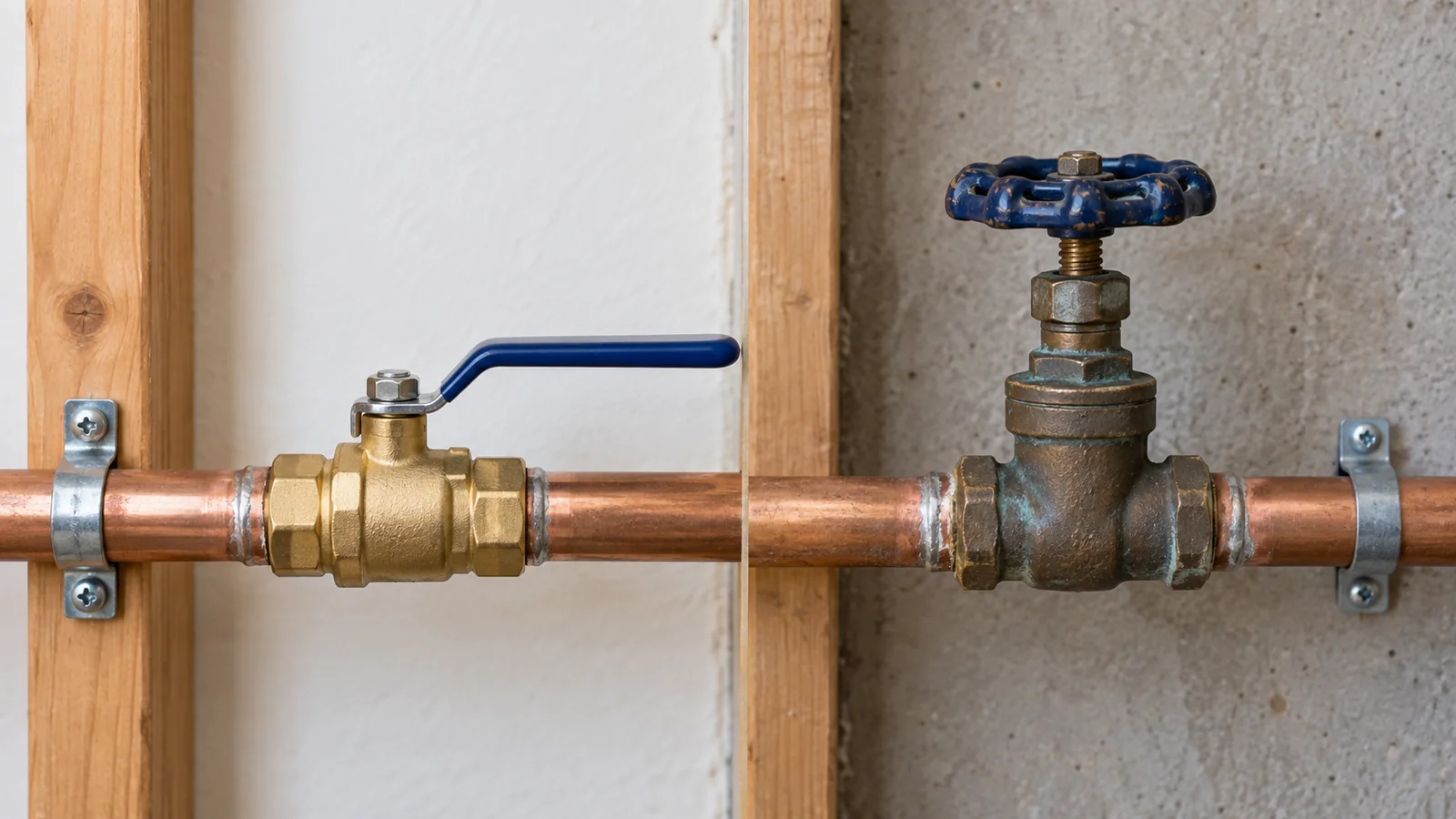
Quarter-turn ball valves and wheel-handle gate valves operate differently, but either can become unreliable. What matters is whether the valve moves normally, seals completely and remains connected to sound piping.
If a valve is stuck, do not make leverage the test. Extra force can damage the stem, valve body, fitting or pipe and turn an isolation problem into an active leak.
A wet stem, damaged body, heavy corrosion, poor access and incomplete shutoff do not all call for the same fix. The valve and its connections should be judged as one assembly.
If the defect is limited to a serviceable component and dependable shutoff control can be restored, a focused repair may be reasonable.
Replacement becomes more practical when the valve cannot be trusted to close, the body or connection is deteriorated, or another repair would still leave unreliable isolation.
A new shutoff attached to weak or leaking piping does not solve the whole problem. Accessible fittings, pipe condition and the next connection should be reviewed before the final scope is chosen.
A shutoff valve stops flow. A pressure regulator changes incoming pressure. A pressure-relief valve is a separate safety device. Similar location does not make these components interchangeable.
If the complaint is high pressure, unstable pressure or regulator behavior, keep the diagnosis on the PRV/pressure path rather than replacing a shutoff that still isolates water correctly.
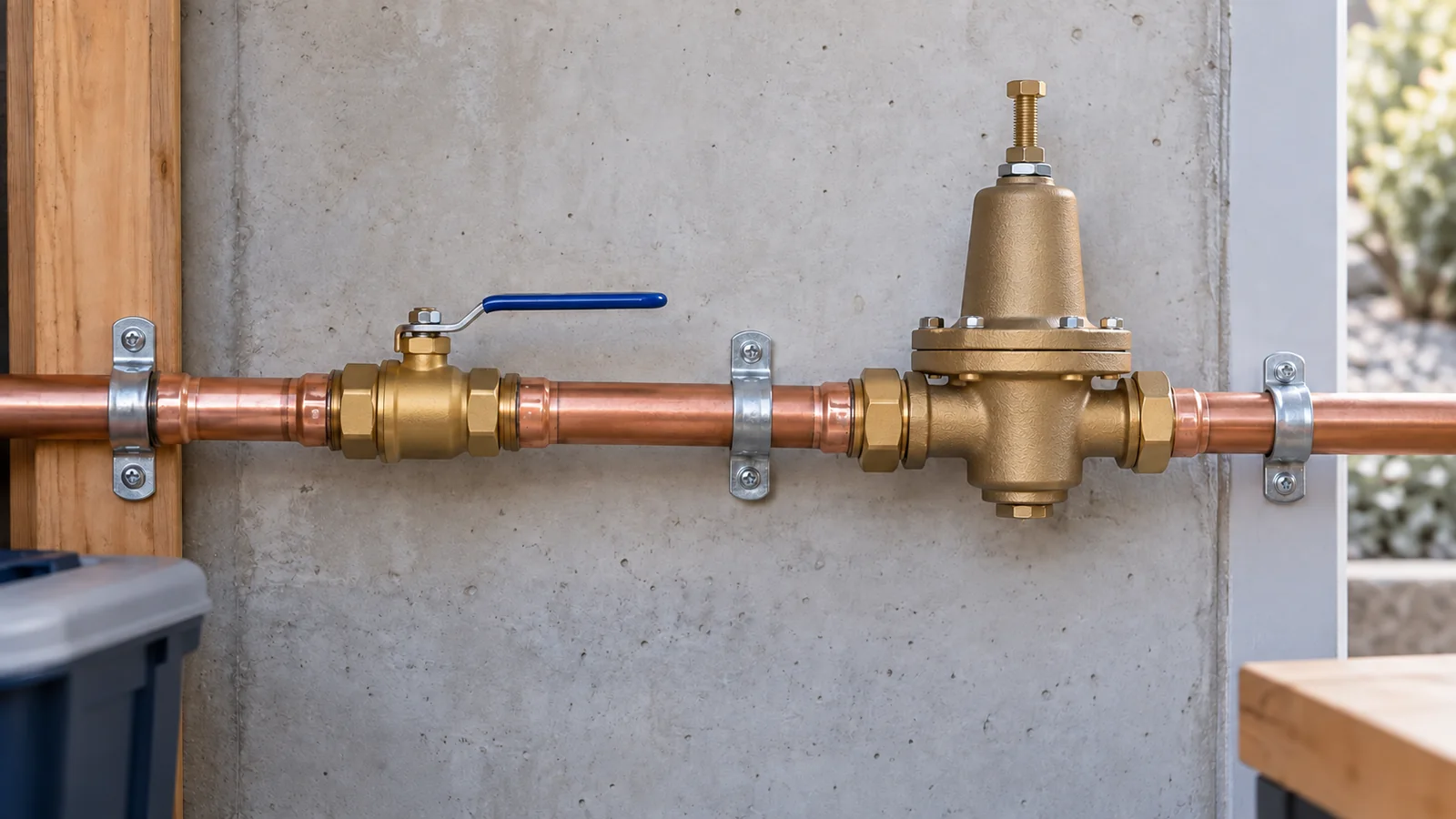
The exact work depends on access and condition, but the decision sequence should stay simple: identify the control point, trace the failure, establish safe isolation and verify the finished repair.
Identify whether the valve isolates one fixture, a branch or the private building supply, and confirm that it is not City meter equipment.
Check the stem, body, connection and nearby fittings for leakage or deterioration. Operate the valve only as far as is safe to learn whether it closes normally.
Decide how water can be controlled before disassembly. If private shutoff control is unavailable, follow the appropriate City process rather than forcing the meter valve.
Repair or replace the agreed private component, restore water and confirm the valve now operates without leakage and provides dependable isolation.
If the shutoff works and the faucet, toilet, supply connector or fixture is the failed part, use fixture service.
Water beside a valve can come from a fitting, wall, floor or another line. If the source is uncertain, locate it before replacing the shutoff.
If water cannot be controlled with a safe private shutoff and damage is continuing, use the Buellton emergency-plumbing path rather than repeatedly operating a failing valve.
For broader shutoff-valve education and other service areas, see Water Fixers shutoff valve replacement and service.
A valve that leaks, will not close fully, is badly corroded or cannot provide dependable isolation should be evaluated. Replacement is more likely when normal operation cannot be restored without leaving the valve unreliable.
Stop relying on that valve for isolation. Internal wear or damage may allow the handle to move without fully stopping flow, so the valve and its connections should be inspected before another repair depends on it.
No. A fixture stop controls one faucet, toilet or appliance connection. A private main shutoff controls a much larger portion of the property water supply.
No. A shutoff isolates flow; a pressure regulator changes incoming pressure. They can be close together but require different diagnosis and service.
Yes. Private fixture shutoffs can be evaluated and replaced when they leak, corrode, bind or no longer close reliably.
Buellton Municipal Code requires a customer control valve on the customer side of the service installation and says the meter valve should not be used for routine customer on/off control. If City-side isolation is needed, use the City’s procedure.
Tell Water Fixers which valve is involved, whether it leaks or closes, and whether the water is currently under control. We can evaluate the private valve and nearby piping and recommend the next step.
CALL NOW! Se Habla Español!