WATER TESTING • NIPOMO, CA
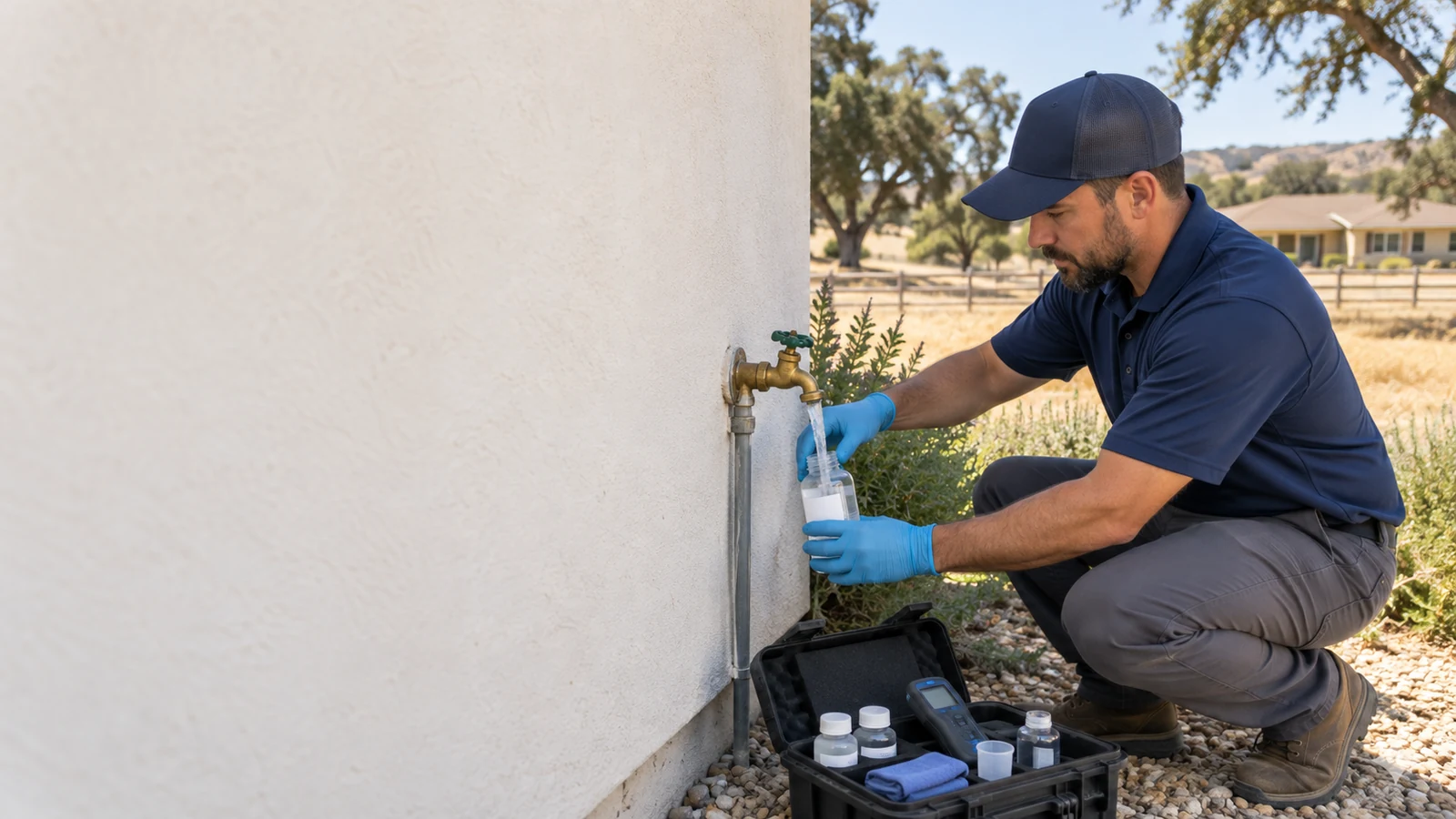
Before changing a softener, adding filtration or replacing an RO system, confirm what the water is doing at the Nipomo property and which water system or source serves the address. Testing turns a symptom into a more focused service decision and helps separate water chemistry from plumbing, water-heater or existing treatment-equipment issues.
38+ Years Serving the Central Coast • Plumbing + Filtration Expertise • California License #719792
START WITH THE SYMPTOM
A Nipomo water problem can be a source-water issue, a plumbing issue, a water-heater issue or a treatment-equipment issue. The first job at the Nipomo property is to separate those possibilities.
DRINKING WATER
For a Nipomo drinking-water question, define the analyte or treatment goal. Some questions can be screened in the field; others need proper sample collection and laboratory analysis.
SCALE / SPOTTING
At a Nipomo property, measure hardness before deciding whether whole-house softening is the right tool. Scale is a mineral clue, not a complete water-quality diagnosis.
TASTE / ODOR
For a Nipomo home, check whether the issue is hot-only, cold-only, one fixture or the entire home. Odor and taste descriptions help select the next inspection or test.
SEDIMENT / STAINING
At a Nipomo address, particles can come from source water, plumbing, corrosion or treatment equipment. Save the clue and trace where it appears before choosing a filter.
LOCAL WATER CONTEXT
Nipomo addresses are not all served by one universal water system. Nipomo Community Services District says its supply includes groundwater plus water purchased from the City of Santa Maria through the Nipomo Supplemental Water Project. Golden State Water separately announced that its Nipomo system would begin receiving supplemental Santa Maria water in September 2025. Confirm the provider and source for the actual address before applying a system report to the property.
What that changes about testing: compare the symptom with the serving provider/source and the property itself. A public-system report can answer system-level regulatory questions; property testing and inspection answer different questions about hardness, treatment performance, fixture-specific symptoms or a defined analyte. Private or shared wells require source-specific testing rather than assumptions based on nearby properties.
Useful Nipomo testing questions include the serving provider or confirmed private/shared well, whether the symptom appears at one fixture or throughout the home, what treatment equipment is already installed, and whether the decision requires a field measurement or proper laboratory analysis.
Important for Nipomo: a utility report applies to that water system, service area and reporting period. It does not diagnose a fixture, water heater, private well, shared well or treatment device inside an individual property—and a nearby property may not have the same provider or source.
FIELD TESTING + LABORATORY TESTING
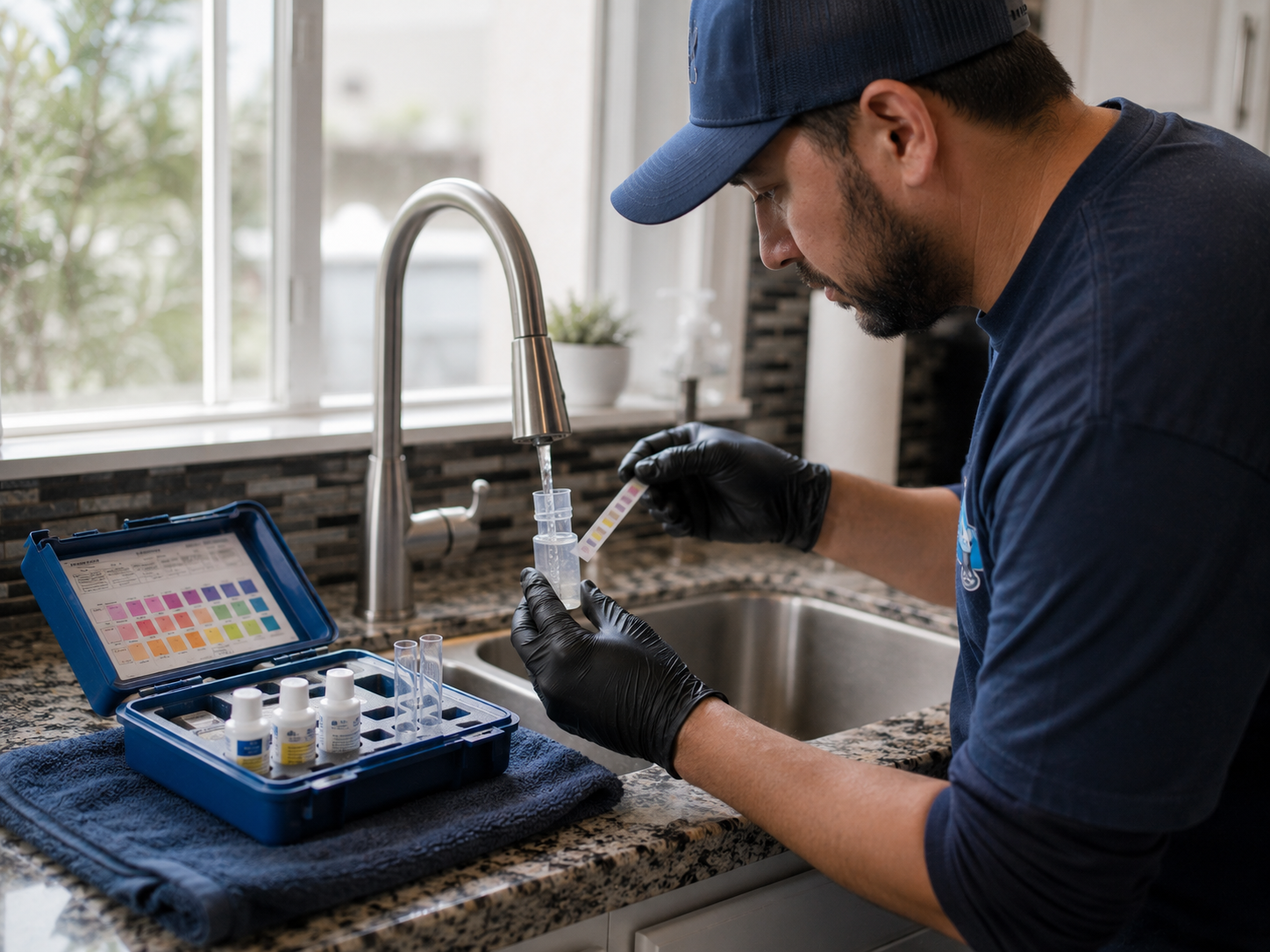
There is no single universal home water test for a Nipomo property. For a Nipomo home, the useful method depends on whether you are investigating a treatment setting, a visible symptom, equipment performance or a specific analyte.
ON-SITE DIAGNOSTICS
Water-source identification, hardness and selected treatment-related measurements, visible sediment or staining clues, fixture comparisons and checks of existing softeners, filters or RO equipment can help narrow a Nipomo service question.
LABORATORY PATH
For a Nipomo property, bacteria, metals, specific chemicals and other health-related analytes may require controlled sample collection and laboratory methods. At a Nipomo property, a basic field test should never be presented as proof that every possible contaminant is absent.
MAKE THE VISIT MORE USEFUL
1. Confirm the Nipomo property source. Public system, private well, shared well or another source.
2. Map the symptom at this address. One faucet, hot water only, cold water only or throughout the home.
3. List treatment already serving the property. Softener, whole-house filter, RO, UV or other equipment, including service history when known.
4. Define the homeowner goal. Scale control, taste and odor, sediment, equipment protection or a specific drinking-water question.
For any Nipomo property, the confirmed water source, existing treatment equipment, and pressure or flow conditions can matter alongside chemistry. Plan testing around the actual property and decision instead of borrowing conclusions from a nearby property or a different provider report.
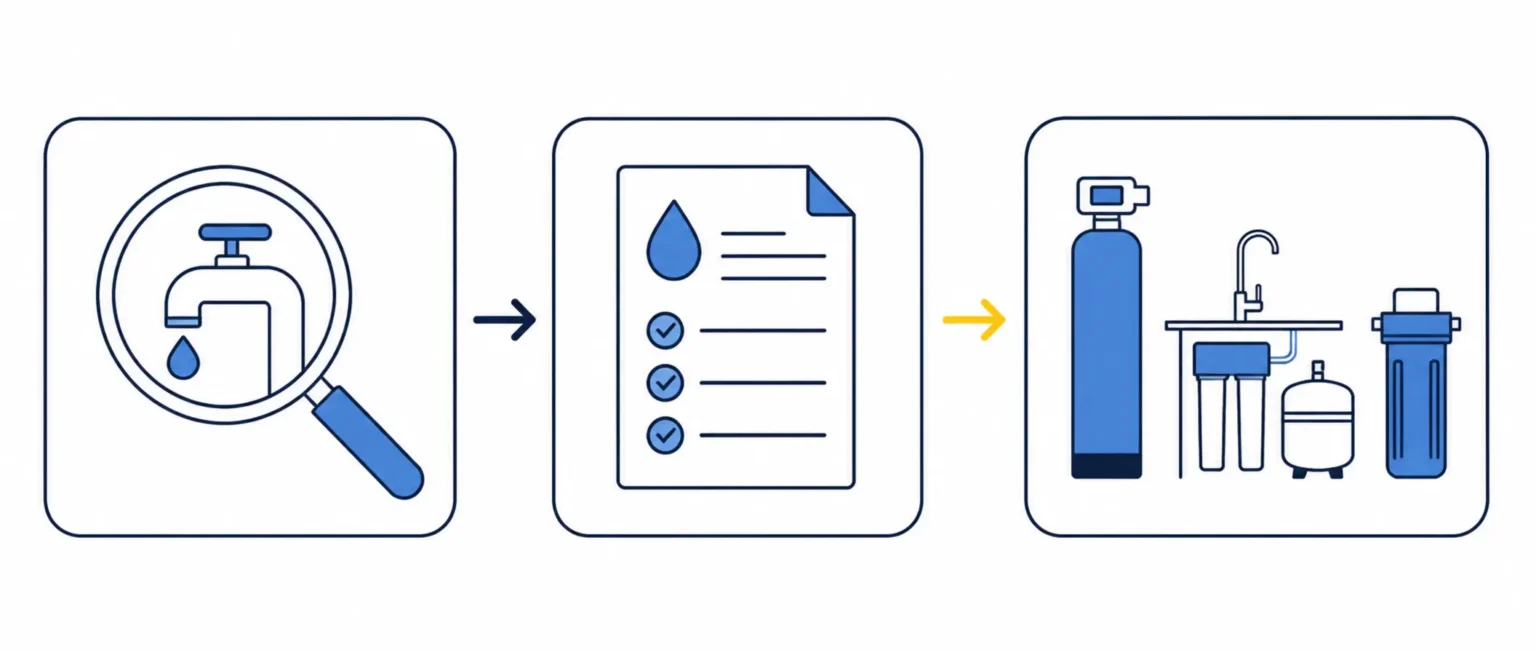
TEST FIRST • THEN CHOOSE THE SERVICE
For a Nipomo property, a result is useful when it changes the decision. For the Nipomo address, the next step may be no treatment, routine maintenance, a plumbing repair, softening, filtration, reverse osmosis, well-water treatment or more specific laboratory testing.
HARDNESS / SCALE
For a Nipomo home, use softening when hardness is the confirmed whole-house problem and the equipment is sized and set for the actual water.
WHOLE-HOUSE GOAL
For a Nipomo property, use whole-house filtration when the identified condition and treatment objective fit a point-of-entry filter rather than a hardness-only or drinking-water-only solution.
DRINKING + COOKING
For a Nipomo drinking-water goal, point-of-use RO can fit when feed-water conditions, pressure, space and maintenance needs are appropriate.
PRIVATE WELL
For a private well near Nipomo, use property-specific chemistry, well context, pressure and flow information before a treatment train is selected.
FIVE CITIES AND SOUTH COUNTY SERVICE ROUTING
If testing points toward a plumbing condition, use the Nipomo plumbing page. If the concern is broader water treatment, the Water Testing hub and treatment pages explain the next service. For regional navigation, use the Five Cities and South County page or the full Service Areas directory.
HOME WATER TESTING QUESTIONS
These Nipomo answers keep the testing step focused on what can actually be learned from the property, the serving water system and the correct test method.
Start by confirming the provider or private-well source for the address. Different systems and private wells should not be treated as interchangeable.
Yes. The test list should reflect the well, surrounding conditions, treatment history, symptoms and the intended use of the water.
Particles can come from source water, well conditions, plumbing or treatment equipment. The location and timing of the symptom help determine the next check.
No. Hardness is a mineral measurement. Nitrate, bacteria and other health-related analytes require their own appropriate testing methods.
Yes. Before adding equipment, it is useful to compare the incoming water, existing treatment and the result at the fixtures you care about.
STOP GUESSING ABOUT THE WATER
Tell Water Fixers what you are seeing, tasting, smelling or trying to improve. We will start with the source and the symptom, then route the Nipomo property toward the testing, plumbing or treatment step that fits the evidence.
Water Fixers Plumbing & Filtration • California License #719792
CALL NOW! Se Habla Español!