
GROVER BEACH, CA • WHOLE-HOUSE WATER FILTRATION
Whole house water filtration in grover beach should be tied to a defined household result. Grover Beach receives treated public water from local sources that include Lopez Lake and groundwater. Whole-house filtration is therefore a household choice for a defined goal—not evidence that the city water is “bad.” Water Fixers focuses on the symptom, the plumbing and the equipment fit. Water Fixers looks at the incoming water, current equipment and main-line plumbing before deciding what belongs in the treatment train.
Water Fixers Plumbing & Filtration • CA License #719792 • Se Habla Español
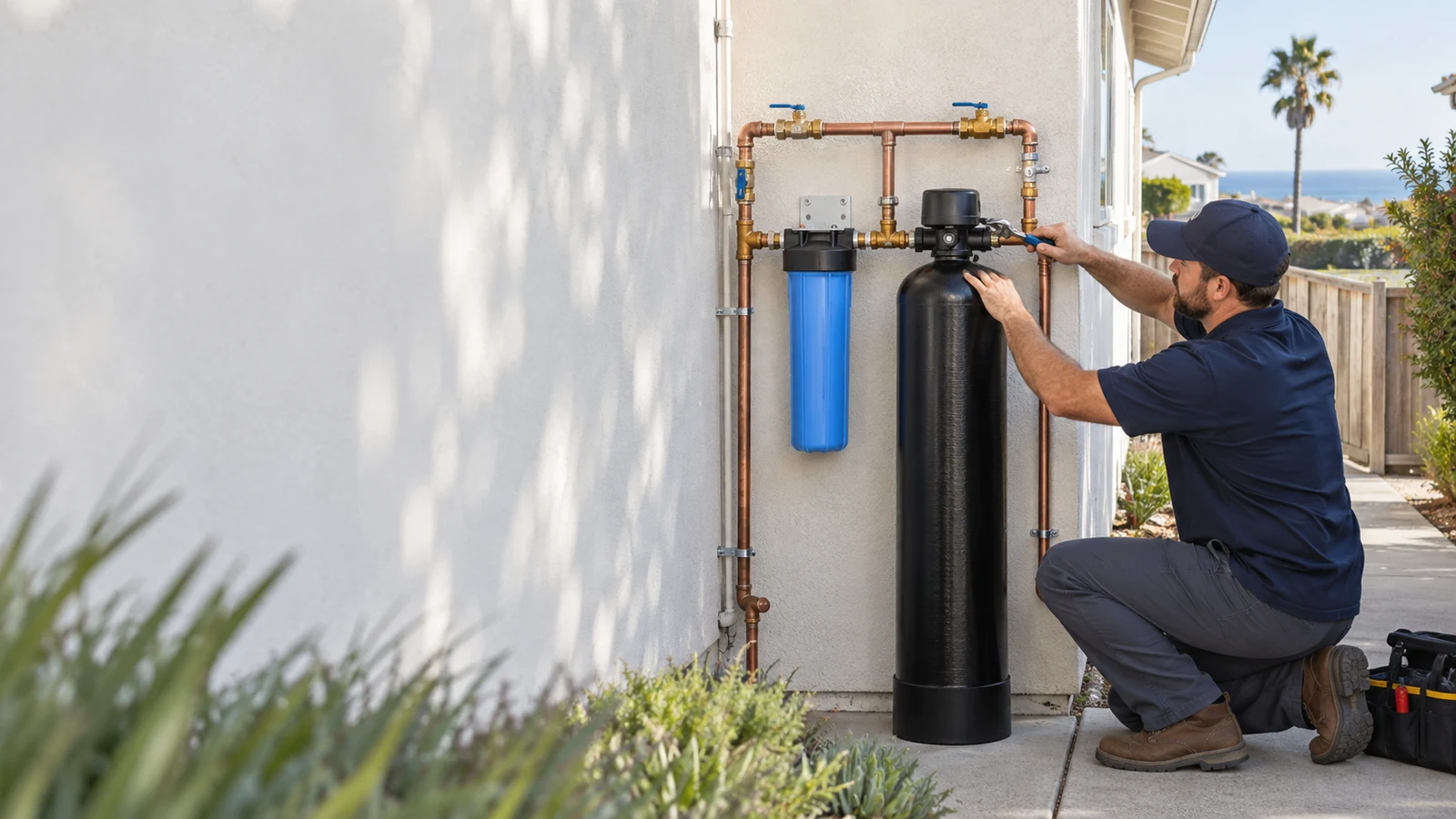
Water Fixers does not use dramatic water claims to justify equipment. Hardness complaints go to softening, drinking-water goals to RO, and specific contaminant questions to testing. A whole-house filter stays focused on the job it can actually perform. This keeps the point-of-entry system focused and avoids paying for treatment on gallons that do not need it.
House-wide taste, odor or particulate complaints can fit point-of-entry treatment when the media and service flow are a good match.
White deposits and scale usually belong in the hardness conversation. Send that goal to softening rather than overloading the filtration plan.
For one drinking faucet, start with RO rather than assuming the main line needs another treatment stage.
Unknown water conditions should be measured before equipment is selected, especially when the concern involves a named constituent.
Grover Beach identifies Lopez Lake and local groundwater as its main potable water sources. The City publishes water-quality information for the public system and encourages residents to use official information rather than alarm-based sales claims. For this page, that research supports a local Lopez Lake plus groundwater system where the page can be practical and anti-scare: define the goal before adding equipment.
Do not turn a water-source description into a sales claim. Current utility information and property-specific conditions should stay separate from what a household filter is actually designed to do.
The right next step in Grover Beach is to connect current source context with what is happening after the meter and inside the home.
A whole-house system is easier to own when every component answers a simple question: what does this stage change, how is it serviced, and what flow can it handle?
Address a household-wide taste or odor preference with correctly sized carbon media when appropriate.
Capture real particulate with a serviceable sediment stage instead of choosing an unnecessarily fine cartridge by default.
Restore flow and performance to an existing filter before assuming another treatment tank is needed.
Many Grover Beach homes have tighter side yards or mechanical spaces. The best installation is compact without making service impossible: shutoffs and bypass valves stay reachable, housings can open, and the main line is not choked by undersized fittings.
A treatment tank can look substantial and still be restrictive if its control valve or connecting plumbing is undersized. System selection should follow rated flow and the property demand.
Design for the next service visit: Good mechanical layout keeps treatment understandable. Each component is reachable, each valve has a purpose and future cartridge or media service is practical.
An older coastal-area installation may have several generations of added equipment. Before adding another device, trace what each tank or housing does, remove abandoned restrictions when appropriate, and confirm the remaining system still meets the homeowner’s goal.
A pressure complaint deserves measurements. Check the filter stage under demand before condemning every piece of treatment equipment.
A tank with no maintenance record should be evaluated by equipment type, performance and use rather than assigned an arbitrary replacement interval.
Persistent aesthetic concerns can indicate exhausted media, bypass leakage, an incorrect treatment choice or a new condition. Separate those possibilities before adding equipment.
A filter, softener and RO system can coexist, but they should never be described as interchangeable. Clear roles lead to cleaner plumbing and clearer service decisions.
When hardness is the target, choose a water softener solution and let filtration address only a separate filtration goal.
For a dedicated drinking or cooking faucet, compare point-of-use reverse osmosis instead of treating the entire home for a one-faucet goal.
A private well needs its own source-specific testing and treatment process. Do not apply municipal-water assumptions to a well.
Use the general filtration guide when the problem has not yet been sorted into softening, RO, whole-house filtration or well-water treatment.
If you are considering a main-line filter in Grover Beach, start with the symptom and the existing plumbing. Water Fixers can sort out the treatment category and design a serviceable next step without stacking unnecessary equipment.
Water Fixers Plumbing & Filtration • Serving California’s Central Coast • CA License #719792
CALL NOW! Se Habla Español!