
ARROYO GRANDE, CA • HOMEOWNER WATER QUALITY GUIDE
Arroyo Grande can receive treated Lopez Lake water, State Water and local well supply, so hardness and taste can depend on source conditions. This guide separates scale, sediment, drinking-water goals and whole-house filtration before a treatment system is chosen.
LOCAL WATER CONTEXT
Arroyo Grande water can be quite hard depending on source. The useful path is to separate hardness, taste/odor, sediment and drinking-water goals before choosing equipment.
City of Arroyo Grande
Treated Lopez Lake water blended with State Water, with city wells also available
Lopez Lake / State Water blend and local groundwater
START WITH WHAT YOU NOTICE
In Arroyo Grande, white scale is a different question from disinfectant taste, sediment or a drinking-water preference. Starting with the household symptom keeps a hardness problem from being treated like a filtration problem.
If white spots or scale are the main complaint in Arroyo Grande, measure untreated hardness before sizing, replacing or reprogramming a softener. The local supply context is treated lopez lake water blended with state water, with city wells also available, so a current property reading is more useful than a generic regional number.
Taste or odor in Arroyo Grande should be evaluated separately from hardness. Start with the current source/provider context and whether the symptom occurs throughout the home before choosing carbon or another whole-house medium.
If the Arroyo Grande goal is better water for drinking, cooking or ice, point-of-use RO may be a better fit than treating every gallon in the home. The feed water and maintenance needs still matter.
At a Arroyo Grande property, particles, staining or filters that clog unusually fast should be identified before new equipment is selected. The source, plumbing and any existing treatment all belong in that diagnosis.
SOURCE BEFORE SOLUTION
Arroyo Grande has multiple supply options available to the City. Current reporting and an address-level test are the practical way to connect that source mix to what the homeowner is seeing at fixtures.
Arroyo Grande customers are associated with City of Arroyo Grande. The supply is best described as treated lopez lake water blended with state water, with city wells also available, tied to Lopez Lake / State Water blend and local groundwater. Confirm the actual account or well before applying citywide conclusions.
At a Arroyo Grande property, hardness can contribute to scale and spotting, while dissolved solids, disinfectant, sediment and plumbing condition can create different symptoms. The local context here is arroyo Grande water can be quite hard depending on source. The useful path is to separate hardness, taste/odor, sediment and drinking-water goals before choosing equipment.; no single treatment addresses all of those conditions.
MATCH THE TREATMENT TO THE JOB
The Arroyo Grande treatment path should follow the measured job: softening for hardness, RO for point-of-use drinking water, and whole-house filtration for a defined home-wide target.
For Arroyo Grande homes, a water softener is specifically intended to reduce calcium and magnesium hardness. It should not be presented as a general-purpose contaminant filter.
For Arroyo Grande, reverse osmosis is a point-of-use option for a defined drinking-water goal. Its performance depends on the feed water reaching the home and on timely filter, tank and membrane maintenance.
Whole-house filtration in Arroyo Grande makes sense when a defined treatment goal applies throughout the home. The filter media should match the actual concern rather than being chosen as a generic add-on.
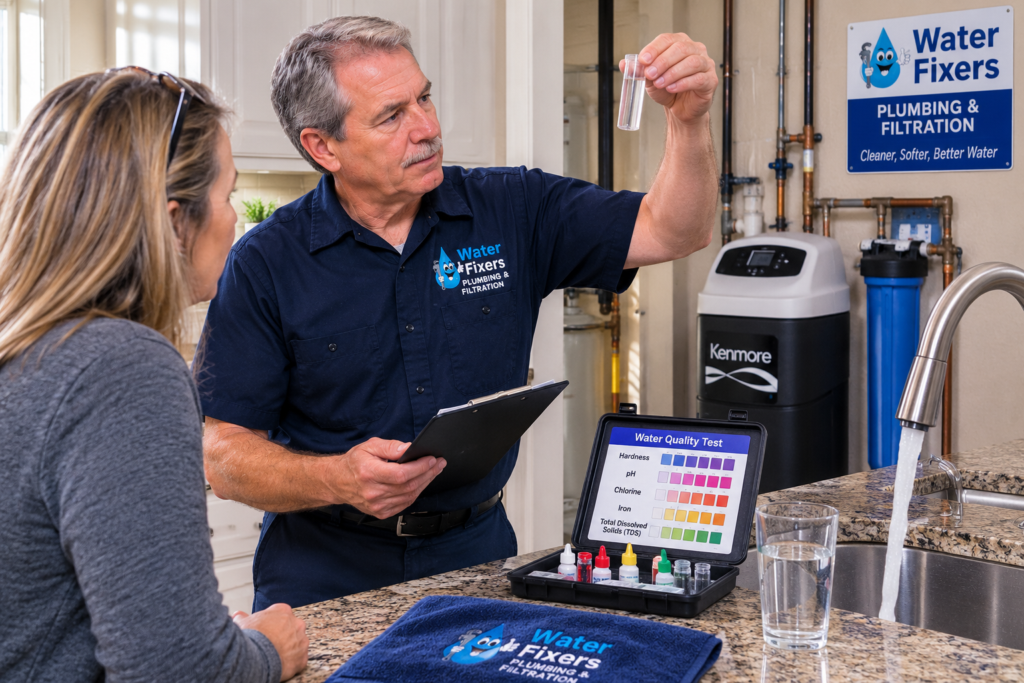
Water testing is useful in Arroyo Grande when the symptom is unclear, the source can vary, or existing treatment is not performing as expected. Test the question that will actually change the treatment decision.
For a Arroyo Grande-area property on a private well, treatment should follow that well’s laboratory results, source conditions and household goals. The community-water information on this page is not a substitute for testing the private well.
EXISTING EQUIPMENT
If an Arroyo Grande home already has a softener, filter or RO system, measure its performance before layering on another device. Maintenance and programming can change the diagnosis.
For an existing softener in Arroyo Grande, check bypass position, salt level, programming, regeneration and treated-water hardness before adding or replacing equipment. That verifies whether the issue is service, setup or source water.
For an existing RO system in Arroyo Grande, review filter history, tank pressure, flow, sanitation and membrane performance before replacing the whole unit. A maintenance issue can often be isolated without changing the entire system.
For a Arroyo Grande property with an unclear setup, Water Fixers can help determine whether the next step belongs to water quality, plumbing, pressure or service on the equipment already installed.
LOCAL NAVIGATION
Use the Arroyo Grande and Five Cities routes below after the symptom has been narrowed to a specific service need.
Use the Arroyo Grande plumber page for broader local plumbing and property-service information.
From Arroyo Grande, use the Five Cities & Coast hub for nearby-community navigation and broader regional plumbing/service information.
From this Arroyo Grande guide, use the main Water Quality library for broader contaminant, symptom and treatment education that is not specific to one community.
COMMON QUESTIONS
The Arroyo Grande FAQ focuses on the local source mix, hardness, treatment roles and the value of testing before sizing equipment.
Hardness should be measured at the Arroyo Grande property before a softener is sized or reprogrammed. The local source context can explain why scale is plausible, but scale or spotting alone does not provide the hardness number needed for equipment decisions.
Arroyo Grande customers should start with the actual provider or well serving the property. The local guide context is City of Arroyo Grande; the supply is described as Treated Lopez Lake water blended with State Water, with city wells also available. Confirm the account/source before applying a citywide conclusion to one home.
Use the current report from City of Arroyo Grande for regulatory compliance questions. Household hardness, taste, odor, scale or a preference for additional point-of-use treatment are separate from whether the public system meets drinking-water standards.
No. A water softener has a specific job: reducing calcium and magnesium hardness. In Arroyo Grande, confirm untreated hardness, household demand and the condition of any existing equipment before sizing or replacing a softener.
RO can make sense in Arroyo Grande when the goal is point-of-use treatment for drinking, cooking or ice. It should be selected for that defined goal and maintained with the correct filters, tank service and membrane checks rather than being treated as a whole-house hardness solution.
Testing is especially useful in Arroyo Grande when the source, symptom or existing treatment does not make the next step clear. It can separate hardness, sediment, taste/odor, dissolved-water questions and equipment performance before money is spent on a new system.
The City can use treated Lopez Lake water blended with State Water and also has wells available. Because source conditions can change, a current property-level hardness test is the best basis for softener sizing or service.
CURRENT INFORMATION MATTERS
For Arroyo Grande, use current reporting from City of Arroyo Grande for regulatory compliance and source-system information. California drinking-water authorities and EPA provide the broader regulatory context; hardness, taste, odor or scale by themselves do not establish whether the public supply meets standards.
NOT SURE WHAT YOUR WATER NEEDS?
Tell Water Fixers what you notice at the home and whether the goal is scale reduction, better drinking water, whole-house taste/odor treatment, or service on existing equipment. We can help separate those paths.
CALL NOW! Se Habla Español!