Tips From Harley & Zsa ZsaHelpful Tips for Home and WaterExplore Harley’s practical plumbing tips and Zsa Zsa’s advice for better water, hair care and shower time.
WATER SOFTENER REPAIR & MAINTENANCE • BUELLTON, CA
Water Softener Repair & Maintenance in Buellton, CA
Hard water back? Salt not moving? Softener leaking or not regenerating?
Water Fixers diagnoses and services existing water softeners in Buellton. We check the salt and brine system, controls, regeneration, bypass, valve, resin performance and the plumbing around the unit before recommending repair, maintenance or replacement.
38+ years on the Central Coast • California License #719792 • Plumbing + water treatment from one local team
START WITH WHAT THE SOFTENER IS DOING
Maintenance, Repair, or a Replacement Decision?
You do not need to diagnose the equipment before you call. The goal is to identify whether the problem is routine upkeep, a repairable failure, worn treatment media or an older system that no longer makes financial sense to keep repairing.
Maintenance & Performance
The unit still runs, but salt use, settings, brine-tank condition or soft-water performance has drifted.
A Softener Service Call Should Look at the Whole System
Adding salt is only one part of maintenance. A useful diagnosis follows the softener through its operating cycle and checks the plumbing conditions that can affect performance.
Salt & Brine System
Salt level, bridging, brine draw, float condition, water level, injector behavior and whether the brine tank is actually doing its part during regeneration.
Controls & Regeneration
Programming, hardness/capacity settings, cycle behavior, motor or control errors, drain flow and whether the unit completes regeneration correctly.
Valve, Seals & Resin
Valve condition, leaks, seals, injector components and whether the resin is still exchanging hardness effectively enough to justify keeping the system.
Plumbing Around the Softener
Bypass position, shutoffs, pressure, nearby leaks, drain connection, water-heater scale and other plumbing conditions that can imitate or worsen a softener problem.
BUELLTON WATER CONTEXT
Why Testing and Correct Settings Matter in Buellton
The City of Buellton reports that its drinking-water supply comes from groundwater wells in the Buellton Uplands and Santa Ynez River Underflow, supplemented by State Water Project water. The City’s 2024-period report lists groundwater total hardness at 420–460 ppm as CaCO₃, averaging 433 ppm.
That source variation is a good reason to check the water and the softener’s actual settings instead of assuming one hardness number applies to every Buellton property or every time of year.
Average total hardness reported for Buellton groundwater in the City’s 2024-period Consumer Confidence Report.
That is source-specific—not a promise of what is at every faucet. The City also uses State Water, and conditions can vary.
COMMON SERVICE CALLS
Signs Your Buellton Water Softener Needs Attention
These symptoms do not all point to the same repair. They are clues that help narrow the problem before a valve, resin, control or complete replacement is recommended.
Hard water or scale has returned
If spots and scale are coming back throughout the home, check bypass position, salt/brine operation, settings, regeneration and resin performance.
The softener has salt but water still feels hard
Salt in the tank does not prove that brine draw and regeneration are working correctly.
Salt use suddenly changed
No salt use, unusually heavy salt use, bridging or a brine level that never changes are all useful diagnostic clues.
The unit is stuck, draining or showing an error
A stalled cycle can involve the motor, control, valve, injector or drain path and should be diagnosed before parts are selected.
Water is leaking around the valve, bypass or tubing
Small leaks can damage nearby surfaces and may also interfere with normal softener operation.
An older unit keeps needing attention
Age alone does not force replacement, but repeated failures, parts availability, resin condition and repair cost should be weighed together.
EXISTING EQUIPMENT + NEXT STEPS
Repair Experience Plus Current Softener Options
Repair first when the equipment is serviceable and the numbers still make sense. When it does not, replacement should solve the actual hardness and household-demand problem—not simply swap one tank for another.
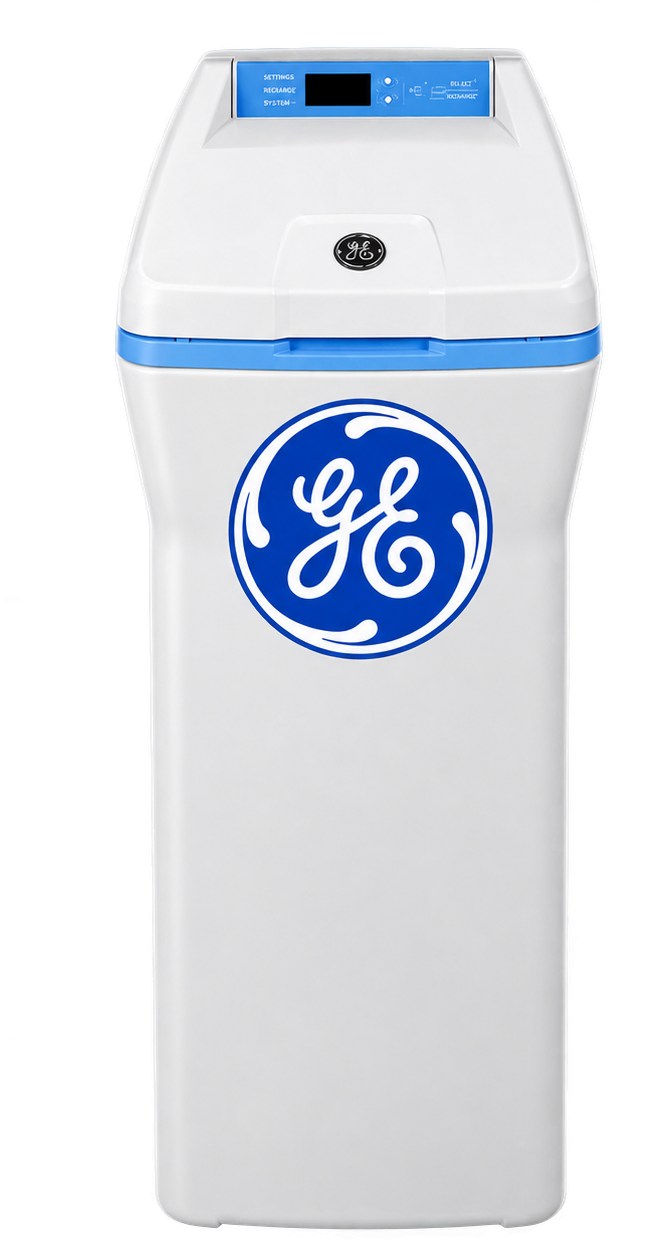
GE Softener Repair
Water Fixers can evaluate many GE cabinet-style softeners for salt, brine, valve, regeneration, leak and hard-water-return problems before replacement is assumed.
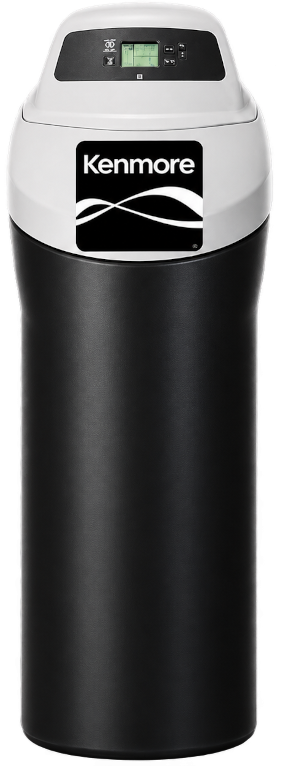
Older Sears and Kenmore softeners can be checked for repairability, parts availability, resin condition and whether another repair still makes practical sense.
When replacement is the better path, compare current Water Fixers softener choices and size the new equipment to the home’s hardness and actual water demand.
Keep the Softener Problem Connected to the Rest of the Water System
Hard-water symptoms can overlap with sediment, taste, odor, pressure and water-heater scale. These routes help keep each job in the right service lane.
Hard Water Solutions
Understand scale, spotting and other signs of hardness without assuming every water-quality problem belongs to the softener.
Hard water returned, salt use changed, the brine tank looks wrong, or the softener is leaking or not regenerating? Water Fixers can evaluate many existing water-softener brands across California’s Central Coast—even when the system was installed by someone else.
We diagnose the controls, valve, brine system, resin performance and surrounding plumbing before recommending repair, maintenance or replacement.
Maintenance is a good starting point when the system still runs but salt use, settings, brine-tank condition or performance has drifted. Repair is more likely when a valve, seal, injector, motor, control or another component is failing.
Salt in the tank does not prove the unit regenerated correctly. Bridging, weak brine draw, incorrect settings, bypass position, valve trouble, drain restrictions or worn resin can all allow hardness through.
A small serviceable leak does not automatically mean replacement. Age, leak location, parts availability, tank condition, valve condition, resin performance and repeated past failures should be considered together.
Water Fixers can evaluate many older GE and Sears/Kenmore systems. Whether repair makes sense depends on the exact model, condition, parts availability and expected remaining service life.
Buellton water conditions vary by source. The City’s 2024-period Consumer Confidence Report lists groundwater total hardness at 420–460 ppm as CaCO₃, averaging 433 ppm, while other supplied water in the report is lower. A current property-level hardness test is the better basis for softener settings.
Yes. Water Fixers provides water softener troubleshooting, maintenance, repair evaluation, resin and valve assessment and repair-versus-replacement guidance for Buellton and nearby Santa Ynez Valley communities.
READY FOR A REAL DIAGNOSIS?
Need Your Water Softener Checked in Buellton?
Tell Water Fixers what the softener is doing: hard water returned, salt use changed, the unit is leaking, regeneration looks wrong or the system simply is not performing like it used to.