
SAN LUIS OBISPO, CA • WHOLE-HOUSE WATER FILTRATION
Whole-house water filtration in San Luis Obispo should start with the result you want at the taps. If you notice taste, odor or particles at several fixtures, we can check the water source, plumbing and existing equipment before choosing a filter. Each cartridge, tank and valve should have a clear purpose and be accessible for service.
Water Fixers Plumbing & Filtration • CA License #719792 • Se Habla Español
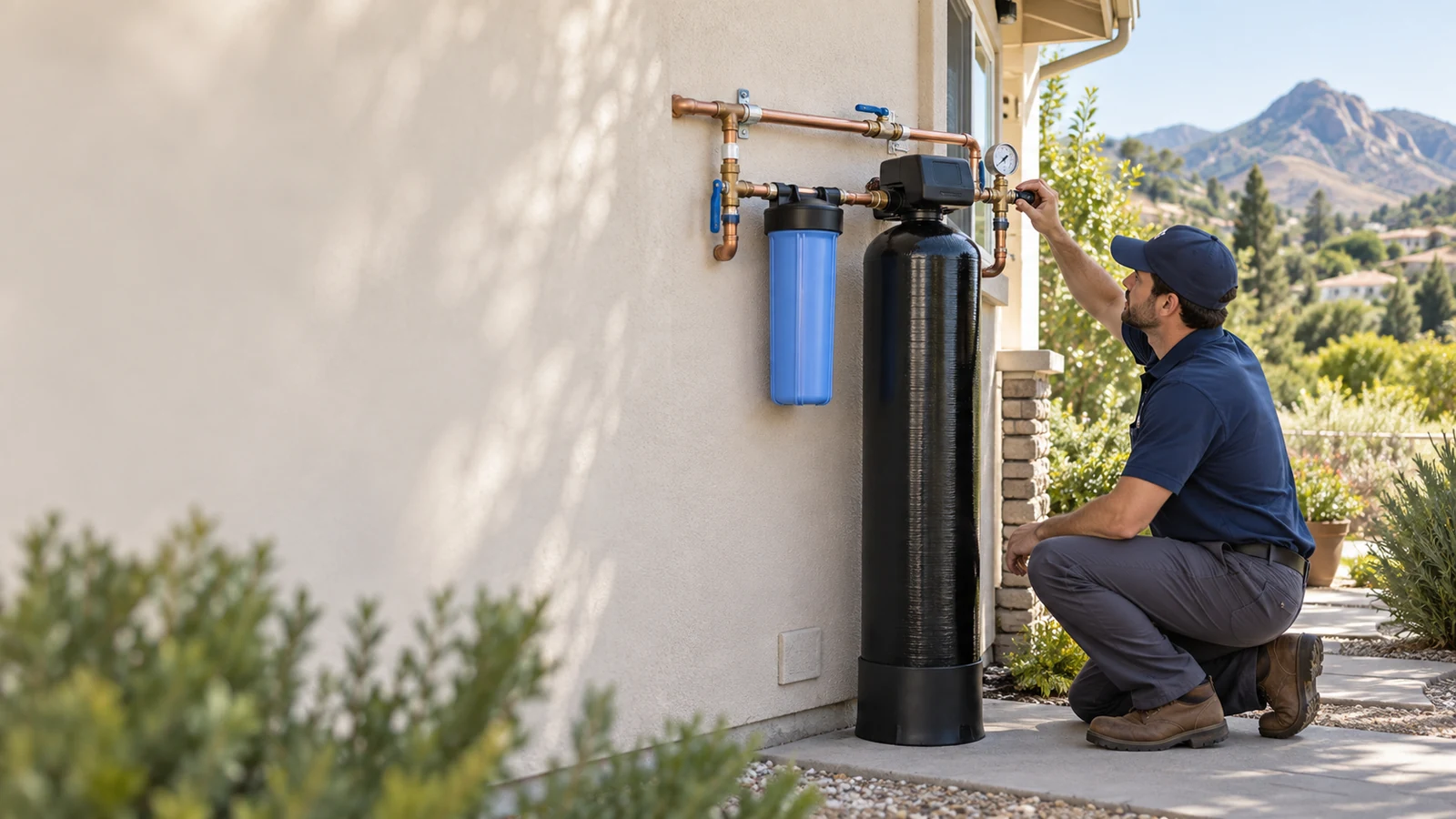
First identify the water concern and confirm what serves the property. A whole-home filter may help with a suitable taste, odor or sediment goal. Hardness, drinking-water treatment and private-well concerns call for different evaluations.
If the same aesthetic issue is present at many fixtures, whole-home filtration can be considered after the cause and treatment goal are defined.
A carbon or sediment filter does not soften water. If scale or spotting is the concern, check the hardness and compare softener options.
A kitchen drinking-water goal is different from a whole-home goal. Reverse osmosis is the dedicated point-of-use service for that situation.
Unknown water conditions should be measured before equipment is selected, especially when the concern involves a named constituent.
The City of San Luis Obispo identifies Whale Rock, Salinas and Nacimiento reservoirs as sources of its municipal drinking water. It treats that water before distribution. This describes the City system; confirm the provider and water conditions for your address before selecting home treatment.
Utility facts provide context, not a treatment prescription. A regulated public system can meet standards while an individual homeowner still chooses extra treatment for a defined aesthetic preference.
Confirm what serves the San Luis Obispo address, describe the condition at the home, and then choose media that can perform that job at residential flow.
A useful treatment train is usually easier to explain than a complicated one: add a stage only when it addresses a known need, size it for the main line, and leave it accessible for service.
Use carbon filtration when a whole-home aesthetic taste or odor goal is clearly defined and the media is suitable.
Use sediment filtration when particulate is actually present or needed for equipment protection, not as an automatic stage.
Size the system for the home’s actual peak demand, available pressure and future service access. Add a filtration stage only when it has a defined job.
Each installation depends on the property’s plumbing and available space. Pipe material, main-line size, regulator condition, available space and fixture demand all affect how a point-of-entry system should be sized and plumbed.
Physical size alone does not reveal service-flow capability. The valve, media type, bed depth, housing area and plumbing connections all influence performance.
Design for the next service visit: Good mechanical layout keeps treatment understandable. Each component is reachable, each valve has a purpose and future cartridge or media service is practical.
An existing SLO filter may be doing its job but overdue for media or cartridge service, or it may have been added without adequate flow capacity. Pressure measurements and equipment identification help separate maintenance from replacement.
Do not assume the largest tank is the restriction. Compare pressure on both sides of each stage and inspect the cartridge before replacing equipment.
A tank with no maintenance record should be evaluated by equipment type, performance and use rather than assigned an arbitrary replacement interval.
Confirm that the installed media was meant for the condition the homeowner still notices. An exhausted filter and a filter aimed at the wrong problem can feel similar at the faucet.
The best multi-stage systems are easy to explain. One device may handle hardness, another a whole-home aesthetic concern and another dedicated drinking water.
When hardness is the target, choose a water softener solution and let filtration address only a separate filtration goal.
For a dedicated drinking or cooking faucet, compare point-of-use reverse osmosis instead of treating the entire home for a one-faucet goal.
If the property uses a private well, start with testing appropriate to that source and evaluate treatment from the results.
If you are unsure whether the concern calls for a whole-home filter, softener or drinking-water system, start with a broader water-filtration evaluation.
If you are considering a main-line filter in San Luis Obispo, start with the symptom and the existing plumbing. Water Fixers can sort out the treatment category and design a serviceable next step without stacking unnecessary equipment.
Water Fixers Plumbing & Filtration • Serving California’s Central Coast • CA License #719792
CALL NOW! Se Habla Español!