NIPOMO • WATER FILTRATION & TREATMENT
Water Fixers helps Nipomo homeowners sort out filtration, softening, reverse osmosis, testing and existing-system service without assuming every water concern needs the same equipment. The useful starting questions are simple: who supplies the property, what do you want to change, and does the concern affect one drinking-water faucet or water throughout the home?
If the water condition is unclear, testing and the current supplier report can help define the treatment goal before equipment is selected.
Nipomo and Central Coast service • California contractor license #719792
NIPOMO WATER-SOURCE CONTEXT
Nipomo should not be treated as one universal water profile. For properties served by Nipomo Community Services District, the District currently reports a blend of groundwater from five operational wells and water purchased from the City of Santa Maria through the Nipomo Supplemental Water Project. The blend can change, so treatment planning should begin with the actual supplier and property—not a single citywide assumption.
NCSD says its supply includes its own wells plus purchased Santa Maria water. That matters because the mix reaching an address can vary. A filtration recommendation should be tied to the concern you want to address and the water actually reaching the property.
NCSD currently reports hardness between about 8 and 19 grains per gallon depending on location, day and source blend, and says the District uses chloramines for disinfection. Hardness is normally a softening question. A disinfectant taste or odor goal is a filtration question. Those are different jobs, and one treatment device should not be assumed to handle both without the appropriate product claim.
START WITH THE TREATMENT GOAL
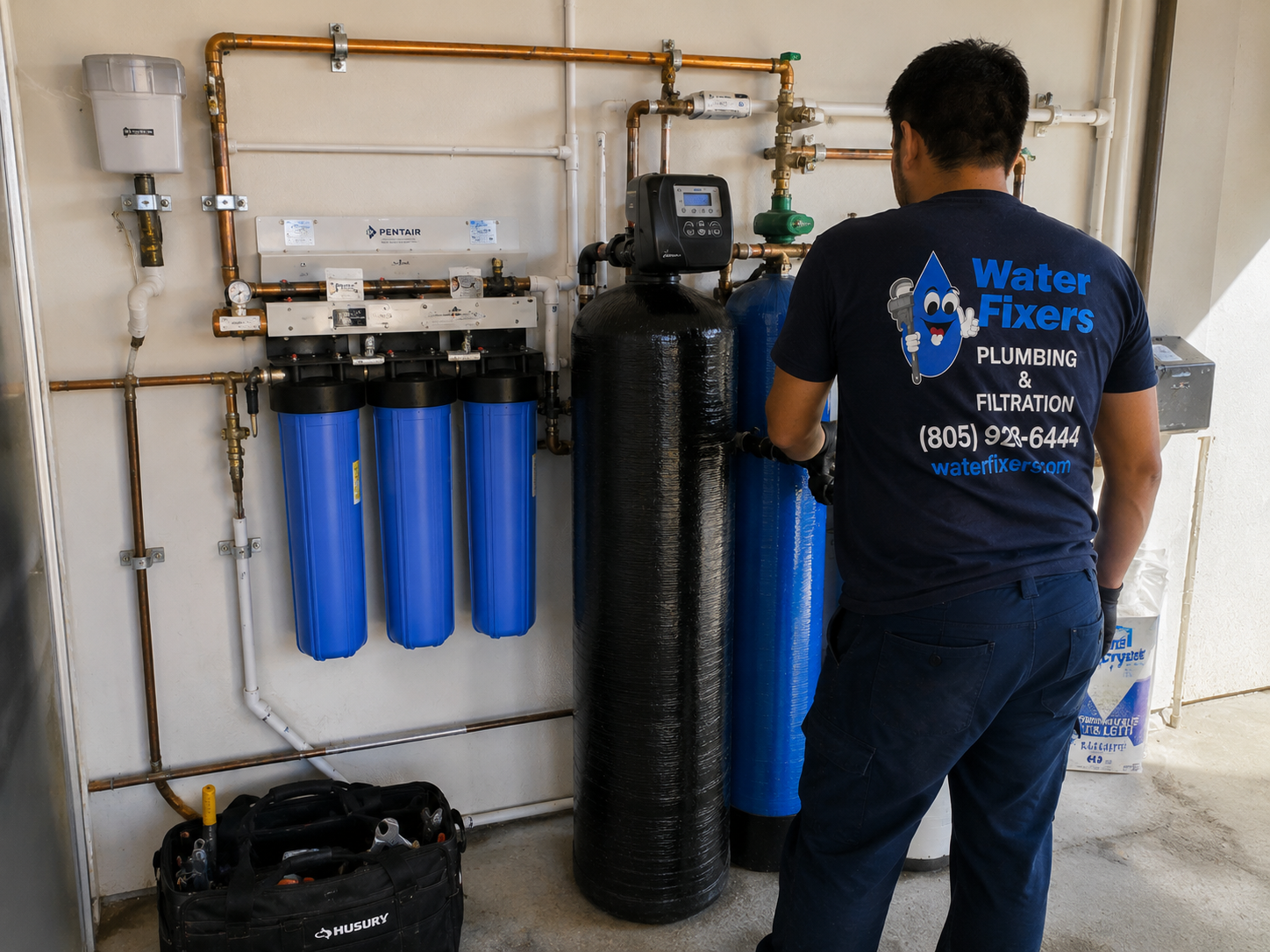
If the concern affects water at many fixtures, point-of-entry filtration may be the appropriate path. The exact system depends on the treatment target, flow needs, plumbing arrangement and maintenance plan.
Hardness treatment is normally the job of a water softener rather than a generic filtration cartridge. Confirm the actual hardness and household demand before sizing equipment.
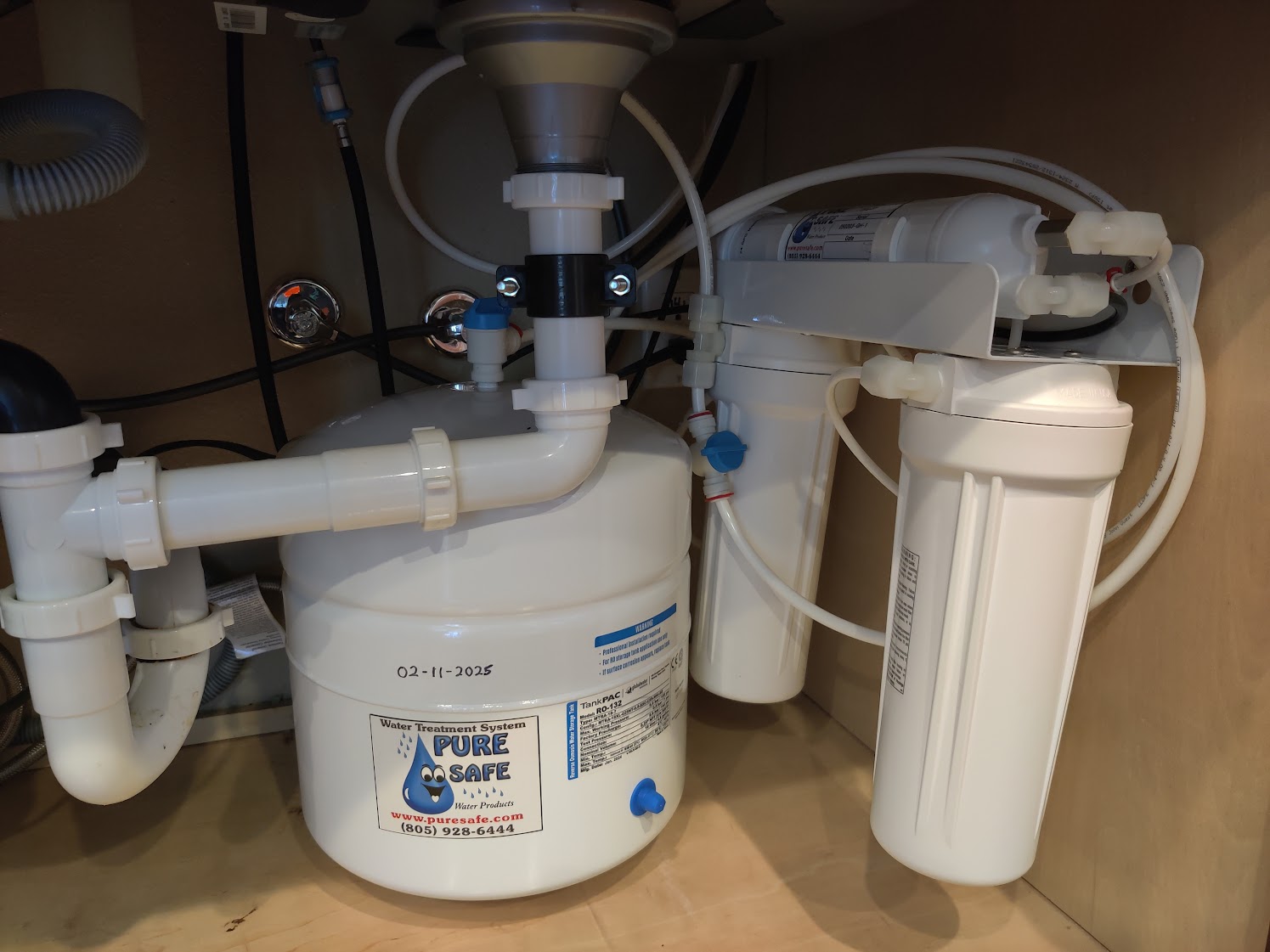
Reverse osmosis is a point-of-use path for a dedicated drinking-water faucet. It is not the same as treating every tap in the home, and it does not replace a softener when whole-house hardness is the concern.
TEST FIRST WHEN THE QUESTION IS UNCLEAR
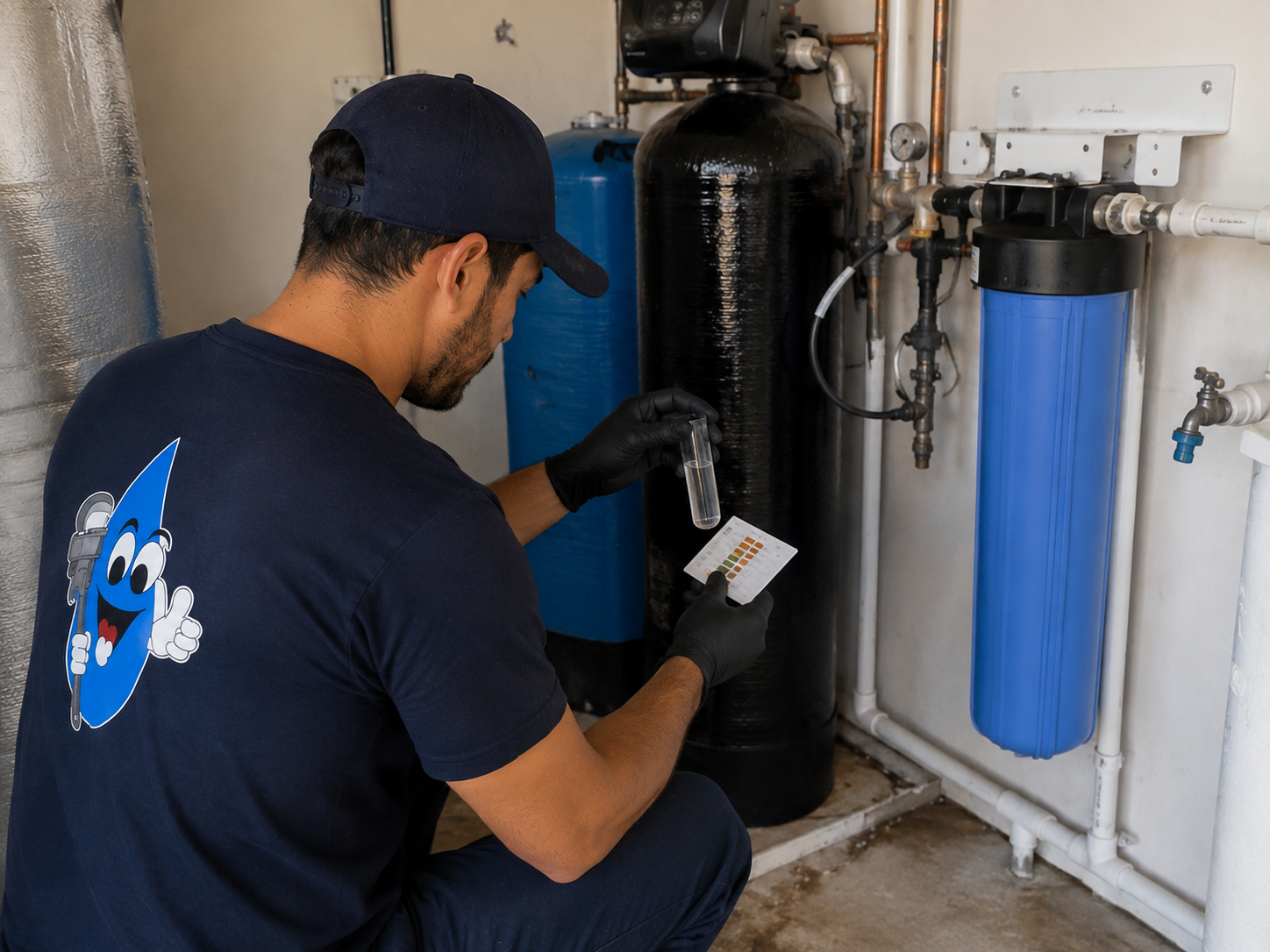
Taste, odor, color, spotting or sediment can help describe a concern, but appearance alone does not establish every chemical or microbial condition. For public-water customers, the current utility report is useful system-level context. When a treatment decision depends on what is actually present at the tap—or when a private well is involved—appropriate testing can narrow the choice.
CDC guidance is similar: identify the substance or problem you want to address and choose a treatment system with a documented claim for that concern rather than assuming all filters perform the same job.
FILTRATION SHOULD MATCH THE ACTUAL TARGET
Different home-treatment systems are built for different jobs. If chloramine reduction is the goal at an NCSD-served property, do not assume every carbon filter has the same performance; check the specific product claim or certification for chloramine reduction. If hardness is the problem, use the softener path. If the goal is dedicated drinking water, compare reverse-osmosis options.
For whole-home filtration, pressure drop, peak household flow, bypass access, drain requirements where applicable, equipment location and filter or media service all matter after installation. A system should be selected for the water goal and the plumbing it has to serve.
CHOOSE THE FOCUSED WATER-TREATMENT PATH
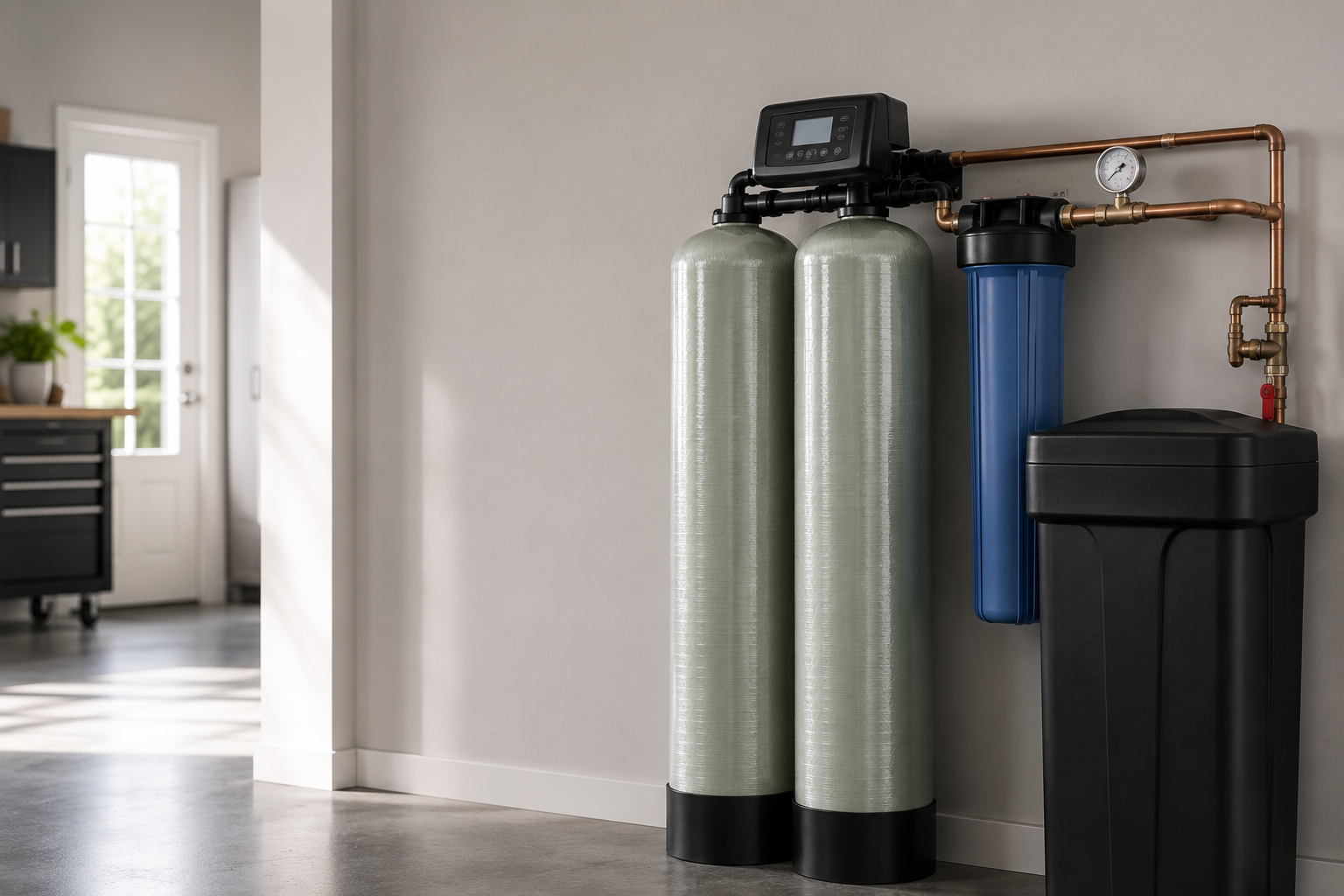
Use the Nipomo whole-house filtration page when the goal is point-of-entry treatment for water used throughout the property, including sediment, taste or odor goals that fit filtration.
Use the local softener page for hardness, scale, spotting, regeneration, salt use, softener repair or new-equipment sizing.
Use the Nipomo RO page for point-of-use drinking-water installation, filter service, sanitation, membrane evaluation, tank and pressure troubleshooting.
If the property uses a private well, start with the well-water path. Well treatment should be based on the actual source, testing, pressure-system context and identified water conditions rather than an NCSD system average.
ALREADY HAVE FILTRATION EQUIPMENT?
Low flow, a leak, overdue cartridges, a bypass left in the wrong position or an unclear service history do not automatically mean the entire system needs replacement. Identify the installed equipment, check accessible pressure and flow conditions, review the filter or media service history, and confirm the original treatment goal before deciding what should be repaired, serviced or replaced.
NIPOMO & FIVE CITIES
Use the Nipomo plumber page when the problem is mechanical plumbing rather than water treatment. Use the Five Cities page when the property is in Nipomo, Arroyo Grande, Grover Beach, Pismo Beach, Avila Beach or another nearby community.
NOT EVERY WATER GOAL IS WHOLE-HOUSE FILTRATION
A whole-house filter treats water as it enters the property. A water softener targets hardness through a different treatment process. Reverse osmosis usually treats a dedicated drinking-water point. Those systems can sometimes be used together, but one should not be sold as a substitute for another simply because the homeowner says the water “needs filtration.”
The better sequence is to identify the source, define the goal, test when needed, and then choose equipment whose documented performance fits that goal.
NIPOMO WATER FILTRATION QUESTIONS
NIPOMO WATER FILTRATION HELP
Taste, odor, sediment, scale, drinking-water quality or an existing filtration system? Tell us which fixtures are affected, who supplies the property if known, and what equipment is already installed. Water Fixers can help choose the appropriate testing, filtration, softening, reverse-osmosis or well-water next step.
CALL NOW! Se Habla Español!