
LOMPOC, CA • WHOLE-HOUSE WATER FILTRATION
Whole house water filtration in lompoc should be tied to a defined household result. Lompoc’s municipal water is treated before distribution, so a residential whole-house system is an additional household choice—not a substitute for the City’s treatment process. Water Fixers focuses on the homeowner’s downstream goal and the condition of any existing equipment. Water Fixers starts with the condition you notice, then checks whether filtration is actually the treatment category that fits.
Water Fixers Plumbing & Filtration • CA License #719792 • Se Habla Español
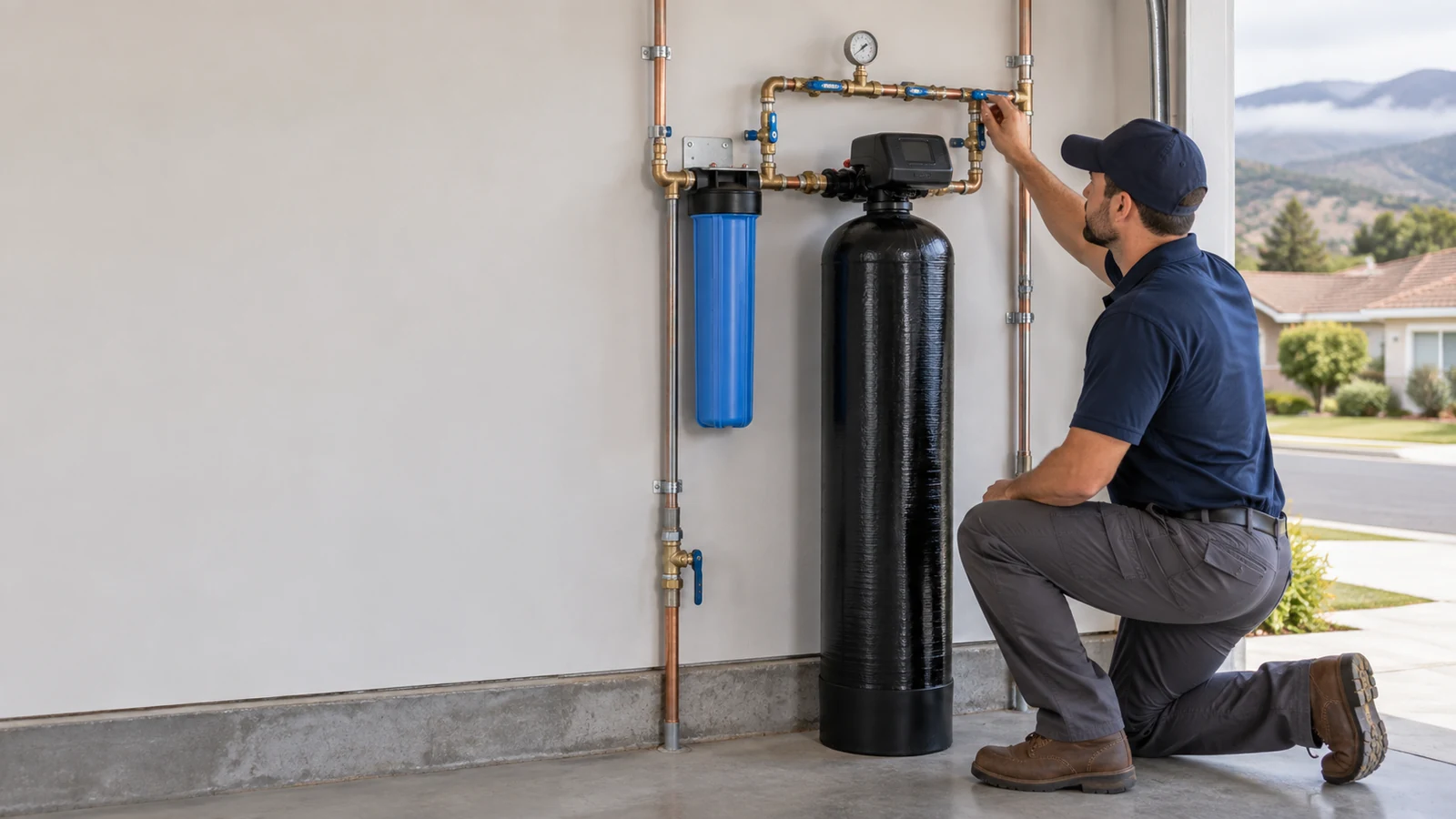
Do not describe a Lompoc whole-house filter as treating raw municipal source water. The City treats the public supply. Standard carbon/sediment filtration also should not be sold as a softener or as proof that public water is unsafe. Water Fixers uses the symptom and source context to decide which service deserves the next step.
Whole-home filtration makes the most sense when the desired change is needed at many fixtures, not only at one drinking faucet.
White deposits and scale usually belong in the hardness conversation. Send that goal to softening rather than overloading the filtration plan.
A kitchen drinking-water goal is different from a whole-home goal. Reverse osmosis is the dedicated point-of-use service for that situation.
If the condition is uncertain or a specific constituent is named, use appropriate testing before selecting specialty treatment media.
Lompoc operates municipal water-treatment facilities and describes conventional treatment steps including disinfection, coagulation, flocculation, sedimentation and filtration, with additional local source infrastructure. Household equipment should be presented as downstream treatment, not treatment of raw source water. For this page, that research supports already-treated municipal water, making this page especially important for separating household filtration from the City’s treatment plant and from softening.
Do not turn a water-source description into a sales claim. Current utility information and property-specific conditions should stay separate from what a household filter is actually designed to do.
Confirm what serves the Lompoc address, describe the condition at the home, and then choose media that can perform that job at residential flow.
Treat the main line conservatively. Put equipment there only when its benefit is needed throughout the home and its pressure loss is acceptable.
Use point-of-entry carbon or sediment media for a defined household aesthetic or particulate objective.
Inspect old housings and tanks for pressure restriction before adding more treatment to the main line.
Keep whole-house filtration separate from hardness treatment so the homeowner understands what each device is expected to do.
A Lompoc installation should work with existing regulated pressure and main-line plumbing. The bypass should be obvious, the cartridge bowl removable, and the media tank sized so simultaneous fixtures continue to work normally.
Whole-home equipment is a hydraulic component. Media selection and contact time matter, but so do port size, pressure loss and the plumbing on both sides of the tank.
Design for the next service visit: Good mechanical layout keeps treatment understandable. Each component is reachable, each valve has a purpose and future cartridge or media service is practical.
If an existing Lompoc filter is causing low flow or has unknown media age, Water Fixers can inspect that equipment as a service problem first. Replacing it only makes sense after confirming the homeowner still wants the treatment function it was installed to provide.
Measure across the treatment train. A loaded cartridge, restrictive media bed, small valve or incorrect bypass position can each create a different kind of flow loss.
Find out what is inside the vessel and what it was installed to accomplish. Media life depends on treatment duty and water throughput.
When the water no longer feels like it did after installation, review both the treatment design and the maintenance status before replacing the entire setup.
The best multi-stage systems are easy to explain. One device may handle hardness, another a whole-home aesthetic concern and another dedicated drinking water.
Use the softener service when scale and mineral hardness are the condition to change.
Keep concentrated drinking-water treatment at the point of use when that is the only objective; whole-home flow does not need RO for that job.
Private-well treatment belongs in the well-water family because the source, pumping system and chemistry are property-specific.
The broader filtration service is the useful starting point when the homeowner knows they want better water but has not identified the correct treatment category.
A useful Lompoc filtration estimate begins with what the homeowner wants to change and how the main line is configured. Water Fixers can inspect the system, explain the options and keep each treatment technology in its proper role.
Water Fixers Plumbing & Filtration • Serving California’s Central Coast • CA License #719792
CALL NOW! Se Habla Español!