
SOURCE-FIRST • LOCAL WELL-WATER SERVICE
Start with the actual water source. The City of Lompoc operates a public drinking-water system, so private-well guidance belongs only to a property that is confirmed to use its own well. For a confirmed private well, Water Fixers can help separate pressure and plumbing issues from water chemistry, treatment and existing-equipment performance.
Water Fixers serves Lompoc from Santa Maria • Plumbing + water treatment • California License #719792 • 38+ years • Private-well guidance only when the property source is confirmed
FIRST QUESTION
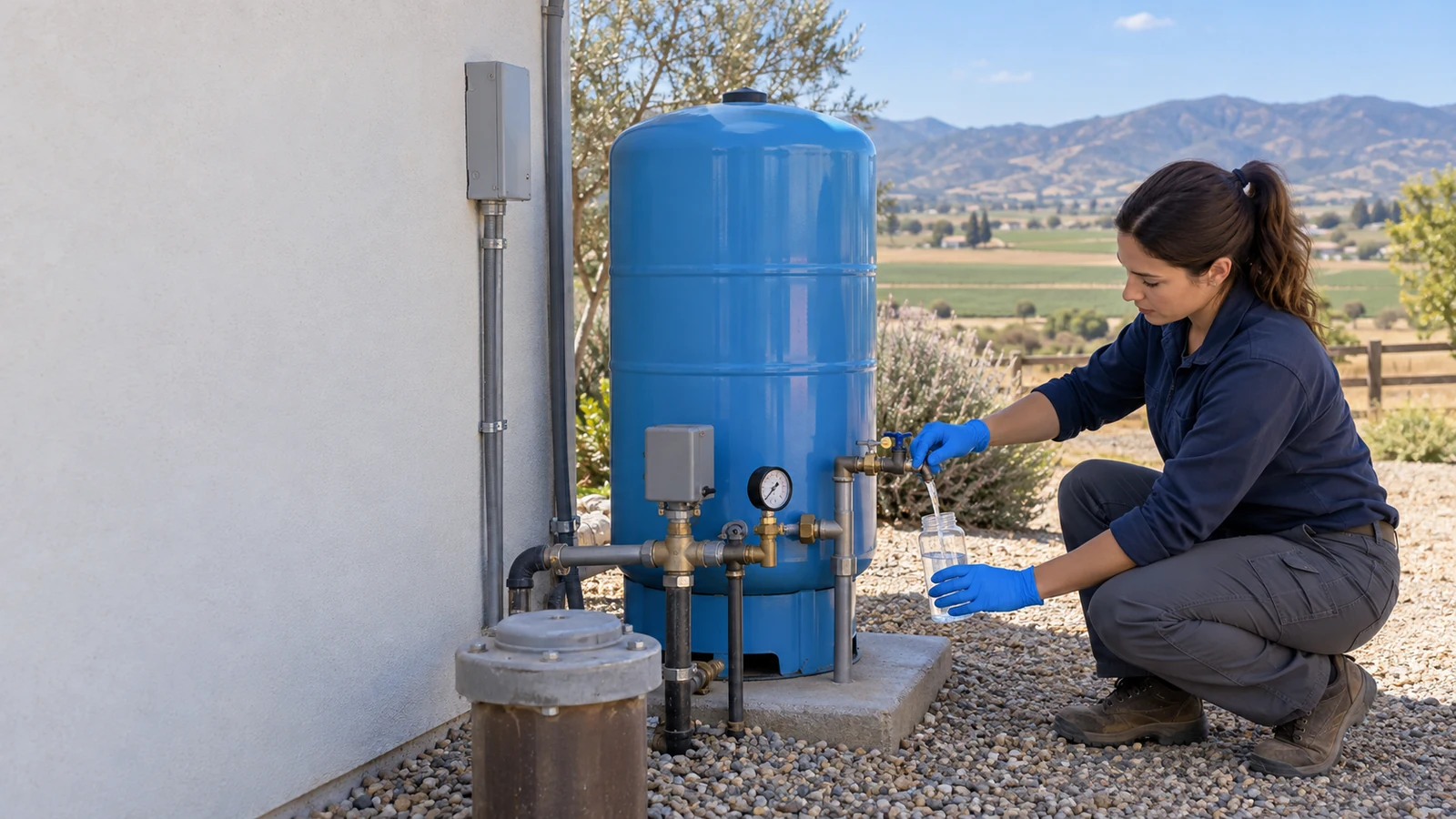
The City of Lompoc produces, treats and distributes public drinking water. Before using private-well guidance, confirm the actual source with utility billing or service records, the property’s water connection, and visible well or pressure equipment. Once the source is confirmed, follow the public-water or private-well path that matches the property.
CONFIRMED PRIVATE WELL
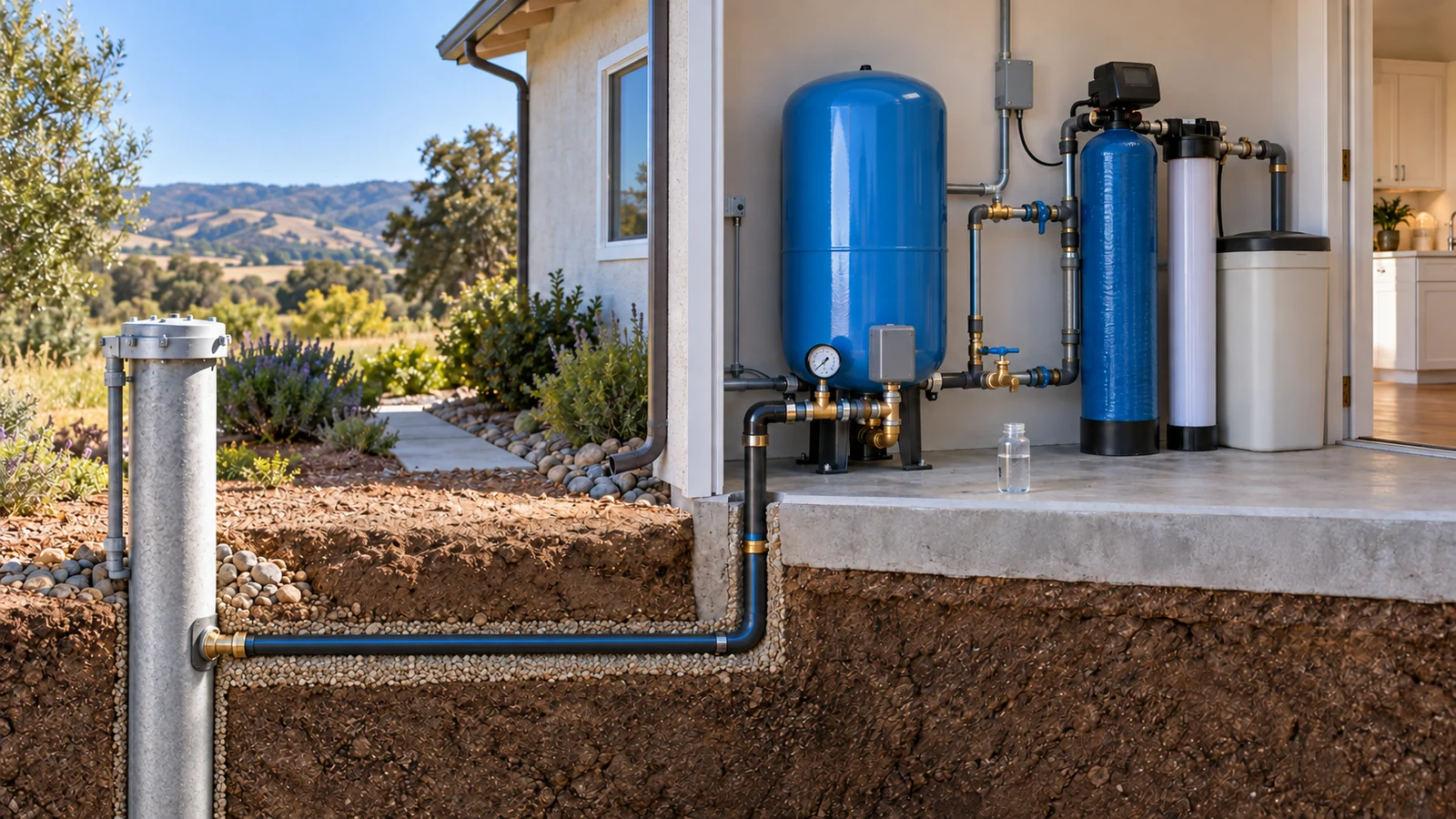
For a confirmed Lompoc private well, follow the system in order: source, pressure equipment, treatment, house plumbing and affected fixtures. Note where the symptom begins and whether it changes with demand. That sequence helps separate source-side issues from restrictions, plumbing losses and treatment-equipment problems.
PUBLIC OR COMMUNITY SUPPLY
City of Lompoc public water is produced, treated and distributed through a municipal utility system, including treatment at the City’s main water plant and Frick Springs facility. Public-system information answers different questions from a private-well test, so do not transfer nearby well chemistry or private-well assumptions to a City-water connection.
START WITH THE SYMPTOM
Once a private well is confirmed, map the symptom to the part of the system that can actually cause it. Compare fixture behavior with pressure readings, bypass checks, treatment condition and water testing as appropriate instead of jumping from the word “well” directly to a replacement product.
Compare pressure behavior near the pressure system with what happens at fixtures under normal and higher demand. A whole-house pressure change points to a different part of the system than one weak fixture or a restriction after treatment.
Staining, odor, sediment and scale can help define the question, but they do not identify every cause. When safety or a specific constituent controls the decision, use an appropriate current laboratory test instead of treating a symptom by appearance alone.
Use an existing laboratory result to define the treatment objective, then compare that objective with current pressure, plumbing and installed treatment stages. A result is most useful when it leads to one clear job rather than an automatic list of equipment.
If existing treatment used to perform well, inspect controls, bypass position, consumables, media condition and pressure loss before assuming the raw well changed. Maintenance or one failed stage can look like a new water-quality problem.
LOMPOC • LOCAL WATER-SOURCE CONTEXT
The City of Lompoc Water Division operates a public drinking-water system and treats water before distribution. Santa Barbara County also maintains a Water Wells & Drinking Water program for small public and private water systems. Those facts are useful for identifying the correct source path, but neither a City report nor regional groundwater information is a substitute for a current private-well sample at a specific property.
Lompoc takeaway: public-system information, regional groundwater context and a private-well test answer different questions. Use provider information for a public connection. For a confirmed private well, let current property conditions and appropriate testing control treatment decisions.
HOW WATER FIXERS APPROACHES IT
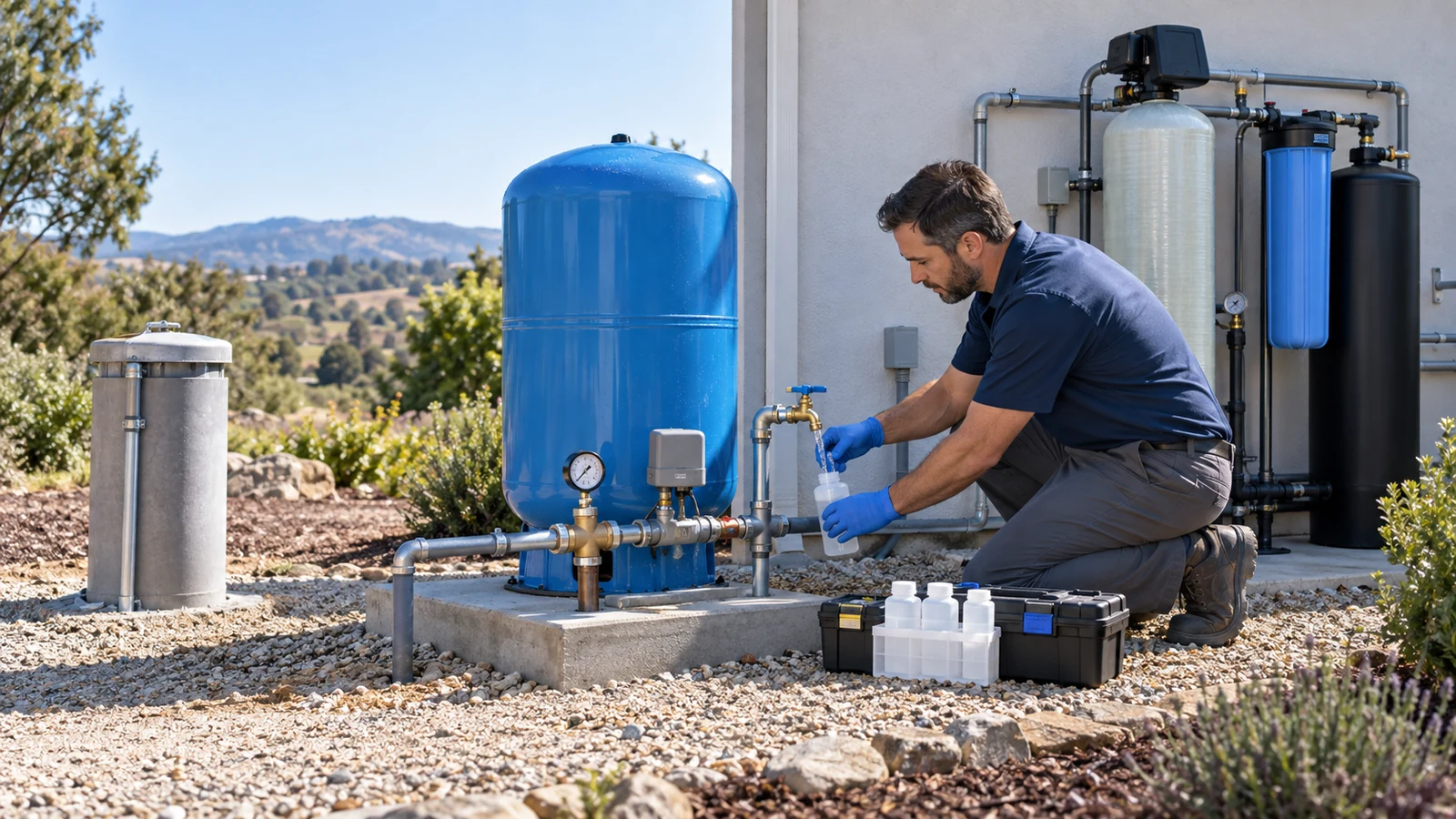
For a confirmed private well, start with the homeowner’s actual concern and collect the information that can answer it. Combine any water test with pressure behavior, plumbing observations and the condition of existing treatment so the service plan addresses the verified problem rather than a location-based assumption.
TEST → MATCH → VERIFY
Choose equipment only after the job is defined. Whole-house treatment belongs at the entry point when the objective affects water throughout the home; a drinking-water objective may be better served at one dedicated faucet. The treatment location should match the problem and the homeowner’s goal.
When chemistry or health-related constituents control the decision for a confirmed Lompoc private well, collect the appropriate sample before selecting treatment. Current testing narrows the treatment category without guessing from taste, color, neighborhood history or a City-water report.
Turn the measured issue into one practical target, then check peak flow, pressure, pH, household demand, installation constraints and the way performance will be verified after service. Treatment should solve a defined problem and remain serviceable.
Compare filtration technologies by the work they actually perform: particle removal, hardness reduction, oxidation, carbon adsorption, disinfection, neutralization or another verified need. The number of tanks does not tell you whether the treatment train is correct.
If the main goal is water for drinking, cooking, coffee or ice, evaluate a point-of-use reverse-osmosis path before committing the entire household supply to that objective. Feed-water conditions and the homeowner’s goal should control the decision.
ALREADY HAVE EQUIPMENT?
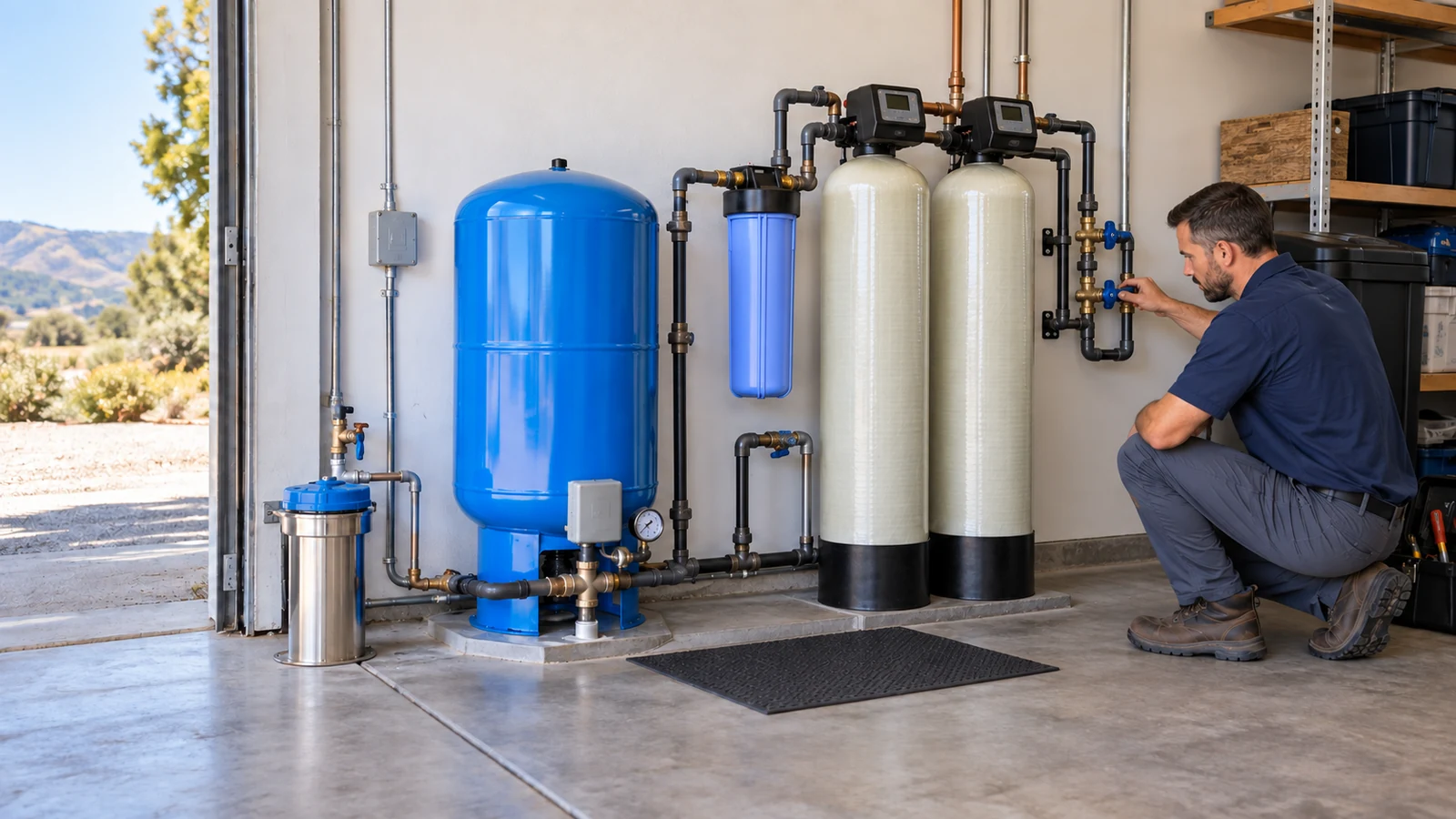
Existing treatment should be evaluated against the job it is supposed to perform today. If performance changed, check service history, controls, pressure loss, consumables and media condition before replacing equipment that may still be serviceable.
Review the installed treatment train stage by stage. Service should be directed at the component that has actually changed, and equipment should remain in the system because it still performs a needed function—not simply because it was installed in the past.
WATER FIXERS SCOPE
Pressure information is most useful when it is tied to demand and location. Note whether the change affects the whole house, only certain fixtures, irrigation demand, or only the plumbing after treatment.
Water Fixers can evaluate appropriate plumbing-side pressure issues, water testing and treatment planning, filtration, and existing treatment equipment. Work involving well drilling, new well construction, casing repair, submersible-pump pulling or specialty well electrical work belongs with the appropriate licensed well or pump specialist.
WHEN A WELL / PUMP SPECIALIST MAY BE NEEDED
Use the verified system boundary to choose the trade. If the problem is inside the well structure or requires pulling a submersible pump or specialized well electrical work, stop the plumbing/treatment diagnosis there and use the appropriate well or pump specialist.
LOMPOC • RELATED HELP
If the address is served by the City of Lompoc or another public system, use the Lompoc water-quality guide for provider and public-system context rather than interpreting a private-well result as though it described utility water.
Use the Lompoc plumbing page when the problem is a fixture, leak, drain, water heater, shutoff or house-piping issue that does not depend on private-well testing or treatment.
Use the well-water directory when the next question is educational—testing, maintenance, a specific well-water concern, treatment technology or another topic that is broader than this local service page.
Water Fixers is based in Santa Maria and serves Lompoc. This page describes service coverage for Lompoc properties; it does not represent a separate Water Fixers storefront or office.
PRIVATE-WELL FAQ
No. The City of Lompoc operates a public drinking-water utility that produces, treats and distributes water. Confirm the actual property source before applying private-well guidance.
No. City reports describe the public system and regional groundwater information describes a broader setting. A confirmed private well needs its own current sample when treatment or drinking-water decisions depend on chemistry.
Note whether pressure changes throughout the house or only at certain fixtures, whether the change appears under higher demand, and whether it begins before or after treatment. Compare those observations with an appropriate pressure reading near the well-side system.
No. Appearance alone cannot rule out dissolved or microbiological concerns. When drinking-water safety or a specific constituent is the question, use the appropriate laboratory test.
Yes, when the work is within plumbing and water-treatment scope. We can evaluate existing filtration, softening, pressure loss and treatment performance. Well drilling, casing work, submersible-pump pulling and specialty well electrical work belong with the appropriate specialist.
LOMPOC • WELL-WATER SERVICE
You do not need to diagnose the equipment before contacting us. Tell us whether the property is served by the City or another public system or by a confirmed private well, what you are noticing, when it happens, and what pressure readings, treatment equipment or water-test results are already available. That helps route the next step to plumbing, pressure evaluation, testing, treatment planning or existing-equipment service.
CALL NOW! Se Habla Español!