
An RO faucet can leak from the spout, handle, base, tubing connection below the sink, or the air-gap drain opening on systems that use one. Those locations point to different cause categories. A few drops immediately after use can be residual water; a continuous drip or recurring moisture deserves inspection. If water is actively leaking beneath the sink and the RO shutoffs are safely accessible, close the RO feed-water and storage-tank valves until the source is checked.
Santa Maria-based • Central Coast RO support • Existing systems welcome • Faucet and leak diagnosis • License #719792
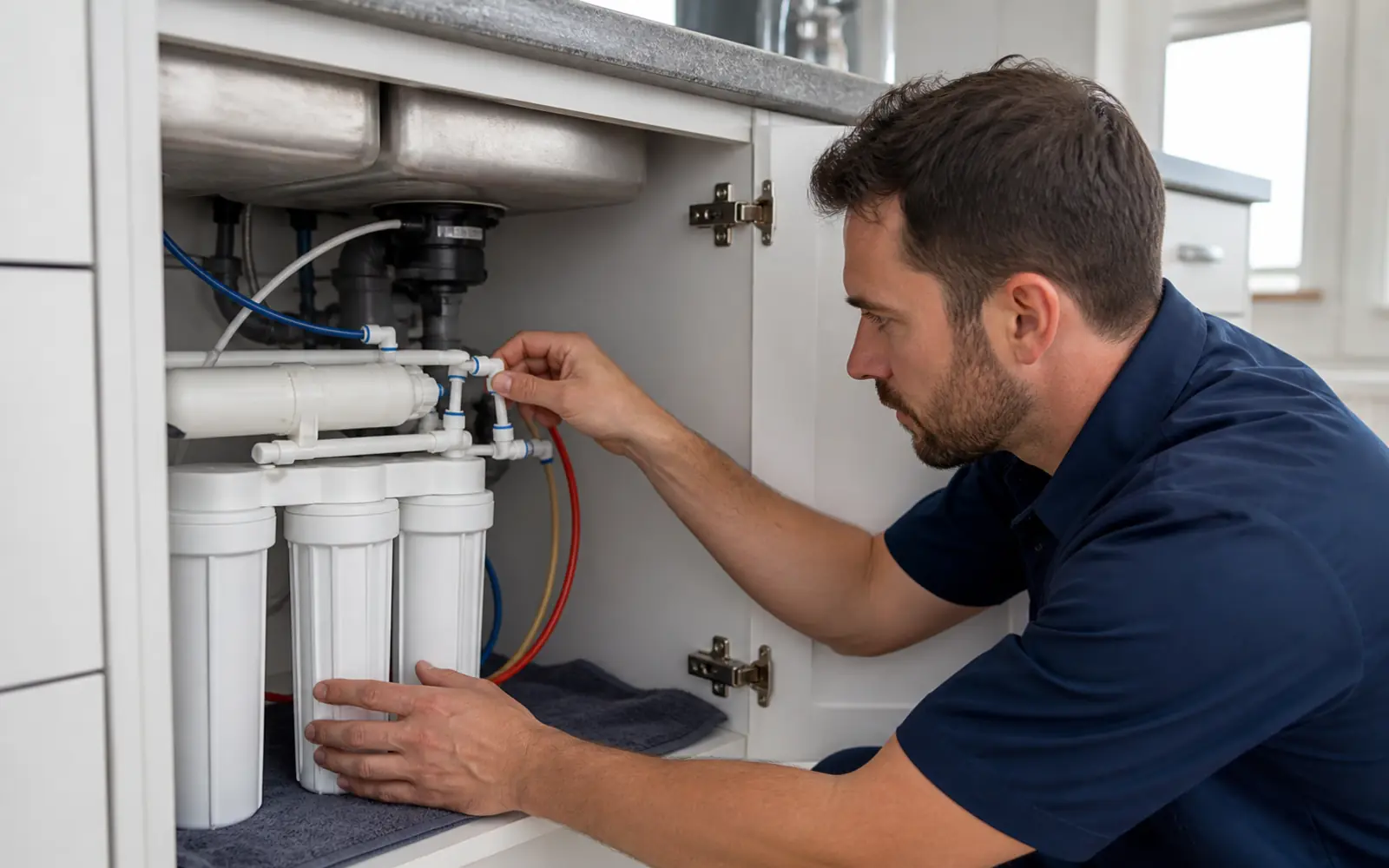
Quick answer: the visible location matters. A drip from the spout can involve the faucet valve or cartridge. Water at the base can come from mounting, seals, sink-deck moisture or water traveling down the stem. A leak below the faucet can involve tubing or fittings. Water from an air-gap opening can point to the drain path rather than the drinking-water valve itself.
A worn valve or cartridge, debris, pressure behavior or an incompatible replacement component can prevent complete shutoff. A few residual drops just after use are different from a drip that continues.
Moisture at the base can come from a loose mount, worn seal, sink-deck water, or water following the faucet stem from above or below. Drying the area helps reveal where the first moisture actually appears.
The RO tube may be scratched, unevenly cut, incompletely seated or under sideways stress. Specialty adapters and threaded connections also need the correct seal and support. Do not repeatedly disconnect a pressurized fitting to experiment.
On systems that use an air-gap faucet, a restricted, kinked or misrouted drain tube—or a drain-saddle or household drain problem—can send water toward the air-gap opening. That symptom does not automatically mean the faucet valve failed.
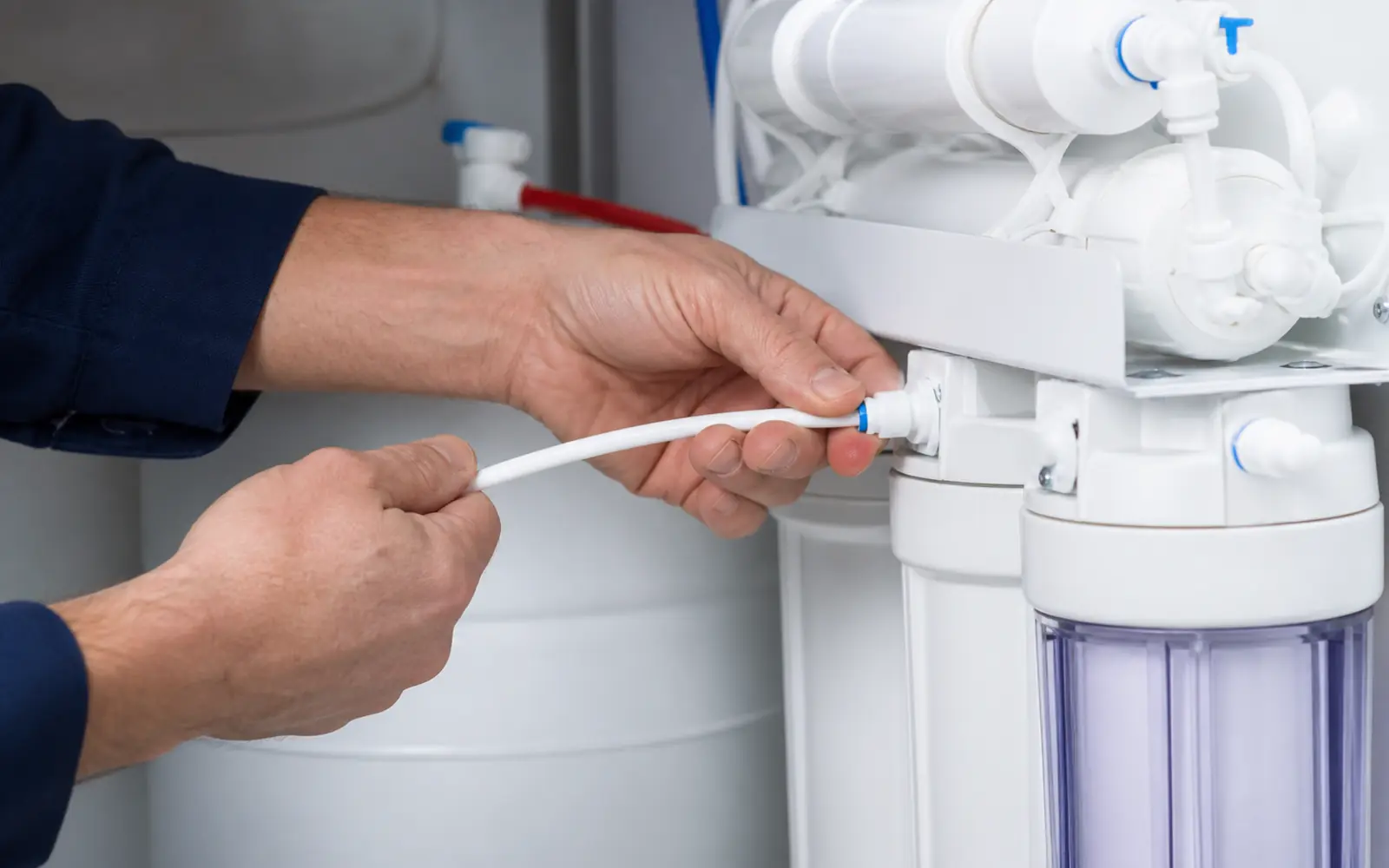
A faucet that releases a few drops immediately after the handle is closed is different from one that drips continuously for minutes or hours. Timing is useful evidence, but it does not identify the failed part by itself.
Residual water can remain in the spout after normal use. Continuous dripping, moisture that returns at the base, or a leak that appears while the RO is refilling points toward a condition that should be inspected rather than simply ignored.
Note whether the leak happens with the faucet closed, only while dispensing, during RO production, or when the household sink drains. That timing can help separate faucet-valve behavior from tubing, pressure or air-gap/drain-path issues.
These observations can make diagnosis faster without taking apart a pressurized faucet or guessing at fittings.
Dry the spout, handle area, faucet base, sink deck and visible tubing below the faucet. Then watch where the first moisture returns instead of assuming the nearest puddle is the source.
Note whether the drip is from the spout, handle, base, an under-sink connection or an air-gap opening, and whether it happens constantly, only after use, during RO production or while the sink drains.
If water is actively escaping below the sink and you can clearly identify the RO feed-water and storage-tank valves, close them. Do not force a stuck valve, disassemble the faucet under pressure or blindly tighten plastic fittings. If water is reaching electrical equipment or the correct shutoff is unclear, stop and call for plumbing help.
Some RO systems use an air-gap faucet that keeps the RO drain path separated from the household drain. If that small opening spits, drips or overflows during production, the drain tubing and drain connection deserve attention.
A kinked or restricted drain tube, poor routing, a blocked drain saddle, or a household sink-drain issue can redirect water toward the faucet opening. The correct repair starts with the full drain path—not with assuming the faucet needs replacement.
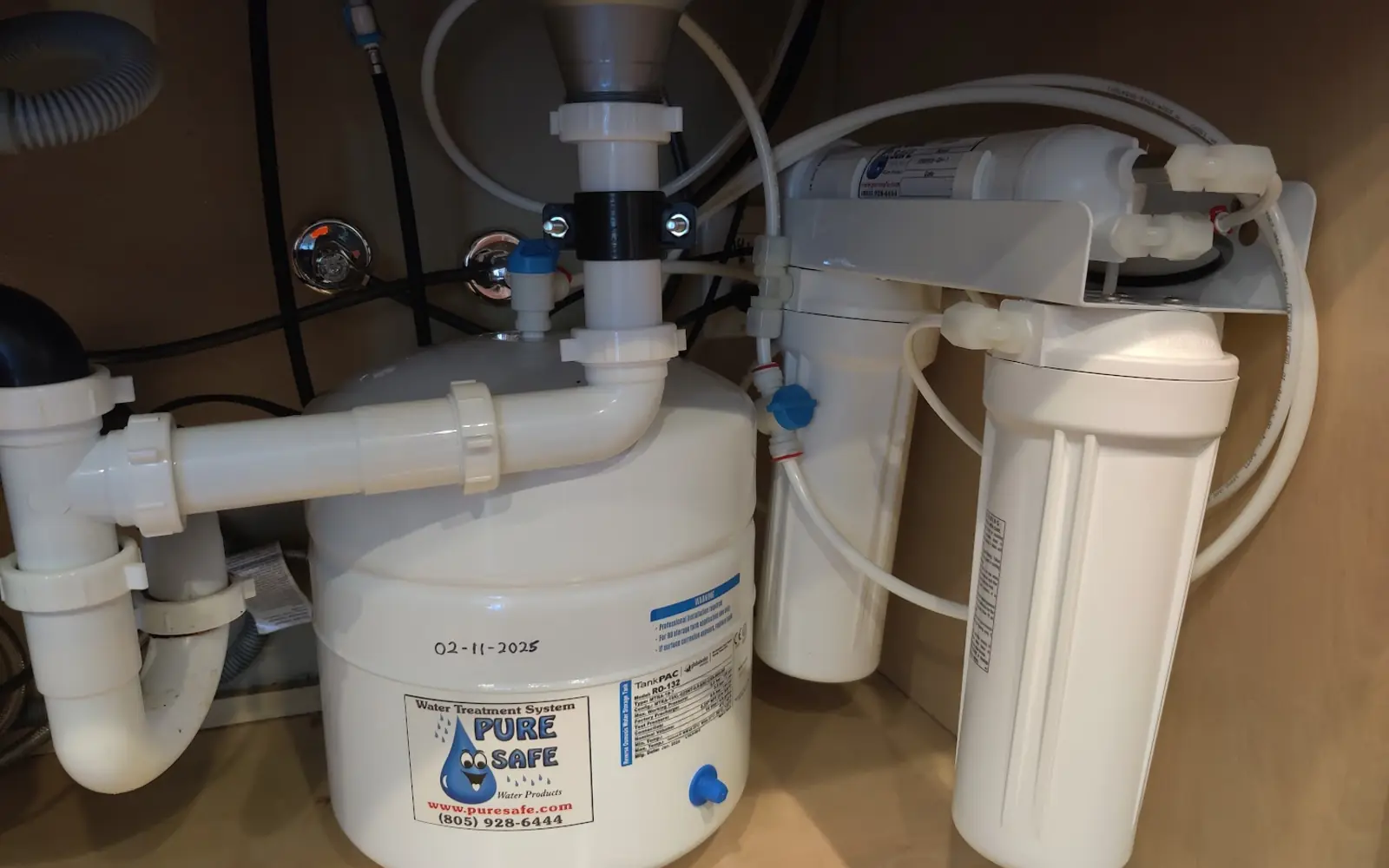
Internal wear, debris, pressure behavior or an incorrect replacement component can keep the faucet from shutting off completely and create a persistent spout drip.
A loose mounting nut, worn seal or water traveling along the faucet stem can make the faucet base appear to be the source. Sink-deck water can also imitate a faucet leak.
Scratched tubing, incomplete insertion, side-loading, worn quick-connect fittings or specialty threaded adapters can leak below the countertop and send water into the cabinet.
Where an air-gap faucet is used, a restricted or poorly routed RO drain line can push water toward the faucet opening. The drain saddle and household drain may need to be checked as part of the same diagnosis.
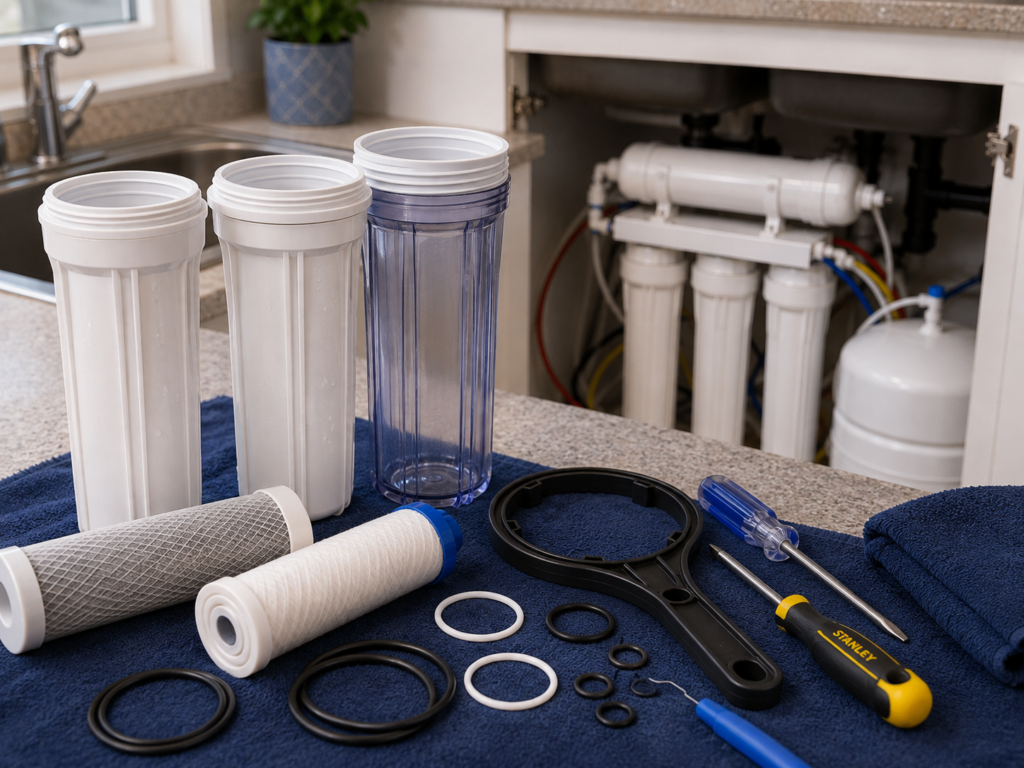
Water can travel down the faucet stem, along tubing, under the sink deck or across the cabinet before it drips. The location of the puddle alone does not prove which component failed.
Nearby kitchen-faucet water, sink splashing, drain leaks, disposal connections, angle stops and other RO fittings can wet the same area. If the moisture starts below the countertop rather than at the RO faucet itself, use the RO Leaking Under Sink guide or move directly to RO Service & Repair for hands-on diagnosis.
An RO faucet leak or drip can come from the spout, faucet base, air-gap path, tubing, or a nearby under-sink connection. Use the location and timing clues below, then schedule RO Service & Repair when the problem needs hands-on diagnosis or replacement.
Use Service & Repair for a continuous spout drip, recurring base leak, air-gap discharge, an uncertain source, a failed faucet connection, or any faucet problem that needs hands-on diagnosis or replacement.
Use the under-sink leak guide when water is coming from a housing, tubing run, tank/feed connection, drain area or another component in the cabinet rather than the faucet itself.
Use Maintenance when the faucet issue appears alongside overdue filters, unknown service history or a broader need to inspect the working RO system. Maintenance does not replace repair of an active leak.
Often, yes. If the RO system is otherwise serviceable, a leaking or obsolete drinking-water faucet can often be replaced independently. Compatibility still matters: countertop mounting, tubing size, faucet connection style, finish and whether the system requires an air-gap faucet all need to match the installation.
If the faucet is obsolete, internal parts are unavailable or the valve/body is worn, complete faucet replacement may be more practical than repeated adjustment. The whole RO only becomes a larger repair-versus-replace decision when the faucet problem is one of several aging-system issues.
Direct answers about spout drips, faucet-base moisture, below-counter connections, air-gap discharge, safe checks, faucet replacement and when to move from symptom guidance to RO repair.
A continuous drip can involve the faucet valve or cartridge, debris, pressure behavior or an incompatible replacement component. A few residual drops immediately after use are different from dripping that continues and should be inspected.
A few drops immediately after the faucet is closed can be residual water left in the spout. Dripping that continues, returns repeatedly or creates moisture at the base is a different symptom and deserves diagnosis.
Water at the base can come from mounting hardware, a worn seal, sink-deck moisture or water traveling down the faucet stem. Dry the area and watch where the first moisture reappears before assuming the faucet body itself is leaking.
The RO tube or adapter may be scratched, unevenly cut, incompletely seated, stressed sideways or worn. Threaded and specialty faucet connections also need the correct seal and support.
On systems that use an air-gap faucet, a restricted, kinked or misrouted drain tube, a blocked drain saddle or a household drain problem can send water toward the air-gap opening. The full drain path should be checked.
It can contribute to water coming from an air-gap opening on systems that use that faucet design. That is different from a drinking-water spout drip, so the location of the water matters.
Often yes. If the RO system is otherwise serviceable, the faucet can frequently be replaced independently as long as the new faucet matches the mounting, tubing and any air-gap requirements of the installation.
If water is actively leaking beneath the sink and the RO feed and storage-tank valves are clearly identifiable and safely accessible, close them until the leak is checked. Do not force a stuck valve or disassemble the faucet under pressure.
Use the RO Leaking Under Sink guide when moisture appears at housings, tubing, valves, the storage tank, drain path or nearby plumbing. The wettest spot is not always the original source.
Schedule RO Service & Repair when dripping is continuous, moisture keeps returning, water comes from the air-gap opening, the source is unclear, the faucet or connection needs replacement, or the leak appears with another RO failure.
Water Fixers can isolate whether the problem is the faucet valve, base, mounting, tubing connection, air-gap/drain path or another nearby source, then repair or replace the correct component before the system is returned to normal operation.
Water Fixers Plumbing & Filtration • Santa Maria, California • Central Coast service • License #719792
CALL NOW! Se Habla Español!