
Water under an RO system can come from a filter housing, O-ring, tubing connection, feed-water fitting, tank valve, membrane housing, faucet connection or drain path. The wet spot does not always identify the failed part. If water is actively escaping, shut off the RO feed-water supply and storage-tank valve if it is safe to do so, then keep the system depressurized until the source is checked.
Santa Maria-based • Central Coast RO support • Existing systems welcome • Leak diagnosis • License #719792
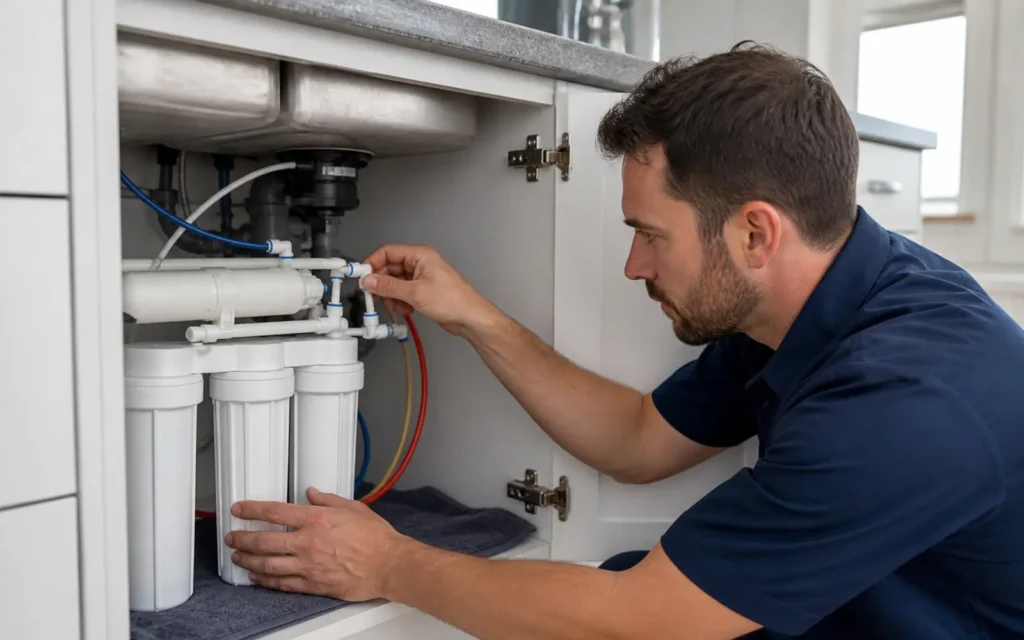
Quick answer: if water is actively leaking and the valves are safely accessible, close the RO feed-water valve and the storage-tank valve. Put a container or towels under the wet area, avoid repeatedly repressurizing the system, and schedule diagnosis. If you cannot identify the correct shutoff, a valve will not close, or water is reaching electrical equipment, stop and call for plumbing help.
A shifted or pinched O-ring, cross-threaded or damaged housing, disturbed tubing, a fitting that did not reseat correctly, or an aging part can begin leaking after service. Do not keep tightening plastic to chase the leak.
Moisture at a filter bowl, cap, thread area or membrane housing can involve the seal, O-ring, threads, housing condition or a nearby fitting. Drying the area and observing where water first appears is safer than assuming the housing simply needs more force.
Tubing can leak when it is scratched, cut unevenly, not fully seated, kinked or under sideways stress. The fitting itself can also be worn or damaged. A pressurized connection should not be repeatedly disconnected just to experiment.
A storage-tank valve, feed-water adapter, faucet connection, drain saddle or nearby sink plumbing can put water in the same cabinet. Trace the first wet point before deciding the RO housing is the source.
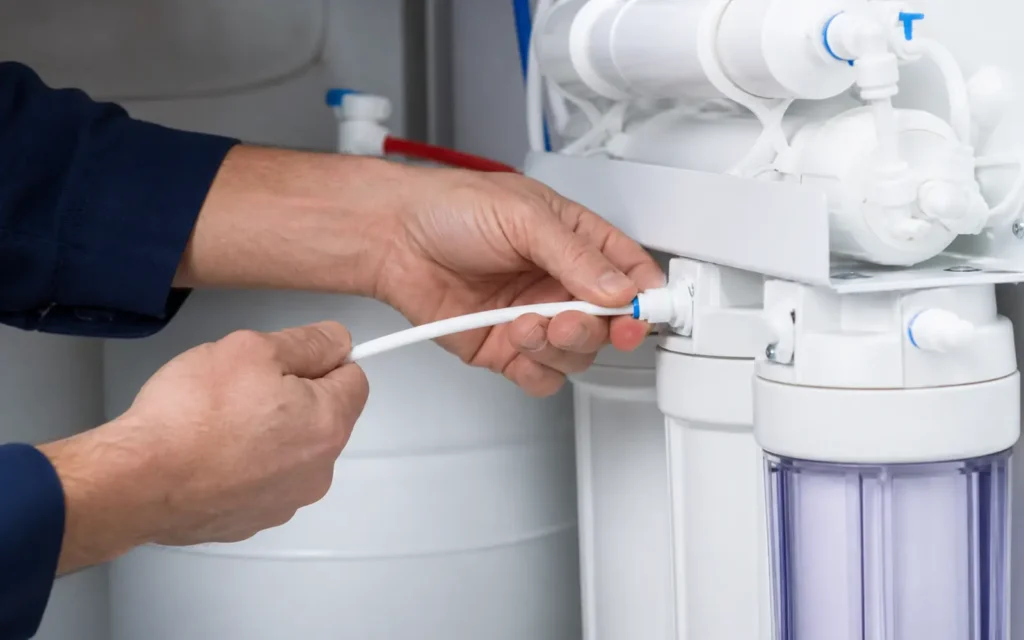
A leak that begins right after filter or membrane service is a useful timing clue, but it still does not prove one component failed. The housing may be sound while an O-ring shifted, tubing was disturbed or a nearby aging fitting started to seep.
Plastic housings need to seat correctly with the proper seal; extra force can distort an O-ring, damage threads or worsen brittle plastic. If the leak source is not obvious, shut the RO down and have the housing, O-ring, tubing cuts, fittings and nearby valves inspected together.
If a housing is visibly cracked, chipped or distorted, use the Broken RO Filter Housing guide. If the system is actively leaking, start with RO Service & Repair rather than continuing to repressurize it.
These observations can reduce water damage and make diagnosis faster without opening pressurized housings or repeatedly testing a known leak.
If you can clearly identify the RO feed-water valve and storage-tank valve, close them. Do not force a stuck valve. If the correct shutoff is unclear or water keeps flowing, call for plumbing help.
Use towels or a container to control water, then note where moisture first reappears: housing seam, tubing fitting, valve, faucet line, drain connection or nearby sink plumbing. Water can travel along tubing before it drips.
A recent filter change, cabinet work, moved tubing, pressure change, long period of inactivity or recurring drip history can help narrow the inspection. Take a clear photo before wiping everything down if it is safe to do so.
Hairline cracks, chipped plastic, distorted threads, worn sealing surfaces or a cap that no longer seats evenly can leak when pressure returns. A visibly damaged housing should stay depressurized until it is evaluated.
If the housing itself is questionable, use the Broken RO Filter Housing guide. If water is actively leaking or the source is uncertain, the correct commercial path is RO Service & Repair. Routine cartridge changes belong on RO Filter Replacement only when the housings and seals are serviceable.
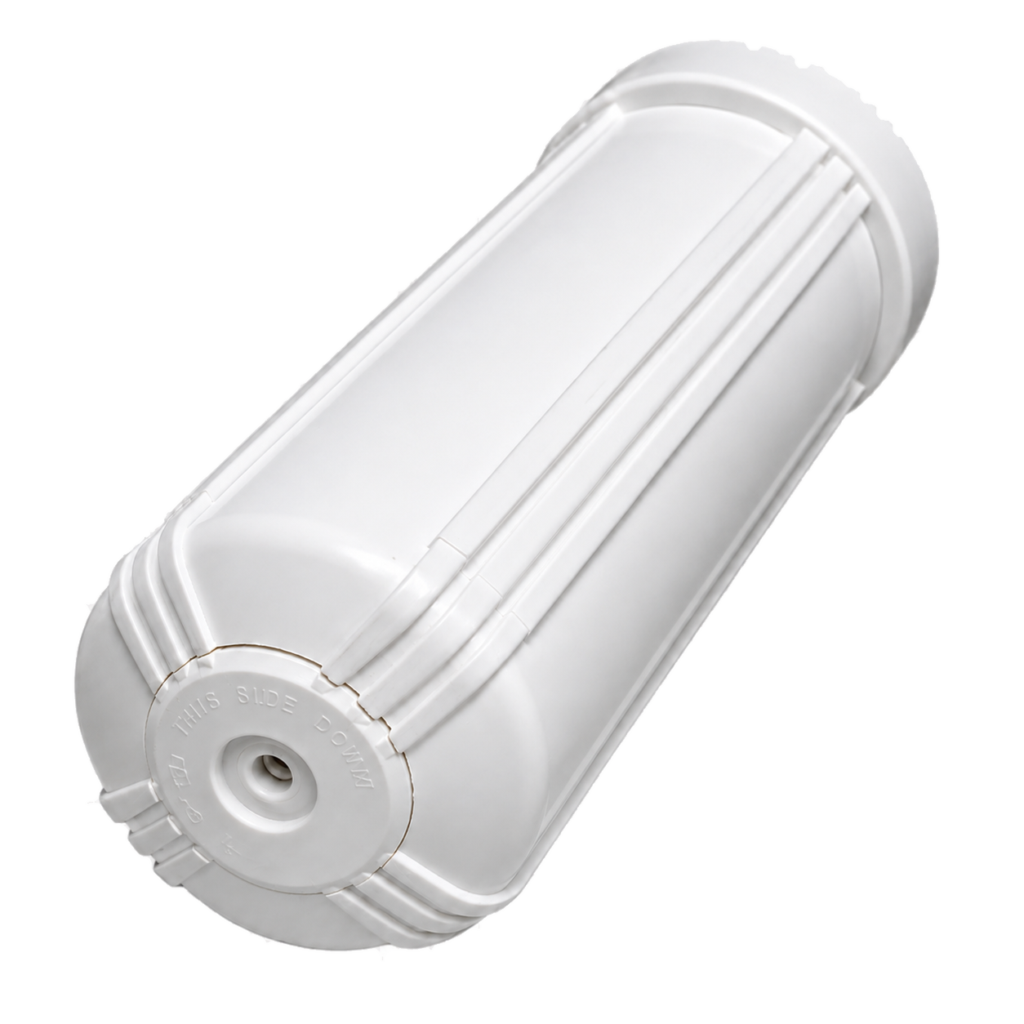
Cracks, damaged threads, a shifted or worn O-ring, or a housing that is not seating correctly can leak when the system is repressurized.
Scratched or uneven tubing, incomplete insertion, side-loading, a kink, or a worn fitting can create a drip that runs along the tube before falling.
The feed adapter, RO shutoff, storage-tank valve, threaded connections and nearby cold-water plumbing can all leak into the same cabinet.
Water can originate at the faucet stem or tubing, membrane housing, drain saddle, or a backed-up drain path. Faucet-specific dripping belongs on the faucet symptom page.
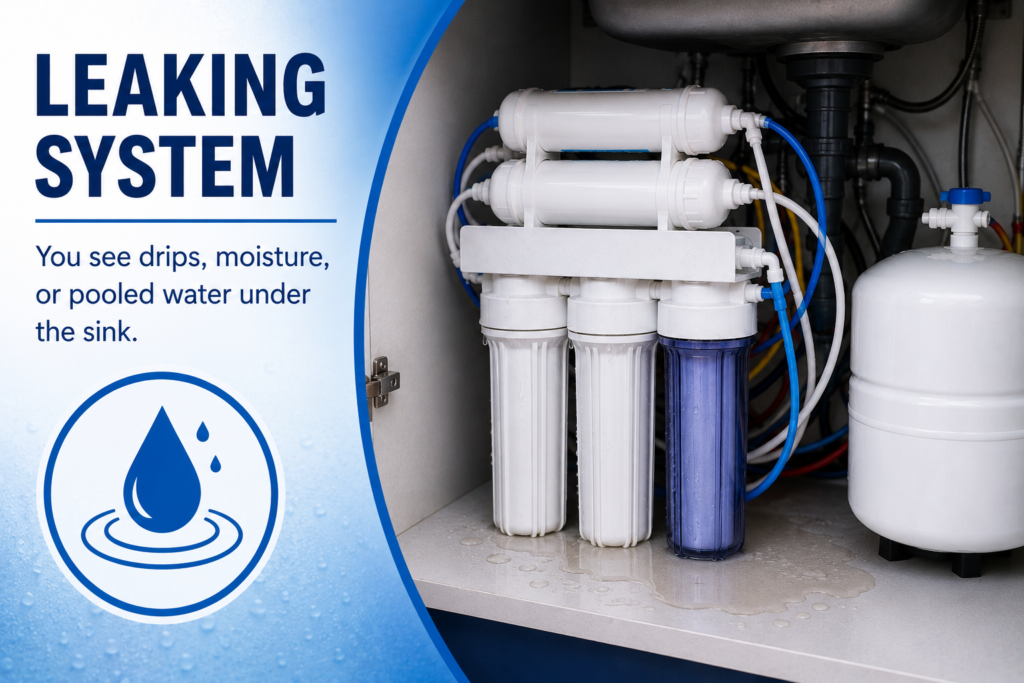
Water travels along tubing, housings, cabinet walls and drain piping. A puddle under the RO does not automatically mean the filter housing is the source.
Nearby sink drains, garbage disposals, angle stops, faucet supplies and dishwasher connections can wet the same cabinet. Water Fixers can dry and isolate the area, identify where the first moisture appears, and then decide whether the problem belongs to the RO or ordinary under-sink plumbing.
An RO leak under the sink should be narrowed by where the first moisture appears and whether the leak is active or recurring. Follow the safe first steps here, then use RO Service & Repair when the source is uncertain or a component needs repair.
Use Service & Repair for an active or recurring leak, an uncertain source, failed fittings or valves, a housing leak, or any situation that needs hands-on diagnosis and repair.
Use Filter Replacement when the system is not actively leaking and the known need is routine cartridge service. Sound housings, seals and fittings should still be checked during service.
Use Maintenance when the system is generally operating but service history is overdue or unknown and you want broader inspection, filter planning, sanitation when appropriate, pressure/tank review and leak checks.
One serviceable fitting or O-ring does not mean the whole RO needs replacement. But repeated leaks, brittle housings, distorted threads, an aging tank, obsolete components or several worn parts at once can make repeated piecemeal repair less practical.
If the main question is whether the existing system is still worth restoring, use RO Repair vs Replace. If the immediate problem is an active leak, start with RO Service & Repair.
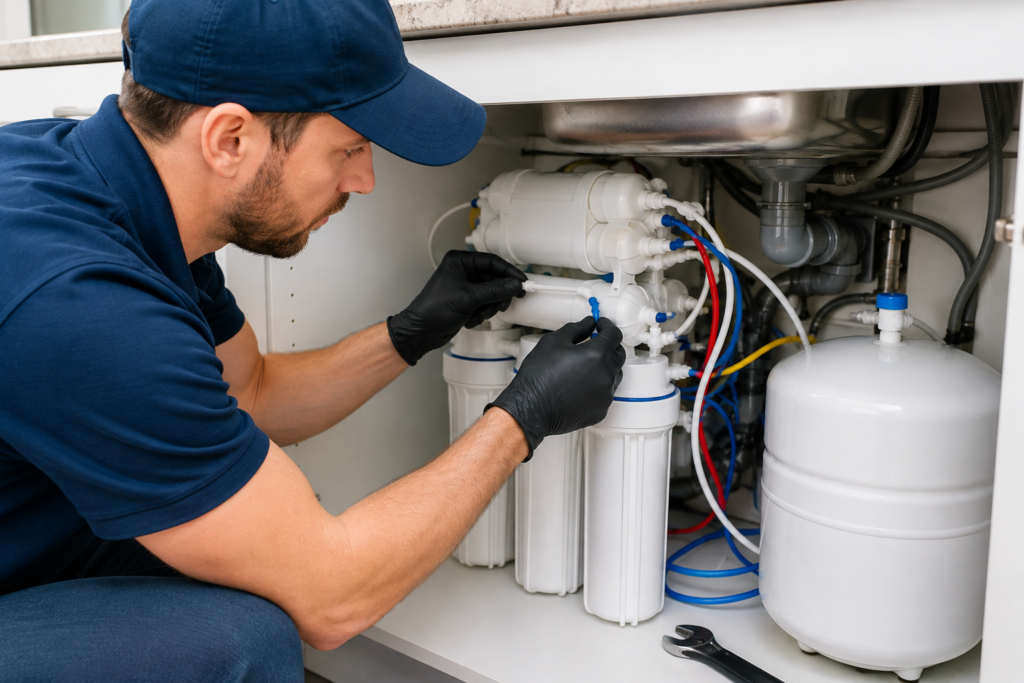
Direct answers about active RO leaks, filter-change leaks, housings, O-rings, tubing, tank/feed connections, drain paths and when the symptom belongs on the repair path.
Water Fixers can isolate the source, inspect housings, O-rings, tubing, valves, tank connections, faucet/drain paths and nearby plumbing, then repair the actual leak before the system is returned to pressure.
Water Fixers Plumbing & Filtration • Santa Maria, California • Central Coast service • License #719792
CALL NOW! Se Habla Español!