
A light drain trickle while the RO is producing water, a brief click as valves operate, or temporary sputtering after service can be normal. New, loud, continuous, or changing gurgling, chattering, humming, hammering or vibration deserves attention. The sound alone rarely identifies one failed part, so the best clue is when and where it happens.
Santa Maria-based • Central Coast RO support • Existing systems welcome • Noise diagnosis • License #719792
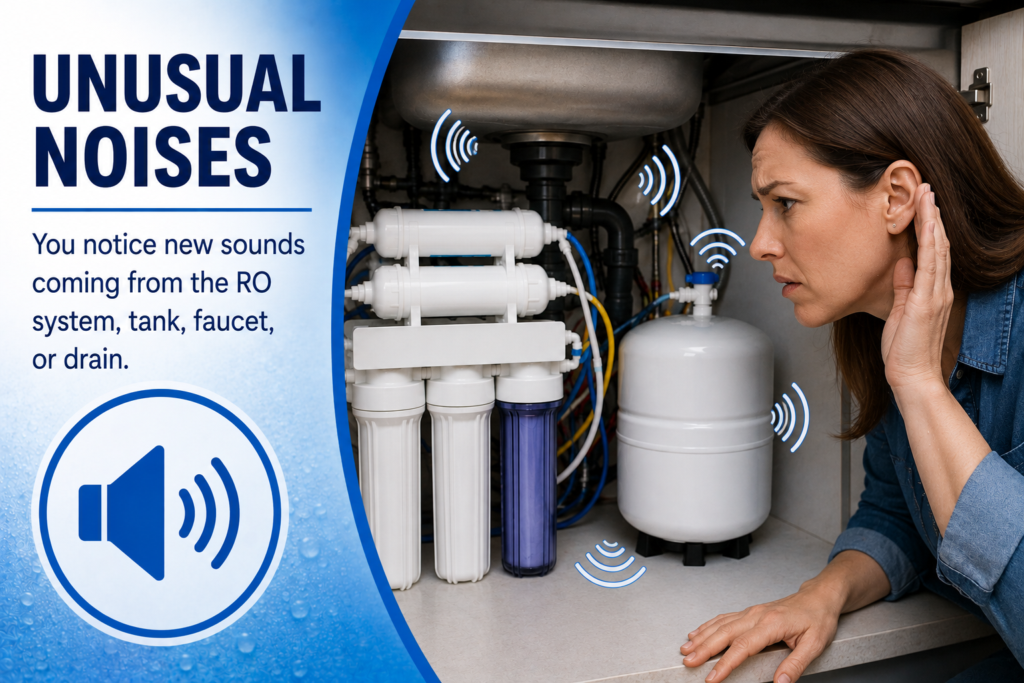
Quick answer: some noise is normal while an RO produces water and refills the storage tank. A gentle drain-flow sound, brief valve click, or short period of air sputtering after filter service can be expected. Noise becomes more useful as a diagnostic clue when it is new, louder than normal, continuous, repetitive, or paired with low flow, a tank that will not recover, a leak, or unusually long drain flow.
RO systems send concentrate water to the drain while the membrane is producing. A light, predictable trickle during tank refill can be normal. If the service history is unknown, maintenance is the right broad checkup path.
Some air-gap and drain noise can occur during production. Loud gurgling, water at the air-gap opening, or noise tied to sink drainage can point toward drain-tube routing, restriction, the drain connection or nearby household drainage.
Repeated start-stop sounds can involve pressure changes, automatic shutoff behavior, check-valve behavior, tank recovery or another operating condition. The sound by itself does not prove which component is responsible.
A new persistent vibration can come from tubing contact, pressure changes, restrictions or valve behavior. If the same system also has weak flow, the pressure and restriction clues should be evaluated together.
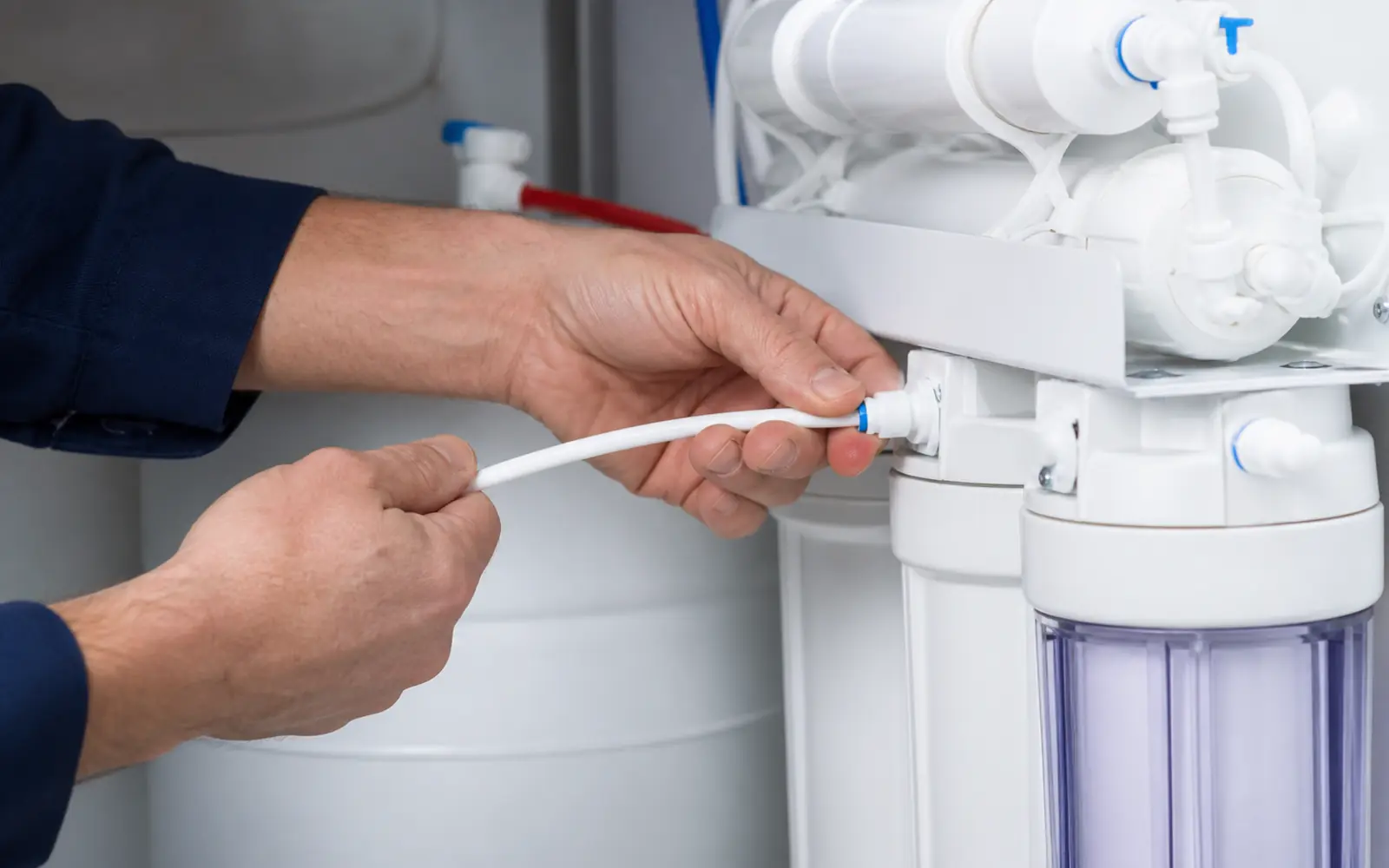
When the sound happens can be more useful than the sound itself. Noise during normal production is different from noise that continues after the storage tank should be full.
During production, water moving through the membrane and drain path can be audible. Once the tank is satisfied, the system should settle and shut down normally. Persistent drain noise, repeated cycling or chattering after the tank should be full deserves diagnosis because shutoff behavior, tank pressure, feed pressure, check-valve operation or drain conditions may be involved.
Note whether the sound starts after you use the faucet, only while the tank refills, after filter service, during sink drainage, or continuously. If the noise appears with low RO flow or a tank that will not fill normally, those extra symptoms help narrow the path.
These observations can make diagnosis faster without altering the drain path or opening a pressurized component.
Listen for whether the noise happens while the tank refills, when the RO faucet runs, after service, during sink drainage, or even after the system should have shut off. Write down whether it is a trickle, gurgle, click, chatter, hum, squeal or vibration.
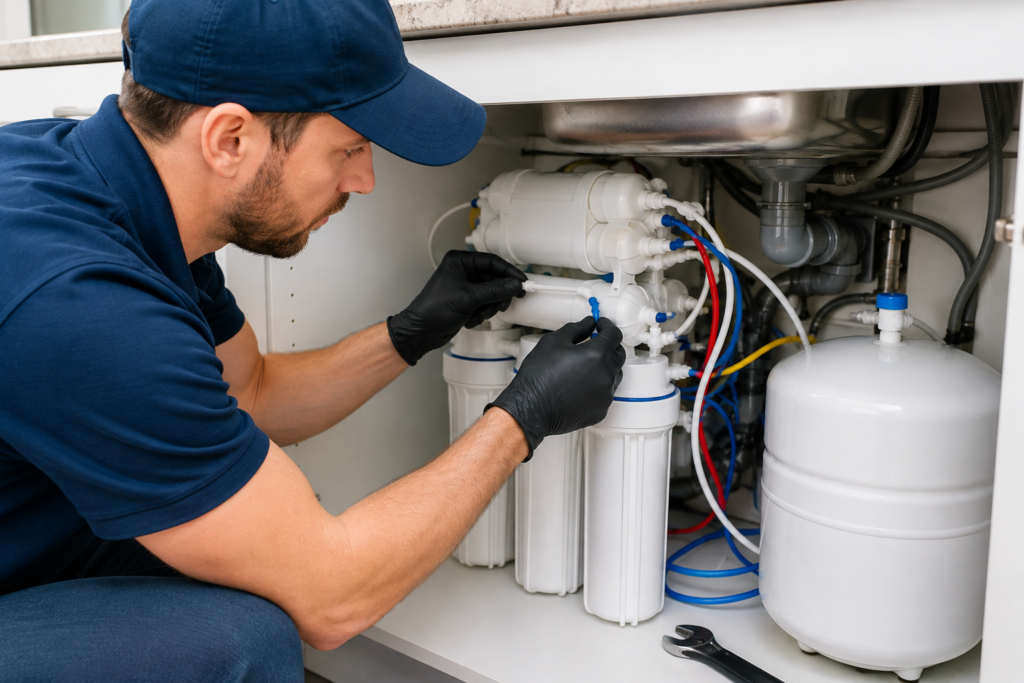
Without disconnecting anything, look for tubing pressed tightly against a cabinet wall, sharply bent tubing, obvious movement when the system cycles, or moisture that would make the issue a leak as well as a noise complaint.
Do not cap or clamp the RO drain line to stop the sound, and do not disassemble a pressurized filter or membrane housing. The drain is part of normal RO operation, and altering it can interrupt performance or create a leak. If the noise is persistent or the operating pattern is unclear, use RO Service & Repair.
On systems with an air-gap faucet, the RO drain path can be audible while concentrate water is moving to the household drain. A mild sound during production may be normal. Loud gurgling, water appearing at the air-gap opening, or noise that changes when the sink drains can point toward the drain tube, drain saddle, routing or the household drain rather than a failed filter stage.
Do not silence an RO by blocking its drain. If a new installation is noisy because tubing is unsupported, the drain route is poor, or the faucet/drain connection is not set up correctly, the installation path matters. If the system used to operate quietly and the sound is now persistent, start with diagnosis.
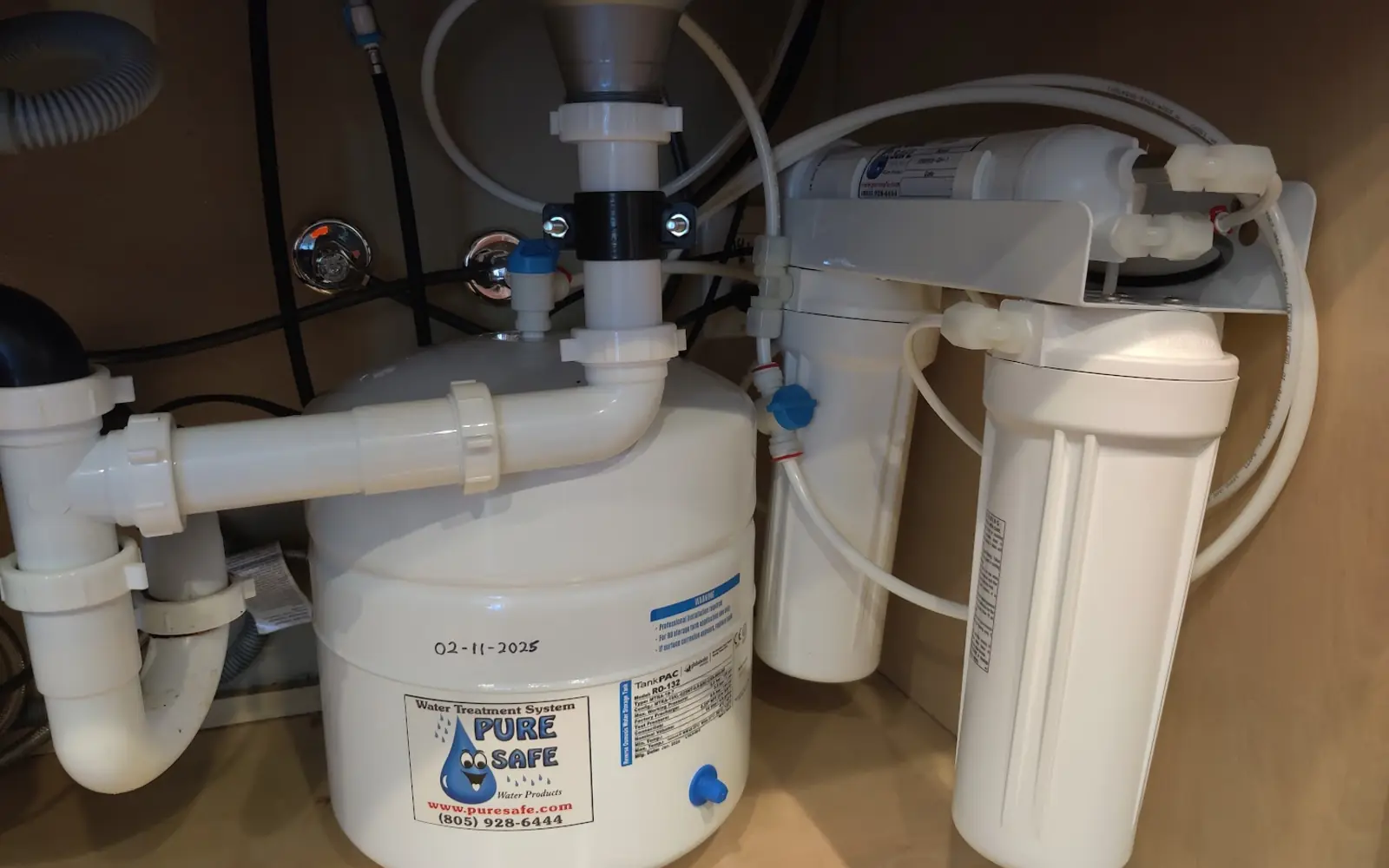
Opening the system for service can introduce air. Temporary faucet sputtering, bubbling or changing sounds can occur during flushing and refill, but the system should trend back toward its normal operating pattern.
A restricted, kinked or poorly routed drain tube, drain-saddle issue, or nearby household drain condition can create gurgling or air-gap noise. The drain should be inspected, not blocked.
Pressure conditions can affect automatic shutoff and check-valve behavior. Repeated clicking or cycling can overlap with slow recovery or a tank that does not fill normally.
Tubing that moves against a cabinet wall or another component can amplify an otherwise small vibration. Correct support and routing matter, especially after installation or recent service.
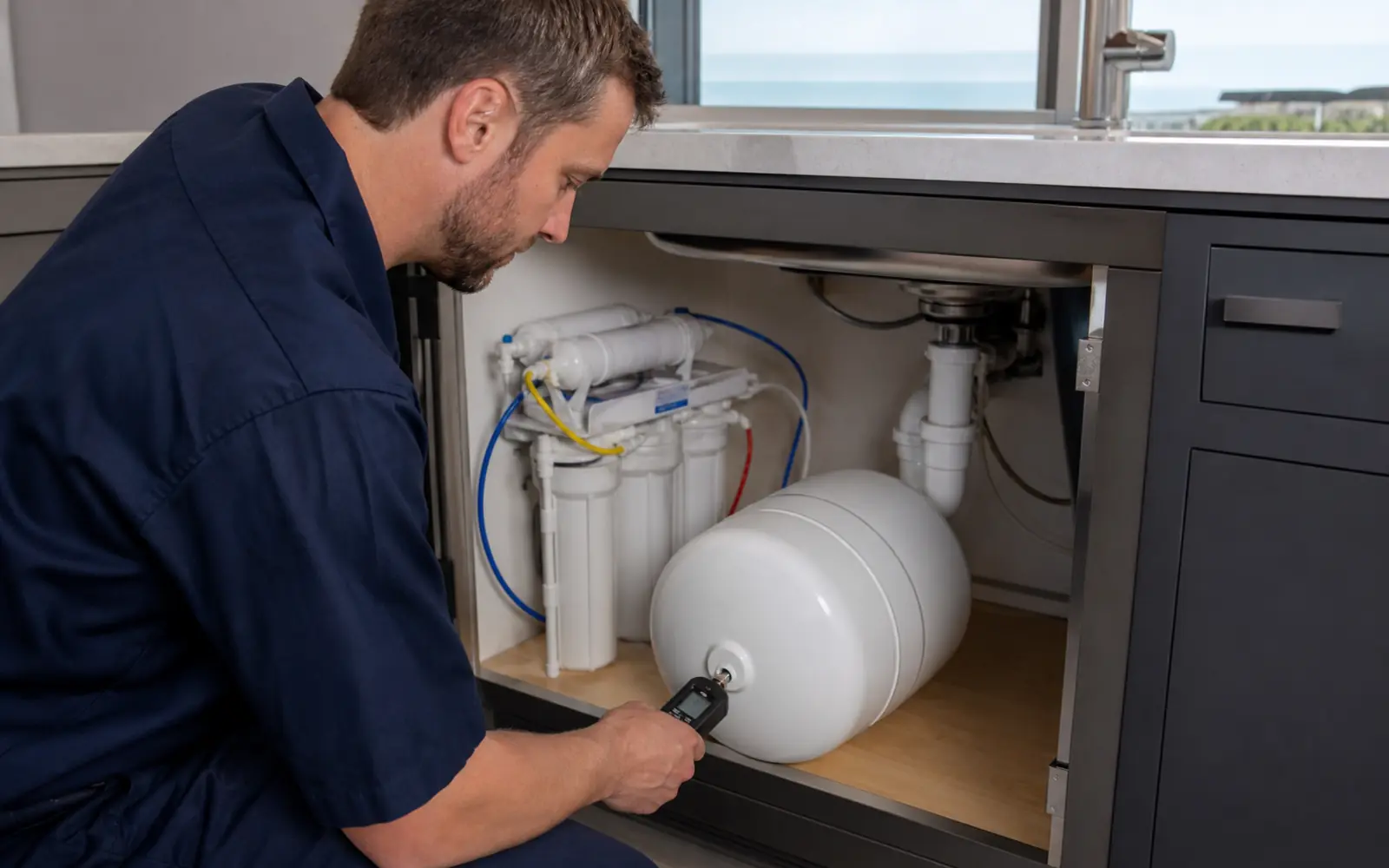
Noise becomes more meaningful when another symptom appears at the same time. That combination can point away from a simple vibration and toward a broader operating problem.
If the RO is noisy and also produces water slowly, takes unusually long to recover, will not fill the tank normally, leaks, or seems to keep draining after the tank should be full, the system should be evaluated as a whole. Filters, membrane production, feed pressure, tank behavior, shutoff/check components, tubing and the drain path can interact.
Some RO sounds are normal during production or drain flow, while recurring vibration, unusual clicking, or a new persistent noise deserves a closer look. Compare the sound pattern below and use RO Service & Repair when hands-on diagnosis is needed.
Use Service & Repair for a new loud or persistent sound, repeated cycling, drain noise that continues after the tank should be full, or noise paired with low flow, leaking, poor tank recovery or another failure.
Use Maintenance when the system is generally working but service history is overdue or unknown, or the noise began around filter service and the system needs a complete operational check.
Use Installation when a new or recently reconfigured system is noisy because faucet, tubing, tank, support or drain routing may need correction rather than a failed component diagnosis.
Filter service can introduce air into the RO and can slightly change tubing position or pressure behavior while the system refills. Temporary sputtering, bubbling or mild drain noise may occur during the flushing and refill period.
The important question is whether the system returns to its normal pattern. Noise that stays loud, continues well beyond the expected flushing period, appears with a leak, or comes with low flow or abnormal tank recovery should be inspected. Do not repeatedly open housings or keep cycling the system to chase the sound. If service history is the main issue, use RO Maintenance; if the operating problem persists, use RO Service & Repair.
Direct answers about normal RO sounds, gurgling, clicking, vibration, drain noise, post-service noise, pressure clues and when a noisy system needs diagnosis.
Some sound is normal. A light drain-flow sound while the tank refills, a brief valve click, or short-lived sputtering after service can occur during normal operation. New, loud, continuous or changing noise deserves attention.
Water moving through the RO drain path can be audible during production. Mild gurgling may be normal, while loud or changing gurgling can involve air-gap or drain routing, a restriction, or nearby household drainage.
Filter service can introduce air and can change tubing position or pressure behavior while the system refills. Temporary sputtering or bubbling may settle with proper flushing, but persistent noise, leaks or abnormal flow should be checked.
Repeated clicking or chattering can be associated with pressure changes, automatic shutoff behavior, check-valve behavior, tank recovery or another operating condition. The sound alone does not identify the failed component.
An air-gap faucet can make some drain noise while the RO produces water. Excessive gurgling, water at the air-gap opening or noise linked to sink drainage can point toward drain-tube routing, restriction, the drain connection or the household drain.
Vibration can come from tubing touching the cabinet, pressure changes, restrictions or valve behavior. If the vibration is new, persistent or paired with weak flow or another symptom, the system should be evaluated rather than assuming one part is bad.
Persistent drain flow or cycling after the tank should be satisfied is different from normal refill noise. Shutoff behavior, tank pressure, feed pressure, check components or drain conditions may need diagnosis.
Pressure conditions can change how an RO fills the tank and how shutoff components operate. If noise appears with low faucet flow or slow recovery, evaluate the pressure and restriction symptoms together.
No. The drain path is part of normal reverse osmosis operation. Clamping or capping it can interrupt normal function and can contribute to performance problems or leaks. Diagnose the cause of abnormal noise instead.
Schedule service when the sound is new, loud, persistent or changing; when the system repeatedly cycles; when drain noise continues after the tank should be full; or when noise occurs with low flow, a tank problem, leaking or another system failure.
Water Fixers can reproduce the sound, match it to the operating cycle, inspect drain and air-gap routing, check feed pressure and filter condition, review storage-tank behavior, and evaluate shutoff/check-valve operation where applicable. The goal is to identify the actual cause instead of replacing parts based on sound alone.
Water Fixers Plumbing & Filtration • Santa Maria, California • Central Coast service • License #719792
CALL NOW! Se Habla Español!