
Water Fixers helps Pismo Beach homeowners confirm hardness, evaluate an existing softener, compare replacement options, and plan installation or maintenance. Start with what the water is doing now, then choose the service that matches the evidence.
38+ years on the Central Coast • California License #719792
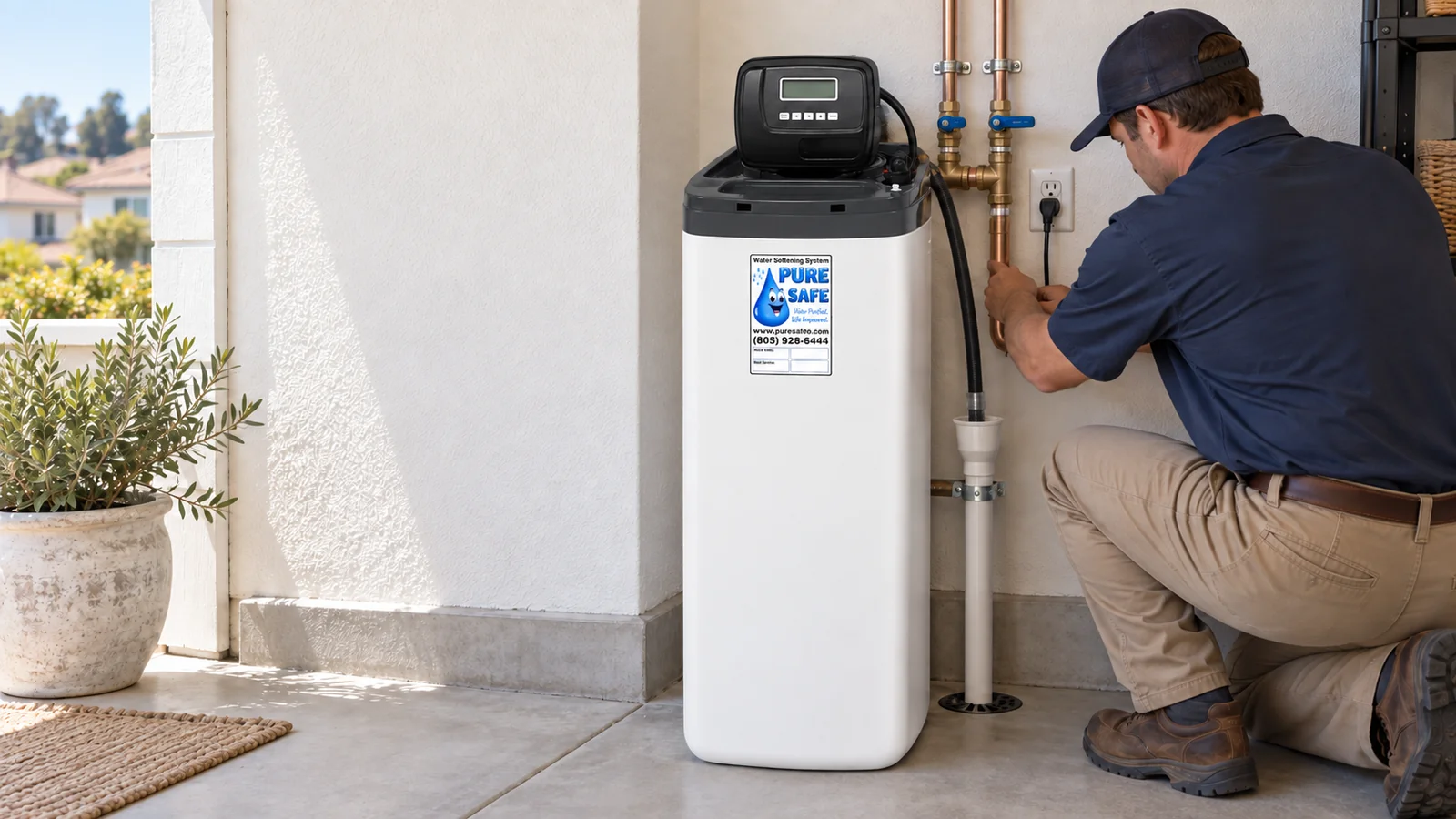
Those are different jobs. Separating them keeps the next step simple and avoids replacing equipment before the cause is known.
Confirm hardness, household demand, available space, bypass, drain access and service clearance before selecting equipment.
Check the installed system first. Settings, bypass position, brine behavior, regeneration, valve operation and resin condition can all affect performance.
Routine maintenance can focus on salt/brine condition, settings, regeneration behavior and visible service points without turning every visit into a replacement decision.
The City of Pismo Beach identifies three municipal water sources: the California State Water Project, Lopez Lake and local groundwater. The City also publishes an annual Consumer Confidence Report; the 2025 report is currently available.
Because source contributions and household conditions can differ, use a current hardness result at the property when sizing or troubleshooting a softener. The citywide source description is useful context, not a property-level diagnosis.
Hardness / scale: softening may fit.
Taste, odor or sediment: testing and filtration may be the better path.
Drinking water: reverse osmosis is a separate point-of-use decision.
Pressure, leaks or piping: use the plumbing path instead of blaming the softener.
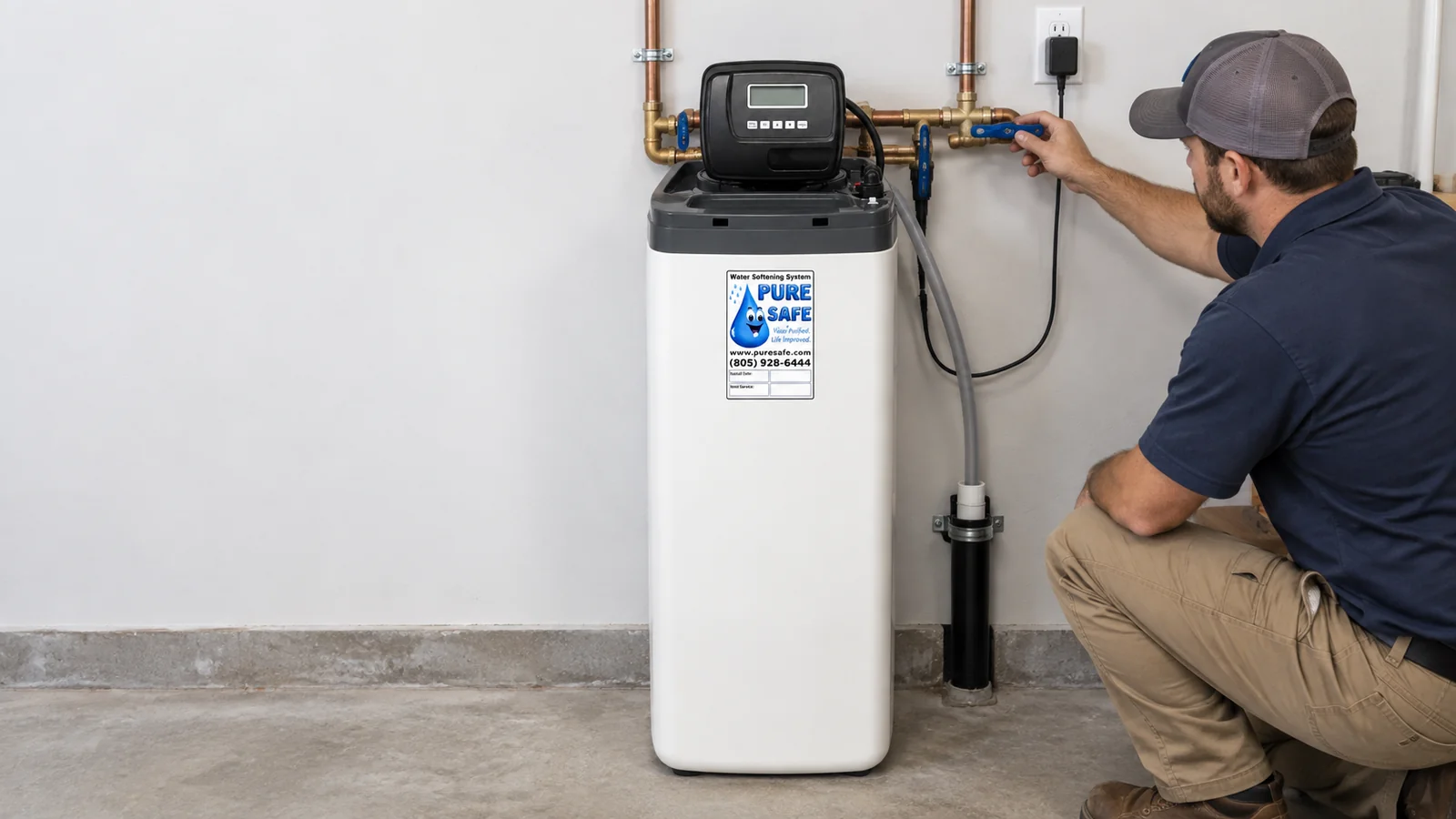
A good softener installation leaves the system serviceable after installation day. Water Fixers checks the inlet/outlet direction, bypass, shutoffs, drain route, brine connection, available utility space and the surrounding plumbing before equipment is selected.
Model choice should follow measured hardness, household demand, simultaneous flow and the available installation space.
Use these as a quick fit summary, then open the full model page for detailed controls, installation and warranty information. Home-size and household figures are general guidance; final sizing should account for hardness, daily water use, simultaneous flow demand and the plumbing at the property.
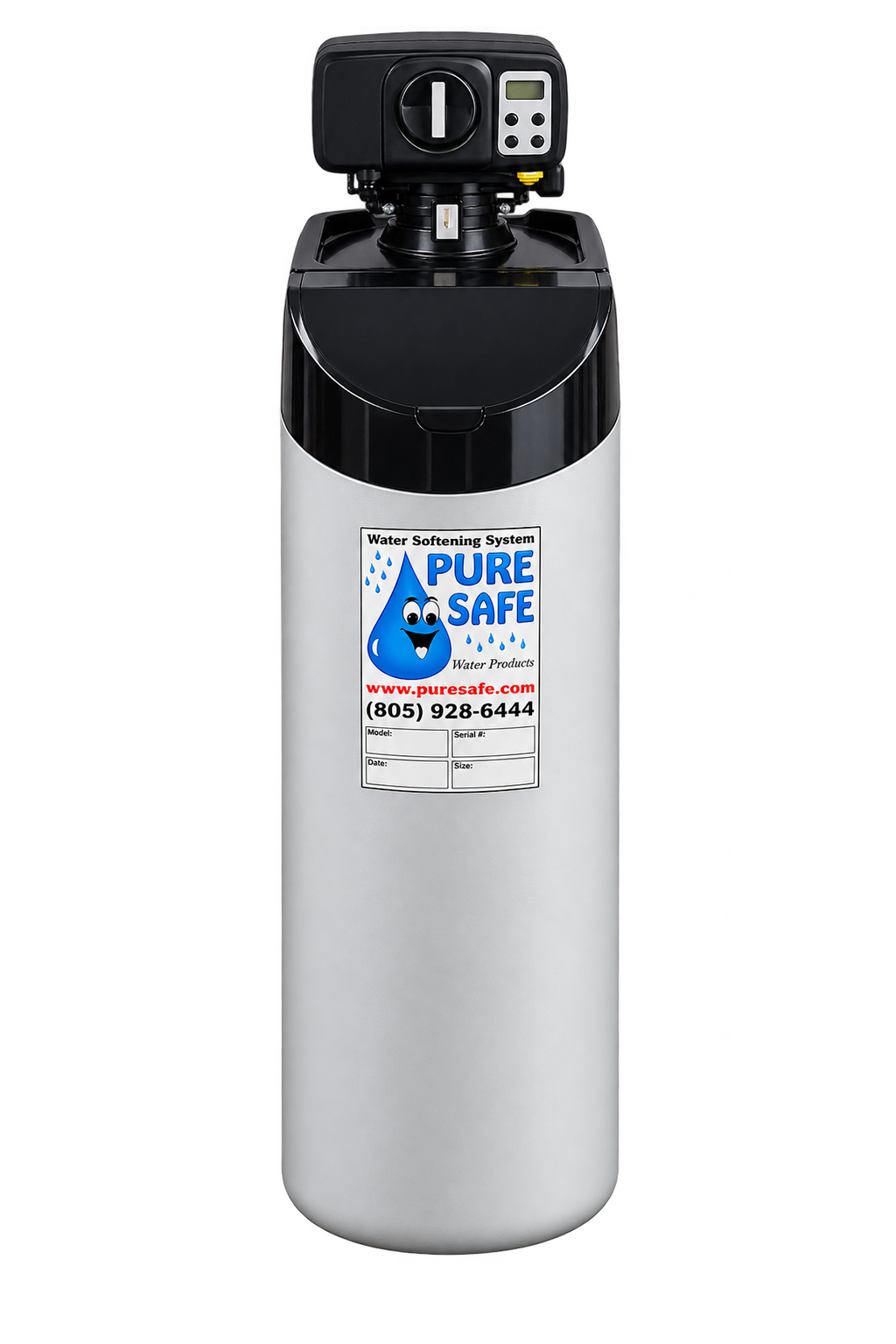
Typical guidance: under 1,400 sq. ft. • 1–3 people • 18,000-grain capacity • 5 GPM service flow.
Use this as a starting point only. Confirm hardness, demand, installation space and plumbing before selecting a system.
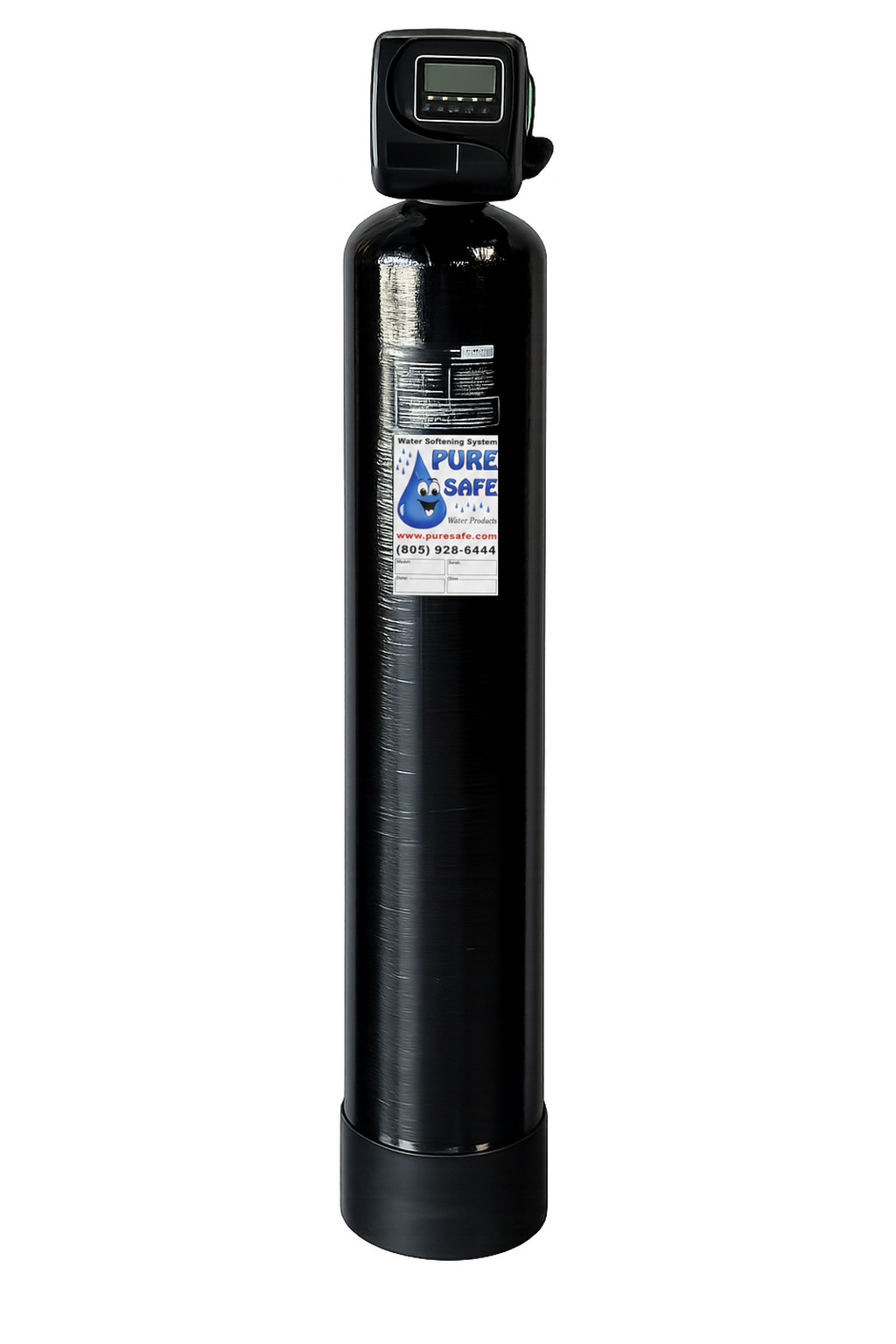
Typical guidance: under 1,800 sq. ft. • 1–4 people • 24,000-grain capacity • 7 GPM service flow.
Use this as a starting point only. Confirm hardness, demand, installation space and plumbing before selecting a system.
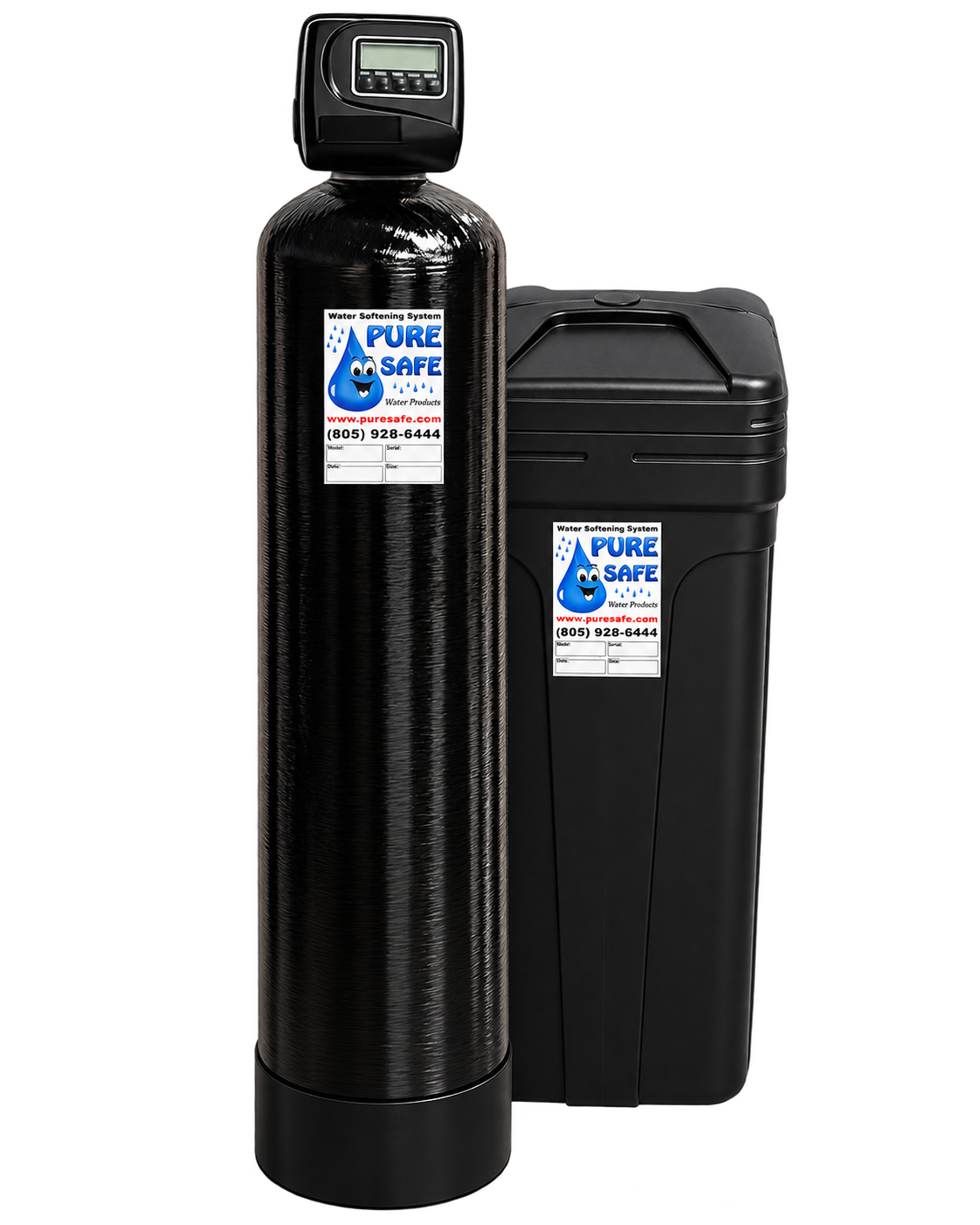
Typical guidance: under 2,400 sq. ft. • 1–4 people • 36,000-grain capacity • 10 GPM service flow.
Use this as a starting point only. Confirm hardness, demand, installation space and plumbing before selecting a system.
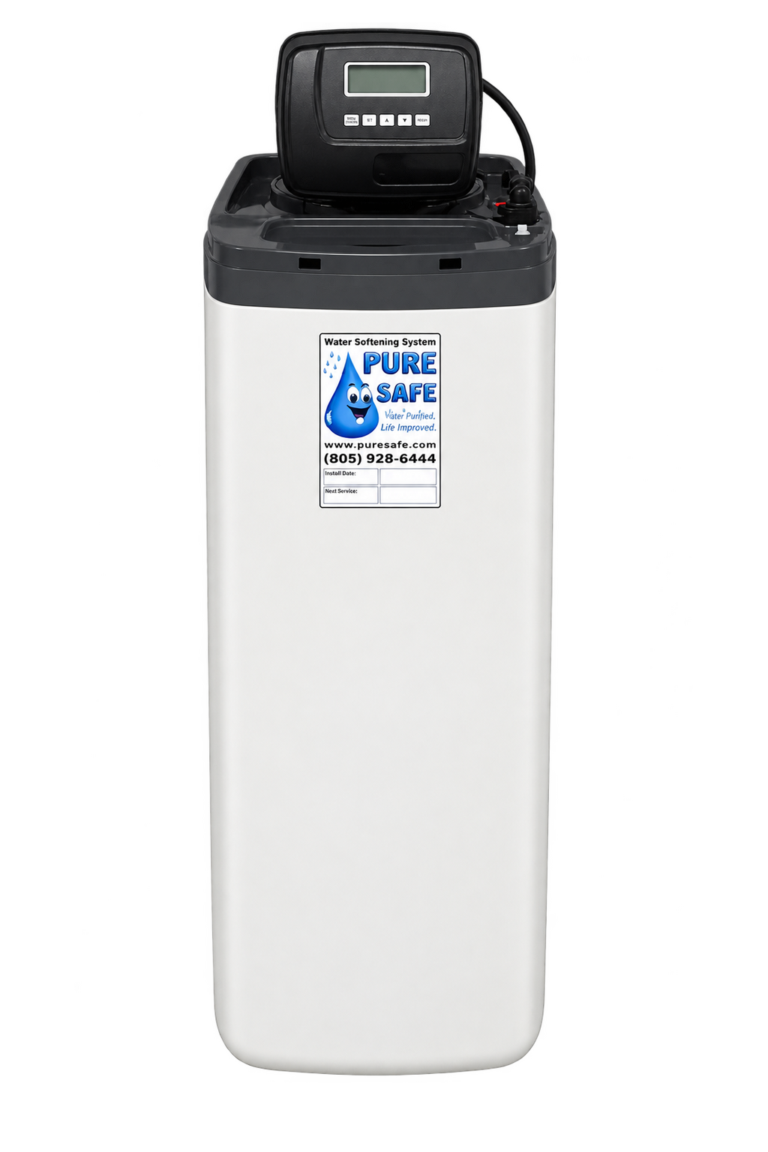
Typical guidance: under 2,500 sq. ft. • 1–4 people • 36,000 grains at 6 lb. salt setting • 12 GPM service flow.
Use this as a starting point only. Confirm hardness, demand, installation space and plumbing before selecting a system.
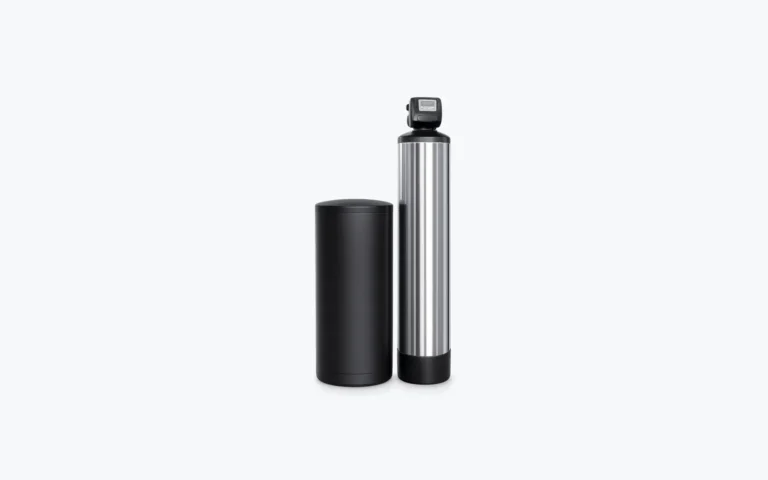
Typical guidance: under 3,500 sq. ft. • 1–6 people • 48,000 grains at 6 lb. salt setting • 14 GPM service flow.
Use this as a starting point only. Confirm hardness, demand, installation space and plumbing before selecting a system.
Not sure which model fits? Start with the hardness result and the household demand, then compare the full lineup.
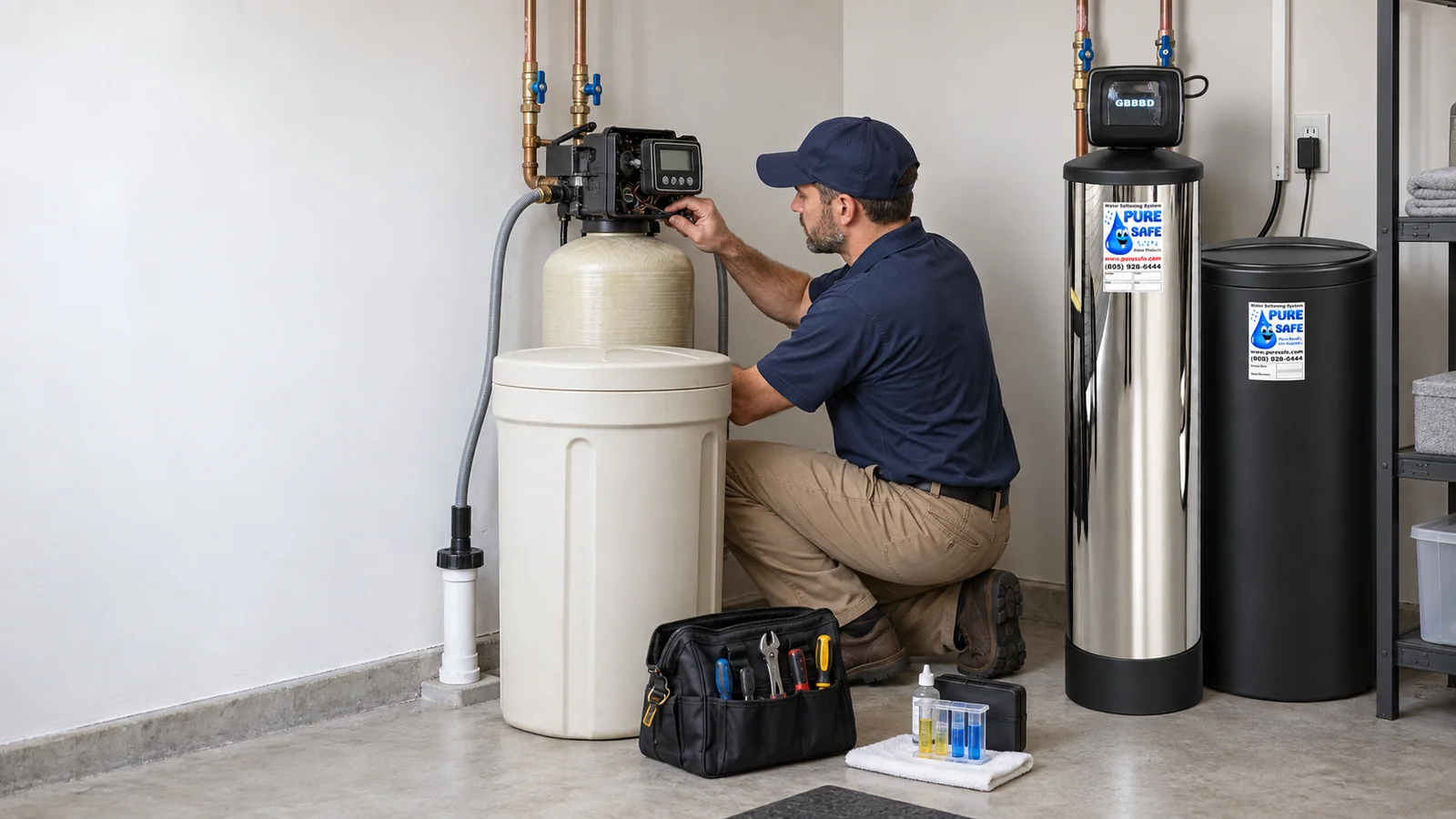
If hardness has returned, confirm what changed before assuming the equipment is finished. Water Fixers can check current hardness, bypass position, programming, salt and brine behavior, regeneration, valve operation, resin condition and whether household demand has changed.
If the system remains practical to repair, keep it working. If the inspection supports replacement, move to the installation path with evidence in hand.
Use a current result at the property instead of treating a citywide or regional number as the sizing number.
Note the current softener, bypass, filtration, pressure equipment, plumbing layout and service history so new work does not duplicate or conflict with existing equipment.
Scale and hardness point toward softening. Other concerns may need filtration, reverse osmosis or plumbing attention instead.

Hard water returned, salt use changed, the brine tank looks wrong, or the softener is leaking or not regenerating? Water Fixers can evaluate many existing water-softener brands across California’s Central Coast—even when the system was installed by someone else.
We diagnose the controls, valve, brine system, resin performance and surrounding plumbing before recommending repair, maintenance or replacement.
No. Local water context matters, but a current hardness result at the property and the homeowner’s goal determine whether softening is appropriate.
Start with actual hardness, bypass position, settings, salt and brine behavior, regeneration, valve operation, resin condition and any change in household demand. Diagnosis should come before replacement.
Start with measured hardness, household water use, simultaneous flow demand, available installation space and service access. The city address by itself does not select the model.
Yes, especially when performance changed or the property’s water source, demand or treatment setup may have changed. A current hardness result helps separate a water change from an equipment problem.
No. A conventional softener primarily targets hardness. Filtration is used for other identified goals such as sediment or certain taste and odor concerns.
Use the dedicated Pismo Beach water-quality and water-treatment guide for local source context, then use property-level testing for the equipment decision.
Tell Water Fixers what changed, what equipment is installed now, and whether you have a recent hardness result. We can route the request to testing, maintenance, repair or installation.
Water Fixers Plumbing & Filtration • Pismo Beach service • California License #719792
CALL NOW! Se Habla Español!