PRIVATE WELL • LOCAL SERVICE
For Guadalupe-area properties that actually use a private well, start by confirming the source, documenting the symptom, and testing the water when chemistry or drinking-water safety affects the decision. City-served properties follow a different evidence path.
Water Fixers Plumbing & Filtration • Santa Maria, CA • CA Lic. #719792 • Serving Guadalupe and the Central Coast
FIRST QUESTION
A private well, shared well, or City of Guadalupe connection calls for different evidence. Confirm the source first, then treat pressure/flow, water chemistry, and existing treatment equipment as separate questions until the findings connect them.
PRIVATE WELL
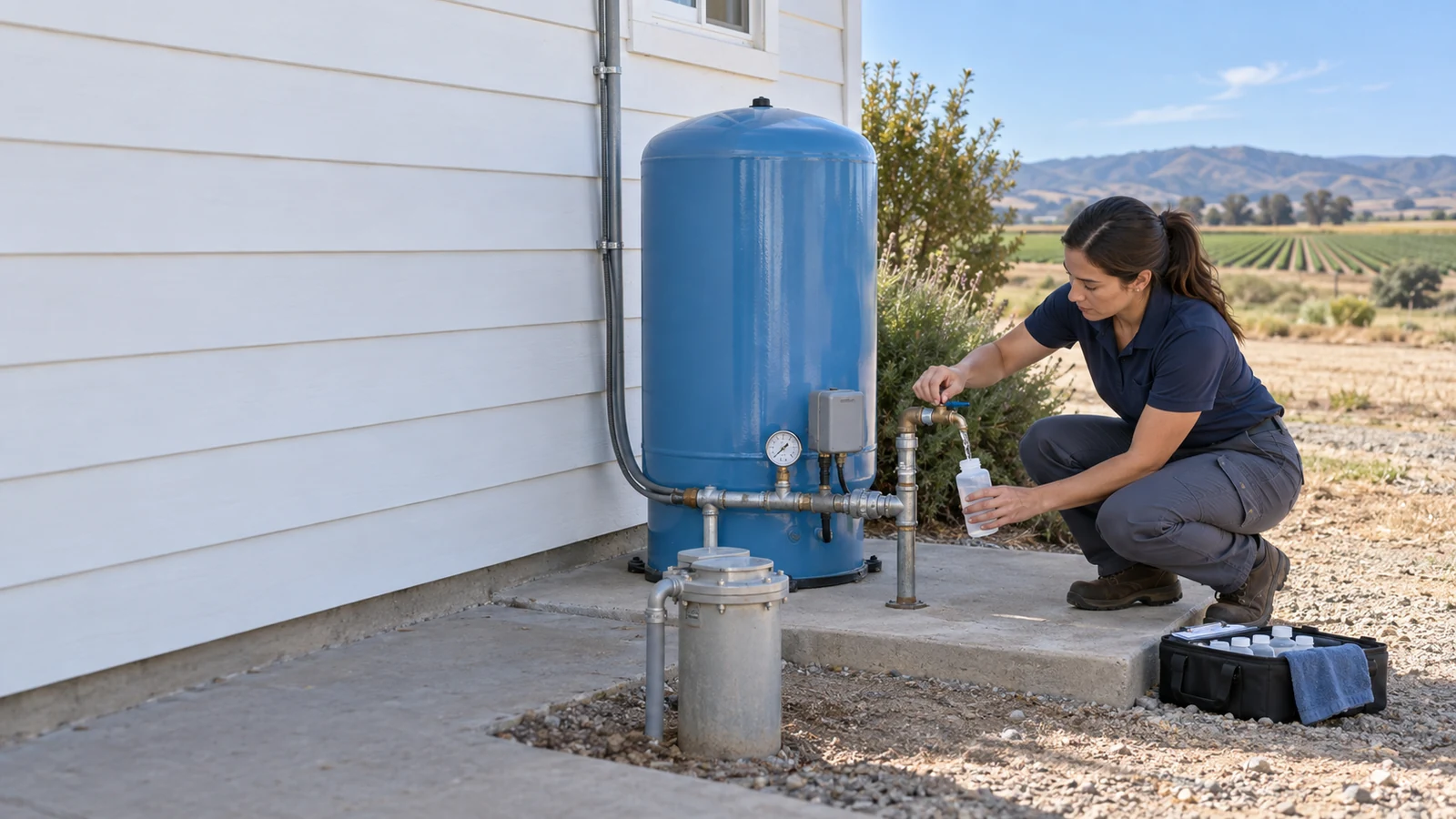
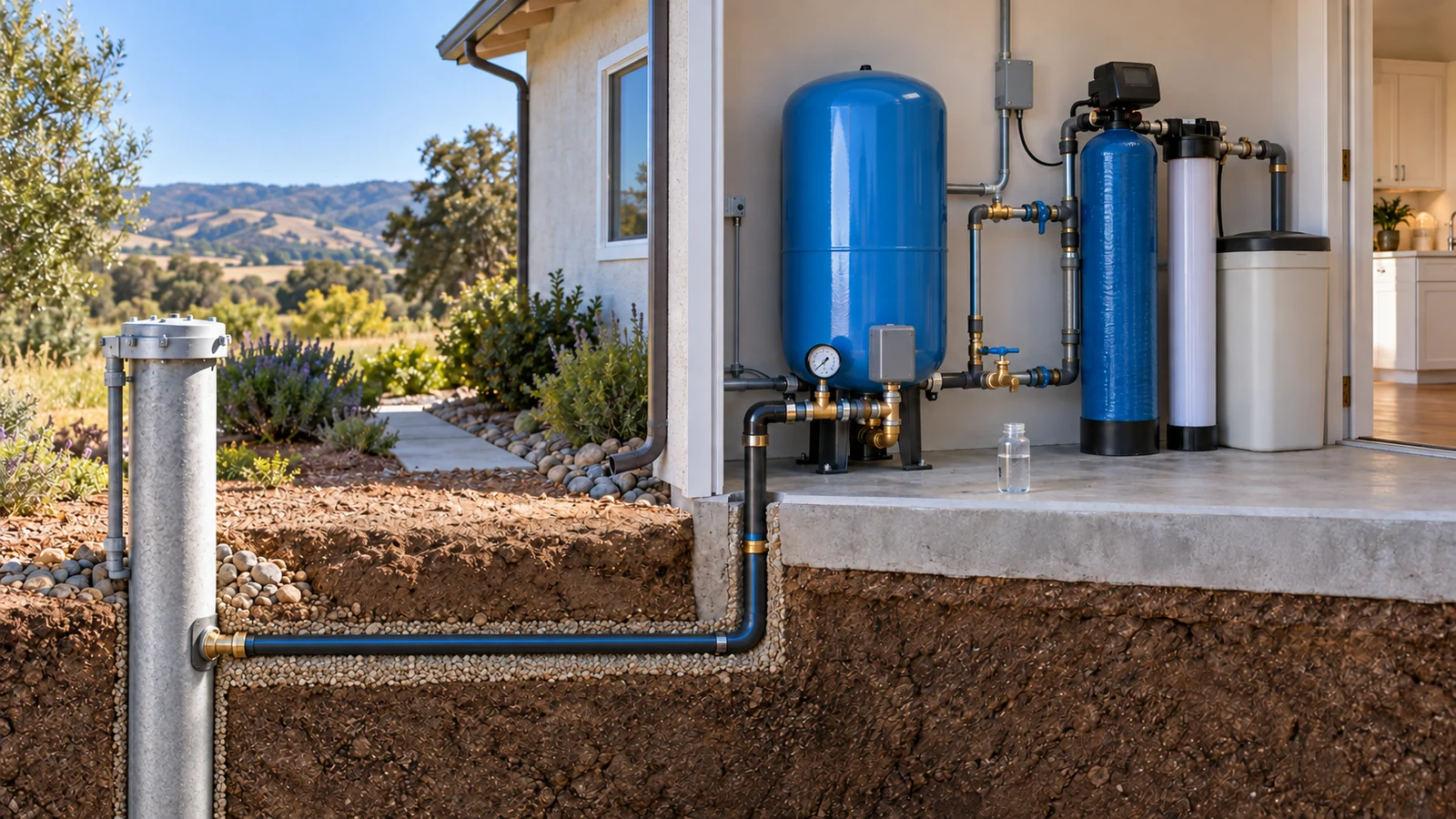
For a property that actually uses a private well, identify the untreated-water sample point, pressure equipment, existing treatment stages, and any available service or laboratory records. Land use, neighborhood appearance, and regional history do not tell you what is in an individual well.
PUBLIC OR COMMUNITY SUPPLY
If the property is served by the City of Guadalupe, use the City’s public-system records instead of private-well assumptions. The City’s 2025 report says 69% of annual supply came from active city wells and 31% from purchased State Water Project surface water; city well water is treated and blended with pretreated State Water in reservoirs. The City reports its water met drinking-water standards in 2025. Those system facts do not describe a private well or determine treatment at one house.
START WITH THE SYMPTOM
Treat pressure and flow, water quality, and equipment condition as three different questions until evidence connects them. The next step should follow the part of the system that is actually affected rather than the word “well” alone.
When flow changes, note whether the condition is constant, demand-related or sudden. Those details help distinguish pressure-system questions from clogged treatment or house plumbing.
Staining, odor, sediment, or scale can help narrow the questions to investigate, but appearance does not identify a constituent or concentration. When chemistry or drinking-water safety matters, use appropriate testing rather than choosing equipment from the symptom alone.
If you already have laboratory data for the property, turn the measured finding into a narrow treatment question and verify that any proposed equipment fits the water chemistry, flow, household goal, and long-term service requirements.
For older treatment trains, check valves, cartridges, media condition and bypass configuration before assuming the well itself changed.
Regional groundwater information can explain the setting around Guadalupe, but it is not a laboratory result for an individual well. City-served addresses should use City of Guadalupe reporting; properties that actually use a private well need their own source records and property-specific testing when treatment depends on water chemistry.
Use basin and groundwater information to understand the broader setting and choose sensible questions—not as a substitute for sampling the water that actually serves the property.
HOW WATER FIXERS APPROACHES IT
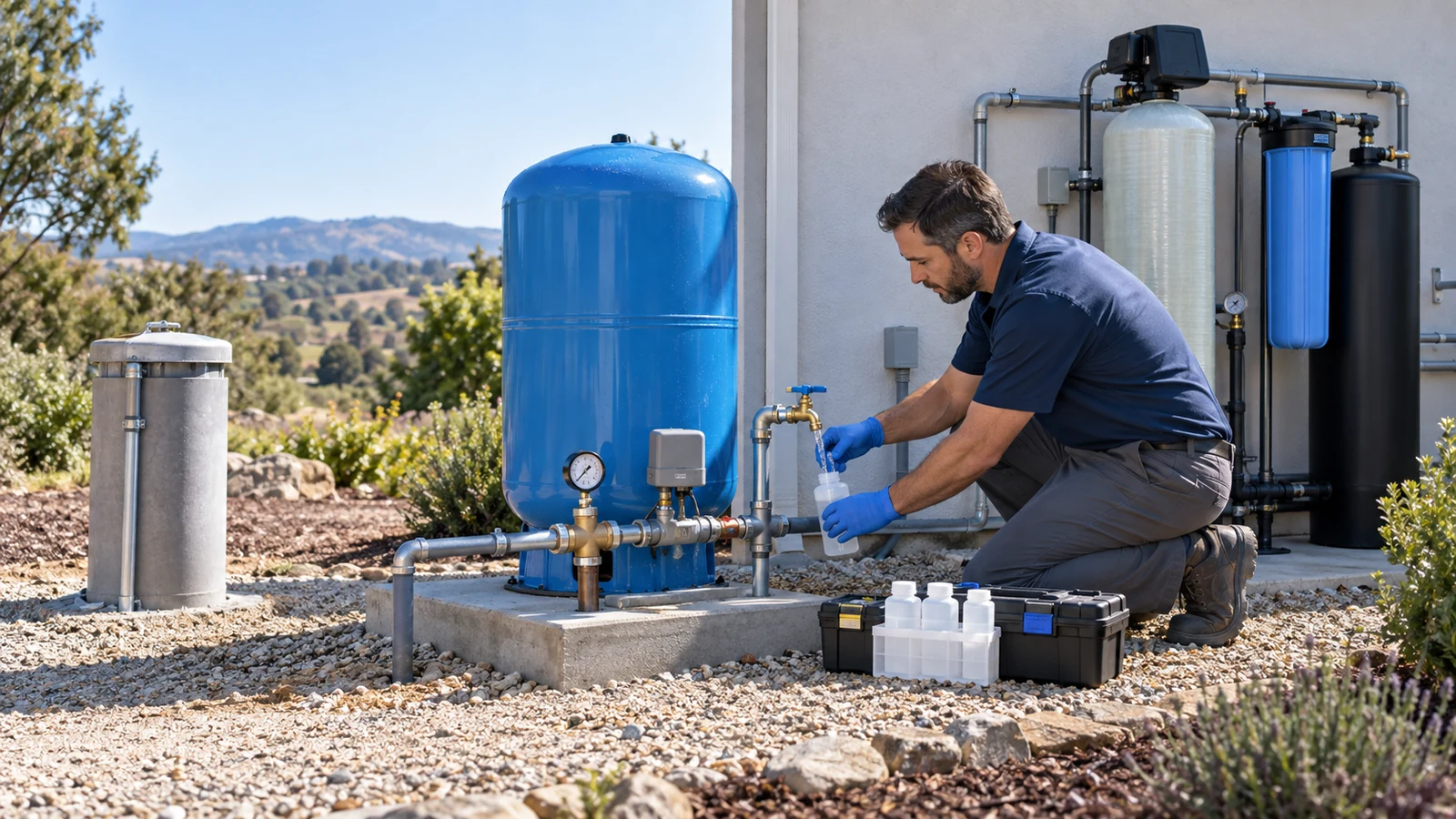
Start by confirming the source and, when testing is needed, the correct untreated-water sample point. Document what changed, where it appears, how pressure behaves, and what treatment equipment is already installed. If chemistry or drinking-water safety controls the decision, collect the appropriate sample using the laboratory’s instructions and combine that result with the pressure and equipment checks before choosing treatment.
TEST → MATCH → VERIFY
Choose equipment only after the job is defined. Whole-house treatment belongs at the point of entry when the objective affects water throughout the home; a drinking-water goal may be better handled at a dedicated faucet. The treatment location should follow the measured issue and the household goal.
When chemistry or health-related constituents control the decision, collect the appropriate sample first. Testing creates the evidence needed to narrow the treatment category without guessing from taste, color, odor, or neighborhood history.
Turn the measured issue into one practical target. Then check flow, pressure, pH and other relevant chemistry, household demand, installation constraints, and verification needs before whole-house equipment is sized.
Compare technologies by the job they perform: particle removal, hardness reduction, oxidation and filtration, carbon adsorption, disinfection, neutralization, or another verified need. The number of tanks is not a treatment strategy.
If the main goal is water for drinking, cooking, coffee, or ice, evaluate a point-of-use reverse-osmosis path before committing the whole household supply to that treatment objective.
ALREADY HAVE EQUIPMENT?
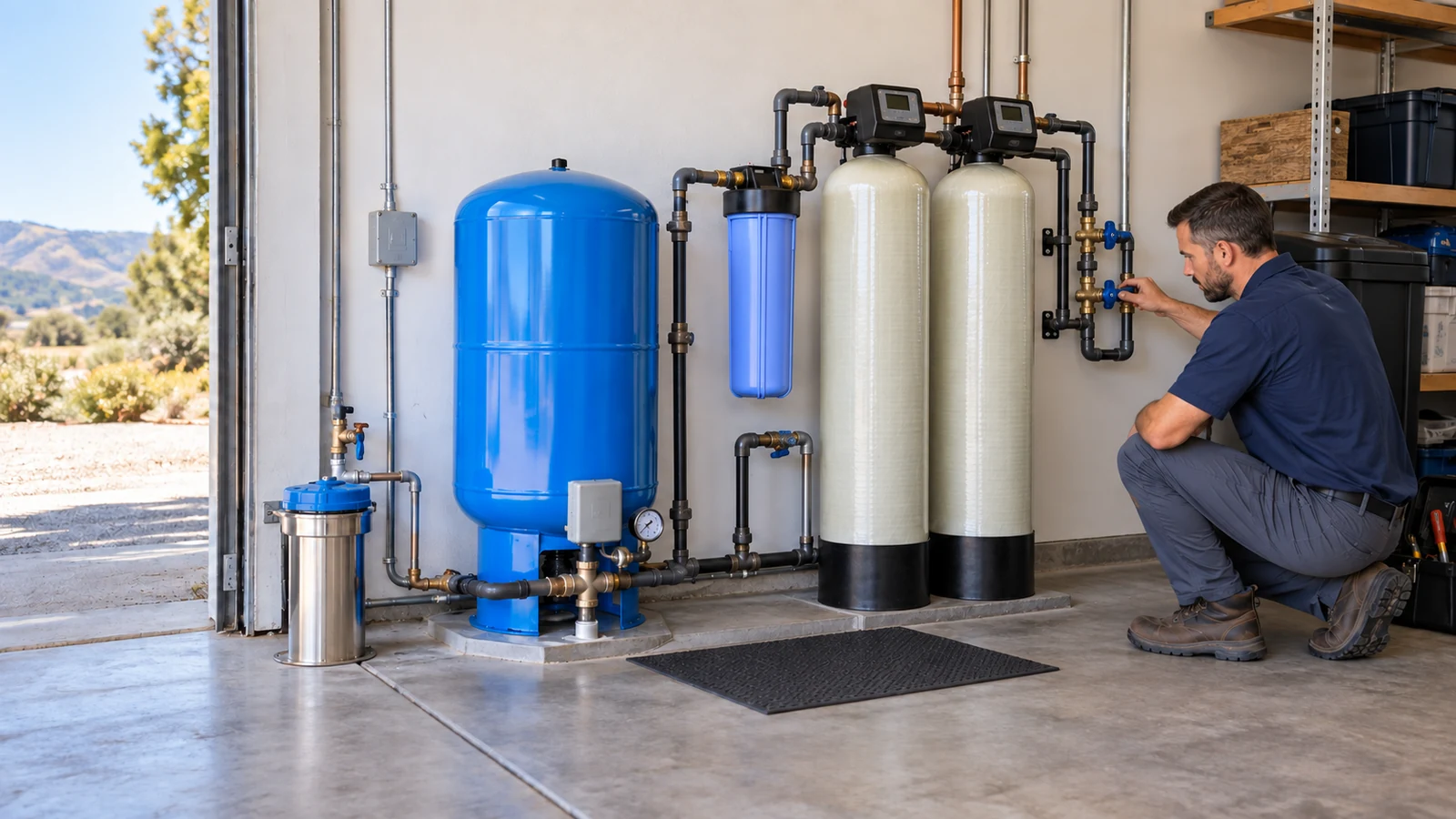
For older treatment trains, check valves, cartridges, media condition and bypass configuration before assuming the well itself changed.
Cartridge life, media performance, and pressure loss depend on the incoming water and workload at this property, so inspection should guide the service interval. Existing equipment should stay in the treatment train because of what it does and how it performs—not simply because of its age.
WATER FIXERS SCOPE
When flow changes, note whether the condition is constant, demand-related or sudden. Those details help distinguish pressure-system questions from clogged treatment or house plumbing.
Water Fixers can help with house-side plumbing, pressure behavior around treatment, water testing and treatment planning, filtration, and existing treatment equipment. Well drilling, new well construction, pump pulling, casing correction, and specialty pump electrical work may require an appropriately licensed well or pump specialist.
WHEN A WELL / PUMP SPECIALIST MAY BE NEEDED
Use the verified system boundary to choose the right trade. If the issue is inside the well, pump, casing, or source-side electrical system rather than the house-side plumbing or treatment equipment, the appropriate well or pump specialist should handle that work.
GUADALUPE • RELATED HELP
Use the Guadalupe water-quality guide for City public-system source and reporting information. For a private well, keep the decision property-specific and use the well’s own records and testing.
Use the Guadalupe plumbing page for house-side leaks, fixtures, piping, drains, water heaters, and other plumbing repairs that do not require a private-well treatment decision.
The Well Water directory organizes the private-well symptom, testing, treatment, filtration, pressure, and maintenance guides that support this local service page.
Water Fixers serves Guadalupe from its Santa Maria location. Guadalupe is a service area, not a separate Water Fixers storefront.
PRIVATE-WELL FAQ
No. The City of Guadalupe operates a municipal water system, and private-well guidance applies only when the specific property actually uses a private or shared well. Confirm the source before using private-well testing or treatment guidance.
No. Public-system reports, basin information, and nearby results provide context only. They do not measure the water from an individual private well. Use a current property sample when the treatment decision depends on water chemistry.
Note whether pressure or flow is low at one fixture or throughout the property, whether the change appears during peak demand, whether it began suddenly, and whether the restriction appears before or after treatment equipment. Those clues help separate plumbing, treatment, pressure-system, and source-side questions.
No. Appearance cannot rule out dissolved or microbiological concerns. When drinking-water safety or chemistry is the question, use appropriate laboratory testing instead of relying on clarity, taste, or odor alone.
Start by identifying what each stage is intended to do, then check pressure loss, bypass position, controls, consumables, media condition, and service history. Do not add or replace equipment until the purpose and present performance of the existing treatment train are clear.
GUADALUPE • PRIVATE WELL
If the property uses a private well, tell us what changed, whether one fixture or the whole house is affected, what filtration or softening is already present, and whether you have recent laboratory results. That information helps route the next step toward plumbing, pressure evaluation, water testing, treatment planning, or existing-equipment service without guessing from the symptom alone.
CALL NOW! Se Habla Español!