
PRIVATE WELL • LOCAL SERVICE
Private-well problems in the Morro Bay area are easier to solve when the source, pressure system, household plumbing, treatment equipment and current test results are evaluated as one connected water path.
Water Fixers • 38+ years serving the Central Coast • California License #719792 • Private-well help in the Morro Bay area
FIRST QUESTION
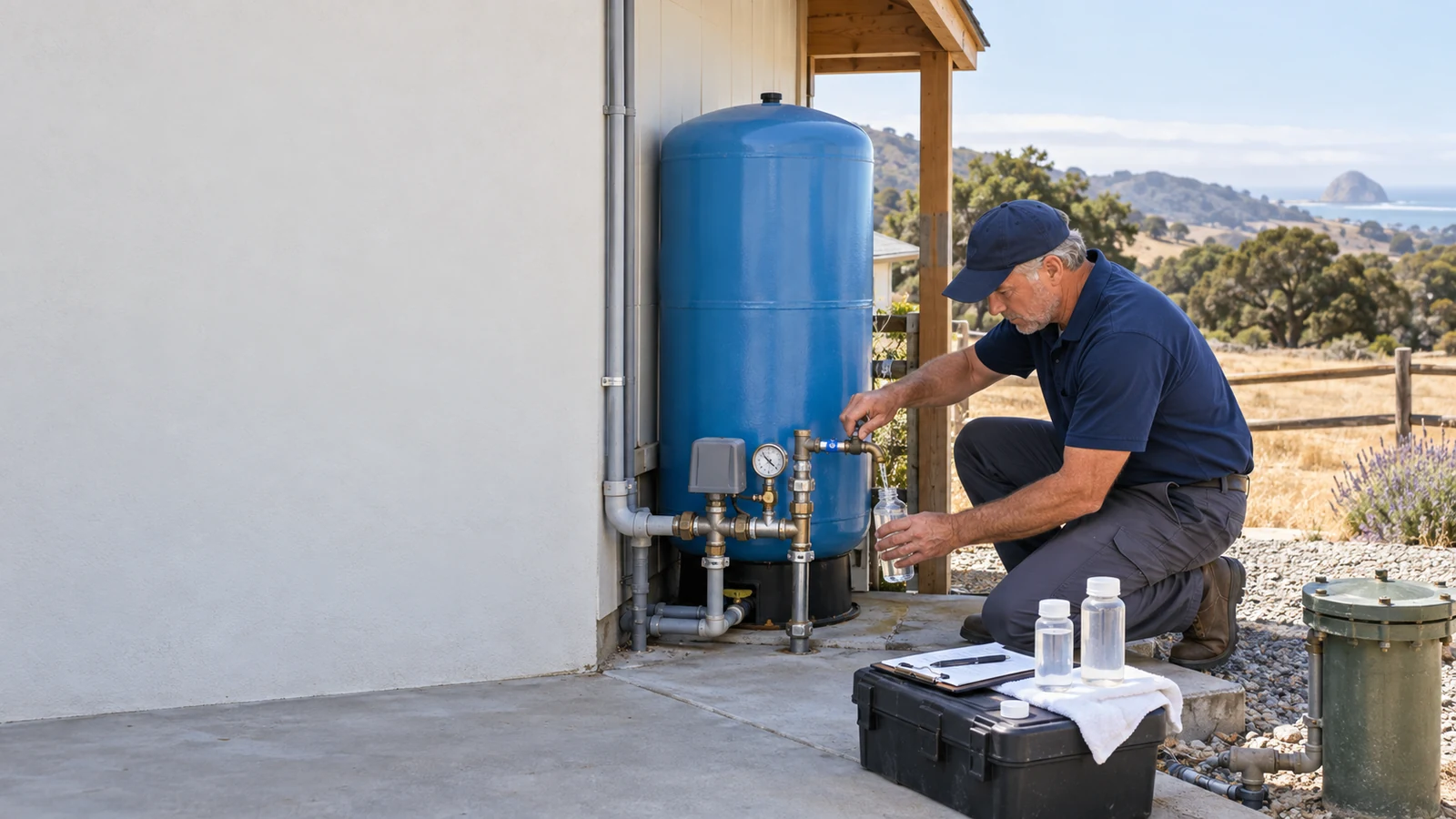
Start by confirming that the property actually uses a private well. If the address is on City water, follow the municipal-water path instead. For a confirmed private well, trace the water from the source through pressure equipment, treatment and household plumbing, and use current testing whenever chemistry or drinking-water safety controls the decision.
PRIVATE WELL
For a confirmed private-well property, document where the problem appears and what changes it. Note whether the symptom varies with household demand, irrigation, filter condition, recent service or another clear operating change. Those observations help separate a pressure or plumbing problem from a treatment or water-quality problem.
CITY OR COMMUNITY SUPPLY
Not every Morro Bay address uses a private well. The City Water Division identifies State Water Project surface water as its primary source and says City groundwater is treated at the brackish-water reverse-osmosis facility or blended with State Water when needed for nitrate control. That public-system record does not describe a private domestic well. Confirm the actual source before applying private-well guidance.
START WITH THE SYMPTOM
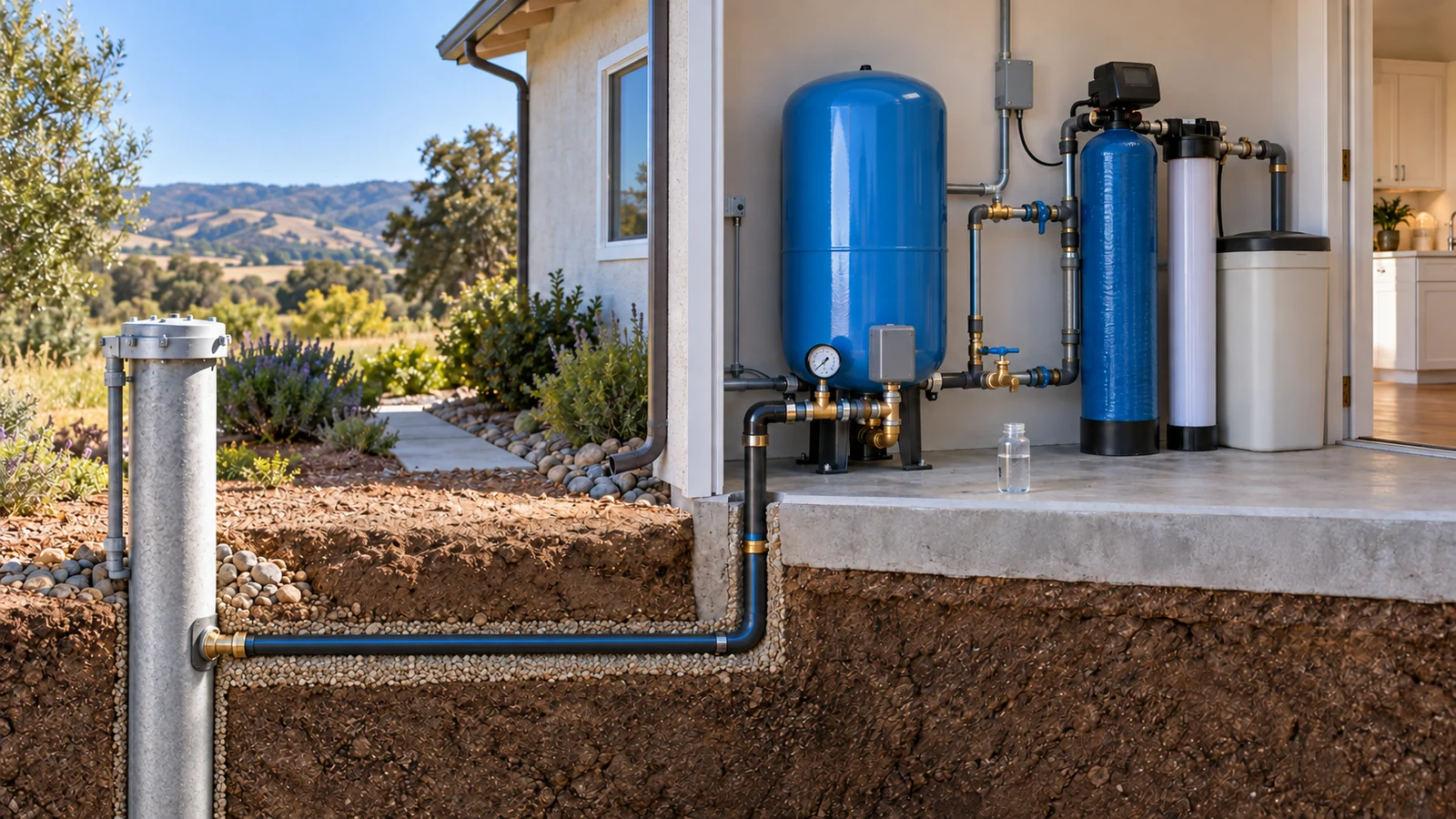
Follow the water path in sequence and stop at the first verified boundary instead of jumping to equipment. A source-side problem, pressure problem, loaded treatment stage and household-plumbing issue can produce very different next steps even when the homeowner describes them all as a “well-water problem.”
Pressure that drops only when several fixtures run points down a different path from pressure that is weak all day. A loaded cartridge, restrictive treatment stage, pressure tank issue, plumbing restriction or source-side problem can also affect flow. Diagnose the location of the pressure loss before recommending equipment.
Staining, odor, particles and scale are useful clues, but they do not identify the cause by themselves. Test for the issue you need to solve and keep the result with the property records. Regional groundwater information can guide the questions; it cannot size treatment for an individual well.
If you already have a current laboratory report, use the measured result to define the treatment job. Then account for peak demand, pressure, pH where relevant, existing equipment and maintenance requirements before selecting or changing a system.
Existing treatment deserves diagnosis before replacement. Check bypass position, cartridges, controls, regeneration behavior, pressure loss and service history, then compare what the equipment was designed to do with the water it is handling today.
MORRO BAY • LOCAL WATER-SOURCE CONTEXT
California DWR recognizes the Morro Valley Groundwater Basin in west-central San Luis Obispo County. That makes groundwater a legitimate local context for properties that actually use private wells, but basin information does not reveal what is in one household well. Well construction, depth and location can differ, so a property-specific sample remains the decision point.
The useful local takeaway is simple: use basin and public-system information to understand the setting, then use the property’s actual source, symptoms and test results to decide what service is appropriate. Do not convert a basin report, City water report or nearby-well result into a household diagnosis.
HOW WATER FIXERS APPROACHES IT
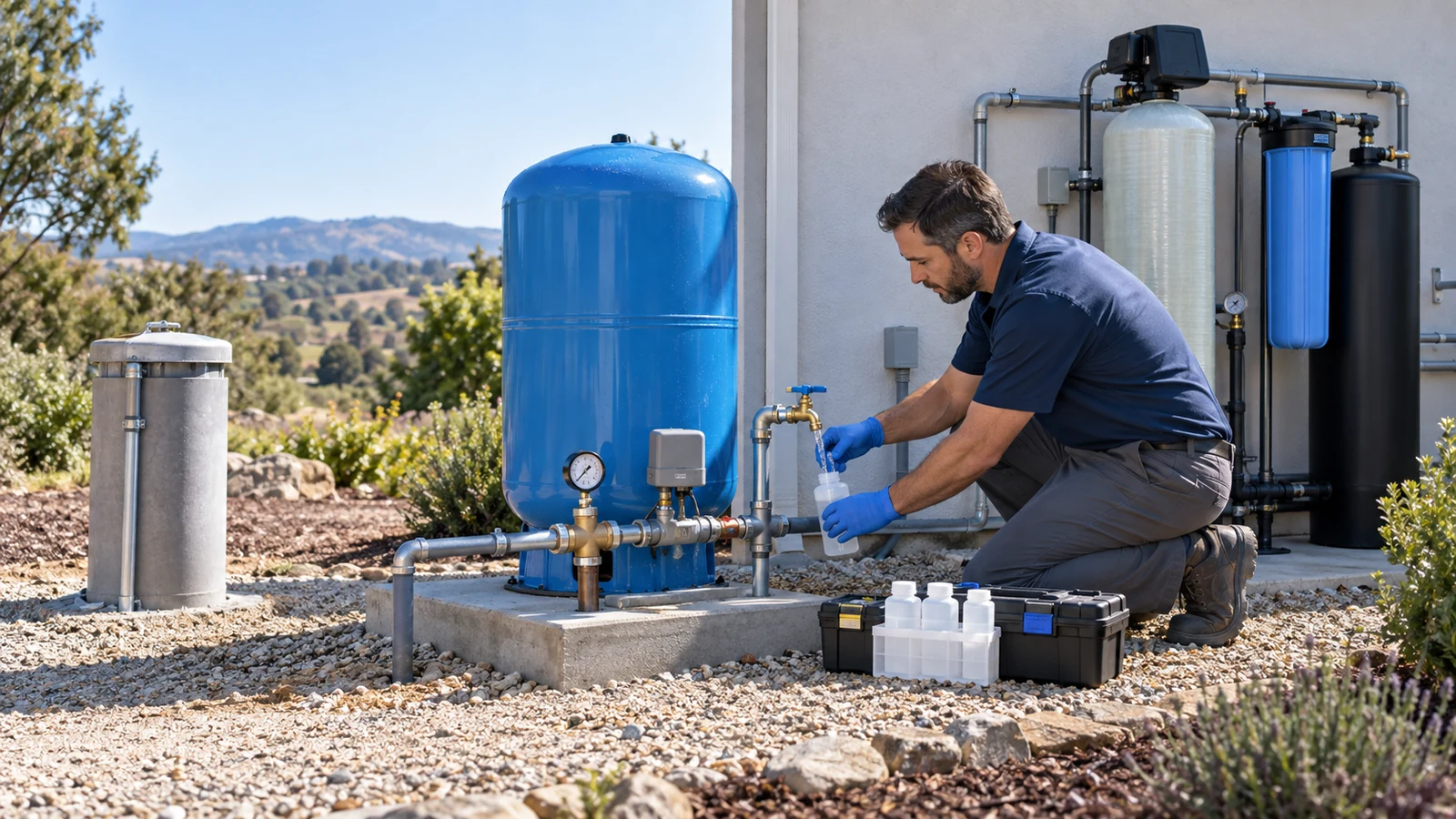
Begin with the homeowner’s actual concern, identify the source, check pressure and existing equipment, and test what matters before choosing treatment. For chemistry or health-related questions, follow the laboratory’s collection instructions and use an appropriate certified laboratory. The result should narrow the plan—not justify a preset equipment package.
TEST → MATCH → VERIFY
Choose equipment only after the job is defined. A whole-house treatment system, water softener, filtration stage and drinking-water reverse-osmosis system solve different problems, so the treatment level should match the measured issue and the part of the home that needs improvement.
Testing is the evidence step. San Luis Obispo County notes that private non-commercial wells are not routinely monitored by an outside agency and that some concerns can only be identified through laboratory testing. CDC and EPA guidance recommends testing private-well water at least annually, with additional testing when local risks or events justify it.
Turn the measured issue into one practical target. Then check peak flow, pressure, pH where relevant, household demand, installation constraints and verification needs before equipment is sized. Treatment should be matched to the result rather than to a neighborhood assumption.
Compare treatment technologies by the job they perform: sediment removal, hardness reduction, oxidation, carbon adsorption, disinfection, neutralization or another verified need. The number of tanks is not a treatment strategy; the measured problem and required flow are what matter.
If the main goal is drinking, cooking, coffee or ice, a point-of-use reverse-osmosis path may be more appropriate than treating every gallon entering the house for that same objective. Private-well drinking-water RO also needs the feed-water conditions to be understood first.
ALREADY HAVE EQUIPMENT?
Existing treatment should be serviced according to the water it handles and the job it is meant to perform. Cartridge loading, media life, control behavior and pressure loss can vary substantially from one property to another.
Pressure, water use, regeneration behavior, filter loading and service history together tell a better maintenance story than equipment age alone. Keep equipment that is doing its job; repair, rebed or replace it when current performance and serviceability justify the change.
WATER FIXERS SCOPE
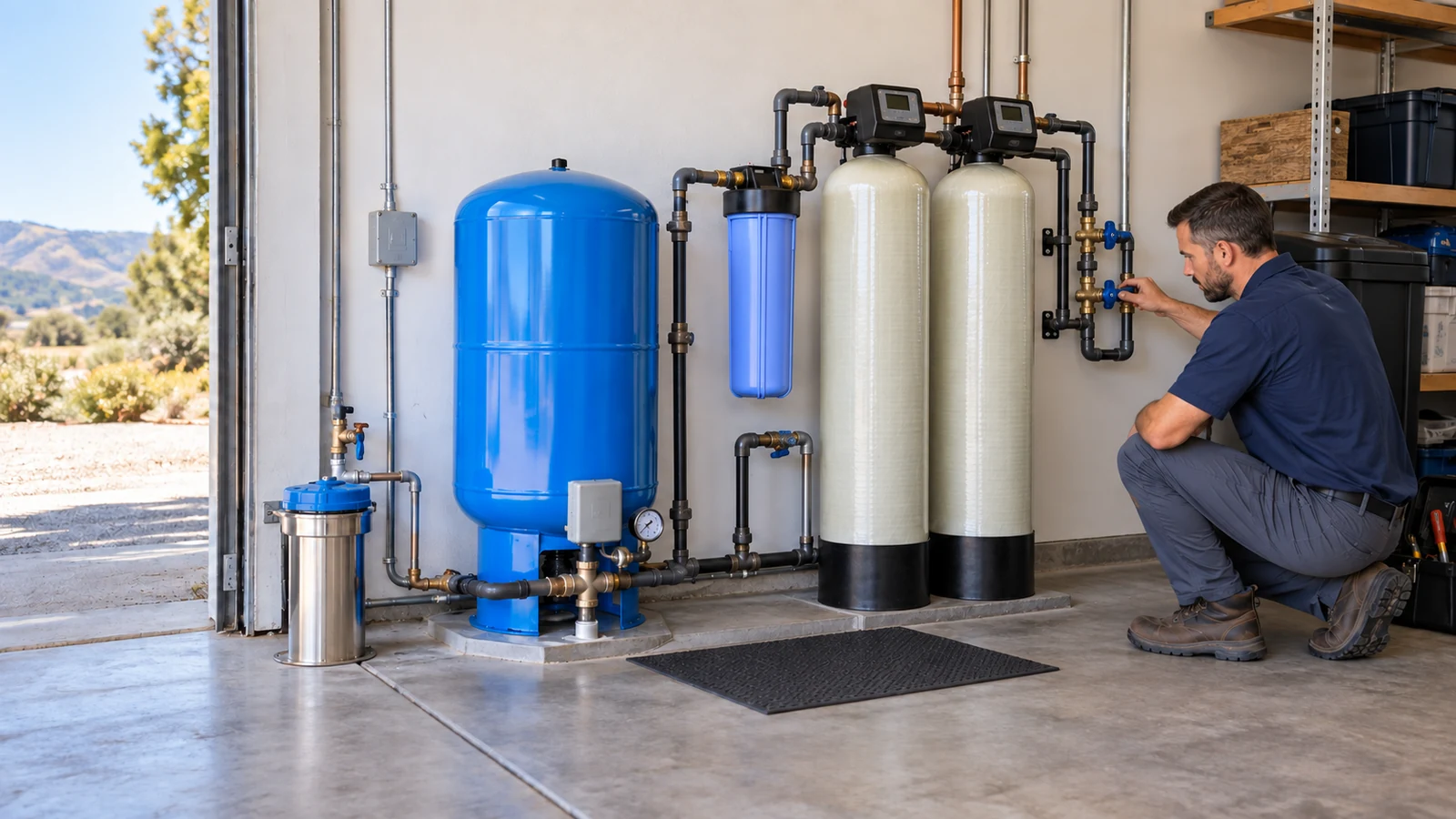
Low pressure is not automatically a failed well pump, and it is not automatically a filtration problem. Compare source-side behavior, pressure equipment, treatment pressure loss and household plumbing before deciding which trade or service should handle the next step.
Water Fixers can evaluate plumbing-side pressure, water testing and treatment planning, filtration, and existing treatment equipment within scope. The job should transfer to an appropriate well professional when it becomes drilling, casing, pump pulling or specialty well electrical work.
WHEN A WELL / PUMP SPECIALIST MAY BE NEEDED
Use the verified system boundary to choose the trade. If the failure is at the well, casing, down-well pump or specialty electrical controls, a qualified well or pump specialist may be the right next call. That handoff helps avoid buying treatment equipment for a mechanical source problem.
MORRO BAY • RELATED HELP
Use the Morro Bay water-quality guide for City water reports and broader local water context. Keep this page focused on confirmed private-well properties and the pressure, testing, treatment and maintenance decisions that follow from that source.
If the problem is in conventional household plumbing rather than the private-well source or treatment train, the broad Morro Bay plumbing page is the cleaner service path.
The broader Well Water directory organizes private-well testing, symptom, maintenance and treatment guidance when you want to explore the subject beyond this local service page.
Water Fixers is based in Santa Maria and serves Morro Bay and the surrounding San Luis Obispo area. This service-area page does not represent a separate Water Fixers storefront in Morro Bay.
PRIVATE-WELL FAQ
Start with the water bill, provider records and visible well or pressure equipment. Morro Bay’s municipal system is separate from a private domestic well, so do not infer a well from the neighborhood or from nearby groundwater use.
No. DWR basin information can explain the local groundwater setting, but it does not measure this household source. Use a current property sample when treatment depends on water chemistry.
Pressure that falls at one fixture, throughout the house, only during peak demand, or only after treatment points to different parts of the system. Locating that boundary helps separate household plumbing, treatment restriction, pressure equipment and source-side problems.
Clear water can still contain dissolved chemicals or microorganisms that cannot be identified by appearance, taste or odor. San Luis Obispo County notes that some private-well concerns can only be found through laboratory testing.
No. First identify what each treatment stage is intended to do, then check bypass position, pressure loss, controls, consumables, service history and current water conditions. Repair, maintenance or reconfiguration may be more appropriate than replacement.
CDC and EPA guidance recommends testing private-well water at least once each year for key indicators, with additional testing based on local conditions and potential contaminants. Test sooner after flooding, well repair, a meaningful change in taste, color or odor, or another event that raises a contamination concern.
MORRO BAY • PRIVATE WELL
Describe the water path as best you can—from the private source through pressure and treatment to the affected fixtures—and mention any recent laboratory results, filter changes or pressure behavior. That information helps route the next step toward plumbing, pressure evaluation, testing, treatment planning or existing-equipment service.
CALL NOW! Se Habla Español!