
PRIVATE WELL • LOCAL SERVICE
Private-well service in Paso Robles starts by confirming the property actually uses a private well, then separating source-side pressure, treatment equipment, household plumbing and water chemistry before choosing the next step.
Water Fixers Plumbing & Filtration • California License #719792 • Serving Paso Robles and the Central Coast from Santa Maria

FIRST QUESTION
Paso Robles includes both City-served properties and properties that may rely on private or shared wells. Confirm the actual source first; then locate where the pressure or water-quality concern begins and test the water when chemistry controls the decision.
PRIVATE WELL
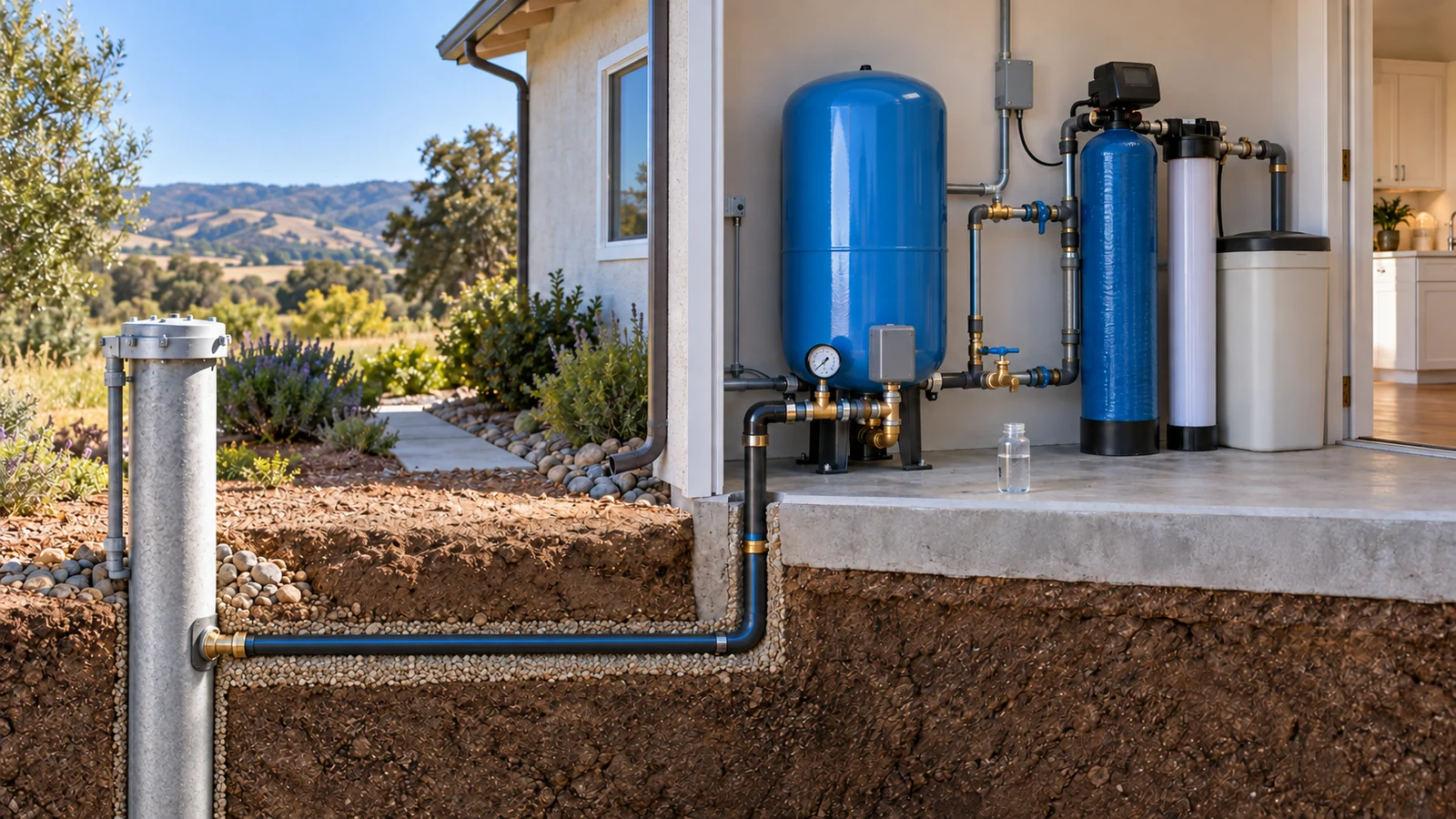
For a confirmed private well, identify the well and pressure equipment, treatment stages, bypasses and shutoffs, and the point where water enters the house. That system map helps separate a source or pressure problem from a treatment restriction or a household-plumbing issue.
PUBLIC OR COMMUNITY SUPPLY
The City of Paso Robles reports that its public system uses a combination of groundwater and surface water, including Salinas River corridor wells, Paso Robles Groundwater Basin supplies and Lake Nacimiento water. Those municipal wells are not evidence that an individual property has a customer-owned private well. For City-served properties, use the current City report and the Paso Robles water-quality guide for source context.
START WITH THE SYMPTOM
Start with where and when the change appears. A whole-house pressure drop, a problem that begins after treatment, one affected fixture, and a water-quality concern can point to different service paths. Verify that boundary before assigning the problem to the well itself or to filtration equipment.
If pressure is normal before treatment but falls after a filter or treatment vessel, restriction deserves attention. If low pressure is present before treatment, the source/pressure side becomes more important. A one-fixture problem may instead belong to household plumbing.
Staining, odor, sediment and scale can have different causes. Use the symptom as a clue, then test or inspect the part of the system that can actually answer the question before selecting treatment.
If you already have a laboratory result, use it to define one treatment objective and then confirm that pressure, flow and existing plumbing can support the plan. A lab result is useful evidence, but it does not replace inspection of the installed system.
Identify what each installed stage is supposed to do, then check whether it is still doing that job. A softener, sediment filter, carbon stage, neutralizer, UV unit or other component should be evaluated against its intended purpose rather than blamed for every water symptom.
PASO ROBLES • LOCAL WATER-SOURCE CONTEXT
San Luis Obispo County notes that properties outside water-purveyor boundaries may require a private groundwater well, while the City of Paso Robles operates its own public water system. The County also maps and manages the Paso Robles Groundwater Basin. Confirm the property source before applying municipal-system or private-well guidance.
For a confirmed private well, basin information and nearby groundwater data can provide context, but they do not measure the water at that property. County private-well guidance notes that some concerns can only be identified through laboratory testing, so use a property-specific sample when chemistry or drinking-water safety controls the decision.
HOW WATER FIXERS APPROACHES IT
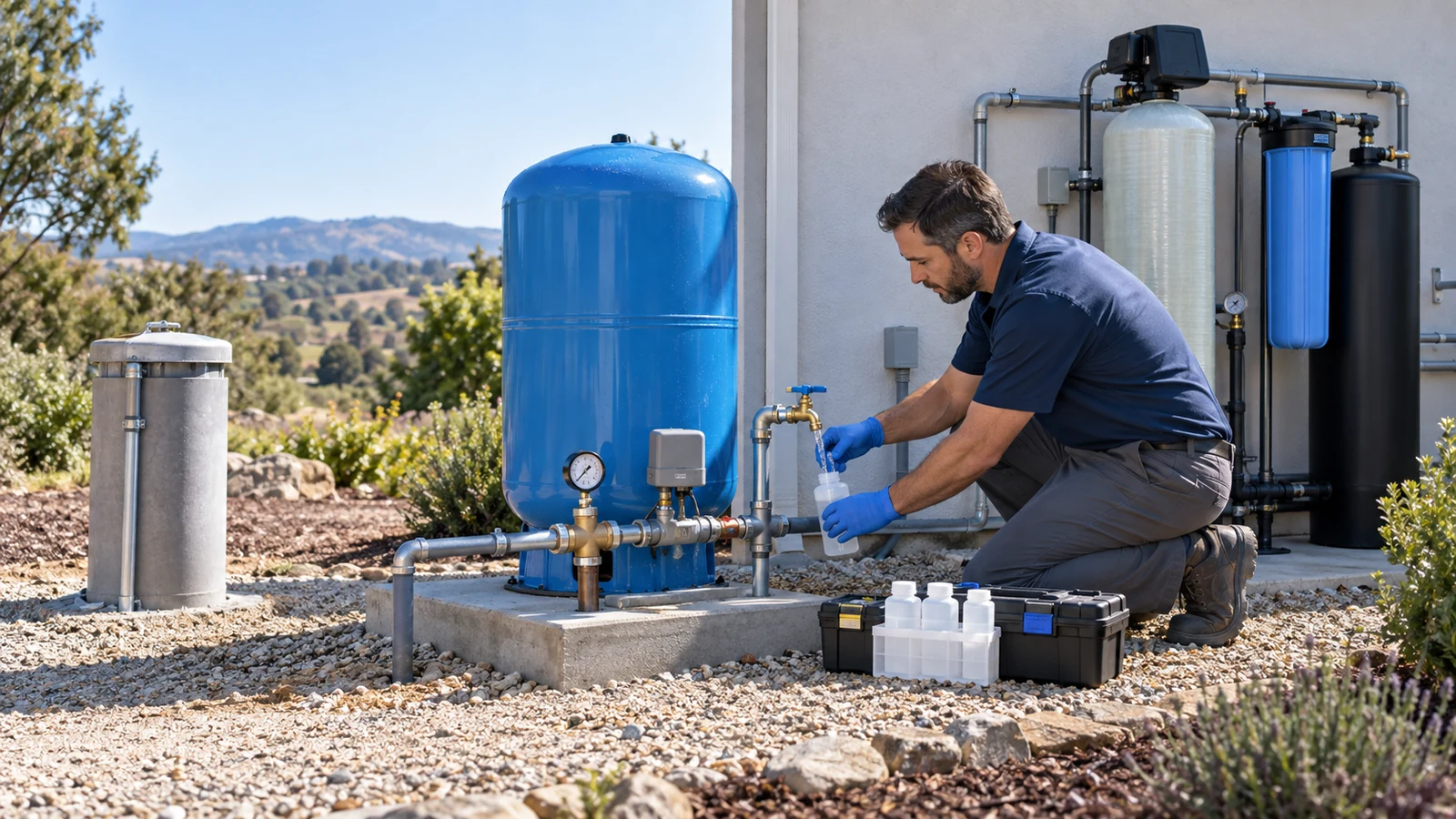
Confirm the source, reproduce the symptom, check pressure before and after treatment, identify the installed equipment, and sample the water when chemistry controls the decision. That sequence avoids replacing equipment before the actual problem is defined.
TEST → MATCH → VERIFY
Choose equipment only after the goal is clear. Whole-home treatment, drinking-water treatment, pressure correction and plumbing repair solve different problems, and adding more equipment is not automatically a better solution.
When hardness, pH, nitrate, bacteria, metals or another specific constituent controls the decision, use the testing method appropriate to that question. Field checks can support troubleshooting, but some analytes require proper sample collection and laboratory testing.
Turn the measured issue into one practical target, then check flow, pressure, household demand, installation constraints and verification needs before sizing or programming equipment.
Compare treatment technologies by the job they perform: particle removal, hardness reduction, adsorption, oxidation, disinfection, neutralization or another verified need. A row of tanks is not a diagnosis, and one technology does not solve every private-well problem.
If the goal is mainly drinking, cooking, coffee or ice, evaluate a point-of-use reverse-osmosis path after defining the actual drinking-water concern. Do not treat point-of-use RO as a substitute for whole-house hardness, pressure or plumbing service.
ALREADY HAVE EQUIPMENT?
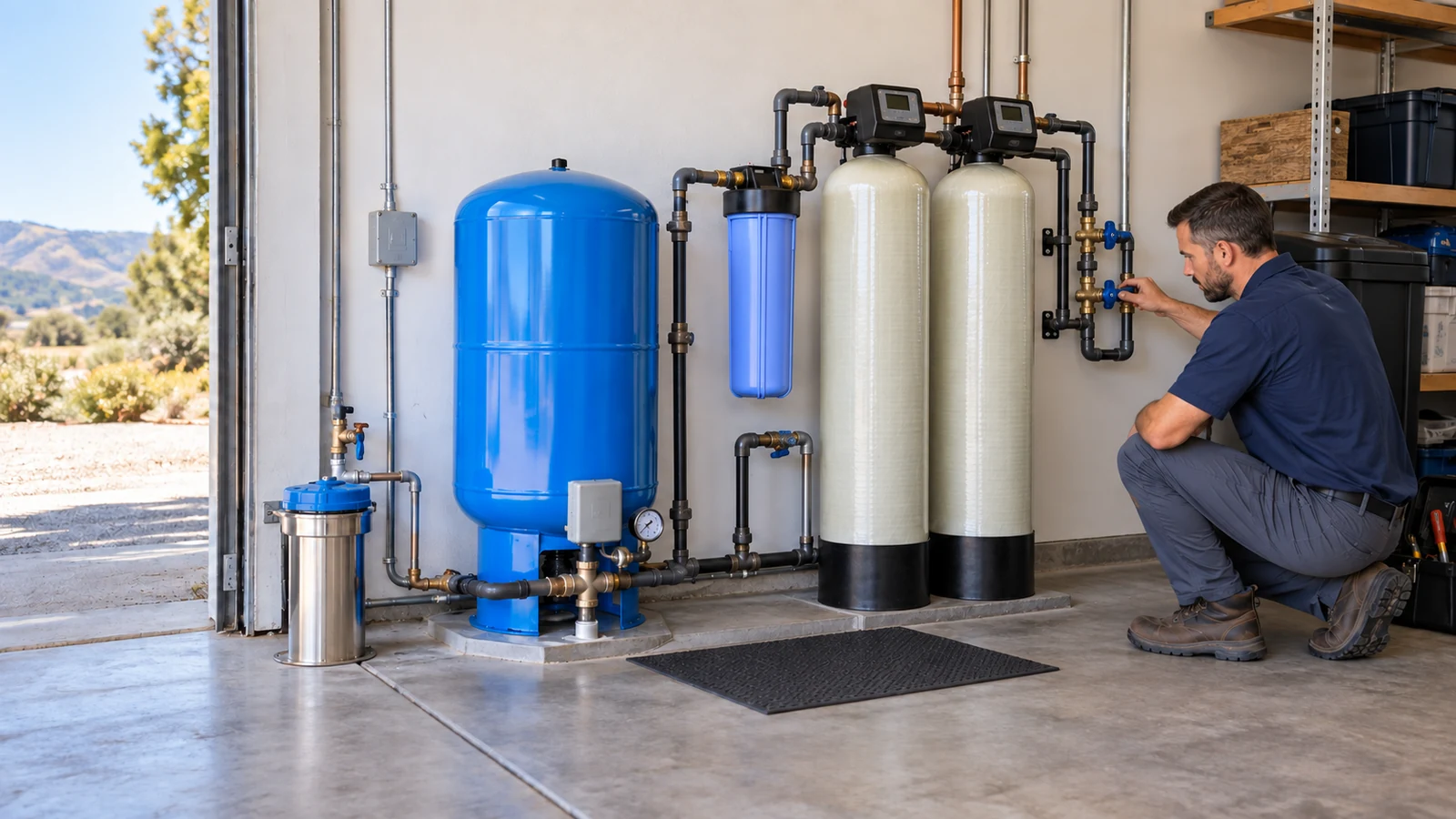
Identify what each existing treatment stage is intended to do, then check pressure loss, bypass position, controls, consumables and service history. Repair or maintenance should be tied to the installed equipment and its measured performance.
Maintenance intervals depend on the equipment, source water, loading and manufacturer requirements. Use current condition and performance rather than age alone to decide whether a filter, media bed or other stage needs service.
WATER FIXERS SCOPE
Water Fixers can evaluate plumbing-side pressure, treatment restrictions, valves, water testing needs and existing water-treatment equipment. The source-side boundary matters because not every low-pressure problem is caused by a filter or regulator.
Well drilling, new well construction, casing work, pump pulling and specialty pump electrical diagnosis belong with the appropriate licensed well or pump specialist. The service path should follow the verified system boundary rather than forcing a filtration answer onto source construction work.
WHEN A WELL / PUMP SPECIALIST MAY BE NEEDED
When the problem is in the well bore, casing, submersible pump or dedicated pump electrical system, a well or pump specialist is the better next trade. Water Fixers can still help separate those source-side issues from downstream plumbing and treatment concerns.
PASO ROBLES • RELATED HELP
If the property is on public water rather than a private well, use the Paso Robles water-quality guide for City source and report context before choosing treatment.
Leaks, drains, water heaters, shutoffs, fixtures and other mechanical plumbing problems belong on the Paso Robles plumbing path when the water source itself is not the issue.
Use the main well-water directory for testing guidance, treatment topics, maintenance information and concern-specific education after the immediate local service question is framed.
Water Fixers serves Paso Robles from our Santa Maria team.
PRIVATE-WELL FAQ
Check the water bill or service account, property records, and visible well or pressure equipment. The City of Paso Robles operates a public water system, and San Luis Obispo County provides water-system maps plus private-well resources. Do not assume a private well from the city name, parcel appearance or neighborhood alone.
No. Basin maps, management reports and nearby groundwater data can provide context, but they do not measure the water at this property. Use a current property sample when the treatment decision depends on water chemistry.
Note whether pressure is low at one fixture or throughout the house, whether the change appears under heavier demand, and whether pressure drops before or after filters and treatment equipment. Those observations help separate plumbing, treatment restriction and source-side paths.
No. San Luis Obispo County notes that some private-well contaminants can only be identified through laboratory testing. Appearance can provide clues, but it cannot rule out dissolved or microbiological concerns.
Yes, when the work is within Water Fixers’ plumbing and water-treatment scope. Start by identifying each stage, its intended job, pressure loss, bypass position, controls, consumables and service history. Well drilling, casing, pump pulling and specialty pump electrical work require the appropriate specialist.
PASO ROBLES • PRIVATE WELL
A useful service request includes the confirmed water source, what changed at the fixtures, whether pressure is steady, and which filters or treatment tanks are already installed. That helps determine whether the next step is plumbing, pressure evaluation, water testing, treatment planning, equipment service or a well-specialist handoff.
CALL NOW! Se Habla Español!