
PRIVATE WELL • LOCAL SERVICE
Private-well help in Santa Maria starts by confirming the water source, identifying the symptom and testing the individual well when water chemistry matters—not by guessing from a stain, odor or filter name.
38+ years serving the Central Coast • Plumbing + filtration • California License #719792 • Based in Santa Maria
FIRST QUESTION
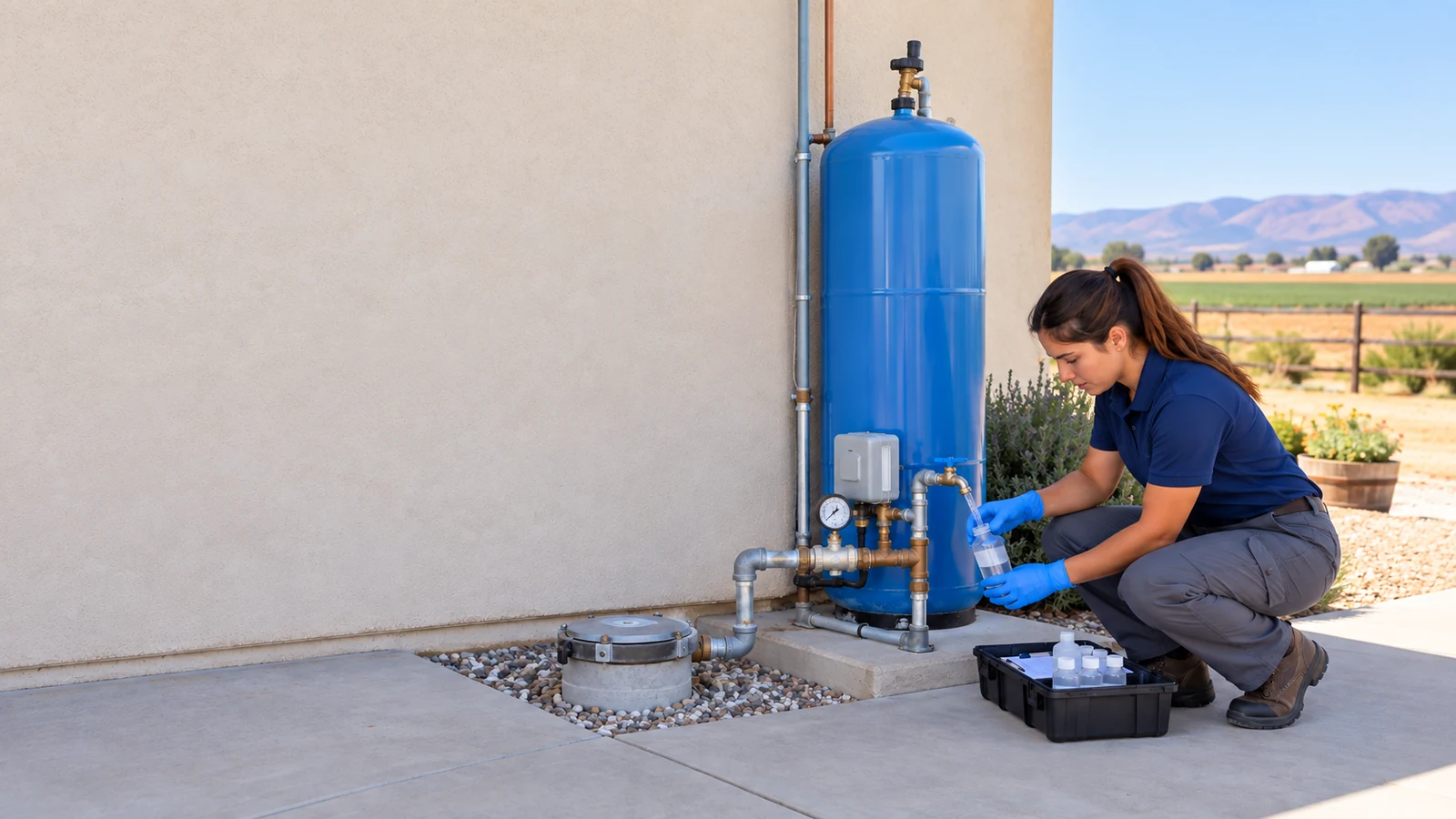
If a Santa Maria property uses a private well, start by confirming the source and documenting what is changing. Pressure behavior, existing treatment and a current water sample answer different parts of the problem, so the order matters.
PRIVATE WELL
Confirm that the property actually uses a private or shared well before applying private-well guidance. Utility billing, source records and visible well/pressure equipment can help establish the source. A municipal water report is not a substitute for a sample from a private well.
PUBLIC OR COMMUNITY SUPPLY
If the property receives utility-delivered water, use the reporting for that public system instead of borrowing a nearby private-well result. Public-water reporting and private-well testing answer different questions.
START WITH THE SYMPTOM
Start with what changes under real household demand, then locate where the symptom begins. A one-fixture problem, a whole-property pressure change, a treatment-system restriction and a source-side well issue do not follow the same service path.
If the whole property loses pressure or flow, separate treatment restriction from pressure-tank, pump-control, plumbing or source questions before changing filtration equipment.
Staining, odor, sediment or scale can help choose what to investigate, but none of those symptoms identifies a constituent or concentration by itself. Regional records can provide context; the individual well result controls the treatment decision.
If you already have laboratory results, connect the measured condition to the homeowner goal and the installed system. Pressure, flow, pH, treatment history and serviceable equipment still matter before equipment is sized or replaced.
Existing softeners, sediment filters, carbon systems and other equipment should be evaluated as installed. Pressure drop, bypass position, media condition and service history can change the symptom.
SANTA MARIA • LOCAL WATER-SOURCE CONTEXT
California DWR identifies the Santa Maria River Valley Groundwater Basin as Basin 3-012 and currently lists the Santa Maria Valley Management Area within that basin. That is useful regional context, but it does not describe the chemistry, construction, depth or pressure behavior of an individual private well.
Local takeaway: confirm the actual water source first. Use regional groundwater information to frame questions, then use the property’s own pressure behavior, equipment condition and water test to make the service decision.
HOW WATER FIXERS APPROACHES IT
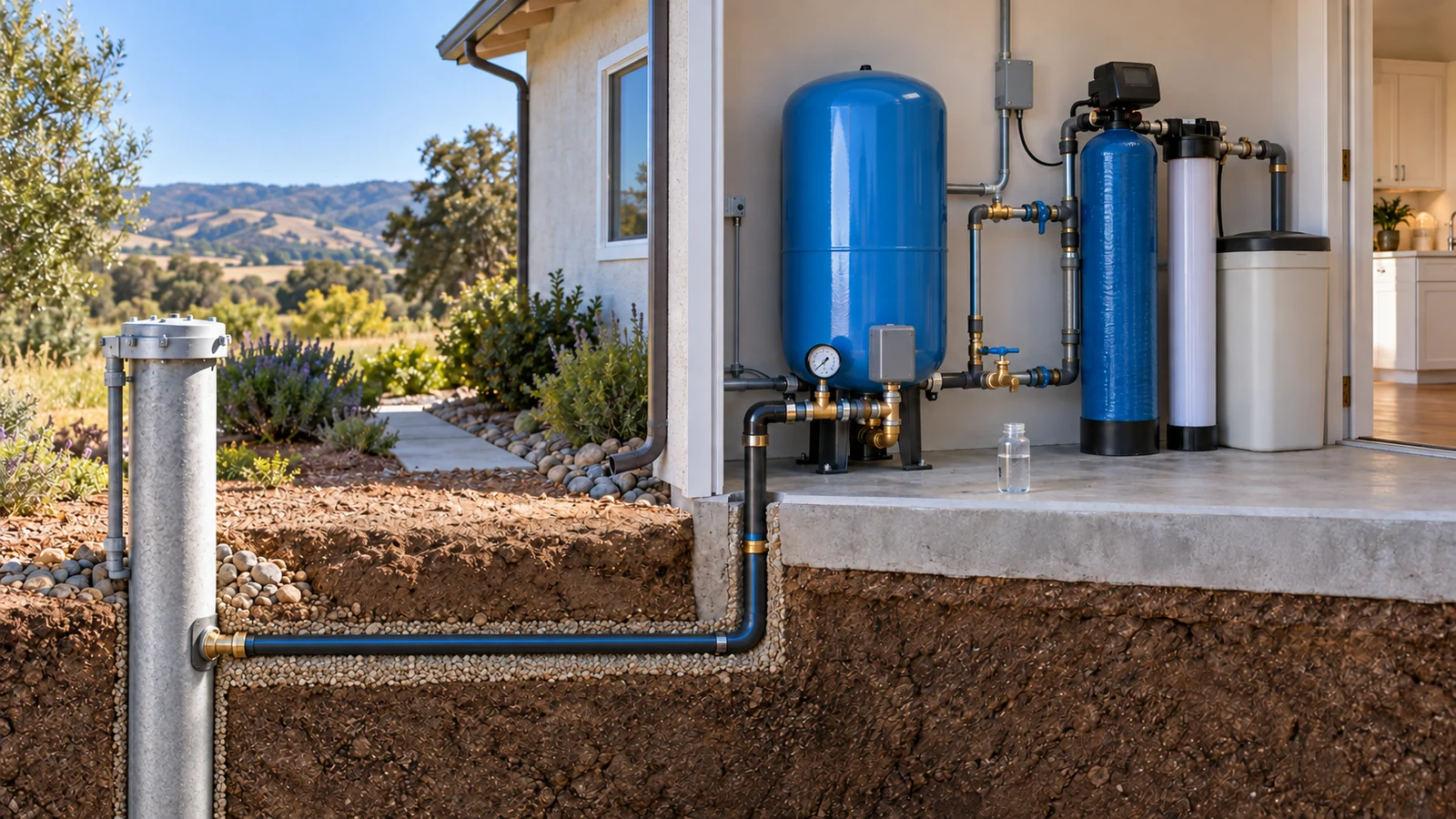
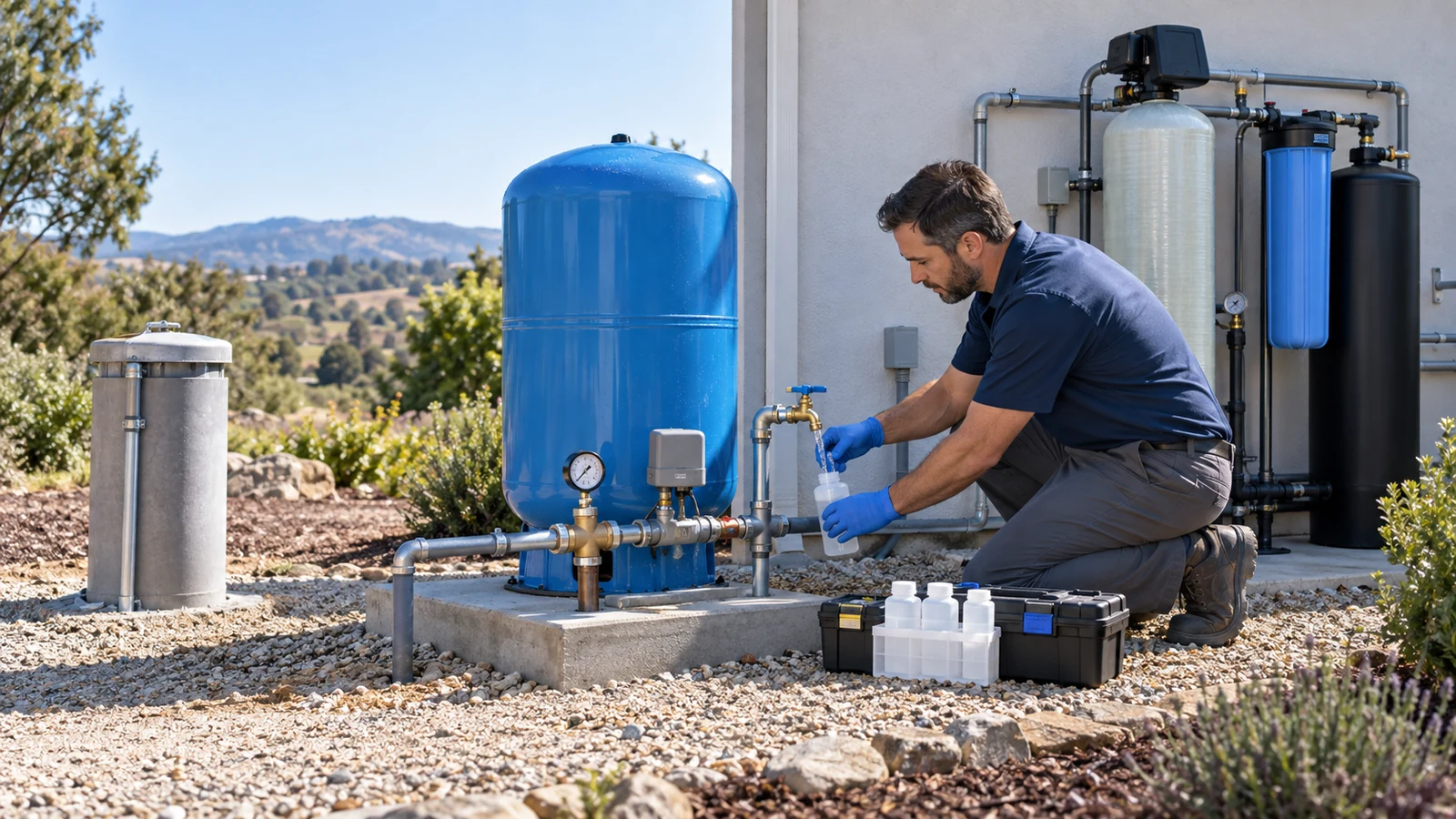
A useful visit narrows the problem in order: confirm the source, document where the symptom appears, check pressure and existing equipment, and use an appropriate current sample when water chemistry controls the decision. The goal is to solve the measured problem rather than drop every private well into the same treatment package.
TEST → MATCH → VERIFY
Choose equipment only after the treatment job is defined. The measured condition and intended use determine whether the solution belongs at the point of entry, at one drinking-water faucet, in existing-equipment service or in a different trade altogether.
When chemistry or drinking-water safety controls the decision, use an appropriate property-specific sample. Testing turns a symptom into evidence and prevents a treatment recommendation based only on appearance, taste or neighborhood history.
Use the measured result to define one practical treatment target. Then account for peak flow, pressure, pH, household demand, installation constraints and verification needs before equipment is selected or sized.
Compare technologies by the job they perform: particle removal, hardness reduction, oxidation, carbon adsorption, disinfection, neutralization or another verified need. The number of tanks or stages is not a treatment strategy.
If the main goal is drinking and cooking water at one faucet, evaluate the Santa Maria reverse-osmosis path as a point-of-use option. RO is a different job from whole-house softening or filtration.
ALREADY HAVE EQUIPMENT?
Existing softeners, sediment filters, carbon systems and other equipment should be evaluated as installed. Pressure drop, bypass position, media condition and service history can change the symptom.
Review the installed treatment train stage by stage so service is directed at the component that has actually changed. Keep equipment that is performing its intended job; do not replace a whole system simply because one filter, valve, setting or maintenance item needs attention.
WATER FIXERS SCOPE
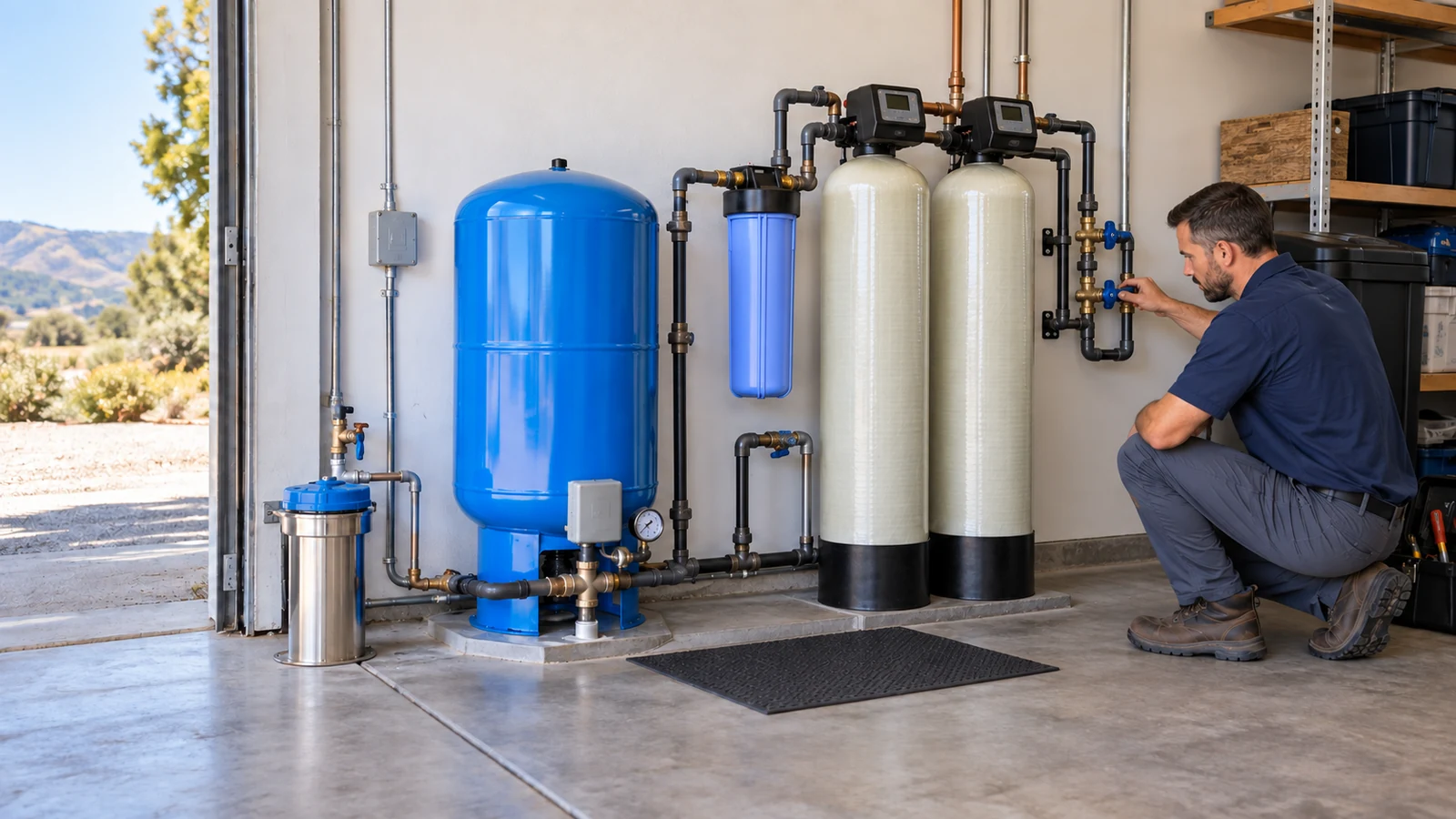
If the whole property loses pressure or flow, separate treatment restriction from pressure-tank, pump-control, plumbing and source-side questions before changing filtration equipment.
Water Fixers can help with plumbing-side pressure diagnosis, water testing and treatment planning, filtration, and service of accessible treatment equipment. Source-side drilling, well construction, pump pulling and specialty pump electrical work may require the appropriate well or pump specialist.
WHEN A WELL / PUMP SPECIALIST MAY BE NEEDED
Use the verified system boundary to choose the right trade. Well construction, casing work, pump pulling and specialized source-side electrical work should stay separate from house-side plumbing and water-treatment service.
SANTA MARIA • RELATED HELP
Use the Santa Maria Valley well-water guide for deeper regional groundwater context, private-well testing principles and source-protection education. This local page stays focused on service at the individual property.
If the problem is an ordinary leak, drain, fixture, water heater, valve or other house-side plumbing issue, use the Santa Maria plumber page rather than forcing it into a well-water diagnosis.
If the property uses public water, use the Santa Maria water-quality guide for City supply, current utility reporting and treatment-category context. Public-system reporting should stay separate from private-well diagnosis.
Water Fixers is based in Santa Maria and serves private-well customers across the Central Coast. This service page does not create or imply a separate storefront.
PRIVATE-WELL FAQ
SANTA MARIA • PRIVATE WELL
Before the visit, gather any well or treatment records you have and note when the symptom appears. That context helps separate plumbing, pressure, maintenance and chemistry questions so the next step can be testing, treatment planning, existing-equipment service or another specialist when appropriate.
CALL NOW! Se Habla Español!