PRIVATE WELL • LOCAL SERVICE
If a Templeton property actually uses a private or shared well, Water Fixers can help separate source, pressure, water-quality and treatment-equipment questions before equipment is changed. Start by confirming the water source, then follow the symptom to the right service path.
38+ years serving the Central Coast • Plumbing + filtration • California License #719792
FIRST QUESTION
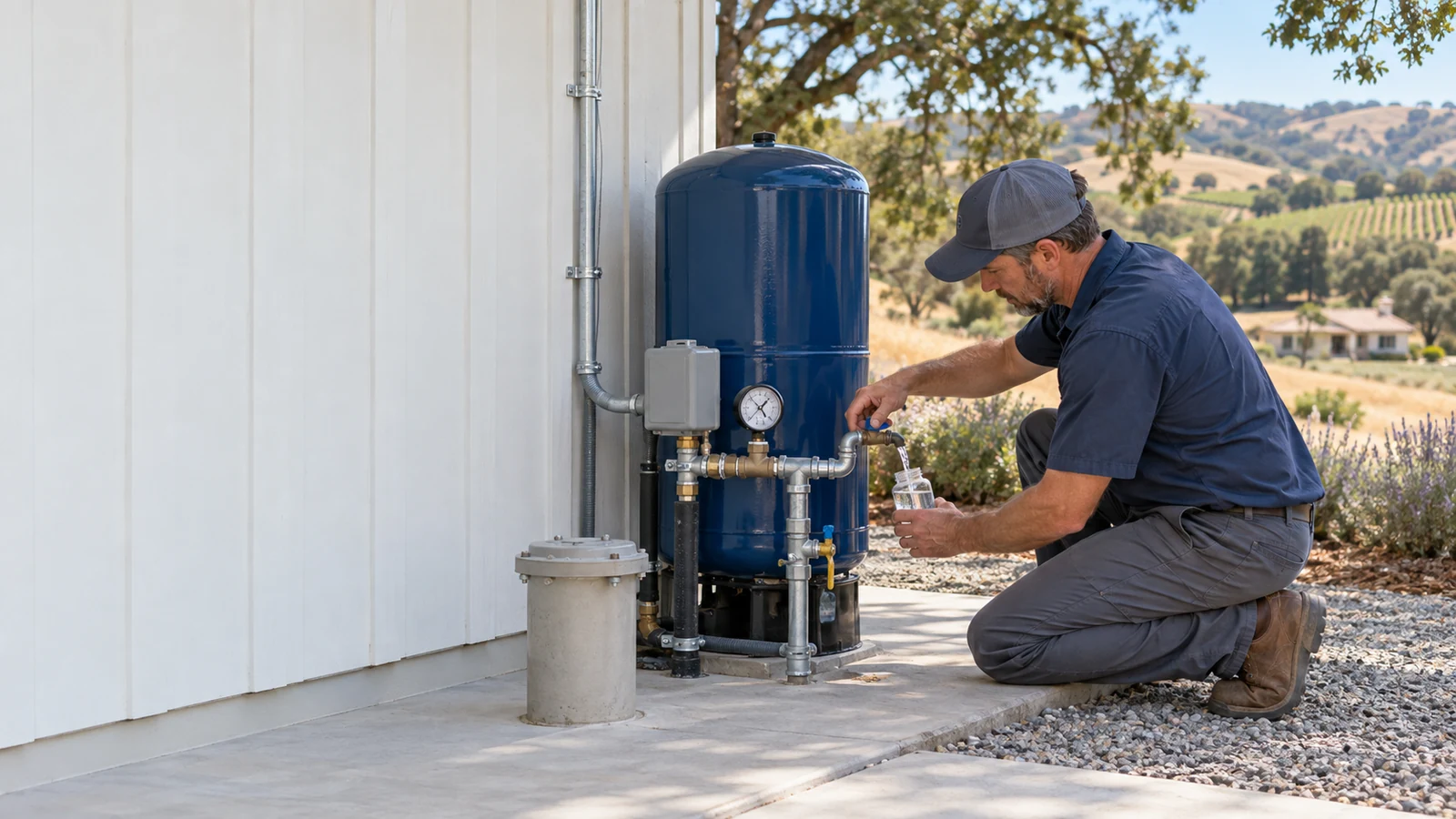
Templeton Community Services District operates a public well-based water system, so a Templeton address should never be labeled private-well supplied from geography alone. Confirm the provider or source at the property first. If it is a private or shared well, then document the pressure behavior, symptoms and installed treatment before selecting a repair or treatment path.
PRIVATE WELL
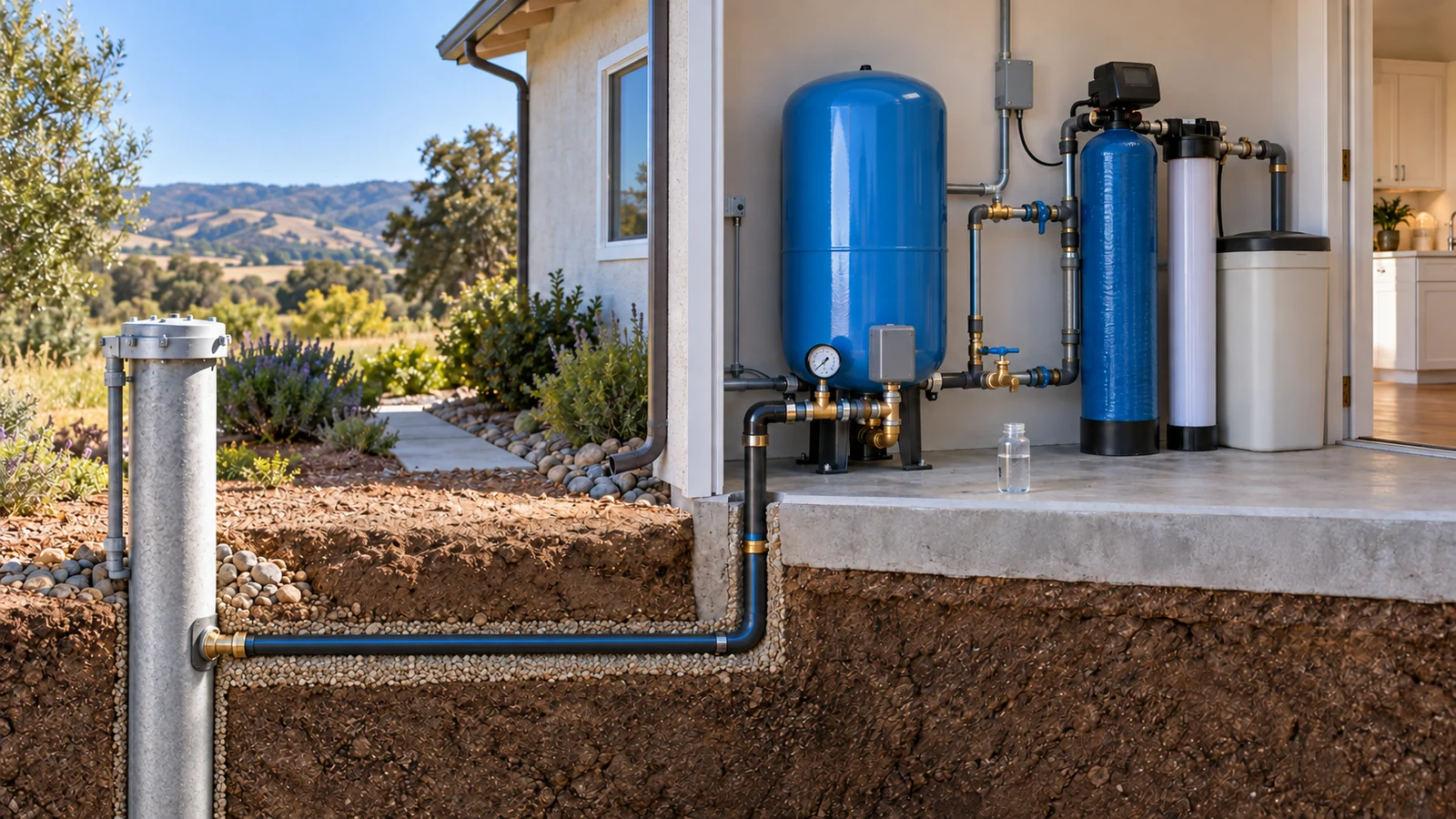
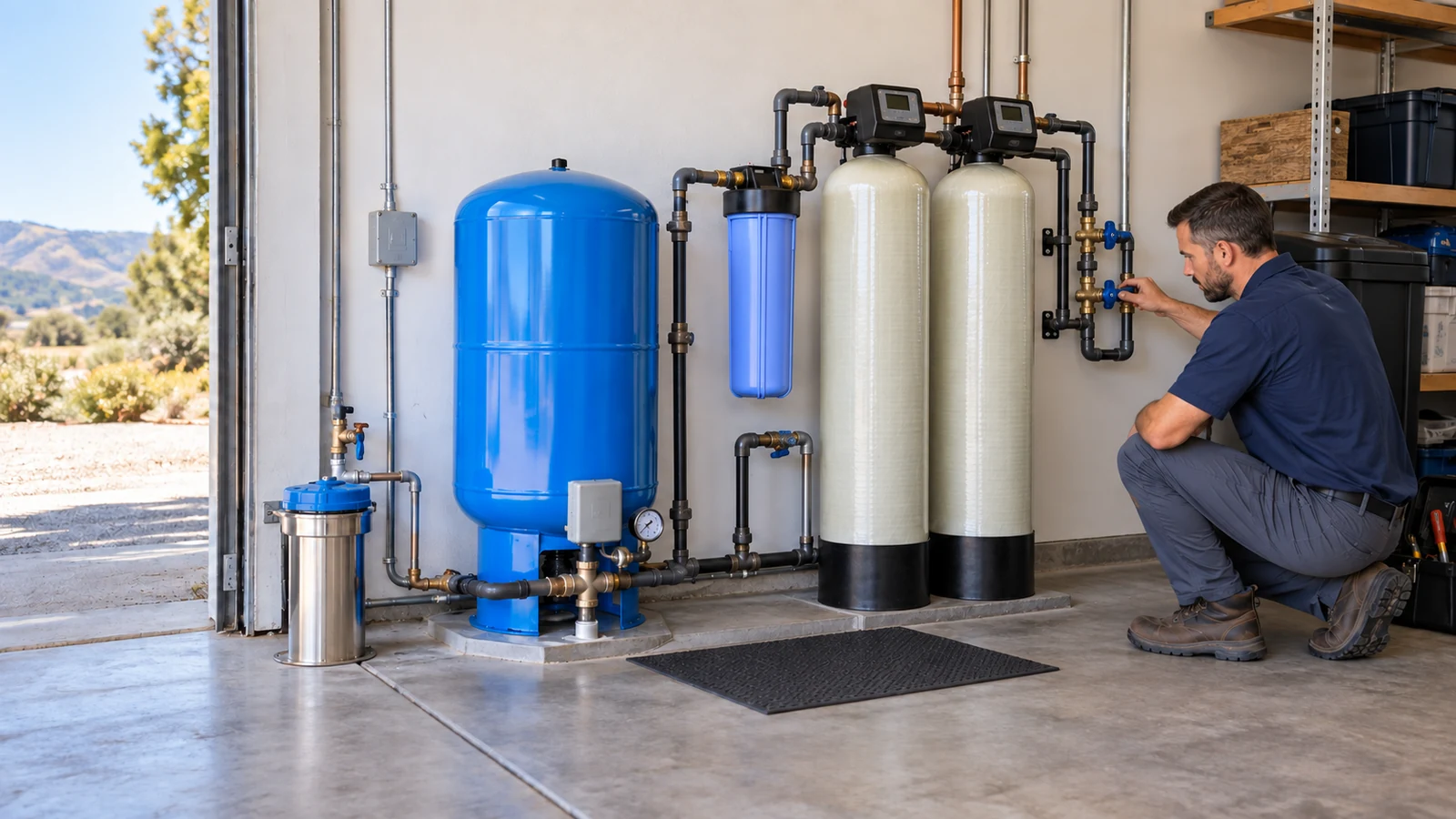
Trace the water path from the source and pressure equipment through any filters, softener or other treatment before it reaches the house. Note whether the concern affects every fixture, only certain uses, or only water after treatment. That boundary helps separate plumbing, pressure and water-quality questions.
PUBLIC OR COMMUNITY SUPPLY
Use current Templeton CSD reporting as public-system context and use the local Templeton testing and treatment pages for property-specific decisions. A District report does not measure a private well, and a private-well sample should not be applied to a District-served home.
START WITH THE SYMPTOM
For a confirmed private-well property, keep delivery, water chemistry and treatment-equipment condition as separate questions until evidence connects them. The symptom should determine the next check; the word “well” by itself should not determine the repair or equipment.
Low pressure can come from several places in the water path. Compare pressure before and after treatment, note whether the problem is whole-house or fixture-specific, and avoid assuming the well pump failed before the restriction or pressure boundary is identified.
Staining, odor, sediment and scale are clues, not diagnoses. Testing and inspection can separate hardness, particles, treatment maintenance and other possible causes before a softener, filter or drinking-water system is selected.
If laboratory results already exist for the property, use the actual analyte and concentration as part of the treatment decision. Then check flow, pressure, pH where relevant, household demand and service access before equipment is sized or changed.
When existing treatment is no longer performing, identify what each stage is designed to do and check maintenance history, cartridges or media, bypass position, controls and pressure drop before assuming the full system needs replacement.
TEMPLETON • WATER-SOURCE CONTEXT
Templeton Community Services District’s 2025 Consumer Confidence Report identifies drinking-water sources as underground aquifers associated with the Atascadero Basin and Salinas River underflow. The District also operates a public distribution system. Those facts help distinguish community water from a private source, but they do not tell you what is in an individual private well today.
Practical takeaway: first confirm whether the property is served by Templeton CSD or by a private/shared well. For a confirmed private well, use that property’s pressure behavior, testing evidence and installed equipment—not District system data—as the basis for service and treatment decisions.
HOW WATER FIXERS APPROACHES IT
Start with the source and the homeowner’s actual complaint. Check pressure and existing treatment, then test when chemistry or drinking-water safety affects the decision. Treatment should follow the measured problem and the plumbing conditions the equipment must work within.
TEST → MATCH → VERIFY
Whole-house treatment, hardness control and drinking-water treatment solve different problems. Define the goal first, confirm the source, and test when needed. Then account for flow, pressure, plumbing access and maintenance before selecting equipment.
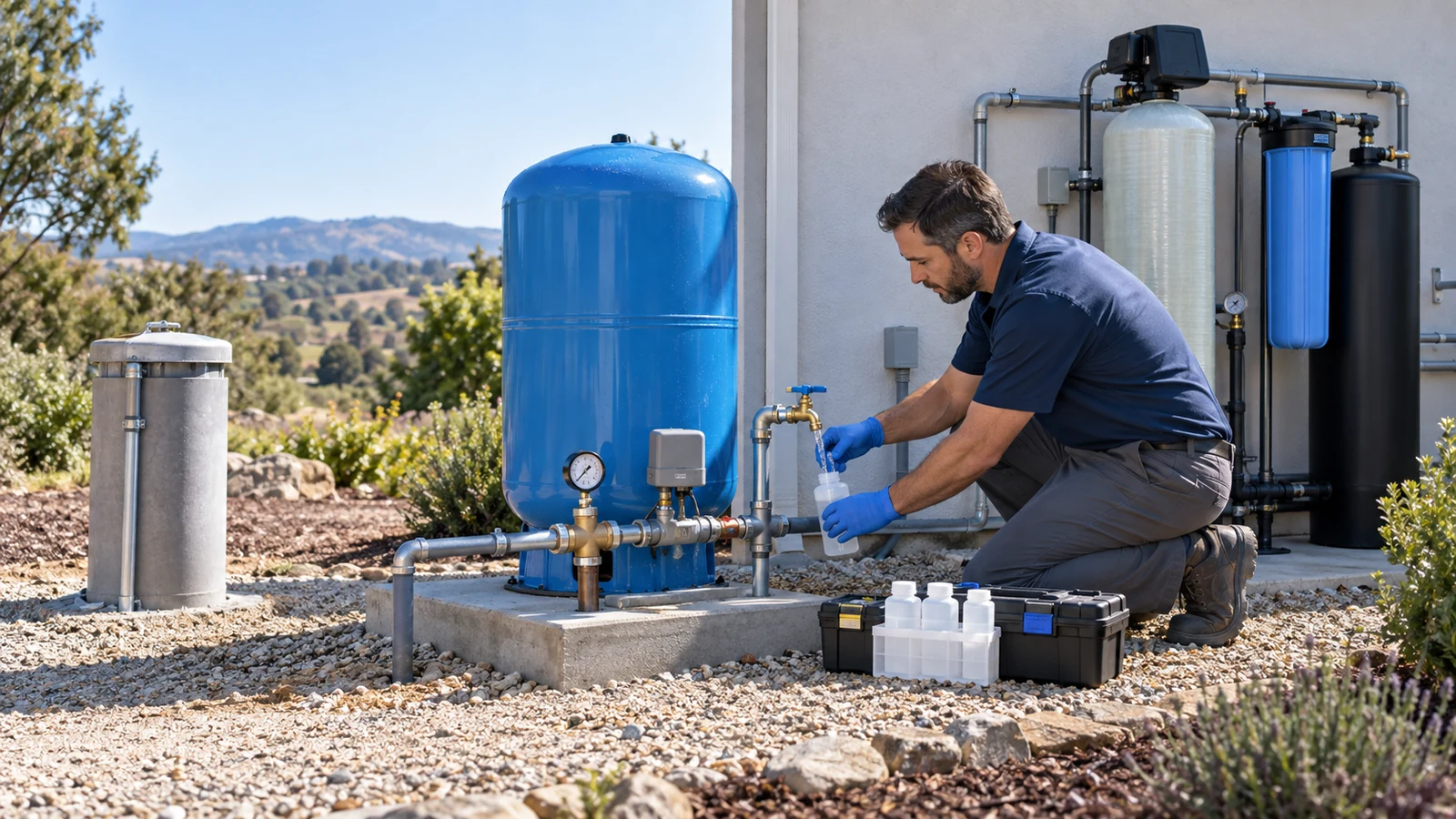
Use the local Templeton testing page when hardness, taste, odor, sediment or another concern needs to be measured before treatment. Private-well safety questions that require laboratory analysis should use the appropriate lab method rather than a field test alone.
Turn the confirmed issue into a treatment target, then check flow, pressure, household demand and installation constraints. A useful treatment plan explains what the system is intended to improve and how performance will be verified.
Compare filtration technologies by the job they perform: particle removal, hardness treatment, carbon adsorption, oxidation, disinfection, neutralization or another verified need. Equipment count alone does not define a treatment strategy.
If the main goal is drinking, cooking, coffee or ice, a point-of-use reverse-osmosis system may be more targeted than treating every gallon in the house. For a confirmed private well, pretreatment and feed-water conditions still matter.
ALREADY HAVE EQUIPMENT?
Identify each filter, softener or treatment tank by function before changing it. The right service step depends on what the stage is intended to do, how it is maintained, and whether pressure or water-quality symptoms changed before or after that stage.
Check bypass position, pressure drop, controls, cartridges or media and maintenance history before assuming older equipment needs complete replacement. Serviceable equipment should be evaluated by present condition and performance rather than age alone.
WATER FIXERS SCOPE
Water Fixers can evaluate plumbing-side pressure behavior, valves, treatment equipment and the water path into the home. If pressure is changing, isolate whether the restriction appears in household plumbing, after treatment or on the source side before choosing the next trade.
Well drilling, casing repair, pump pulling and specialty pump electrical work are different scopes. When the verified problem is source-side well construction or specialty pump work, the homeowner should use the appropriately licensed well or pump professional.
WHEN A WELL / PUMP SPECIALIST MAY BE NEEDED
The goal is a clean handoff based on the verified system boundary. If the problem is in the well, casing, source-side pump or specialty electrical equipment, that work should not be disguised as ordinary household plumbing service.
TEMPLETON • RELATED HELP
Use the Templeton water-quality guide for current Templeton CSD source/report context and for understanding how public-system information differs from property-specific testing.
If the concern is conventional household plumbing rather than the well source or treatment equipment, use the broad Templeton plumbing page.
The main well-water directory connects testing, treatment, filtration, low-pressure guidance, maintenance and drinking-water RO. If the property is on community water, use Templeton reverse osmosis or the Templeton filtration and treatment page when those are the better match.
Water Fixers serves Templeton from its Santa Maria location. Templeton is a service area, not a separate Water Fixers office. For broader regional navigation, use the North County plumbing and water-treatment page.
PRIVATE-WELL FAQ
Start with billing, provider records, property information and visible source/pressure equipment. Templeton CSD operates a public water system, so the town name or surrounding landscape is not enough to label a property private-well supplied.
No. The District report describes its public system and monitoring. It does not measure a private well. When a private-well treatment or drinking-water decision depends on chemistry, use a sample from that property and the appropriate laboratory method.
Not automatically. Low or changing pressure can involve household plumbing, a restricted treatment stage, pressure equipment or a source-side problem. Comparing where the pressure changes occur helps determine whether plumbing service or a well/pump specialist is the better next step.
Test for the question you are trying to answer. Hardness, staining, odor, sediment and drinking-water safety concerns may require different measurements. Bacteria, nitrate, arsenic and similar safety questions require appropriate laboratory testing rather than appearance or a basic field strip alone.
Usually it is worth identifying what the existing equipment does and checking maintenance history, bypass position, pressure drop, cartridges, media and controls first. A maintenance or configuration problem can look like a need for new equipment.
This page focuses on plumbing-side pressure evaluation, testing and treatment planning, filtration and existing treatment equipment. Well drilling, casing work, pump pulling and specialty pump electrical work should be handled by the appropriately licensed well or pump professional.
TEMPLETON • PRIVATE WELL
A useful service request includes how the property gets its water, what changed at the fixtures, whether pressure is steady, and which filters, softener or treatment tanks are already in the water path. That information helps route the problem to plumbing, pressure evaluation, testing, treatment planning or existing-equipment service.
CALL NOW! Se Habla Español!