
LOS ALAMOS • PRIVATE-WELL SERVICE
If a Los Alamos-area property is supplied by a confirmed private well, start with the source and the actual symptom before choosing equipment. Water Fixers can help separate plumbing-side pressure problems, water-quality questions, existing treatment performance and the need for property-specific testing.
38+ years serving the Central Coast • CA License #719792 • Water Fixers service for Los Alamos and the Santa Ynez Valley
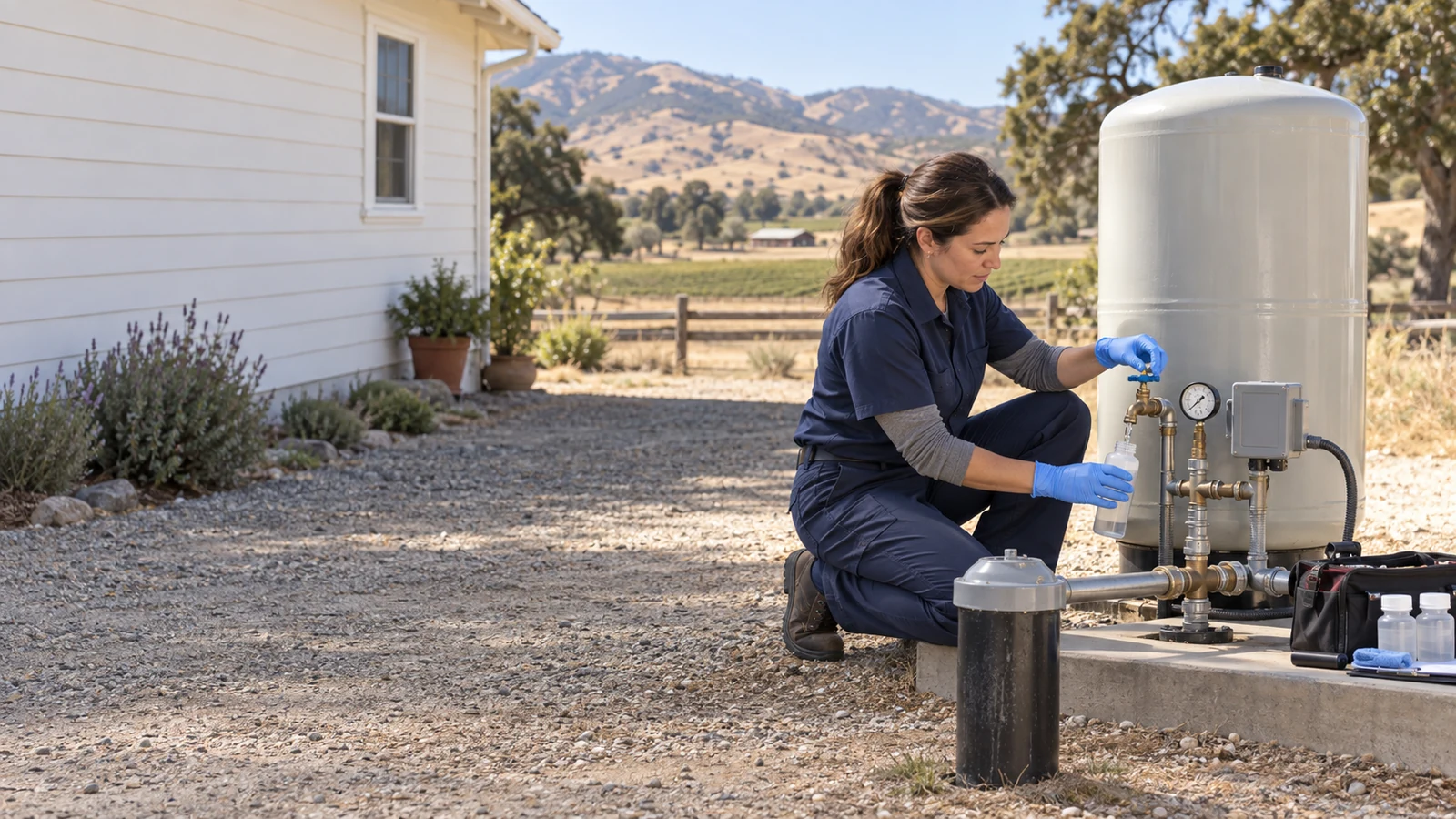
FIRST QUESTION
Los Alamos has an active community water system, so a Los Alamos address should not be treated as a private-well property by default. Before applying private-well guidance, confirm what actually supplies the home. A utility bill, meter information, property records and visible well or pressure equipment can help establish the starting point.
PRIVATE WELL CONFIRMED
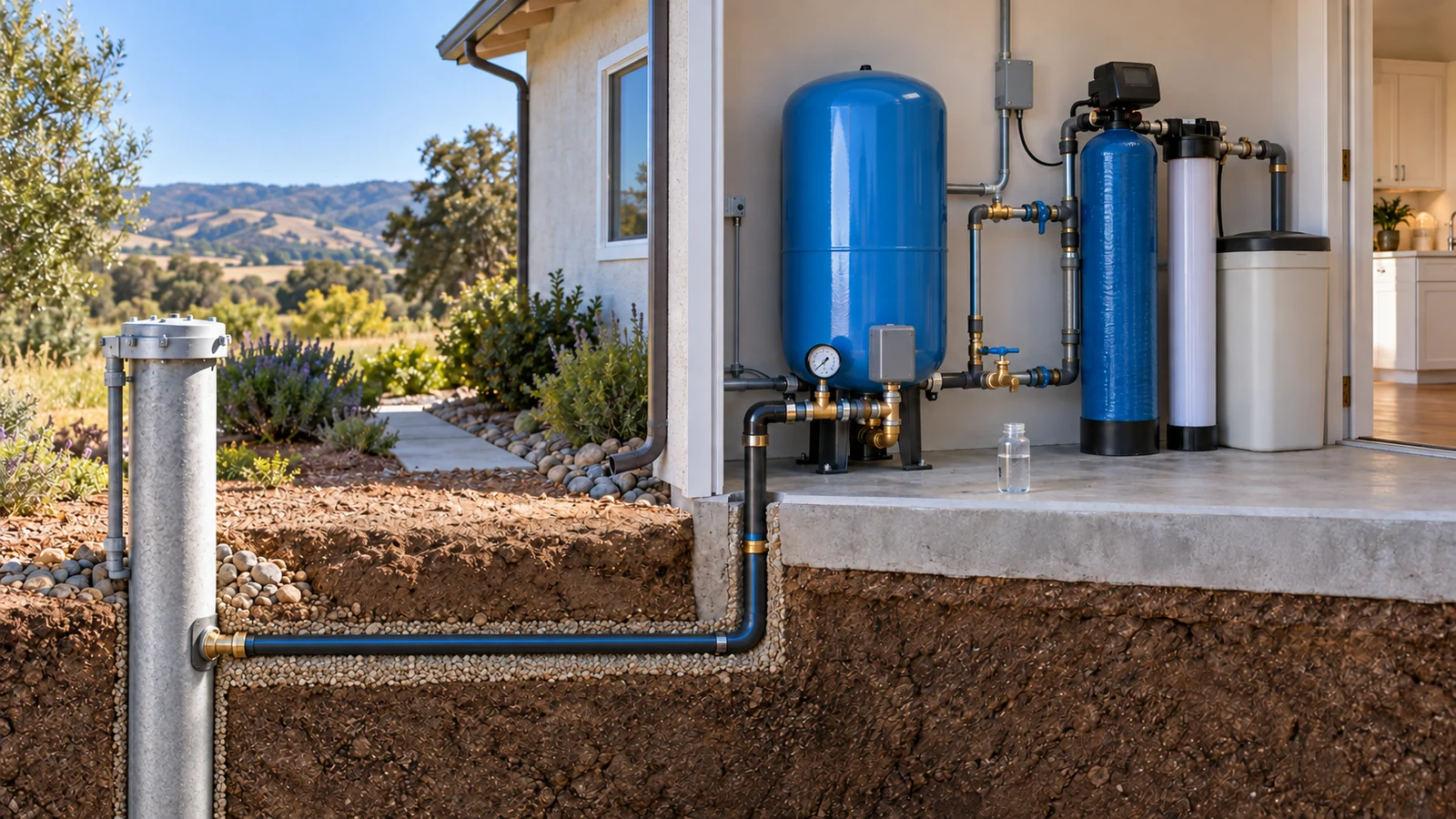
When a private well is confirmed, evaluate the system from source to house: pressure behavior, storage and accessible pressure equipment, untreated water, installed treatment and the plumbing downstream. Testing should answer the property’s actual question rather than assume a condition from the neighborhood.
PUBLIC OR COMMUNITY WATER
California Drinking Water Watch lists Los Alamos Community Services District as an active public system with groundwater as its primary source and Wells 3A, 4, 5 and 6 active. If the property is on District water, use public-system information and property-specific testing as appropriate. Use this private-well path only when the property source is actually a private or shared well.
START WITH THE SYMPTOM
Once a private well is confirmed, use the way the problem appears to decide what to inspect next. Pressure, water chemistry, plumbing restrictions and treatment equipment can overlap, so the symptom should narrow the investigation rather than trigger a one-size-fits-all system recommendation.
Low pressure at one fixture can be a local plumbing issue. Low or cycling pressure throughout the home can point to a broader pressure-system, restriction or source-side question. Compare where the pressure change begins before replacing treatment equipment.
Odor, staining, sediment, scale or a change in taste can help define what to test, but appearance alone does not identify a constituent or concentration. Use a property-specific sample when the treatment decision depends on water chemistry.
If a recent laboratory report already exists, use the measured result to narrow the treatment objective. Then account for flow, pressure, household demand, installation constraints and the condition of existing equipment before sizing a system.
If an installed filter, softener, neutralizer, disinfection stage or other treatment is no longer performing as expected, compare water before and after the equipment and check maintenance, bypass position, pressure loss and controls before adding another stage.
LOS ALAMOS • SOURCE CONTEXT
Los Alamos Community Services District operates an active public groundwater system. The current state record lists Wells 3A, 4, 5 and 6 as active, and the District’s 2024 report says those four wells draw from the San Antonio Groundwater Basin. Those facts describe the District system; they do not establish that a particular property uses a private well.
For a confirmed private well, regional basin information can provide background, but it cannot replace a sample from that well. Public-system reports describe the system that issued them; private-well treatment decisions should use the property’s own source, pressure behavior, testing evidence and existing equipment.
HOW WATER FIXERS APPROACHES IT
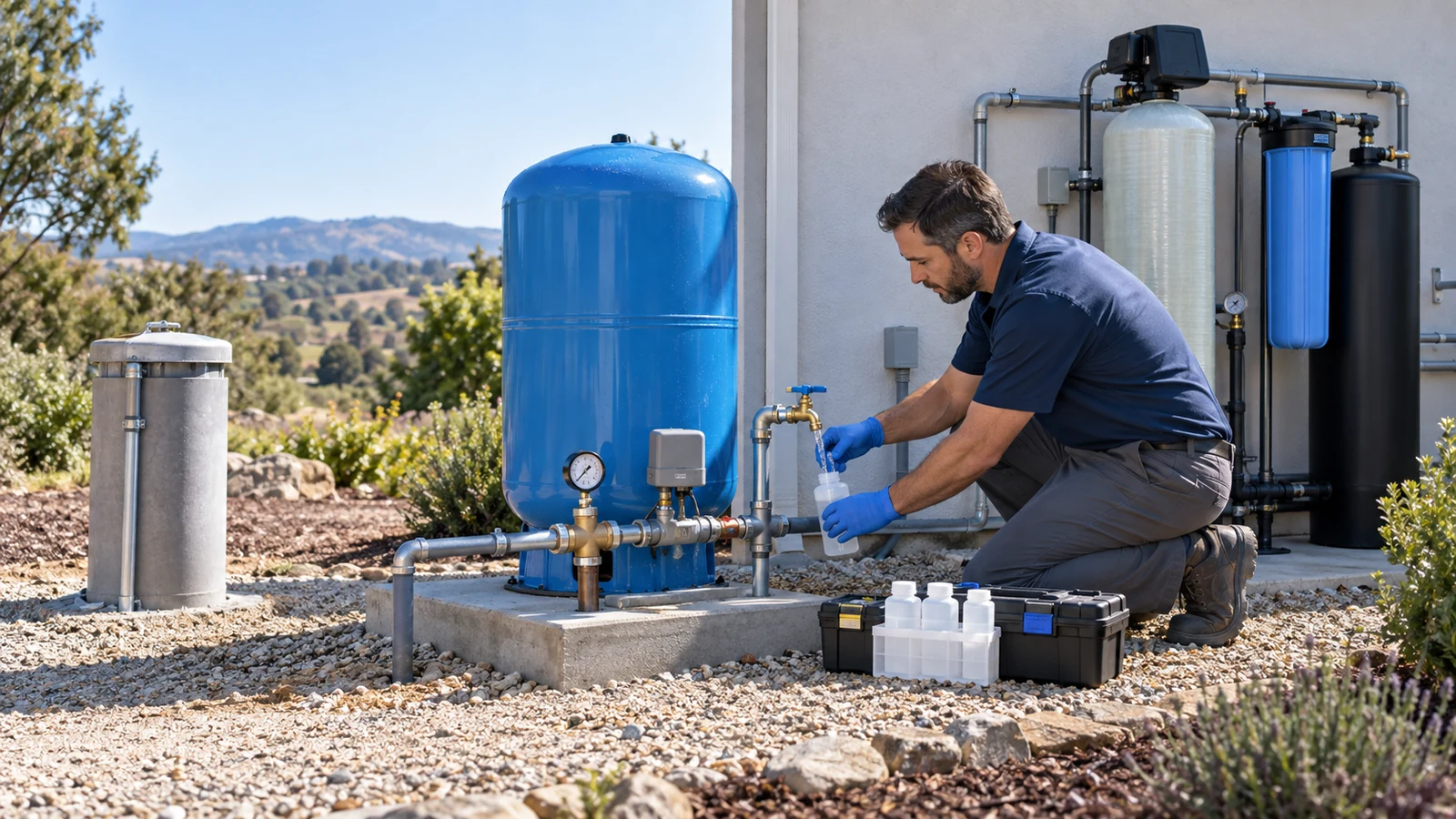
A useful well-water visit narrows the problem in a consistent order. Water Fixers starts with what changed, confirms the source, looks at pressure and accessible plumbing conditions, identifies installed treatment, and uses testing when chemistry is part of the decision. The goal is to avoid replacing equipment simply because a symptom looks familiar.
TEST → MATCH → VERIFY
Treatment should have a defined job. Whole-house equipment changes water used throughout the property; point-of-use equipment addresses a much narrower goal. Choose the treatment level only after the source, symptom, test result and existing system are understood.
Use testing when hardness, odor, staining, sediment, microbiological concerns or another measurable condition will determine the treatment choice. Sampling location and method should fit the question being asked.
Once the issue is measured, build a treatment strategy around that result. Flow, pressure, pH, household demand, service access and verification can matter as much as the name of the equipment.
Sediment filtration, carbon, softening, oxidation, neutralization, disinfection and other technologies solve different problems. Compare them by the job they perform rather than by the number of tanks or cartridges.
If the goal is mainly drinking, cooking, coffee and ice, a point-of-use reverse-osmosis system may be more targeted than treating every gallon entering the home. Well-water RO planning should still account for feed-water conditions and any pretreatment already in place.
ALREADY HAVE EQUIPMENT?
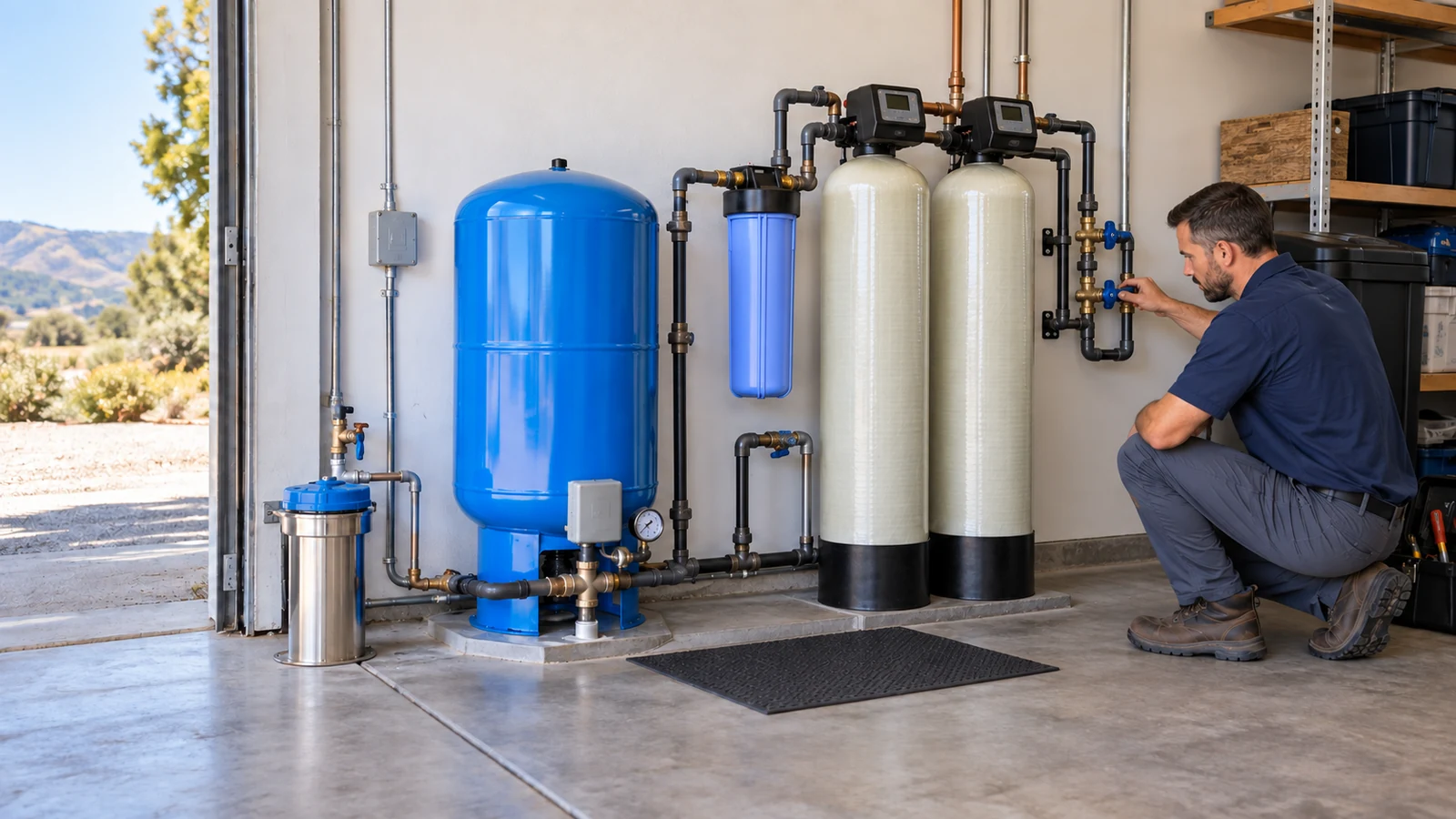
Existing treatment deserves a diagnosis before replacement. Note whether the symptom exists in untreated water, appears after one stage, or changes only when demand is high. That comparison can reveal maintenance, restriction or control problems without assuming the entire system is wrong.
Check bypass position, filter loading, salt or media condition where applicable, pressure drop, controls and service history. If the primary issue is hardness, the current Los Alamos softener page is the focused local path. If the concern is filter maintenance or declining well-water treatment performance, use the dedicated maintenance path.
WATER FIXERS SCOPE
Water Fixers can help with accessible plumbing-side pressure questions, testing and treatment planning, filtration, softening, reverse osmosis and service on existing treatment equipment. If a pressure complaint is tied to a private well, the first step is to identify whether the problem is in household plumbing, treatment restriction, accessible pressure equipment or farther upstream.
Well construction, casing repair, pulling a submersible pump and specialty pump electrical work are different trades. When the evidence points to source-side work, the correct next step may be a licensed well or pump specialist rather than ordinary plumbing service.
WHEN A WELL / PUMP SPECIALIST MAY BE NEEDED
The most useful diagnosis stops at the correct boundary. Water Fixers can document what is happening on the plumbing and treatment side and help the homeowner understand when the remaining work belongs to a well contractor or pump specialist.
LOS ALAMOS • RELATED HELP
Use the local guide for public-system context, source information and broader water-quality education. This service page is for a property after a private-well source is confirmed or when the homeowner needs help determining which well-water service path applies.
If the concern turns out to be ordinary household plumbing rather than the private-well or treatment system, the Los Alamos plumber page is the better starting point for fixtures, leaks, water lines and other plumbing work.
The main well-water directory connects testing, treatment, filtration, low-pressure guidance, maintenance and drinking-water RO. For local public-system context, read the Los Alamos water-quality guide. For local service geography, see Santa Ynez Valley plumbing and water-treatment services. If the property is on the community water system instead, use the current Los Alamos water-testing page, local softener page, local RO page, whole-house filtration page, or Los Alamos filtration router as appropriate.
Water Fixers serves Los Alamos from its Santa Maria location. This page describes service coverage and does not create a separate Los Alamos storefront.
PRIVATE-WELL FAQ
Start with source records rather than appearance. A District water bill or meter points toward the Los Alamos Community Services District system; property records and visible well or pressure equipment can help identify a private or shared well. Because Los Alamos has an active community groundwater system, the town name alone should never be used to label a property as private-well supplied.
No. The District report describes the public system and its monitoring. It does not measure a private well. When a private-well treatment or drinking-water decision depends on chemistry, use a sample from that property and the appropriate laboratory method.
Compare where the pressure changes. One weak fixture can indicate a local plumbing restriction. A whole-home change can involve filter loading, valves, pressure equipment or source-side conditions. Comparing pressure before and after accessible treatment helps narrow the boundary.
Clarity alone cannot answer a chemistry or microbiological question. If the concern involves drinking-water safety, treatment sizing or a measurable water-quality issue, use appropriate testing rather than relying on appearance.
Usually it is worth identifying what each installed stage is supposed to do and checking maintenance, bypass position, controls and pressure loss first. That can prevent adding equipment to compensate for a service problem in equipment already present.
Water Fixers focuses on plumbing-side pressure evaluation, water testing and treatment planning, filtration and service on accessible treatment equipment. Well drilling, casing work, pump pulling and specialty pump electrical work may require a licensed well or pump specialist.
LOS ALAMOS • PRIVATE WELL
Start with what is known: confirm the private-well source, note which fixtures are affected, describe pressure changes, identify existing treatment and bring any recent test report. Water Fixers can use that information to decide whether the next step belongs in plumbing, pressure evaluation, water testing, treatment planning or service on existing equipment.
CALL NOW! Se Habla Español!